

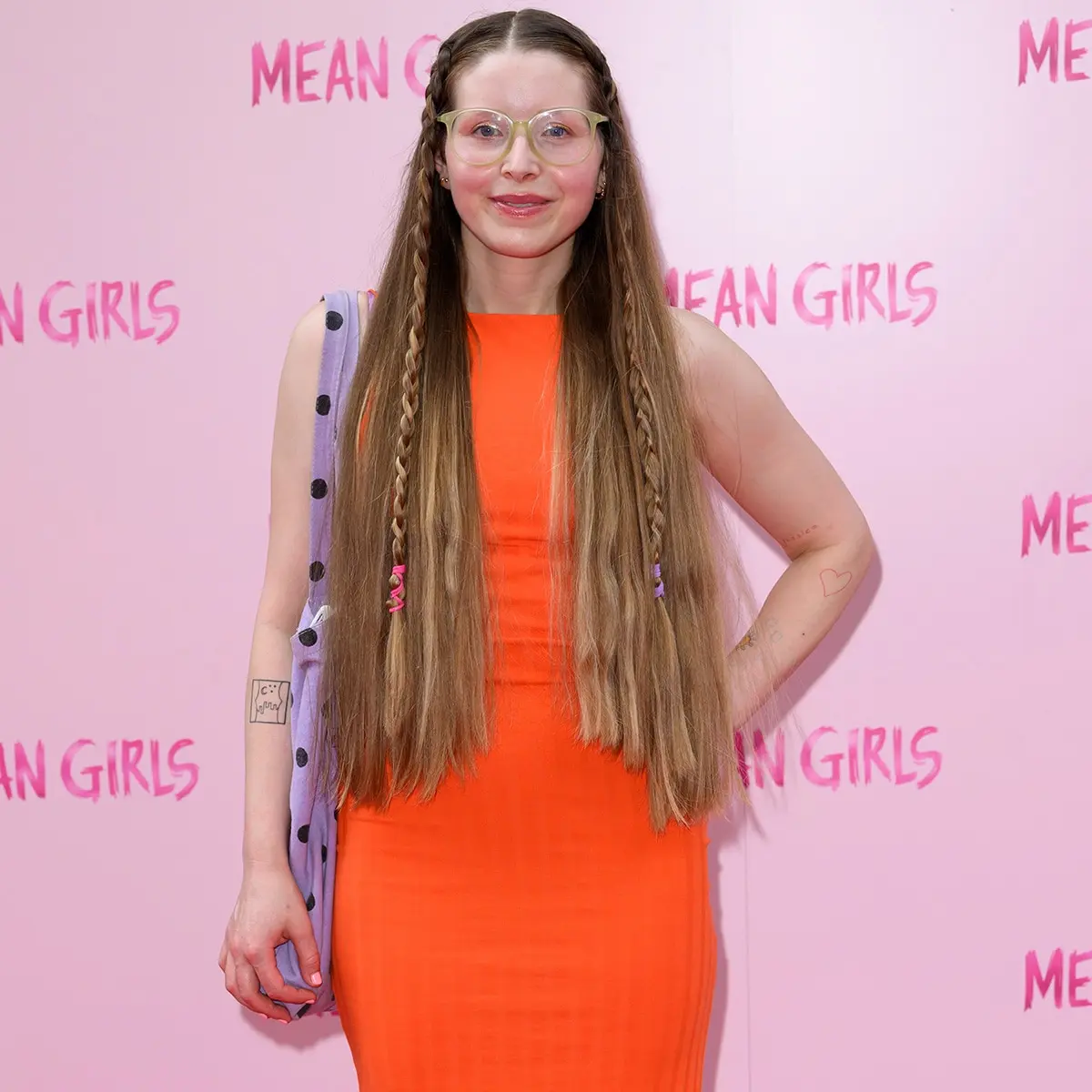
In the contemporary digital economy, the intersection of traditional Hollywood celebrity and creator-led subscription platforms has catalyzed an unprecedented financial evolution. For many actors, musicians, and public figures, the transition to platforms like OnlyFans has ceased to be a taboo contingency and has instead emerged as a primary engine of economic stability. Few stories encapsulate this paradigm shift quite as clearly as that of actress Jessie Cave, widely recognized for her portrayal of Lavender Brown in the final three installments of the Harry Potter franchise.
Initially hesitant to join the subscription-based platform due to persistent public misconceptions regarding the residual wealth of child stars, Cave launched her OnlyFans account in March 2025. Far from the explicit content typically associated with the service, Cave carved out a remarkably specific, non-sexual niche centered on hair artistry, adopting what she playfully terms a "slutty Mormon" aesthetic. The financial reality that followed shattered her expectations: within just twenty-four hours, Cave amassed £15,000, and within a year, she generated more income than she had across her entire traditional acting career.
Cave’s journey is far from an isolated incident. Across the entertainment and digital landscapes, a diverse roster of public figures—ranging from Disney Channel alumni and reality television veterans to mainstream actors and YouTube creators—have leveraged subscription platforms to achieve staggering financial independence. This investigative report examines the mechanics of Jessie Cave’s OnlyFans success, the broader economic realities facing contemporary artists, and the wider ecosystem of celebrity monetization on digital subscription platforms.
Detailed Chronology: From Wizarding World to Niche Digital Artistry
To understand Jessie Cave’s pivot to OnlyFans, one must first deconstruct the financial mythos surrounding major film franchises. Portraying Lavender Brown in Harry Potter and the Half-Blood Prince and both parts of Harry Potter and the Deathly Hallows cemented Cave’s place in pop culture history. However, the cultural saturation of the franchise often masks the financial realities of supporting cast members.
In a candid appearance on the UK talk show This Morning, Cave addressed the elephant in the room. "People just assume I’m rich and I have loads of money, and no I don’t," Cave explained, noting that her role was relatively small and took place two decades ago. As a mother of four children shared with her longtime partner, Alfie Brown, Cave found herself grappling with the astronomical costs of childcare and the volatile income of a self-described "struggling artist" who primarily produces independent, one-woman puppet shows.
+-------------------------------------------------------------------+
|                     JESSIE CAVE'S FINANCIAL TIMELINE              |
+-------------------------------------------------------------------+
| 2009–2011 : Portrays Lavender Brown in final three HP films.      |
| March 2025: Launches OnlyFans featuring niche, non-sexual content.|
| Day 1     : Generates an immediate return of £15,000.             |
| Aug 2025  : Confirms earnings surpass entire acting career.       |
+-------------------------------------------------------------------+
Faced with mounting financial pressures and the necessity of funding her creative pursuits, Cave launched her digital platform in early 2025. Rather than conforming to conventional adult content norms, she leaned into a deeply personal interest that had long engaged her social media followers: hair.
"It’s very much geared toward people who have an interest or fetish with hair," Cave elaborated on her Before We Break Up Again podcast. Noting that her Instagram hair videos consistently attracted voluminous, non-depraved curiosity, she decided to embrace the niche. "I just thought, ‘F–k it, I’m going to do something that is very niche.’"
The financial response was immediate. In an interview published by The Times on August 7, 2025, Cave revealed the staggering scale of her returns. Within the first single day of operation, her account brought in £15,000—dwarfing the initial five-thousand-pound conservative estimate she had budgeted to buy her family breathing room. Over the subsequent year and a half, the enterprise transitioned from a temporary financial patch into what Cave described as a life-saving enterprise that sustainably funds both her household and her avant-garde theatrical art.
Supporting Context & Metrics: The Celebrity Creator Economy
Jessie Cave’s trajectory reflects a broader economic transformation within the entertainment sector, where traditional residuals have dwindled, and direct-to-consumer monetization has accelerated. The modern creator economy relies heavily on algorithmic visibility, dedicated fan bases, and subscription models that bypass traditional studio middlemen.
To contextualize Cave’s £15,000 first-day milestone and her subsequent career-surpassing earnings, it is illuminating to examine how other public figures have fared upon entering the subscription market. The scale of monetization spans a wide spectrum, from modest supplemental income to unprecedented multi-million-dollar windfalls.
+-------------------------------------------------------------------+
|                  SELECTED CELEBRITY ONLYFANS EARNINGS             |
+-------------------+---------------------------+-------------------+
| Creator           | Reported Milestone        | Context           |
+-------------------+---------------------------+-------------------+
| Bella Thorne      | $1 Million (Day 1)        | August 2020       |
| Bhad Bhabie       | $57 Million (Net, 3 yrs)  | Verified via stmt |
| Shannon Elizabeth | $1 Million (9 Days)       | April 2026 launch |
| Piper Rockelle    | $2.9 Million (Day 1)      | January 2026      |
| Sophie Rain       | $82 Million (18 Months)   | Collective model  |
+-------------------+---------------------------+-------------------+
The Vanguard of Platform Monetization
- Bella Thorne: As one of the earliest mainstream Hollywood stars to embrace the platform in August 2020, the Disney Channel alumna shattered records by netting over $1 million within her first twenty-four hours. Thorne utilized the space to offer personal voice memos, morning and evening greetings, and PG-13 artistic imagery, proving that brand equity alone could drive mass adoption.
- Bhad Bhabie (Danielle Bregoli): The rapper’s financial disclosures stunned media analysts when she revealed a net earning of $57 million (from $71 million gross) accumulated since joining the platform in April 2021. Her case study highlights the immense earning potential when high-engagement youth-market audiences are funneled directly into a paid subscription funnel.
- Shannon Elizabeth: The American Pie star demonstrated sustained generational appeal when she crossed the seven-figure mark just nine days after launching her account in April 2026, expressing profound gratitude for the unexpected wave of fan support.
- Piper Rockelle and Lil Tay: Representing the younger generation of internet personalities, Rockelle pulled in an astounding $2.9 million on her first day in January 2026, while rapper Lil Tay reportedly captured over $1 million within three hours of launching her account upon turning 18 in July 2025.
- The Collective Economy (Sophie Rain and the Bop House): The evolution of the platform has also birthed content collectives. Figures like Sophie Rain have reported accumulating upwards of $82 million over an 18-month span, leveraging collaborative marketing strategies and highly dedicated fan bases to rival the salaries of top-tier professional athletes.
Official Statements & Industry Perspectives
The mainstreaming of subscription-based platforms has forced a cultural reckoning regarding labor, art, and dignity. For many women in the public eye, the decision to monetize their image directly is framed as an assertion of autonomy rather than a fallback option.
Jessie Cave has been remarkably vocal about removing the stigma attached to these platforms. Reflecting on her peers in the entertainment industry, she noted during her interview with The Times: "I see people on Instagram posting bikini shots or sexy stuff and I think, ‘You could be charging for this! You’re losing money!’ I see that being the future. Everyone will be paying for everything."
This sentiment is echoed across various sectors of the entertainment industry. For instance, former racing driver Renee Gracie transitioned from a struggling athletic career—where she was forced to take out loans—to building a multi-million-dollar real estate portfolio through adult digital content, describing her shift as a complete life inversion. Similarly, reality television alumni such as Farrah Abraham and Jenelle Evans have credited digital subscription spaces with providing stable, lucrative avenues for financial recovery following public industry fallout.
Conversely, some creators choose to exit the space when it no longer aligns with their personal evolution. Reality star and model Blac Chyna (Angela Renée White), who deactivated her account after generating roughly $2 million during the pandemic, reflected on her departure by stating that she was worth far beyond the platform’s ecosystem, while still encouraging others to "get your money" without letting the money dictate their self-worth.
Future Outlook: The Normalization of Direct-to-Consumer Monetization
As the digital landscape matures, the financial success of artists like Jessie Cave signals a permanent shift in how creative labor is sustained. The traditional model—relying on sporadic acting gigs, modest theatrical ticket sales, and shrinking residuals—is increasingly insufficient for mid-tier artists navigating the realities of modern inflation and childcare costs.
Cave’s journey from a supporting role in a historic cinematic franchise to a self-sufficient digital artisan underscores a broader democratization of revenue. By identifying an underserved, highly specific niche and shedding the internalized shame traditionally associated with alternate forms of digital income, Cave has secured a sustainable financial foundation for her family without compromising her artistic integrity.
Looking forward, industry analysts predict that direct-to-consumer subscription models will become increasingly normalized across all tiers of celebrity and independent artistry. As societal stigma continues to dissipate and economic pressures on creative professionals mount, platforms that offer direct monetization pathways will remain a vital lifeline—ensuring that artists can continue to create, perform, and survive on their own terms.