

Executive Overview
For decades, the freelance writing industry operated on a predictable, albeit grueling, ecosystem. Aspiring wordsmiths and seasoned veterans alike relied heavily on third-party job boards, indiscriminate cold-pitching campaigns, and fragmented networking forums to secure their next paycheck. While these legacy methods still yield occasional work, the topography of digital freelancing has fundamentally shifted. Today, the most lucrative inbound leads, sustainable client relationships, and high-paying contracts are concentrated on a single, business-centric platform: LinkedIn.
As professional networking transitions into the primary domain of thought leadership and digital authority, mastering LinkedIn is no longer an optional extracurricular activity for freelancers—it is an absolute operational necessity. Modern marketing directors, startup founders, and enterprise content managers rarely browse traditional classifieds when they need elite talent; instead, they turn to LinkedIn to evaluate personal brands, assess expertise, and scout for reliable partners.
However, approaching LinkedIn with a passive mindset or outdated strategies will yield little more than digital silence. The platform’s proprietary algorithms, audience behaviors, and visibility metrics have evolved dramatically. To cut through the noise, freelancers must adopt a strategic, highly intentional playbook. By pivoting away from peer-to-peer networking, optimizing their profiles as high-converting sales pages, engaging methodically with target accounts, and systematic idea generation, independent writers can transform LinkedIn from a digital resume into an automated inbound lead-generation machine.
Detailed Chronology: The Evolution of Freelance Lead Generation
To fully appreciate why LinkedIn currently dominates the freelance landscape, it is helpful to examine how independent client acquisition has evolved over the past decade.
Phase 1: The Wild West of Content Mills and Job Boards (Early 2010s)
Ten years ago, the path of least resistance for a new freelance writer involved registering on content mills, bidding on low-budget platforms, or scouring massive aggregate job boards. Competition was fierce, margins were razor-thin, and writers were frequently treated as interchangeable commodities. Success depended almost entirely on sheer volume—sending out dozens of cold pitches daily in the hope that a low-paying client would bite.
Phase 2: The Cold Email and Portfolio Era (Mid-to-Late 2010s)
As the digital landscape matured, the industry shifted toward independent blogging, self-hosted portfolios, and targeted cold-email outreach. Writers learned to research specific companies, pitch editors directly via email, and build comprehensive online portfolios. While this era produced vastly superior writing rates and healthier client relationships, it remained an active, outbound-heavy grind. If you stopped pitching, your pipeline dried up instantly.
Phase 3: The Authority and Inbound Revolution (Present Day)
Today, the pendulum has swung definitively toward inbound marketing and personal branding. Modern decision-makers prefer to hire professionals whose expertise is publicly visible, verifiable, and validated by community engagement. LinkedIn recognized this cultural shift early and optimized its infrastructure to reward thought leadership. Consequently, the platform has surpassed traditional job boards, establishing itself as the undisputed heavyweight champion for high-value freelance leads. Writers who understand how to navigate this modern ecosystem no longer chase clients; instead, they position themselves so that ideal clients naturally seek them out.
Supporting Context & Metrics: Decoding the Algorithm and Consumer Behavior
Navigating LinkedIn successfully requires an understanding of how the platform actually operates under the hood. The days of simply dropping a link or gaming the algorithm with superficial engagement tactics are long gone.
What the Algorithm Rewards Today
- Niche Authority and Relevance: LinkedIn’s algorithm prioritizes thematic consistency. If you consistently produce high-value content within a specific vertical (e.g., B2B SaaS marketing, financial compliance, or healthcare tech), the system recognizes your authority and distributes your posts to broader, highly targeted audiences within those industries.
- Dwell Time: Content that encourages readers to stop scrolling, read thoughtfully, and engage meaningfully gets heavily favored. Formatted text posts with compelling narrative hooks generate the highest native reach.
- Authentic Conversations: The platform rewards posts that spark active discourse in the comment sections, treating active conversations as indicators of high-value community interaction.
What Gets Penalized
- External Links in the Main Post Body: Posting updates with outbound links directly in the initial copy often triggers algorithmic suppression, as LinkedIn prefers to keep users on its platform. (Savvy creators typically place links in the comments or edit the post later).
- Generic Engagement Pods and Automation: Inauthentic, automated commenting or mass-tagging triggers spam filters and significantly limits organic reach.
- Irrelevant Cross-Pollination: Constantly publishing content tailored exclusively to other freelancers while attempting to attract enterprise clients confuses the algorithm regarding your true target audience.
Five Core Strategies to Master LinkedIn for Freelance Success
+-------------------------------------------------------------------------+
|                  THE 5-PILLAR LINKEDIN PLAYBOOK FOR WRITERS             |
+-------------------------------------------------------------------------+
| 1. Write for Clients, Not Peers    -> Shift focus from peers to buyers  |
| 2. Maintain Sustainable Consistency -> 1-2 focused posts per week         |
| 3. Execute Daily Engagement         -> The 3-2-1 method & "marketing dog" |
| 4. Optimize Your Profile as a Funnel -> Headline, About, & Featured work  |
| 5. Build an "Idea Brain"            -> Systematized daily ideation      |
+-------------------------------------------------------------------------+
Strategy 1: Write to Potential Clients, Not Other Freelancers
A trap that ensnares countless independent writers is falling into the echo chamber of peer-to-peer networking. While joining writer communities and exchanging tips with fellow creatives is emotionally comforting, it generates zero revenue.

If a prospective marketing director visits your LinkedIn profile, they should immediately understand what problems you solve and who you serve.
- Audit Your Content: Review your last ten posts. If the majority focus on general freelancing tips, rate negotiations, or software reviews for writers, your messaging is misaligned.
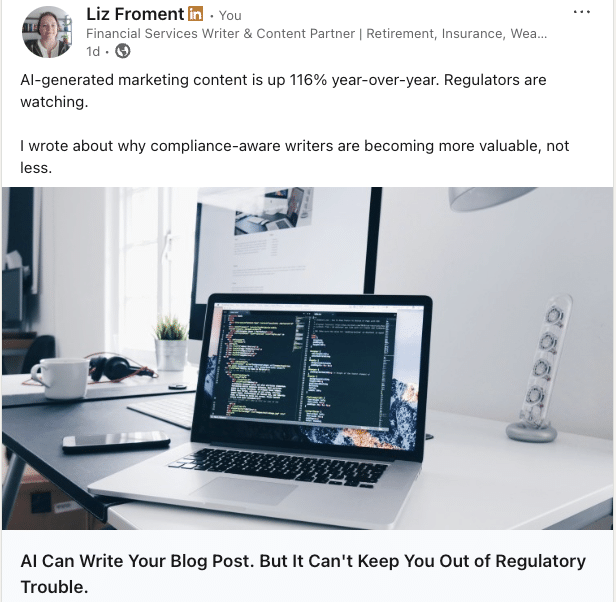
- Identify Client Pain Points: Select three to five core topics that genuinely concern your target market. For instance, a freelance medical writer should discuss evolving regulatory frameworks, clinical trial trends, or content distribution challenges in biotech. A fintech writer should focus on compliance hurdles, API integrations, or customer onboarding strategies.
- Demonstrate Domain Expertise: Write analytical posts dissecting industry trends, breaking down why a major brand’s content strategy succeeds, or sharing high-level insights from recent projects (without violating NDAs). When a corporate buyer lands on your page, they must see an industry insider who happens to write exceptionally well.
Strategy 2: Overcome Posting Anxiety Through Sustainable Systems
The conventional wisdom that creators must publish daily content to succeed is a primary driver of burnout and imposter syndrome. Believing they must become full-time influencers, many capable writers abandon LinkedIn entirely.
The reality is far more forgiving: publishing one or two exceptionally well-crafted posts per week consistently over several months yields extraordinary cumulative results.

- Establish a Manageable Cadence: Select a schedule you can maintain indefinitely without stress—such as every Monday and Thursday, or a single deep-dive post every Wednesday. Consistency vastly outweighs sheer volume.
- Batch Your Workflow: Block out thirty minutes every weekend to outline, draft, and schedule your posts using LinkedIn’s native scheduling tool.
- Leverage High-Performing Formats: Text-based posts featuring strong narrative hooks, scannable spacing, and clear formatting consistently outperform complex graphics. You do not need a video production studio; you need a compelling opening line and valuable insights.
Strategy 3: Prioritize Proactive Engagement
Publishing content is only half the battle. Because building an inbound pipeline is a marathon, active networking can dramatically accelerate your results. Proactively engaging with target accounts often yields faster client conversions than passive posting alone.
- Curate Your Prospect List: Compile a list of 20 to 30 decision-makers—such as marketing directors, content heads, editors, and startup founders—at companies you aspire to work with. Follow their profiles closely.
- Practice "Walking the Marketing Dog": Dedicate 15 to 20 minutes daily to reviewing your targets’ feeds. When they publish updates, leave thoughtful, substantive comments rather than superficial pleasantries like "Great post!" or "So true!" Add a unique perspective, share a relevant data point, or ask a nuanced follow-up question.
- Implement the Daily Action Rule: Adopt variations of proven frameworks like the 3-2-1 method (send 3 connection requests, write 2 thoughtful comments, and publish 1 post daily) or scale it down to a cadence you can sustain without fail. Regular visibility turns strangers into familiar faces.
Strategy 4: Optimize Your Profile as a High-Converting Sales Page
Your content attracts attention, but your profile closes the deal. Treat your LinkedIn profile less like a digital resume and more like a high-converting landing page designed to sell your writing services.
- Craft a Benefit-Driven Headline: Erase the generic title "Freelance Writer." Instead, explicitly state the transformation you provide: "I write high-converting B2B SaaS content that turns complex tech into pipeline" or "Financial Services Copywriter | Trusted by [Client A], [Client B], and [Client C]."
- Rewrite Your About Section in the Second Person: Address prospective clients directly. Outline the specific pain points you solve, the verticals you specialize in, and the measurable results you have delivered. Conclude with a clear, frictionless call to action.
- Leverage the Featured Section: Pin your absolute best writing samples, case studies, and glowing client testimonials directly to the top of your profile.
- Detail Tangible Experience: Update your employment history to reflect impact rather than duties. Writing "Authored 50+ thought-leadership pieces covering AI integration for commercial banking clients" carries infinitely more weight than "Wrote articles for various clients."
Strategy 5: Build a Systematic "Idea Brain"
Writer’s block shouldn’t plague content creators, yet staring at a blank document remains a common hurdle. The antidote is systematic idea capture.
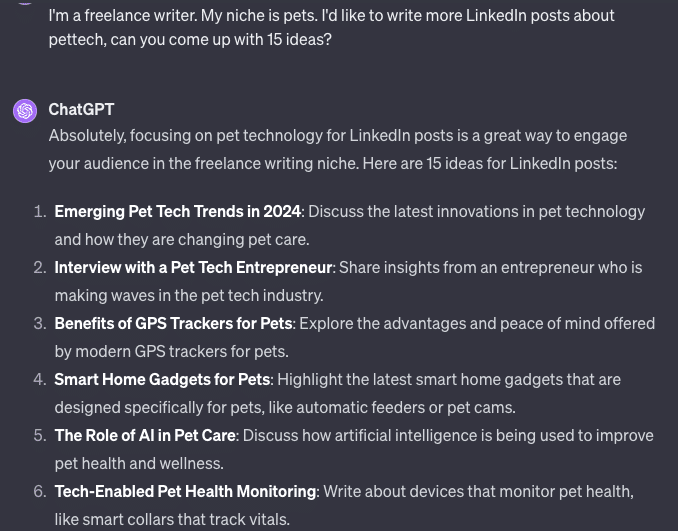
- Practice Daily Ideation: Set a daily reminder to open your phone’s notes app and jot down ten raw ideas. They can range from post concepts and client questions to industry gripes or personal observations. Most will be discarded, but compiling 70 ideas a week guarantees a handful of brilliant nuggets.
- Leverage Modern Tools: When inspiration completely dries up, lean on AI writing tools to brainstorm angles, outlines, or counter-arguments within your niche. Use AI as a springboard for your unique perspective rather than a replacement for your voice.
Future Outlook: The Indispensable Role of Personal Brands
As artificial intelligence continues to reshape the landscape of digital content creation, the nature of freelance writing is undergoing a profound transformation. Basic, commoditized writing tasks are increasingly automated, raising the bar for what corporate buyers demand from human creators.
In this new era, companies are no longer paying merely for words on a page; they are investing in strategic perspective, authentic industry authority, and trusted partnership. LinkedIn serves as the ultimate proving ground for these exact qualities.
Writers who proactively build a professional digital footprint, nurture relationships through consistent engagement, and position themselves as specialized experts will insulate themselves against market volatility. The transition requires intentional effort and disciplined time management—dedicating just 20 to 30 minutes a day to the platform can fundamentally alter your career trajectory. The tools, strategies, and blueprints are available. The only remaining variable is execution. Do not leave your freelance future to chance—claim your digital real estate on LinkedIn today.