

Executive Overview
The intersection of modern American politics, media influence, and high-stakes legal battles has once again produced a turbulent news cycle. From the West Wing corridors of power to federal courtrooms and newsrooms across the globe, accountability, personal devotion, and the fragile nature of journalistic integrity are facing unprecedented scrutiny. At the epicenter of this dynamic is Natalie Harp, a polarizing White House aide whose proximity to President Donald Trump has sparked fierce debate among political strategists, journalists, and lawmakers alike.
Concurrently, the broader media landscape continues to grapple with historic repercussions. President Trump’s ongoing legal maneuvers against international broadcasters—specifically his defamation lawsuit against the BBC—signal an aggressive posture toward foreign media entities that critique his administration or historical actions. Meanwhile, the domestic press faces its own existential reckoning following a monumental defamation verdict against The New York Times, a legal defeat that shatters a half-century precedent protecting the paper from such liability.
This report synthesizes these multifaceted developments, examining the structural influences shaping contemporary political journalism, the health and behavioral scrutiny surrounding the commander-in-chief, and the shifting boundaries of accountability in the digital age.
Detailed Chronology: The Rise of Natalie Harp and the West Wing "Human Printer"
From Far-Right Cable Anchor to Presidential Confidante
The trajectory of Natalie Harp’s career represents one of the most remarkable ascents within the modern conservative political ecosystem. A 33-year-old former anchor for the far-right One America News Network (OAN), Harp’s integration into Trump’s inner circle is deeply personal. According to profiles by outlets like The New York Times, Harp frequently credits Trump with saving her life. She has recounted publicly that legislation signed by Trump in 2018 granted her access to experimental treatments for bone cancer—treatments she credits with her survival.
Her loyalty caught the attention of the former president in 2019 during a televised appearance on Fox News, leading to a speaking slot at the 2020 Republican National Convention. Following years of amplifying Trump’s unproven claims regarding the 2020 election on OAN, Harp formally joined his team in 2022.
The Digital Archive of January 6, 2021
Recent investigative reporting by CNN’s Isabelle Chapman and Andrew Kaczynski illuminated the extent of Harp’s ideological alignment with the president prior to her official employment. An analysis of her deleted X (formerly Twitter) account revealed that Harp flooded the platform with more than 150 posts on January 6, 2021.
The posts served as a real-time ledger of fervent devotion. In one instance, Harp repeated the phrase "FIGHT FOR TRUMP" 12 times in a single tweet, appending an American flag and declaring, "Today DC is TRUMP COUNTRY." As the events at the U.S. Capitol unfolded, she live-tweeted the president’s speech, writing, "We will never give up. We will never concede!" Following Congress’s certification of Joe Biden’s victory, she posted, "America may not be America anymore. But God’s still God. Don’t stop believing!!"
Proximity, Influence, and the "Human Printer"
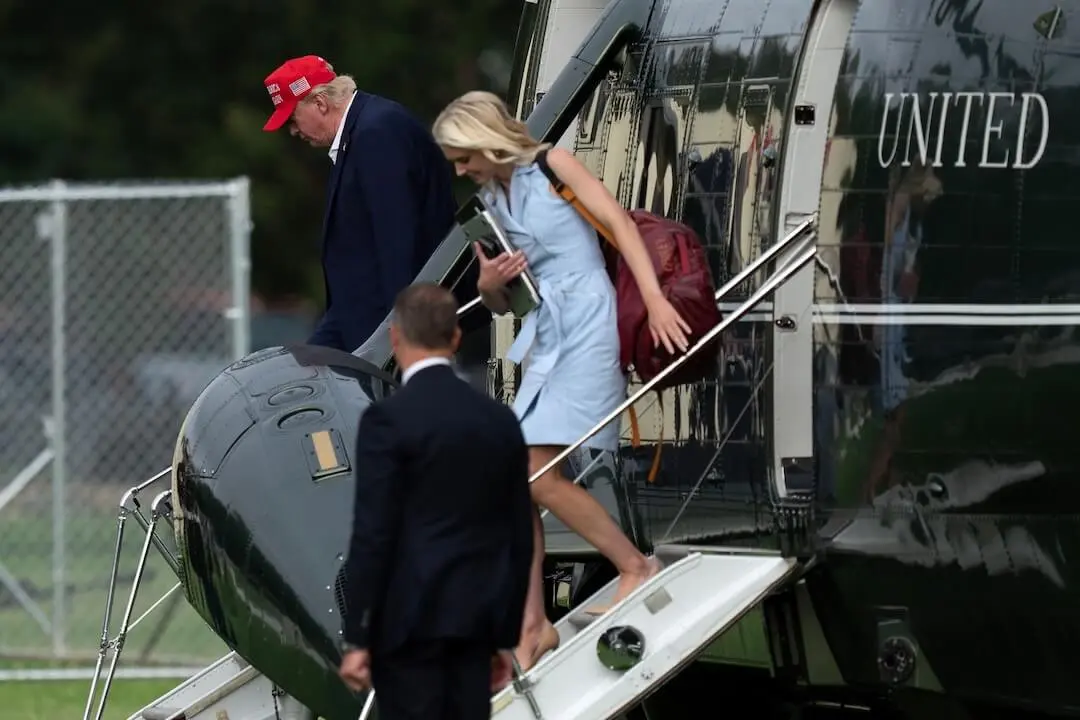
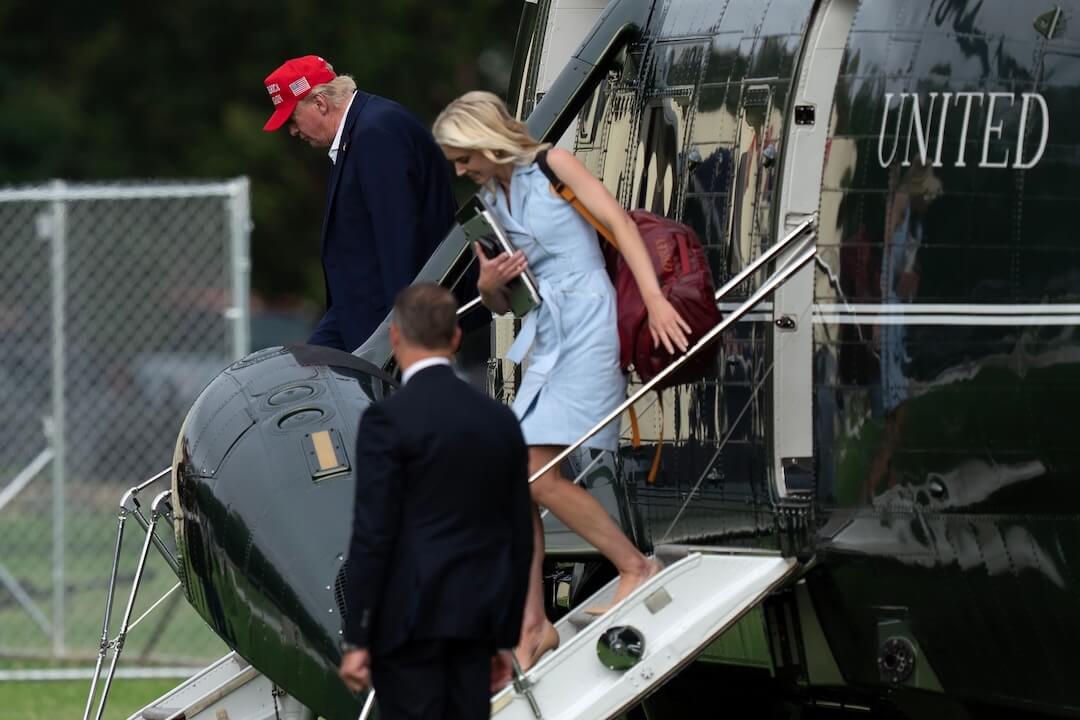
In the current administration, Harp’s role extends far beyond traditional administrative duties. Earning the moniker "the human printer" from colleagues, Harp is rarely seen more than a few paces away from Trump, often trailing him with a portable printer to deliver hard-copy news articles, social media clips, and polls.
Journalists Maggie Haberman and Shawn McCreesh of The New York Times reported that Harp acts as an unvetted pipeline of information to the president. Critics and advisors within Trump’s orbit have expressed concern that this material—ranging from unverified polling data to inflammatory internet content—reinforces a worldview isolated from conventional Washington channels. Haberman has colloquially referred to Harp as Trump’s "human binkie," noting her role as an eternal source of optimism during turbulent political moments.
The friction surrounding her influence spilled into public view recently when Senator Jon Ossoff (D-GA) made a pointed remark during a critique of executive priorities. Ossoff quipped that Trump preferred traveling "with Natalie to their apparently defenseless flying palace gifted by the Emir of Qatar" rather than focusing on domestic governance. The ensuing overreaction from Trump’s supporters—characterized by Ossoff as a "White House meltdown"—underscored the sensitivities surrounding the aide’s unique status.
Supporting Context & Metrics: Trump, the BBC, and Presidential Health
The BBC Defamation Suit and Family Subpoenas
While Harp manages the flow of information inside the West Wing, President Trump continues to wage aggressive legal battles against international media institutions. Trump is currently pursuing a $10 million defamation lawsuit against the BBC over a documentary that spliced together two distinct segments of his January 6, 2021, speech. The documentary aired ahead of the 2024 presidential election, leading to network apologies and the subsequent resignations of BBC Director-General Tim Davie and news chief Deborah Turness.
Despite winning the 2024 election and the documentary never having aired domestically, Trump’s legal team is aggressively pressing the litigation. Over the weekend, Trump’s attorneys filed a motion asking a federal judge to block the BBC’s attempts to subpoena family members—specifically Donald Trump Jr., Ivanka Trump, and her husband, Jared Kushner. The BBC argues that these individuals possess firsthand knowledge and records relevant to the case. Court filings revealed that prior attempts to serve subpoenas were thwarted, including an incident in May where the Secret Service intervened as process servers approached Ivanka Trump and Kushner’s residence. U.S. District Judge Jeffrey Kuntz, a Trump appointee, has yet to rule on the motion.
Health and Weight Scrutiny
As the administration navigates these legal and political fronts, questions regarding the physical health of the 80-year-old president—the oldest person ever sworn in for a presidential term—have intensified. Reporting by The Washington Post‘s Dan Diamond highlighted growing scrutiny over Trump’s physical measurements, noting a significant increase in reported weight.
While booking records from a Georgia election interference case listed Trump at 215 pounds, a White House medical report released in May placed his weight at 238 pounds, putting him less than two pounds shy of the clinical threshold for obesity. White House physicians have reportedly advised the president to pursue weight loss, improved diet, and sustained physical activity—guidance complicated by Trump’s well-documented preference for fast food and aversion to rigorous exercise. While the administration has declined to comment directly on the weight metrics, they continue to point to the president’s baseline stamina and energy.
Official Statements & Legal Precedents
The New York Times Defamation Verdict
In the domestic media sector, a historic legal development has sent shockwaves through journalistic institutions. For the first time in half a century, The New York Times lost a defamation lawsuit stemming from its reporting.
A jury awarded former University of Alabama men’s basketball player Kai Spears $9.25 million in damages after determining he was defamed by a 2023 article written by staffer Billy Witz. The piece incorrectly placed Spears at the scene of a fatal shooting in Tuscaloosa, Alabama, attributing the claim to a single anonymous source. Although the paper subsequently published updates including denials from university athletic officials and Spears’s family, it initially resisted making substantive retractions.
During the trial, The Times argued that the article did not explicitly imply Spears’s involvement in the crime, and that the reporter had taken reasonable steps to corroborate the information. However, jurors were swayed by evidence showing that while Spears was nearby in another car, he was not at the scene, and that the publication had caused measurable harm to his academic and athletic standing.
Charlie Stadtlander, a spokesperson for The Times, issued a statement following the verdict:
"We’re disappointed the jury found The Times liable for an honest mistake. We thank the jury for its service, but believe the verdict and award of damages are contrary to law and not supported by the evidence."
The publication is actively weighing its legal options, signaling potential appeals that could test the boundaries of the landmark New York Times Co. v. Sullivan legal standard in modern courts.
Future Outlook
The convergence of these events paints a complex picture of the modern sociopolitical and media ecosystem. The unprecedented access granted to aides like Natalie Harp highlights a shifting paradigm where institutional filters are increasingly bypassed in favor of loyalty-driven information streams. As long as "the human printer" remains at the president’s side, traditional advisors will likely continue to struggle against the tide of unvetted digital content shaping executive decision-making.
Simultaneously, the legal landscape for journalism is entering a precarious era. The staggering $9.25 million judgment against The New York Times serves as a warning sign for news organizations operating in an era of heightened hostility toward the press, potentially chilling investigative reporting or raising the financial stakes of editorial errors. Coupled with ongoing international litigation like the BBC lawsuit, media entities face mounting pressure from both domestic jurisprudence and assertive political figures.
Ultimately, the coming months will test the resilience of journalistic institutions, the durability of constitutional press protections, and the capacity of administrative structures to withstand internal polarization. Whether through courtrooms, newsrooms, or the West Wing, the mechanisms of public accountability are undergoing a fundamental stress test whose outcomes will resonate for decades.