

Executive Overview
It was sexy, it was cute, and more than two decades after its initial theatrical release, the definitive cinematic gospel of competitive cheer remains entirely unmatched. Directed by Peyton Reed and written by Jessica Bendinger, Bring It On premiered on August 25, 2000, utterly shattering box-office expectations and instantly transforming into an indelible pop-culture touchstone.
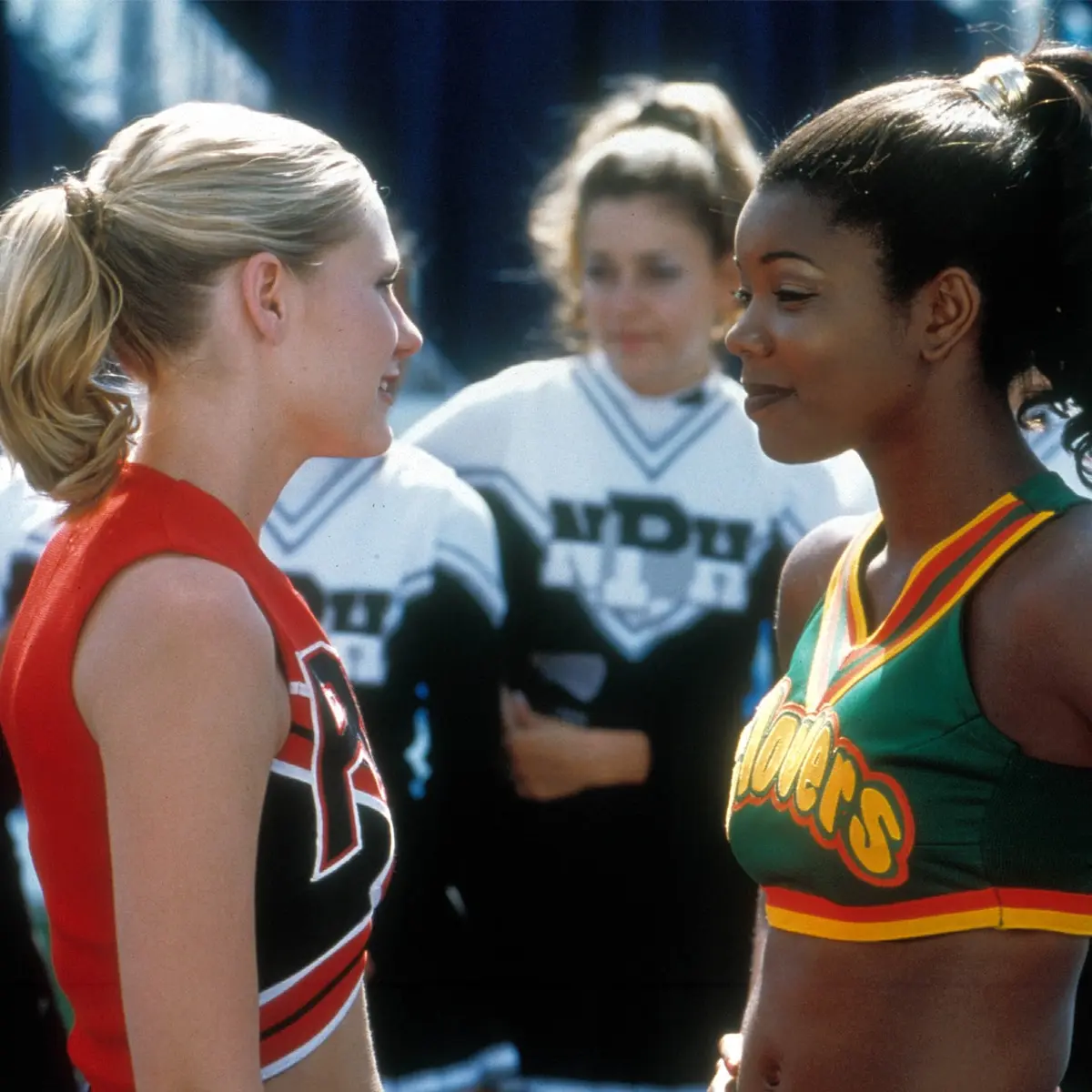
Yet, the film’s journey to the screen was as precarious as a high-flying pyramid. Long before Kirsten Dunst commanded the Rancho Carne Toros or Gabrielle Union led the East Compton Clovers, the project—initially titled Cheer Fever—faced staggering resistance from risk-averse Hollywood executives. It survived dozens of rejections, grueling casting changes, unexpected run-ins with international law enforcement, and fierce debates over its narrative trajectory.
Twenty-six years later, Bring It On is no longer just a quotable late-summer teen comedy; it is a full-fledged cultural institution. Following celebratory cast reunions—including a sold-out, star-studded screening at the Hollywood Forever Cemetery where Dunst recited iconic choreography from memory—the film’s enduring influence continues to shape conversations around representation, tenacity, and the tricky terrain of Hollywood sequels. This is the definitive retrospective of how an underdog movie about pom-poms and school spirit became a generation-defining classic.
Detailed Chronology: From Rejected Script to Box-Office Supremacy
The Long, Winding Road to Cheer Fever
Before it found a home at Universal, the script written by former music video director Jessica Bendinger was viewed by traditional studio gatekeepers as an uphill financial battle. Bendinger took the concept through a grueling gauntlet of development hell.
"I went to 28 or more places and meetings," Bendinger recalled in a 2015 retrospective. "I had about 27 pitches because sometimes I’d go to a studio and they’d love it and they’d take it to their boss and they go, ‘We love it!’ and take it to their boss and then it would get a pass at the third time."
Originally conceived under the working title Cheer Fever, the project struggled to find backers willing to take a cinematic gamble on the hyper-competitive, athletic subculture of cheerleading.
The Casting Shuffling Game
When the film finally secured a green light, its iconic roster looked remarkably different on paper. Kirsten Dunst, who was just 17 years old at the time of production, was not the initial choice for Torrance Shipman. The role was originally offered to Marley Shelton, who ultimately dropped out of the project to star in Sugar and Spice—a 2001 dark comedy about cheerleaders-turned-bank robbers.
Dunst, having recently emerged from a string of exhausting indie projects, initially turned down the script before changing her mind. "I read it and was like, ‘Oh, this is a fun movie,’" she noted.
Meanwhile, finding the film’s edgy, counterculture romantic lead, Cliff Pantone, proved equally challenging. Executive producers auditioned roughly 300 actors before landing on Jesse Bradford. Bradford, leaning into the rock-and-roll attitude of the character, famously pushed for production perks during negotiations. Executive producer Max Wong recalled, "He was like, ‘Can I get a convertible?’ And I was like, ‘Of course!’ Which was a total lie."
The Tijuana Incident and Boot Camp Grind
Production on the film was as intense physically as it was logistically. The principal cast endured a punishing four-week cheerleading boot camp, training eight hours a day to master pyramids, tumbling, and complex synchronized choreography. Nicole Bilderback, who played Toros squad member Whitney, described the grueling process: "We had to learn the pyramids; we had to build up strength for that. We had to learn all the tosses… So it was eight hours a day, and we’d get a lunch break. It was tough."
Off-screen, the young cast was making their own headlines. During location work, actors including Eliza Dushku and Jesse Bradford found themselves in hot water across the border. According to production lore, the pair were arrested in Tijuana, Mexico, after a day on the beach and briefly detained. Dushku was quick to clear up the narrative regarding studio intervention: "I want to go on the record and say no producers came and bailed us out. There may have been an incident in TJ one weekend, but we got ourselves out of it."
Supporting Context & Metrics: Breaking Down the Numbers
The true narrative of Bring It On is best told through the stark contrast between its modest expectations and its phenomenal financial payload.
- The Budget vs. Box Office Disconnect: Operating on a relatively tight budget of roughly $10 million, studio tracking projections estimated a soft domestic opening of around $6 million. Instead, Bring It On stunned Hollywood by opening at No. 1 and hauling in an astounding $22 million domestically during its opening frame.
- Music Licensing Investments: To set the high-energy tone of the tryouts montage, the production spent a significant chunk of its budget securing the rights to Warrant’s "Cherry Pie." Director Peyton Reed recalled that the single cue cost approximately $40,000—the single most expensive music licensing fee in the film.
- Franchise Expansion: The original 2000 film sparked an unexpected multimedia legacy, spawning six direct-to-video and television sequels, along with a critically acclaimed Broadway adaptation, Bring It On: The Musical, which earned two Tony Award nominations in 2013 for Best Musical and Best Choreography (co-written by Lin-Manuel Miranda).
The Battle Over the Nationals Trophy
Behind the scenes, the film’s climactic ending sparked intense debate among the creative team. A faction of producers argued that Kirsten Dunst’s character, as the primary protagonist, should lead the Toros to a first-place victory at Nationals. Ultimately, story integrity won out. The East Compton Clovers took home the top prize, teaching Torrance—and audiences—a valuable lesson about cultural appropriation, equity, and earned respect.
Official Statements and Behind-the-Scenes Revelations
Gabrielle Union on Representation and the Birth of Isis
Gabrielle Union’s portrayal of Isis remains a masterclass in commanding screen presence. Speaking on the character’s genesis, Union revealed that basketball legend Michael Jordan served as the primary physical and mental inspiration for Isis’s competitive fire. Furthermore, director Peyton Reed credited Union with being instrumental in shaping the authentic voice and depth of the East Compton Clovers.
Union has also been vocal about the systemic double standards in Hollywood teen films of that era. Contrasting Bring It On with Sugar and Spice, Union noted that the competing bank-robbery project rejected diversity in its casting. "The cheerleading movie I wanted about bank robbing—they didn’t want to go Black on any of the characters," Union told MTV. "So it’s interesting, the group that didn’t want to commit to diversity didn’t seem to do well and the movie that was about righting the wrongs did well."
Kirsten Dunst on the Legacy and a Potential Sequel
While Dunst holds fond memories of her time as Torrance Shipman—affectionately imagining her character today as a veteran coach—she remains firmly opposed to a cinematic reboot or direct legacy sequel involving her character. In various interviews, including a stop at Entertainment Tonight, Dunst maintained a protective stance over the original film’s pristine reputation: "I’m like, leave good things where they are."
Future Outlook: Will the Clovers and Toros Return?
While Kirsten Dunst may prefer to let sleeping pom-poms lie, her co-stars have a decidedly different perspective on the franchise’s future.
Gabrielle Union has kept the flame alive for years, openly discussing ongoing behind-the-scenes efforts to mount a proper legacy sequel that updates the storyline for a modern era. Teasing fans on social media during the film’s milestone anniversaries, Union dropped tantalizing hints about the narrative trajectory: "Hmmmm, so Isis might have a teenager #BringItOn."
As Union noted in interviews with industry outlets regarding the arduous nature of Hollywood development, bringing a beloved property back to life can take anywhere from five minutes to fifty years. Yet, the appetite for a return to the "cheerocracy" has never been stronger. Whether or not a reunion feature ever materializes on the silver screen, Bring It On has firmly secured its legacy. It stands forever as a brilliantly cast, sharply written, and culturally significant triumph that proved once and for all that spirit, grit, and authenticity will always carry the day.