

Executive Overview
In a coordinated display of economic statecraft, the United States, the European Union, and Japan launched a formidable joint challenge at the World Trade Organization (WTO) targeting China’s restrictive export policies on rare earth minerals. Announced by President Barack Obama, the move marks a pivotal escalation in global trade tensions, focusing on a suite of 17 specialized elements and vital raw materials—including tungsten and molybdenum—that form the absolute bedrock of modern electronics, clean-energy technologies, and advanced defense systems.
At the heart of the dispute is Beijing’s near-monopoly on the production of these critical materials. Producing roughly 97% of the world’s rare earth elements, 91% of its tungsten, and over a third of its molybdenum, China wields immense influence over global supply chains. Western leaders argue that Beijing has systematically tightened export quotas and levied punishing export taxes to artificially depress domestic material costs while driving up prices for foreign competitors. This dynamic, trade officials assert, exerts immense pressure on international manufacturers to relocate operations, capital, and intellectual property directly to Chinese soil.
While Washington and Brussels frame the legal challenge as a defense of free-market principles and international trade law, Beijing has vehemently defended its policies. Chinese officials maintain that their regulatory framework governs production, exploration, and export alike, serving legitimate environmental protection goals rather than protectionist ambitions. As the WTO gears up to oversee formal consultations, this high-stakes dispute underscores a broader geopolitical struggle over who will control the raw materials powering the technological and ecological revolutions of the 21st century.
Detailed Chronology of the Dispute
The collision course between China and Western industrial powers over rare earths did not materialize overnight; it represents the culmination of years of tightening restrictions, diplomatic friction, and mounting industrial anxiety.
[2010] China slashes quotas (32% domestic / 54% foreign) & briefly halts Japan shipments. Prices spike.
  │
[Sept 2011] U.S. House Foreign Affairs Subcommittee holds hearings on rare earth vulnerabilities.
  │
[March 2012] U.S., EU, and Japan formally file a WTO dispute settlement consultation request against China.
  │
[Next Steps] 10-day response window, 2-month consultation phase, followed by potential WTO panel ruling.
The 2010 Turning Point and Escalating Quotas
Tensions first boiled over on the global stage in 2010, when China abruptly halted rare earth shipments to Japan amid a diplomatic maritime dispute. The move sent shockwaves through international markets, causing unprecedented price spikes and exposing the extreme vulnerability of high-tech manufacturing supply chains worldwide.
In the wake of this shock, the European Union and the United States documented a systematic escalation of Chinese export curbs. Beijing progressively ratcheted up export taxes while slashing export quotas. Notably, in 2010 alone, export quotas were slashed by 32% for domestic Chinese companies and by a staggering 54% for foreign-invested enterprises. According to trade analysts, these maneuvers effectively insulated Chinese downstream manufacturers from global price volatility while starving international competitors of the materials necessary to maintain production lines.
Congressional Alarm in the United States
As supply chain vulnerabilities became increasingly apparent, legislative bodies in Washington began investigating the national security implications of material dependency. In September 2011, the U.S. House Foreign Affairs Subcommittee on Asia and the Pacific convened dedicated hearings to examine the domestic availability of rare earths.
Lawmakers expressed profound alarm over the extent to which cutting-edge American military hardware—including missile guidance systems, unmanned aerial drones, and the next-generation F-35 Joint Strike Fighter—relied on Chinese-supplied elements. These hearings galvanized bipartisan support for aggressive state intervention, setting the stage for the multilateral legal offensive launched by the White House in the spring of 2012.
The March 2012 WTO Filing
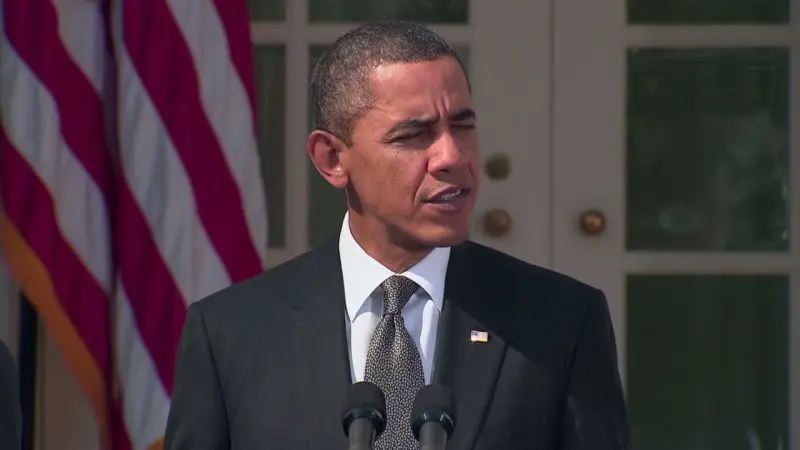
On a Tuesday morning in March 2012, President Obama stepped before reporters at the White House to officially announce that the United States, alongside the EU and Japan, was formally filing a dispute settlement consultation request with the WTO. Simultaneously, European trade officials in Brussels and Tokyo released synchronized statements detailing the legal basis of the challenge. Under WTO rules, China was granted a mandatory 10-day window to acknowledge the request and entered a strict two-month consultation window to negotiate a resolution with the complaining parties before the case could escalate to a formal dispute adjudication panel.
Supporting Context & Metrics: The Anatomy of Critical Minerals
To understand the gravity of the WTO challenge, one must examine the indispensable role that rare earths and associated metals play in modern industrial ecosystems. These elements possess unique magnetic, heat-resistant, and phosphorescent properties that cannot easily be replicated or substituted.
The Magic 17 and Beyond
The disputed materials encompass 17 distinct rare earth elements on the periodic table—including cerium, neodymium, and dysprosium—as well as crucial transition metals like tungsten and molybdenum.
- Neodymium and Dysprosium: Essential for creating permanent, high-strength magnets used in hybrid and electric vehicle (EV) motors, wind turbine generators, computer hard drives, and portable electronics.
- Cerium: Widely utilized in petroleum refining catalysts, glass polishing, and energy-efficient lighting.
- Tungsten: Characterized by an exceptionally high melting point, tungsten is indispensable for lighting technology, advanced electronics, automotive components, aerospace engineering, and medical equipment. China currently controls 91% of global tungsten production.
- Molybdenum: A vital metallic element used to create high-strength steel alloys and electrical filaments in incandescent light bulbs. China produces approximately 36% of the world’s supply.
Irreplaceable Components and Supply Chain Fragility
According to comprehensive industrial analyses published by the European Union, rare earths are rarely substitutable without forcing manufacturers into expensive product redesigns. In many instances, no viable chemical or material alternative exists.
Consequently, the physical unavailability or artificial inflation of these inputs does not merely impact a single component; it threatens to completely fracture entire value chains. A disruption in the supply of dysprosium, for example, can halt the assembly lines of global wind turbine manufacturers, delaying green energy infrastructure projects across continents.
| Mineral / Element | China’s Global Production Share | Primary Industrial & Defense Applications |
|---|---|---|
| Rare Earths (Total) | ~97% | Smart phones, flat-screens, EV batteries, wind turbines, F-35 fighter jets, missile guidance systems. |
| Tungsten | ~91% | Lighting, automotive systems, aerospace engineering, medical devices, electronics. |
| Molybdenum | ~36% | Steel alloys, light bulb filaments, industrial machinery, chemical catalysts. |
Official Statements and Diplomatic Posturing
The public diplomacy surrounding the WTO filing revealed starkly contrasting narratives between Western governments seeking open markets and a Chinese administration asserting national sovereignty over resource management and environmental protection.
Washington’s Stance: Playing by Global Rules
President Obama emphasized that while the growth of the Chinese economy is a welcome global phenomenon, economic power must be accompanied by adherence to international trade rules.
"We want our companies building those products right here in America," President Obama told reporters. "But to do that, American manufacturers need to have access to rare earth materials which China supplies. Now, if China would simply let the market work on its own, we’d have no objections. Instead, Chinese policies currently are preventing that from happening and they go against the very rules that China agreed to follow."
White House Press Secretary Jay Carney reinforced this message, framing the action not as an attack on China’s rise, but as a demand for a level playing field:
"We believe that China’s rise is a good thing for the Chinese people and for the global community, a good thing for the United States. It is also important that, as China becomes a bigger and bigger economic power, that China play by the same set of rules that other major economic powers play by."
U.S. Trade Representative Ron Kirk added that China’s aggressive export curbs had generated "massive distortions and harmful disruptions in supply chains," directly harming American workers and industrial innovators across both established and emerging sectors.
Brussels and Tokyo Echo Frustration
European Trade Commissioner Karel De Gucht pulled no punches, noting that despite prior WTO rulings against Chinese raw material restrictions, Beijing had failed to reform its trade regime.
"China’s restrictions on rare earths and other products violate international trade rules and must be removed," De Gucht stated. "These measures hurt our producers and consumers in the EU and across the world… This leaves us no choice but to challenge China’s export regime again to ensure fair access for our businesses to these materials."
Beijing’s Defense: Environmental Stewardship and Regulation
In Beijing, the Ministry of Foreign Affairs mounted a swift defense of its sovereign resource policies. Liu Weimin, a ministry spokesman, maintained that China’s administrative measures were fully compliant with international trade frameworks.
"China has worked out its own policy on managing rare earths, which is in line with WTO regulations," Liu declared during a press briefing. "Our policies tackle not only the export of rare earth but also its production and exploration."
While Western capitals accused China of hoarding strategic minerals to choke off foreign competition, Beijing consistently countered that its restrictions were driven by critical environmental concerns. Decades of unmitigated rare earth mining had inflicted severe ecological damage—including soil erosion, radioactive contamination from associated thorium waste, and toxic chemical runoff—prompting the government to cap production and clean up the domestic mining sector.
Alternative Legislative Proposals and Domestic Production
While the tripartite WTO challenge represented the primary diplomatic and legal instrument deployed by the West, domestic politicians argued that multilateral trade dispute resolution was simply too slow to protect national interests.
Calls for Aggressive Bilateral Leverage
U.S. Senator Chuck Schumer (D-New York) publicly criticized reliance on the WTO framework, pointing out the protracted timelines inherent in international arbitration.
"There are faster ways to assert leverage on China than relying on the WTO, which could take years to resolve the case," Schumer argued in a legislative statement.
The New York senator advocated for aggressive retaliatory measures, calling for direct U.S. efforts to block Chinese-funded mining acquisitions within the United States, as well as actively working to restrict World Bank financing for Chinese mining and extraction projects.
The Rise of Alternative Domestic Producers
Even as governments wrangled in Geneva, private enterprise began stepping in to diversify the global supply base. Companies like Molycorp Inc., which operates rare earth mines in Mountain Pass, California, and facilities in Colorado, emerged as crucial Western bulags against Chinese market dominance. Molycorp executives aggressively lobbied the U.S. Congress to increase federal support for domestic research, development, and streamlined environmental permitting to accelerate domestic production capabilities.
Similarly, other mining ventures across Australia, Canada, and various developing nations began fast-tracking exploration projects to break the structural monopoly that left high-tech manufacturing vulnerable to a single nation’s export decree.
Future Outlook and Strategic Implications
The WTO challenge initiated by the United States, the European Union, and Japan serves as a watershed moment in modern trade law, carrying profound implications for the future of globalization, resource nationalism, and industrial policy.
If the WTO ultimately rules in favor of the complainants, China will be forced to dismantle its export quotas and lower export taxes, compelling a return to open-market pricing dynamics. However, legal battles at the WTO are notoriously protracted, often spanning several years through panels and appellate bodies. During this interim period, Western industrial planners and defense contractors must continue accelerating investments in alternative supply chains, recycling technologies, and domestic extraction projects to insulate themselves from future supply shocks.
Conversely, should Beijing successfully defend its policies under WTO environmental exceptions, it would establish a powerful precedent allowing sovereign nations to utilize ecological pretexts to restrict the flow of strategic raw materials. This outcome would likely accelerate a broader retreat from free-trade orthodoxy, ushering in an era of intense resource nationalism where industrial superpowers fiercely lock down critical inputs to secure national economic and military supremacy.
Ultimately, the rare earths showdown highlights an immutable reality of the 21st-century economy: as technology grows more advanced, the geopolitical power to build it rests not just in the laboratories that design it, but in the earth from which its elemental building blocks are extracted.