

Executive Overview
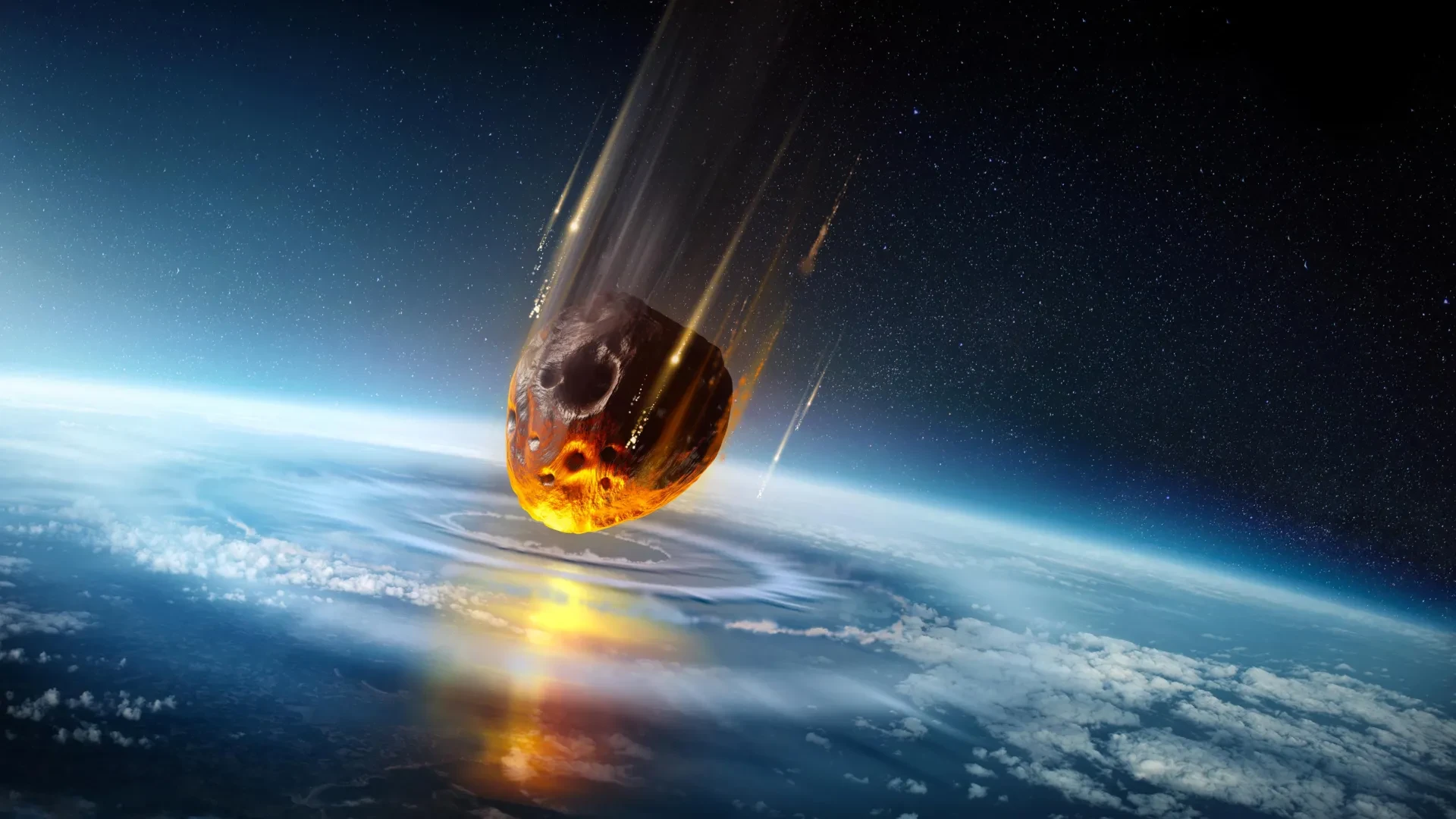
Deep beneath the rolling plains and oil-drilling infrastructure of Ames, Oklahoma, lies a geological titan: a subterranean impact structure stretching miles wide. For decades, this massive circular depression—celebrated as a prolific reservoir for the state’s oil and gas production—held a prominent place in North American paleontology and planetary science. Widely accepted as a hallmark relic of the Ordovician Meteor Event, the Ames crater was believed to be roughly 467.5 million years old, placing it squarely in a hypothesized epoch when Earth may have sported a ring of asteroid debris akin to Saturn’s.
However, a definitive new study conducted by researchers at The University of Texas at Austin (UT Austin) has systematically dismantled this long-standing geological consensus. Through rigorous radiometric dating of microscopic mineral grains, a multidisciplinary research team has revealed that the Ames meteorite impact actually occurred approximately 370 million years ago, during the Late Devonian period. This dramatic recalibration strips the crater of its Ordovician pedigree, making it nearly 100 million years younger than previously assumed.
The ramifications of this discovery extend far beyond a localized dating correction in Oklahoma. By severing the Ames structure from the Middle Ordovician cluster of impacts, scientists must now reevaluate hypotheses regarding ancient asteroid belts that allegedly orbited the primordial Earth. More compellingly, the newly established timeline places the massive extraterrestrial impact dangerously close to the Frasnian-Famennian mass extinction—a catastrophic biotic crisis that wiped out a staggering proportion of marine life approximately 372 million years ago.
Published in the journal Meteoritics & Planetary Science, the findings highlight the vulnerability of relying solely on biological proxies for geological dating and showcase the precision of modern mineralogical techniques. As the scientific community digests this paradigm shift, the study also serves as a poignant posthumous tribute to the researchers who laid its foundational groundwork.
Detailed Chronology: From Ordovician Mystery to Devonian Reality
To understand the magnitude of the UT Austin team’s discovery, one must trace the timeline of how the Ames structure was initially evaluated and why the scientific community accepted its Ordovician assignment for generations.
The Misleading Microfossils of the Ordovician
When the Ames structure was first intensely scrutinized by geologists and energy prospectors—spurred by its immense value as a hydrocarbon producer encased in brecciated granite and carbonate rocks—researchers needed a method to date the cataclysmic event. Lacking advanced radiometric analyses specifically tailored to the shock-altered matrix of the crater in early evaluations, scientists turned to biostratigraphy.
Embedded within the sedimentary layers resting within and above the impact basin were fossilized teeth belonging to conodonts—an extinct, eel-like chordate organism whose microscopic phosphatic remains are standard tools for dating Paleozoic marine rocks. The conodont teeth recovered from the strata intimately associated with the Ames formation consistently pointed to the Middle Ordovician period, roughly 467.5 million years ago.
This dating aligned neatly with a broader temporal pattern across North America and parts of Europe, where numerous impact structures appeared to cluster tightly within this exact window. The statistical anomaly of so many meteorite impacts occurring in such a compressed geological timeframe fueled breathtaking hypotheses. Most notably, some astronomers and geologists suggested that the inner solar system experienced an intense bombardment because Earth had captured an asteroid, tearing it apart via tidal forces to create a temporary, ring-like system of debris.
The Ames crater was treated as a premier data point—a foundational "pawn," in the words of the study’s lead authors—supporting this Ordovician ring hypothesis.
The Breakthrough: Unlocking the Secrets of Zircon
The unraveling of the Ordovician narrative began years ago through an initiative spearheaded by Andrew Parisi, then a graduate student at UT Austin’s Jackson School of Geosciences. Parisi traveled to the Oklahoma Geological Survey to secure critical rock cores extracted from the depths of the Ames structure. Deep within these cores lay altered granite that had borne the brunt of the extraterrestrial collision.
Working alongside faculty, Parisi and his colleagues focused on extracting zircon ($ZrSiO_4$) crystals from the shock-baked rock. Zircon is widely considered the holy grail of geochronology. Because its crystal lattice readily incorporates uranium while firmly rejecting lead during its formation, zircon acts as an atomic clock. By measuring the ratio of uranium isotopes to lead isotopes (U-Pb dating), scientists can determine with astonishing precision when the mineral crystallized or underwent complete resetting due to thermal or shock metamorphism.
When the UT Austin team ran the U-Pb isotopic analyses on the Ames zircons, an unexpected pattern emerged.
"No matter what technique we used, it was coming back to this younger signal," noted Elizabeth Catlos, associate professor in UT’s Department of Earth and Planetary Sciences and lead author of the study.
Repeated testing across multiple samples consistently pointed to an age of approximately 370 million years. The conodont teeth, it turns out, had told a deceptive story. The eel-like creatures had lived during the Ordovician, but their teeth had rested on the seafloor or within older rock formations for tens of millions of years before the asteroid ever struck. When the massive impact event occurred during the Late Devonian, it violently excavated, churned, and mixed the ancient fossilized material into the newly forming impact breccia, perfectly preserving the older fossils while completely resetting the mineral clocks of the basement rocks.
Supporting Context & Metrics: The Science of Shock and Extinction
The revision of the Ames structure’s age is not merely a chronological adjustment; it introduces a high-stakes variable into our understanding of Earth’s catastrophic environmental crises.
The Frasnian-Famennian Extinction Link
By dating the Ames impact to roughly 370 million years ago, the UT Austin team has dropped the crater squarely into the timeline of the Late Devonian epoch. Specifically, this age positions the impact uncomfortably close to the Frasnian-Famennian (F-F) extinction event, which unfolded roughly 372 million years ago.
The F-F extinction is recognized as one of the "Big Five" mass extinction events in Earth’s history. It devastated global ecosystems, particularly warm-water marine environments, leading to the collapse of coral reef ecosystems that would not recover in similar forms for millions of years. For decades, paleoclimatologists and paleontologists have debated the primary drivers of the F-F crisis. Competing theories point to:
- Massive volcanic provinces triggering global anoxia (ocean oxygen depletion) and rapid climate shifts.
- Rapid shifts in plant evolution drawing down atmospheric carbon dioxide and destabilizing global temperatures.
- Extraterrestrial impacts that might have disrupted atmospheric conditions or cast the globe into prolonged darkness.
While the Ames crater was not globally catastrophic on the scale of the Chicxulub impact that ended the age of dinosaurs, confirming its timing near the F-F boundary revitalizes discussions regarding the role of multiple, concurrent stressors—both internal and external—in driving ancient mass extinctions.
Advanced Mineralogical Validation via NASA Collaboration
To ensure that the U-Pb zircon ages genuinely reflected the moment of impact rather than an unrelated thermal overprint, the research team employed cutting-edge microscopy. They partnered with NASA scientists to analyze the internal structures of the zircon crystals using two advanced imaging modalities:
- Cathodoluminescence (CL): This technique uses an electron beam to induce luminescence in minerals, revealing internal zoning, growth patterns, and structural disruptions caused by extreme shock pressures.
- Electron Backscatter Diffraction (EBSD): EBSD maps crystal orientations across microscopic scales, identifying the distinct crystallographic damage and micro-fracturing signature of a hypervelocity impact.
When zircon is subjected to the multi-gigapascal pressures of a meteorite collision, it undergoes characteristic shock deformation and recrystallization. The imaging confirmed that the UT Austin samples bore these unmistakable shock-induced signatures, cementing the validity of the 370-million-year date.
Official Statements and Perspectives
The implications of the study have reverberated across the global geoscience community, drawing commentary from the leading minds at UT Austin’s Jackson School of Geosciences.
Danny Stockli, dean of the Jackson School of Geosciences and co-author of the research, emphasized the methodological power of combining U-Pb geochronology with advanced structural analysis:
"These small crystals allow us to go back in time and learn about the major changes to Earth’s ancient landscapes," Stockli stated. Looking forward, he advocated for a broader application of these techniques: "It would be great to do this for more of the meteor impact sites across the continent so we could get a more accurate timeline for these major events."
Lead author Elizabeth Catlos encapsulated the theoretical disruption caused by their findings regarding the Ordovician Meteor Event and the Devonian extinction puzzle:
"With this research, we’re basically taking a major pawn out of the Ordovician Meteor Event and dumping it into the Frasnian-Famennian event, and saying, ‘This is where this impact belongs.’"
Catlos underscored that establishing ironclad, precise chronologies for mass extinctions and geological anomalies is the only way to resolve the enduring debate over whether Earth’s history is primarily dictated by astronomical forces from above or geological processes from within.
The publication of this study also carries a solemn undertone. The foundational work—obtaining the core samples from the Oklahoma Geological Survey, isolating the microscopic zircons, and pioneering the initial analytical pathways—was initiated by Andrew Parisi, who earned his graduate degree from the Jackson School in 2018. Parisi tragically passed away before the culmination of the project. Additionally, co-author Michael Brookfield, an affiliated researcher at the school, passed away prior to the manuscript’s publication. Their collaborative efforts, alongside contributions from Research Professor Sean Gulick and Professor Emeritus Mark Cloos, culminated in the July publication in Meteoritics & Planetary Science.
Future Outlook: A New Era for North American Impact Cratering
The recalibration of the Ames structure serves as a cautionary tale and a roadmap for modern geology. For years, scientists have leaned heavily on biostratigraphic markers like conodonts and acritarchs to date impact structures buried beneath sedimentary basins. However, as the Ames study demonstrates, the chaos of a meteorite impact routinely entrains older, surviving fossils into younger strata, muddying the chronological waters.
Moving forward, the geochronology community faces a monumental task: re-examining North America’s catalog of impact craters. Many of the structures identified during oil, gas, and mineral exploration campaigns rely on legacy dating methods that are vulnerable to the exact pitfall that masked the Ames crater for decades.
By applying rigorous U-Pb zircon dating, coupled with NASA-backed shock-deformation imaging, researchers now possess the toolkit required to construct an unassailable, high-resolution timeline of Earth’s bombardment history. As more impact craters undergo this rigorous re-evaluation, scientists anticipate further shifts in the geologic timeline—reallocating ancient impacts, refining the pacing of mass extinctions, and ultimately providing a clearer picture of how extraterrestrial collisions have continually shaped the trajectory of life on our planet.