

Executive Overview
The collapse of trade negotiations between Washington and Ottawa in late August 2026 marks a profound, historic inflection point in North American relations. Canadian Prime Minister Mark Carney’s decisive walkout from high-stakes talks—prompted by sweeping U.S. tariff threats and unprecedented incursions into Canadian domestic policy—has plunged the two neighbors into an economic confrontation. At the core of this crisis is the Trump administration’s aggressive enforcement of the "Trump Corollary to the Monroe Doctrine" (widely dubbed the "Donroe Doctrine"). Formalized in late 2025, this geopolitical framework asserts unilateral American hegemony across the Western Hemisphere, viewing traditional neighbors not as sovereign equals, but as strategic assets subject to U.S. economic and political subordination.
For Prime Minister Carney, who warned of a "rupture" in the post-WWII international order during his landmark address at the World Economic Forum in Davos earlier this year, this is not merely a dispute over ledgers and trade imbalances. It is an existential struggle for national autonomy. By absorbing the shock of looming 50% tariffs and rejecting sweeping U.S. demands regarding foreign trade pacts and cultural digital mandates, Carney has put his nation’s economic stability on the line. As the international community watches an increasingly isolated Washington wage simultaneous, self-inflicted conflicts on multiple fronts—from the volatile Middle East to the Arctic and the Canadian border—this article examines the escalation, the doctrine driving it, and the high-stakes gamble facing Ottawa.
Detailed Chronology: From Davos Warnings to the Ottawa Rupture
The path to the August 2026 trade rupture was paved over months of escalating diplomatic tension, shifting security doctrines, and broken diplomatic frameworks.
- January 2026: Speaking at the World Economic Forum in Davos, Switzerland, newly established Canadian Prime Minister Mark Carney delivers a seminal address warning that the post-war rules-based economic order has been fundamentally shattered. Introducing the concept of "middle powers" needing to band together, Carney explicitly condemns how great powers have begun "using economic integration as weapons," noting that supply chains and financial infrastructure are being weaponized for coercion.
- February 2026: A brief diplomatic window opens regarding Iran, led by U.S. special envoy Steve Witkoff. While some experts spot the framework for a viable non-proliferation agreement, negotiations abruptly dissolve. The U.S. and Israel initiate a military bombing campaign against Iran two days later, instantly diverting Washington’s primary focus toward a costly Middle Eastern conflict.
- Spring 2026: Despite the Middle East distraction, the U.S. administration continues to ramp up pressure within its own hemisphere. Preceding Carney’s warnings, outgoing Prime Minister Justin Trudeau had alerted labor and business leaders that the Trump administration viewed Canada’s vast mineral and resource wealth as ripe for absorption. Simultaneously, European allies express alarm over U.S. threats to annex Greenland for its rare earth elements, prompting NATO to dispatch protective contingents to the island nation.
- August 2026: Following months of eroded trust and the effective dismantling of the United States-Mexico-Canada Agreement (USMCA), Ottawa and Washington enter a final, desperate round of trade talks to avert catastrophe.
- August 22, 2026: Trade talks completely implode in Ottawa. Despite reports that a tentative framework had been reached, the White House issues unnegotiable, eleventh-hour demands. These include stripping Canada of its right to pursue independent trade agreements with third-party nations and forcing domestic policy reversals on Canadian cultural inclusion and digital streaming requirements.
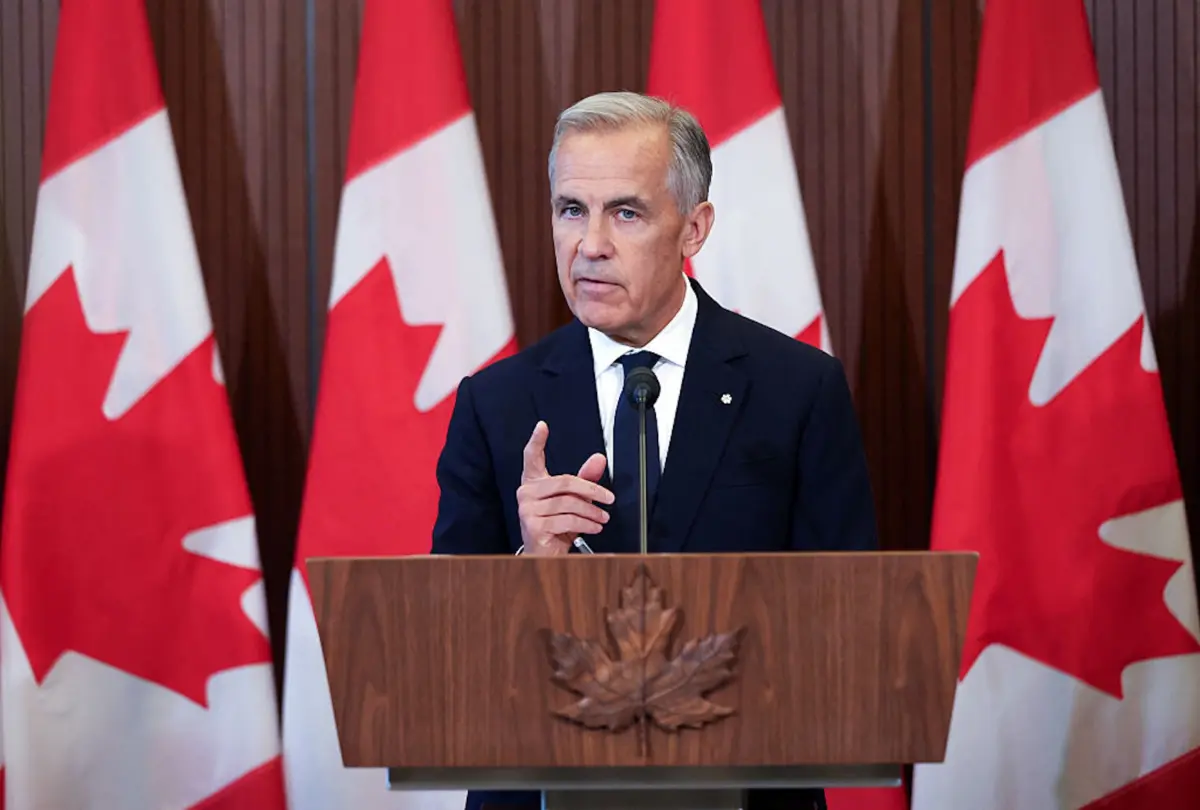
- August 25, 2026: Prime Minister Carney holds a tense press conference in Ottawa, announcing that Canada will refuse submission. President Donald Trump responds by declaring sweeping 50% tariffs on Canadian imports, setting the stage for a bitter, protracted economic war.
Supporting Context & Metrics: The "Donroe Doctrine" and Economic Realities
To understand why Canada’s leadership chose economic pain over compliance, one must examine the legal and strategic architecture codified by Washington in December 2025.
The Evolution of the "Donroe Doctrine"
The 2025 National Security Strategy, formally titled Western Hemisphere: The Trump Corollary to the Monroe Doctrine, radically expanded the 1823 doctrine authored by President James Monroe. While the original Monroe Doctrine sought merely to prevent European re-colonization of the Americas, the "Donroe Doctrine" asserts an explicit, interventionist right of American dominance over the internal affairs, natural resources, and trade policies of Western Hemisphere nations.
Initially marketed to the American public as a counterweight to rising Chinese economic influence in Latin America and the Caribbean, the doctrine quickly morphed into a blunt instrument of regional subordination. Through provocative actions—including naval strikes against vessels in the Caribbean and overt threats against Greenland and Canada—the administration signaled that geographic proximity to the United States now carries the mandatory forfeiture of absolute sovereignty.
Economic Exposure and Vulnerability
The economic stakes for Canada are severe:
- Trade Dependency: Over 75% of Canadian merchandise exports traditionally head south to the United States, making the Canadian economy deeply integrated with its southern neighbor.
- The 50% Tariff Shock: Economists warn that a permanent 50% tariff regime would trigger deep recessions in manufacturing-heavy provinces, disrupt cross-border supply chains in the automotive and energy sectors, and cause immediate inflationary pressures.
- Resource Wealth: The primary driver behind Washington’s aggressive posture remains Canada’s immense natural capital—specifically critical minerals, rare earths, clean hydroelectric power, and vast fresh water reserves essential for next-generation technological infrastructure.
Despite these terrifying economic metrics, Prime Minister Carney’s gamble rests on the calculation that absolute economic integration under terms of subjugation ultimately destroys a nation from within. By calling the administration’s bluff, Ottawa is betting that domestic political fatigue within the United States—weary of foreign entanglements, inflation, and international pariah status—will ultimately constrain Washington’s capacity to sustain a two-front economic and military crusade.
Official Statements and Rhetoric
The ideological fault lines of this crisis were laid bare in the impassioned public statements issued by both capitals as the negotiations disintegrated.
-
Prime Minister Mark Carney, addressing the collapse of trade talks (Ottawa, August 22, 2026):
"Last spring, I warned that America is trying to break us so that they can own us. And I promised: ‘That will never, ever happen.’ We are keeping that promise."
When pressed by a bewildered journalist on whether Canada felt it was entering a state of actual war with its oldest ally and trading partner, Carney did not hesitate:
"You’re at war when you get attacked. We got attacked."
-
President Donald Trump, defending the administration’s regional posture and tariff mandates (Washington, August 2026):
"Under the Trump administration, we are reasserting American power in a very powerful way in our home region. To the victor go the spoils."
Political analysts have noted the stark contrast in tone. While Washington frames its demands through the transactional, zero-sum lens of 19th-century imperial expansionism, Ottawa has successfully galvanized its populace by casting the resistance not as an economic squabble, but as a defense of democratic self-determination against neo-imperial coercion.
Future Outlook: A Precarious Crossroads for North America
As the dust settles on the initial salvo of the August 2026 trade war, the trajectory of U.S.-Canadian relations—and by extension, the stability of the Western Hemisphere—remains deeply uncertain.
Several distinct scenarios loom on the horizon:
- The Temporary Ceasefire: It is entirely possible that severe market corrections, mounting pressure from American industrial lobbies (particularly U.S. auto-makers and agricultural exporters reliant on northern supply chains), and congressional pushback could force the White House back to the negotiating table. However, as Carney and his cabinet recognize, any treaty negotiated under the current ideological framework would likely serve as a temporary pause before the next round of coercion.
- The Middle Power Coalition: Accelerating on the vision Carney outlined in Davos, Canada is actively strengthening diplomatic and trade corridors with European allies, the United Kingdom, and Pacific democracies. By diversifying its trade portfolio away from total reliance on the American market, Ottawa hopes to insulate itself from future unilateral shocks.
- Deepening American Isolation: On the global stage, Washington’s simultaneous miscalculations—the quagmire in the Middle East, aggressive posturing in the Caribbean, and now an open trade war with its closest and most culturally aligned neighbor—have accelerated its diplomatic isolation. Analysts suggest that treating long-standing allies as vassal states is eroding the soft power that underpinned American global leadership for nearly a century.
For now, the battle lines are drawn. Mark Carney has chosen to put his country’s immediate economic prosperity on the line to preserve its long-term dignity and autonomy. Whether the American public and its political institutions will tolerate an avoidable, self-destructive war with their northern neighbor will determine whether North America enters a dark era of regional hegemony or returns to a foundation of mutual respect and sovereign equality.