

Executive Overview
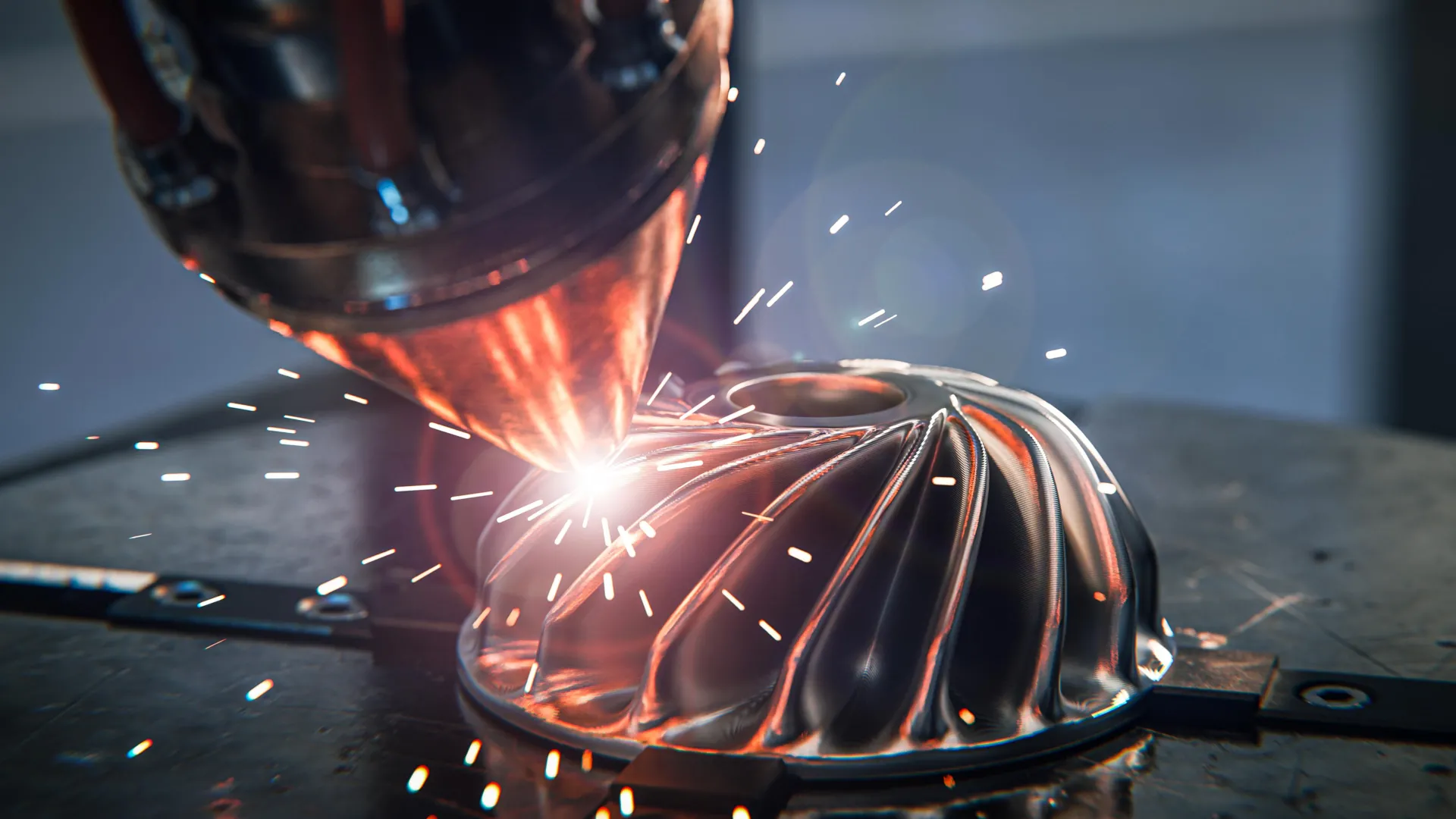
In a breakthrough that bridges the gap between high-end aerospace engineering and accessible commercial manufacturing, a multidisciplinary research team at Washington State University (WSU) has successfully deployed artificial intelligence to solve a critical materials science bottleneck. By designing a sophisticated machine learning framework, the WSU researchers bypassed the need to manually test more than 100 million potential printing configurations, rapidly identifying a viable, low-power method to 3D print GRCop-42—a high-performance copper-chromium-niobium alloy originally developed by NASA for extreme thermal environments.
The implications of this breakthrough extend far beyond a single alloy. Historically, manufacturing components from GRCop-42 required specialized, high-power laser equipment that is unavailable in roughly 90% of commercial 3D printing facilities. By discovering how to reliably process the material at lower wattages (including a landmark successful print at just 500 watts), the WSU team has effectively democratized the production of a critical space-flight material.
Furthermore, the underlying AI methodology provides a blueprint for tackling other intractable optimization problems across scientific disciplines. In fields where experimental spaces span tens or hundreds of millions of variables, and where every physical test incurs substantial financial, material, and temporal costs—such as pharmaceutical drug discovery or advanced materials synthesis—this active-learning approach offers a viable path forward. This remarkable achievement was recognized at the highest levels of the computer science community, earning the prestigious Innovative Deployed Application Award at the annual AAAI Conference on Artificial Intelligence, alongside publication in the conference’s official proceedings.
Detailed Chronology: From Intractable Problem to AI Breakthrough
The genesis of this research lies in the frustrating physical limitations of additive manufacturing. When attempting to 3D print advanced alloys, engineers face a hyper-dimensional search space of process parameters. Variables such as laser power, scanning speed, hatch spacing, and layer thickness can be modulated in countless combinations. For GRCop-42, the total number of plausible configuration permutations exceeded 100 million.
The Traditional Trial-and-Error Dead End
Before the intervention of the WSU computer science department, researchers in the School of Mechanical and Materials Engineering hit a brick wall. Printing GRCop-42 typically demands immense laser power and thermal energy. Previous attempts to scale down the process to the modest wattages found on standard, commercially available 3D printers resulted in catastrophic failures. Often, the material failed to fuse correctly, or the input energy was so mismanaged that the printed geometry simply melted into a ruined puddle of metal.
Manually iterating through the 100 million possibilities was recognized as an impossible endeavor. Each physical print consumed expensive feedstock materials, locked up specialized machinery, and required intense human oversight. A single build could easily cost hundreds of dollars in materials and machine time, followed by days of metallurgical analysis and post-processing. As doctoral student and lead paper author Azza Fadhel noted, even with infinite patience and deep pockets, the human race could never exhaustively test 100 million options manually.
The Machine Learning Pivot
Recognizing that brute-force experimentation was a dead end, the WSU team—led by Jana Doppa, Huie-Rogers Endowed Chair Professor of Computer Science and Berry Distinguished Professor in Engineering—decided to reframe the manufacturing challenge as a computational optimization problem.
The project kicked off using a modest baseline: historical failure data from 37 prior, unsuccessful printing configurations generated within WSU’s materials science labs. Rather than viewing these failures as wasted effort, the AI researchers treated them as valuable data points that defined the boundaries of what not to do.
Doppa and Fadhel collaborated with materials scientists Nathaniel Zuckschwerdt, Susmita Bose, and Amit Bandyopadhyay, alongside Aryan Deshwal from the University of Minnesota, to build an iterative, AI-driven active learning loop.
- Model Training: The AI model ingested the initial failure data and learned to map the complex, non-linear relationships between printing parameters and structural integrity.
- Uncertainty Estimation: The algorithm developed the capacity to evaluate untested combinations of settings and predict the mathematical probability of a successful print.
- Strategic Selection: Instead of blindly trusting the model’s highest-probability predictions, the AI balanced two competing priorities: exploiting areas of the search space that looked promising, and exploring highly uncertain zones to gather maximum information and refine the underlying model.
- Physical Execution: The mechanical engineering team took the AI’s curated batch of candidate configurations, executed the physical prints, and evaluated the results.
- Continuous Feedback: Every physical outcome—whether a catastrophic melt or a promising structure—was fed straight back into the algorithm. As Fadhel remarked, every failure was welcomed because it actively sharpened the predictive accuracy of the model.
Over a compressed timeline of just three months, and strictly limiting the project to a total of 40 physical experiments, the AI-guided strategy successfully identified six viable printing configurations across varying laser power levels. Most notably, for the first time in additive manufacturing literature, GRCop-42 was successfully printed using a modest 500-watt laser.
Supporting Context & Metrics
To fully understand the magnitude of this breakthrough, one must examine the metallurgical properties of GRCop-42 and the immense economic and technical barriers it has historically presented to the manufacturing sector.
NASA’s GRCop-42: Engineered for the Inferno
Developed by the National Aeronautics and Space Administration (NASA), GRCop-42 is a specialized copper-chromium-niobium alloy ($Cu-4Cr-2Nb$). It was explicitly engineered to survive the most punishing thermal environments known to engineering: the interior combustion chambers of liquid-fuel rocket engines.
+--------------------------------------------------------------------------+
|                        GRCop-42 Core Properties                          |
+---------------------------+----------------------------------------------+
| Primary Composition       | Copper (Cu), Chromium (Cr), Niobium (Nb)     |
| Defining Characteristic   | High thermal conductivity + Extreme strength |
| Primary Aerospace Use     | Liquid rocket engine combustion chambers     |
| Traditional Manufacturing | Requires high-power, specialized lasers      |
+---------------------------+----------------------------------------------+
In a rocket engine, combustion temperatures can easily exceed 3,000 degrees Fahrenheit. The walls of the combustion chamber must transfer heat away from the interior with extreme efficiency to prevent the metal from melting, while simultaneously retaining enough mechanical tensile strength under high pressures to prevent structural rupture. GRCop-42 achieves this delicate balance through a finely dispersed distribution of strengthening precipitates ($textCr_2textNb$) within a high-conductivity copper matrix.
However, the very properties that make GRCop-42 a dream material for aerospace engineers make it a nightmare for traditional 3D printing equipment. Copper alloys possess exceptionally high thermal and optical reflectivity, meaning they reflect standard laser wavelengths rather than absorbing the energy required to melt and fuse the powder particles. Overcoming this reflectivity has historically required massive, expensive high-power laser systems.
The Metrics of Success
The efficiency gains achieved by the WSU research team rewrite the traditional economics of materials discovery:
- Search Space Reductions: Navigated >100,000,000 potential printing configurations.
- Experiment Economy: Achieved breakthroughs in just 40 total physical experiments over 3 months.
- Yield Efficiency: Discovered 6 distinct, highly successful printing configurations across various power bands.
- Power Threshold Breakthrough: Successfully executed the first-ever 3D print of GRCop-42 using a standard 500-watt laser, unlocking compatibility with approximately 90% of commercial printers.
By drastically lowering the required energy threshold, the WSU framework eliminates the need for expensive post-processing equipment, reduces operational wear and tear on machinery, and slashes energy consumption during the manufacturing phase.
Official Statements and Expert Perspectives
The intersection of artificial intelligence and physical metallurgy requires a delicate fusion of disciplines. The success of the WSU project is a testament to effective cross-departmental collaboration between computer scientists and materials engineers.
Reflecting on the democratization of the technology, lead researcher Jana Doppa emphasized the commercial and industrial accessibility unlocked by the team’s work:
"Ninety percent of commercial printers cannot print this metal alloy, so given that we were able to find these feasible process parameters, it allows us to use those commercial printers, and we are essentially democratizing the printing of this alloy."
Doppa also reflected on the inherent anxiety of deploying predictive algorithms into physical environments where financial and material stakes are genuine:
"There’s always uncertainty when you are deploying something where real people, materials, and physical costs are involved. We didn’t know whether we would succeed or not, and there is always that risk. There are real stakes. I was very surprised that we were able to do this so well."
Addressing the severe mathematical challenge posed by the search space, Doppa highlighted the binary nature of the feedback loop:
"It’s a very challenging case for AI. Every time you try, you basically get a binary success or failure signal, and you are trying to minimize the number of tries that you have so that you get to those successful needles very quickly."
Azza Fadhel, the computer science PhD student and first author of the research paper, detailed the practical realities of exploring the massive search space:
"Sometimes they printed a certain configuration, and the product just melted. It wasn’t really printable, and even with time and money, they wouldn’t be able to try all 100 million options. What we were doing in our collaboration is to apply the AI so that we efficiently choose candidates from this very large search space."
Fadhel also highlighted the symbiotic relationship between the computational modeling team and the physical testing laboratory led by Nathaniel Zuckschwerdt, Susmita Bose, and Amit Bandyopadhyay:
"They would give me back the results, and I liked all of them—even if they failed—because every result improved our AI model."
Future Outlook and Broader Scientific Implications
The successful synthesis of GRCop-42 using low-power commercial 3D printers marks an inflection point for advanced manufacturing, but the methodology’s true legacy may lie in its universality.
Expanding Additive Manufacturing Horizons
In the immediate term, the WSU team’s AI framework opens the door for smaller enterprises, academic institutions, and regional laboratories to experiment with and deploy NASA-grade materials. Historically, aerospace prototyping was restricted to heavily capitalized prime contractors with dedicated, custom-built high-power additive manufacturing cells. By proving that machine learning can safely and rapidly optimize parameters for legacy commercial hardware, WSU has paved the way for decentralized, agile aerospace manufacturing.
The researchers are already looking toward the next phase of development. They aim to adapt their AI-guided active learning framework to identify workable processing conditions for other notoriously difficult-to-print metal alloys, such as specialized superalloys and refractory metals used in hypersonic flight and nuclear energy applications.
Beyond Manufacturing: Revolutionizing Scientific Discovery
On a macro-scientific scale, the underlying algorithmic structure developed by Doppa and Fadhel offers a blueprint for solving complex optimization challenges where traditional experimentation fails due to cost, time, or physical constraints.
In fields such as pharmaceutical drug discovery, researchers routinely face combinatorial search spaces containing billions of molecular variations. Similarly, in quantum computing and advanced chemistry, testing every permutation of experimental variables is physically impossible. The active-learning strategy—which treats failure as rich data, balances exploration against exploitation, and operates under strict constraints of limited physical trials—provides a robust template for accelerated discovery.
As artificial intelligence continues to mature, projects like the WSU GRCop-42 initiative demonstrate that the most profound technological leaps occur when computational intelligence is harnessed not to replace human ingenuity, but to intelligently navigate the physical constraints of the real world.
