

Executive Overview
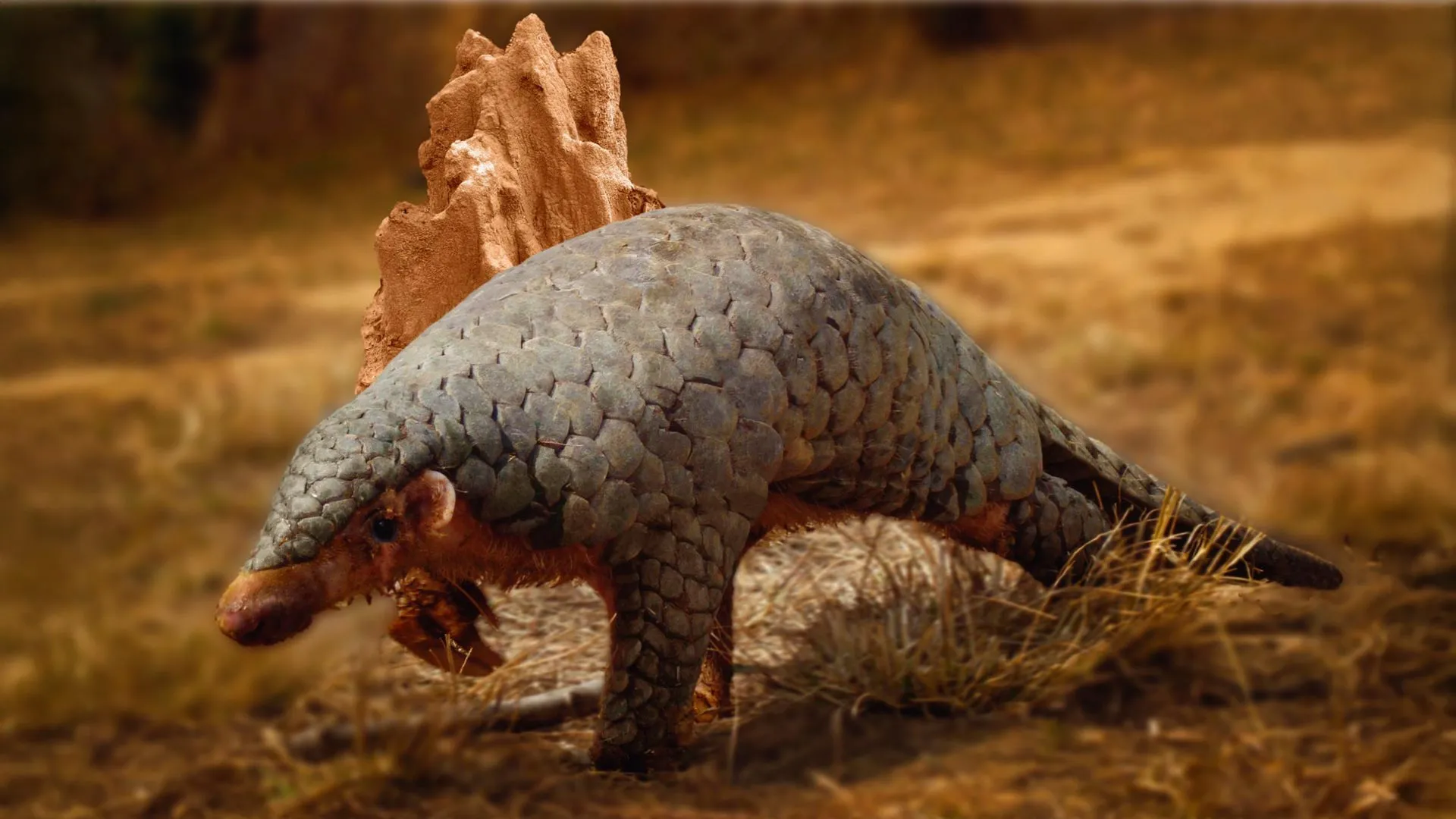
Pangolins, often described as walking pinecones due to their overlapping keratin scales, occupy a unique and ancient branch of the mammalian tree of life. Found exclusively across the tropical and subtropical landscapes of Africa and Asia, these solitary, insectivorous creatures possess powerful curved claws for tearing open termite mounds and prehensile tails that lend them a distinctly prehistoric appearance. Yet, this ancient lineage faces an unprecedented modern crisis. Highly coveted on the black market for their scales—falsely believed in some traditional medicine practices to possess medicinal or aphrodisiac properties—pangolins have earned the grim distinction of being the most heavily trafficked mammals on Earth.
Amidst this relentless poaching pressure, conservation efforts have long been hampered by a fundamental scientific hurdle: taxonomic confusion. For decades, conservationists, wildlife forensic scientists, and border authorities struggled to protect animals whose exact species boundaries, geographic ranges, and evolutionary relationships were poorly understood.
Now, in a landmark study published in the journal Communications Biology, an international team of researchers has confirmed the existence and validity of a long-overlooked Asian pangolin species: Manis aurita. Ranging across the rugged Himalayan foothills of Nepal and Northern India, this mountain-dwelling creature was hidden in plain sight, misidentified, and shuffled through taxonomic classifications for nearly two centuries.
The breakthrough was achieved by extracting and sequencing DNA from a historic 190-year-old type specimen housed in the Natural History Museum in London. This genetic detective work solved a complex scientific puzzle, clarified the relationship between regional populations, and established the correct historical nomenclature for the animal. Beyond academic taxonomy, this discovery provides a powerful, actionable weapon in the global war against wildlife trafficking. By equipping law enforcement agencies with precise genetic markers and clear morphological distinctions, conservationists can now trace confiscated contraband back to its geographic source, revolutionizing anti-poaching operations and ensuring that captive-breeding and reintroduction initiatives are scientifically sound.
Detailed Chronology: Unraveling a Century-Old Taxonomic Mystery
The road to confirming Manis aurita as a distinct, valid species spans nearly two centuries, drawing together nineteenth-century natural history collections and twenty-first-century genomic technology.
1836: The Initial Description
The trail began in the 1830s. Naturalists cataloging the diverse fauna of the Himalayas originally described a unique pangolin specimen from Nepal, assigning it the scientific name Manis aurita. In the decades that followed, however, as scientific frameworks evolved and specimen data became decentralized, this designation was systematically stripped of its species status. Eventually, M. aurita was reclassified merely as a subspecies of the broader Chinese pangolin (Manis pentadactyla), effectively erasing it as a distinct evolutionary entity on contemporary checklists. For generations, regional pangolins spanning the Himalayas and southern China were lumped together under broad taxonomic umbrellas, masking underlying biodiversity.
2015–2020: The Decade-Long Investigation Begins
Independently, a coalition of evolutionary biologists, molecular ecologists, and museum curators embarked on a comprehensive, decade-long investigation into pangolin evolution. Led by institutions including the Field Museum in Chicago, the South China Biodiversity Research Center at Guangzhou University, and the Guangdong Academy of Forestry, the team sought to untangle the convoluted pangolin family tree.
Parallel to this, field researchers in Nepal—including Narayan Koju of Nepal Engineering College at Pokhara University—began documenting localized morphological and ecological evidence. Their field studies suggested that Himalayan pangolins possessed distinct traits that did not neatly align with standard definitions of Chinese pangolins, hinting at a separate evolutionary lineage.
2025: The Indoburmanica Turning Point
The scientific consensus shifted dramatically in early 2025. A separate research team published findings demonstrating that animals previously grouped together under the umbrella of the Chinese pangolin actually represented two distinct species. One population occurred primarily within China proper, while the second inhabited the Himalayan foothills, stretching across parts of Nepal, India, Bhutan, and Myanmar. The researchers formally named this mountain-dwelling lineage Manis indoburmanica, or the Indo-Burmese pangolin.
While this study was a major step forward, it created a complex taxonomic riddle. Under the stringent rules of biological nomenclature, the principle of priority dictates that if a single species has been given multiple scientific names throughout history, the earliest valid name must take precedence.
The London Museum Breakthrough
Recognizing this regulatory hurdle, Anderson Feijó and his colleagues accelerated their ongoing genomic investigation. They realized they needed to compare the newly proposed Manis indoburmanica samples against the forgotten historical records of Manis aurita from 1836.
The ultimate turning point occurred at the Natural History Museum in London. Accessing the historic type specimen of the Nepalese subspecies (aurita), which had rested in the museum’s archives for nearly 190 years, a specialized team extracted and successfully sequenced ancient DNA directly from the century-old biological material.
When the genetic profile of the 1836 London specimen was compared against modern Himalayan pangolin samples, the results were unequivocal. The modern Himalayan pangolins—temporarily classified as M. indoburmanica in 2025—genetically matched the historical aurita specimens. Consequently, under the rules of biological priority, Manis aurita was reinstated as the correct, legally binding scientific name for the Himalayan pangolin.
Supporting Context & Metrics: Morphology, Geography, and Forensics
To understand the conservation significance of validating Manis aurita, one must examine how it differs from its close relative, the Chinese pangolin (Manis pentadactyla), and why these differences matter on the ground.
Physical and Ecological Distinctions
While sharing superficial resemblances due to their shared evolutionary ancestry, Manis aurita and the Chinese pangolin possess distinct anatomical divergences shaped by their respective environments:
- Body Size: The Himalayan pangolin (M. aurita) generally boasts a larger, more robust overall body structure than its Chinese counterpart.
- Tail Length: M. aurita features a noticeably longer tail, an adaptation that may assist with balance and navigation across steep, mountainous terrain.
- Ear Morphology: The revived species name aurita directly references the animal’s distinct ears. Compared to the Chinese pangolin, M. aurita possesses smaller, less prominent ears—a subtle yet vital diagnostic feature for trained researchers and field biologists.
- Geographic Isolation: Crucially, field data and genetic mapping indicate that the known ranges of M. aurita and the Chinese pangolin do not overlap. M. aurita is strictly bound to the elevated Himalayan foothills of Nepal, Northern India, Bhutan, and Myanmar, whereas the Chinese pangolin occupies lower-altitude and more easterly domains.
The Scale Crisis and Wildlife Forensics
The illegal wildlife trade operates largely out of sight, capitalizing on porous borders and high-value black-market demand. Pangolins are hunted primarily for their keratin scales, which are smuggled in massive quantities across international borders to supply illicit traditional medicine networks.
For law enforcement officers and customs inspectors intercepting illegal shipments, battling this trade has historically been an uphill battle. Seizures almost exclusively yield sacks of loose, dried scales rather than intact, identifiable carcasses. Without the head, limbs, or distinctive bodily proportions, identifying the exact species—let alone the precise geographic origin of the poached animals—was nearly impossible.
The validation of Manis aurita provides a crucial missing link for wildlife forensics. By establishing clear genetic signatures for M. aurita versus other Asian pangolin species, conservation geneticists can now analyze confiscated scale shipments in forensic laboratories. By running DNA assays on seized material, authorities can determine with pinpoint accuracy whether a batch of scales originated from the Himalayan foothills, southern China, or Southeast Asia. This intelligence allows enforcement agencies to map trafficking routes, identify high-intensity poaching hotspots, and dismantle criminal syndicates at their source.
Official Statements from Leading Researchers
The multi-institutional collaboration behind the discovery underscores the global nature of modern conservation science. Key leaders in the study emphasize both the academic triumph and the urgent conservation utility of their findings:
"We can’t protect what we do not know, and now that we have confirmed that this other species of pangolin exists, we can use that information to help protect these endangered animals."
— Anderson Feijó, Negaunee Assistant Curator of Mammals at the Field Museum and co-corresponding author of the study."This finding marks the culmination of more than five years of research that began in Nepal, where we first documented evidence suggesting that Himalayan pangolins represented a distinct evolutionary lineage. The confirmation of Manis aurita as a valid species demonstrates the importance of long-term research, international collaboration, and museum collections. Most importantly, it provides a strong scientific basis for conservation planning, wildlife forensics, and efforts to protect one of the world’s most trafficked mammals from extinction."
— Narayan Koju, Researcher at Nepal Engineering College, Pokhara University, and first author of the study."This left us with a core taxonomic riddle: what is the relationship between indoburmanica and aurita? Are they the same species or different species? The ultimate, most thrilling piece of the puzzle came from the Natural History Museum in London. Thanks to their incredible expertise and assistance, the NHM team successfully sequenced the DNA directly from the historical type specimen of the Nepalese subspecies (aurita). This specimen dates back to 1836, making it nearly 190 years old."
— Kai He, Co-corresponding author and researcher at the South China Biodiversity Research Center, Guangzhou University."This taxonomic clarification provides a crucial scientific basis for combating illegal poaching and lays the groundwork for protecting this cryptic endangered species."
— Yan Hua, Co-corresponding author and researcher at the Guangdong Academy of Forestry.
Future Outlook: Implications for Global Conservation
The formal re-establishment of Manis aurita charts a clear, scientifically rigorous pathway forward for global pangolin conservation. As wildlife authorities and conservationists integrate these findings into strategic frameworks, several key areas of impact emerge:
1. Revolutionizing Reintroduction Protocols
Conservation breeding and reintroduction programs—designed to restore depleted populations to native habitats—rely heavily on ecological precision. Historically, a lack of taxonomic clarity meant that conservationists occasionally faced the risk of releasing mismatched species into fragile local ecosystems (such as introducing Chinese pangolins into historical Himalayan habitats). By definitively mapping out the geographic boundaries and physiological adaptations of M. aurita, conservation managers can ensure that future reintroduction initiatives strictly match native species to their correct ancestral ranges.
2. Upgrading Border Security and Anti-Trafficking Strategies
Interagency cooperation between national wildlife authorities, INTERPOL, and customs departments will benefit immediately from the genetic profiling methodologies validated in this study. As forensic labs adopt these DNA-based identification tools, border control checkpoints will transition from guesswork to precision enforcement. Knowing where pangolins are being harvested transforms reactive enforcement into proactive disruption, enabling law enforcement to target the specific criminal networks operating within the Himalayan foothills.
3. The Indispensable Value of Natural History Archives
Perhaps one of the most profound takeaways from the Manis aurita study is a renewed appreciation for natural history museums. In an era where funding frequently flows toward high-tech, field-based ecological monitoring, this research highlights that museums are not merely passive storehouses of the past; they are active, dynamic vaults of irreplaceable biodiversity data.
Because wild pangolin populations are elusive, heavily depleted, and exceedingly difficult to sample in their natural forest habitats today, relying solely on fresh field specimens would have severely constrained the researchers’ scope. By unlocking the genomic secrets held within a 190-year-old museum specimen, scientists were able to bridge a century of scientific oversight.
As conservationists race against the clock to protect the world’s remaining pangolin species from the brink of extinction, the lesson of Manis aurita is clear: preserving our past in museum archives is vital to securing a future for the planet’s most vulnerable wildlife.