

Executive Overview
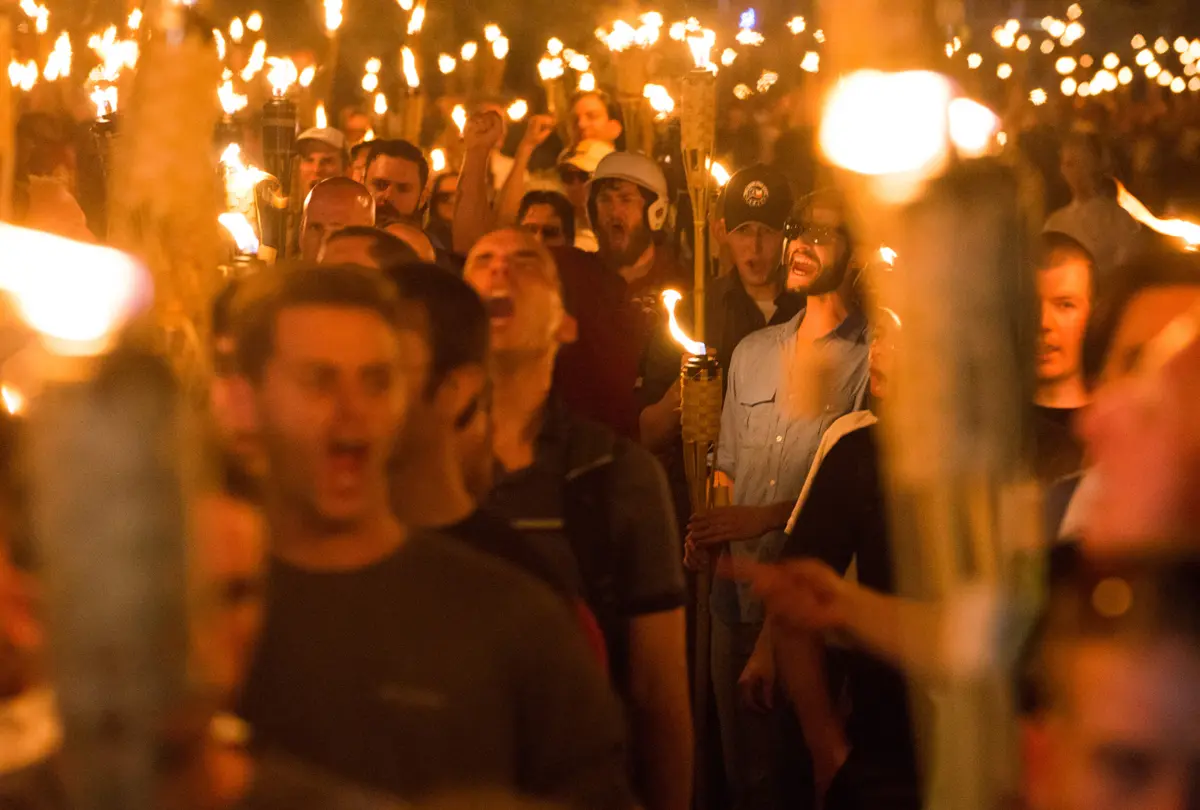
Nine years after the harrowing events of the "Unite the Right" rally in Charlottesville, Virginia—where torch-bearing white nationalists chanted echoes of European fascist movements—the ideological architecture of the American right has undergone a radical transformation. What was once relegated to the fringe margins of the political spectrum has increasingly bled into mainstream conservative thought.
At the vanguard of this ideological shift is Vice President JD Vance, whose rhetoric frequently rejects America’s foundational identity as a "creedal nation" defined by universal ideals. Instead, Vance and his ideological allies advance a vision of the United States rooted in shared ancestry, ancestral homelands, and ethnic continuity—a concept closely aligned with European völkisch movements.
This commentary examines how the doctrine of nativism has taken root within modern American politics, tracing its historical roots, its manifestations in contemporary public policy, the internal contradictions of the "Heritage American" framework, and the broader institutional battles—ranging from state-level voting restrictions to Supreme Court jurisprudence—that will determine the future of American citizenship.
Detailed Chronology: From Charlottesville to the Mainstream
To understand the current political landscape, one must trace the evolution of nationalist rhetoric over the past decade.
- August 11–12, 2017: The "Unite the Right" rally in Charlottesville, Virginia, brings extremist factions into the public eye. Marchers carrying tiki torches chant "Jews will not replace us" and "Blood and soil!"—phrases directly imported from Nazi Germany’s agrarian nationalist rhetoric. The weekend culminates in tragedy when a counterprotester, Heather Heyer, is killed after an extremist drives his car into a crowd.
- The Post-2017 Realignment: Rather than being permanently ostracized, the underlying racial and cultural grievances driving the alt-right gradually migrate into mainstream conservative discourse. Concepts regarding demographic anxiety and cultural preservation find a comfortable home within populist political movements.
- July 2024: During his address accepting the vice-presidential nomination at the Republican National Convention, JD Vance lays out a worldview centered on the concept of the homeland. Referencing his family’s cemetery in Eastern Kentucky, Vance declares, "America is not just an idea. It is a group of people with a shared history… That is our homeland. People will not fight for abstraction, but they will fight for their home."
- 2025–2026: The intellectual framework of the online right coalesces around the term "Heritage American"—the notion that true belonging is tied to ancestral lineage stretching back to early colonial Anglo-Protestant and Scotch-Irish settlers. Concurrently, red-state legislatures begin introducing bills designed to restrict naturalized citizens from holding high public office, testing the boundaries of constitutional equality.
- Mid-2026: The Supreme Court navigates contentious questions surrounding citizenship and constitutional rights. Meanwhile, public figures like Justice Neil Gorsuch publicly reaffirm the traditional view of America as a "creedal nation," sparking immediate backlash from proponents of the Heritage American doctrine.
Supporting Context & Metrics: The Myth of the Monocultural Republic
The "Heritage American" narrative relies on a fundamental misreading—or outright revision—of United States history. Proponents of this doctrine argue that the nation was established as a homogenous, ethno-cultural entity whose preservation requires guarding against demographic change. However, preeminent historians of the American founding paint a starkly different picture.
The Reality of the Founding Era
As the late historian Gordon Wood documented extensively, the United States was never built on a uniform bloodline. Even at the nation’s founding, the population was remarkably diverse for its era. Alongside settlers of various European nationalities, the early American republic included:
- Approximately 750,000 individuals of African descent, the vast majority of whom were enslaved.
- Numerous Native American nations whose ancestral ties to the land predated European colonization by millennia.
- Diverse religious, linguistic, and cultural communities scattered across the thirteen colonies.
Because the founders lacked a singular ethnic or religious lineage, they could not define the nation through traditional European models of shared ancestry. Instead, they forged a republic anchored in political abstractions: the principles articulated in the Declaration of Independence and operationalized through the Constitution and the Bill of Rights. As Wood famously observed, America is uniquely organized not around being "someone," but around believing in "something."
The Ideological Pivot: "Abstractions" vs. "Homeland"
When JD Vance asserts that "people will not fight for abstraction," he dismisses the core motivation that has driven American military service and civic sacrifice for centuries. Millions of Americans—including generations who fought in World War I and World War II on foreign soil—risked and lost their lives not to protect a specific mountain range or ancestral burial plot, but to defend democratic ideals against totalitarian aggression.
By framing patriotism exclusively through the lens of land and lineage, the modern nativist movement attempts to redefine the American experiment. It replaces the universal promise of the Declaration of Independence—that "all men are created equal"—with a restrictive club whose membership is determined by pedigree.
Official Statements and Juridical Tensions
The ideological battle over the definition of American identity has spilled over into the highest levels of the federal judiciary and legislative bodies.
Justice Gorsuch and the "Creedal Nation" Debate
During a public tour promoting his literary work, Supreme Court Justice Neil Gorsuch addressed the foundational principles of the United States. Confronted by questions regarding the ideological direction of the country, Gorsuch offered a defense of the traditional constitutional order:
"Our nation is not founded on a religion. It’s not based on a common culture even, or heritage. It’s based on those ideas. We’re a creedal nation. And I hope we take a moment to reflect on that and to recommit ourselves to that."
This declaration caused significant ideological friction among proponents of the Heritage American framework. The belief that America was founded explicitly as a Christian, culturally homogenous nation is a pillar of modern right-wing populism. Gorsuch’s explicit rejection of heritage and religion as the foundational glue of the republic—coming from a conservative jurist—highlighted the widening gulf between institutional constitutionalism and populist nationalism.
Legislative Assaults on Naturalized Citizenship
The theoretical debate in legal circles is mirrored by tangible legislative actions across the country. According to political reporting in outlets like The Atlantic, lawmakers in several conservative-leaning states have advanced or proposed legislation aimed at barring naturalized citizens from holding certain elected offices.
Such measures seek to institutionalize a tiered system of citizenship, effectively segregating "natural-born" citizens from those who acquired citizenship through naturalization. Legal scholars note that these initiatives are tailor-made to wind their way through the federal court system, ultimately forcing the Supreme Court to adjudicate whether the Fourteenth Amendment permits states to dilute the constitutional parity of naturalized Americans.
Future Outlook: The Contradictions of Exclusion
As the United States navigates demographic shifts and political polarization, the durability of the nativist doctrine faces severe internal contradictions.
If pursued to its logical conclusion, the "Heritage American" ideology collapses under the weight of its own arbitrary criteria. Prominent conservative figures and political architects of this movement frequently possess family trees that complicate their own exclusionary definitions. For instance, critics have noted the deep ironies inherent in political figures championing strict lineage-based citizenship while presiding over multicultural families or possessing recent immigrant ancestry in their own immediate genealogies. When applied broadly, the standards of the völkisch doctrine would disenfranchise or disqualify a vast swath of contemporary American society, including many figures currently leading the conservative movement.
The Path Forward
The struggle for the soul of American identity is far from settled. History demonstrates that the American republic has always experienced cyclical friction between its inclusive, creedal aspirations and its exclusionary, nativist impulses.
While the resurgence of "blood and soil" rhetoric poses a formidable challenge to pluralism, the foundational architecture of the United States remains anchored in its legal and political ideals. As legal challenges regarding birthright citizenship, voting access, and office-holding qualifications make their way toward the Supreme Court, the judiciary will once again act as the arbiter of whether America remains a nation defined by universal principles—or devolves into an enclave defined by ancestry.
Ultimately, the nation’s survival as a cohesive society depends on its commitment to the radical premise articulated by its founders: that citizenship is not a matter of blood, but a shared devotion to liberty, equality, and constitutional governance.
