

Executive Overview
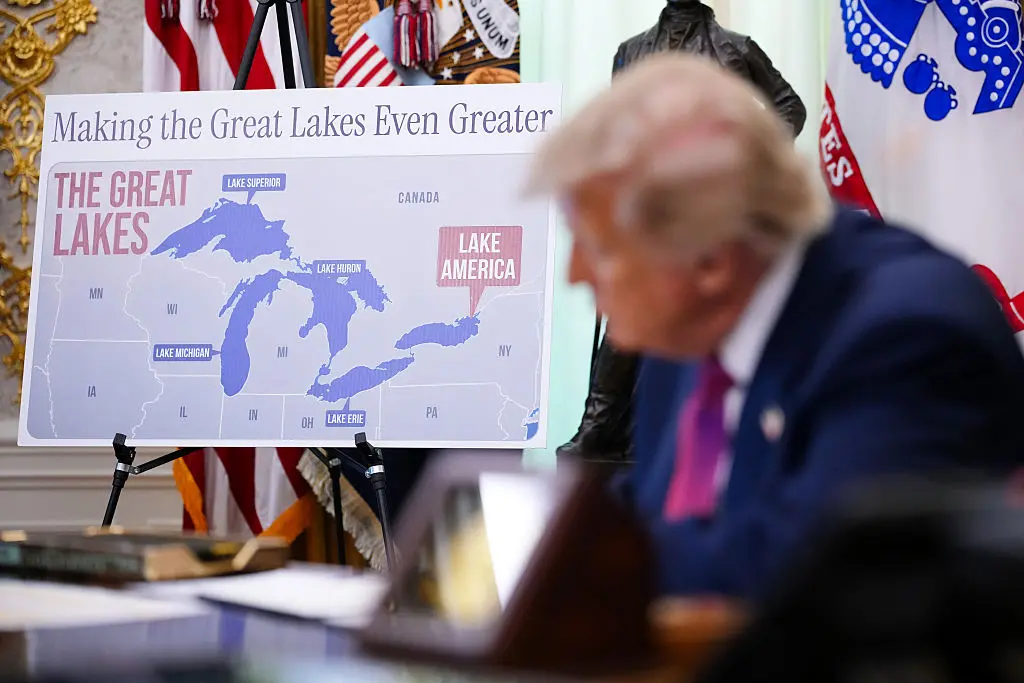
In a dramatic escalation of both international friction and domestic cultural friction, President Donald Trump has signed an executive order mandating the renaming of Lake Ontario to "Lake America." The sweeping unilateral decision—directed at the U.S. Geographic Names Information System—has ignited immediate, fierce pushback from Canada, international geographers, and Indigenous peoples. Leading the charge against the administration is the Seneca Nation, which has formally called upon the White House to reverse course.
The Seneca Nation’s opposition is anchored not merely in contemporary politics, but in deep historical sovereignty, invoking the 1794 Treaty of Canandaigua signed during the presidency of George Washington. Leaders argue that the presidential decree exhibits a blatant disregard for centuries of Indigenous history, cultural heritage, and binding federal treaty obligations.
Meanwhile, the executive order coincides with an escalating trade and geopolitical feud between Washington and Ottawa, amplified by provocative rhetoric from the Trump administration regarding Canada’s sovereignty. As Canadian Prime Minister Mark Carney rejects the rebranding of a shared international waterway, the White House has leaned into a surreal media strategy, celebrating the controversial order on social media with bizarre, artificial intelligence-generated imagery. This clash between solemn historical diplomacy and modern digital spectacle underscores a profound cultural fracture over memory, geography, and national identity in North America.
Detailed Chronology: From Executive Decree to Digital Satire
The controversy surrounding the rebranding of one of North America’s Great Lakes unfolded in rapid, contentious phases, characterized by swift bureaucratic commands and eccentric digital outreach.
The Thursday Directive
On a Thursday afternoon in late August 2026, President Trump formally signed an executive order targeting the nomenclature of Lake Ontario. The directive instructed the Department of the Interior to initiate changes within the U.S. Geographic Names Information System (GNIS) over a strict 30-day window. The mandate requires federal maps, documents, and navigational databases managed by the United States to reflect the new designation: "Lake America." This move mirrors a broader, recurring pattern from Trump’s political career—and particularly his second term—which has prioritized the aggressive rebranding of major domestic and shared geographical landmarks under nationalist identifiers.
Immediate Backlash and Indigenous Condemnation
Within hours of the executive order’s signing, institutional pushback began to materialize. Seneca Nation President J. Conrad Seneca issued a searing public statement denouncing the presidential proclamation. He characterized the move as an act of profound cultural erasure and "blatant disrespect" toward the Haudenosaunee Confederacy and other Indigenous communities whose ancestral roots anchor the Great Lakes basin.
"Lake Ontario is not owned by the United States," Seneca declared in his official response. "The President cannot assert ownership over our culture or erase it through irresponsible political action."
The Canadian Rejection
Simultaneously, international complications arose along the northern border. Prime Minister Mark Carney, who has already faced repeated commentary from Washington suggesting Canada should become the 51st U.S. state, swiftly dismissed the name change. Canadian officials pointed out the logistical and international reality of the situation: while the United States can alter domestic federal databases, it possesses no legal authority to compel Canada—a sovereign nation that shares ownership and stewardship of the waterway—to adopt the nomenclature "Lake America."
Saturday Morning on Truth Social: The AI Meme Controversy
While diplomats, tribal leaders, and legal scholars grappled with the geopolitical and constitutional implications of the executive order, President Trump adopted an unconventional approach to public relations. On Saturday morning, the president utilized his account on Truth Social to celebrate the newly minted "Lake America" through digital art.
Trump shared an AI-generated video clip captioned, "Lake America protected by Donald Ducks." The surreal, heavily stylized video depicted a flock of Canada geese outfitted with distinctive Trump-styled hairstyles, rifle-toting capabilities, and inexplicable human arms. The animated waterfowl marched in formation beneath a backdrop of American flags, eventually discharging their weapons into the air as digital fireworks illuminated the sky above the newly branded text: "Lake America." The juxtaposition of a centuries-old diplomatic treaty invocation against a digital meme campaign highlighted the stark surrealism defining the modern political landscape.
Supporting Context & Metrics: History, Etymology, and Geopolitics
To fully grasp the gravity of the "Lake America" dispute, it is essential to examine the etymological roots of the region, the legal weight of the treaties involved, and the broader geopolitical context governing U.S.-Canada relations.
The Etymological Roots of "Ontario"
The name "Ontario" carries deep historical and linguistic significance that predates the modern political borders of both the United States and Canada. Etymologists and historians trace the word back to Iroquoian dialects—specifically Wyandot or Huron origins—where terms such as Skanadario translate broadly to "lake of shining waters" or "beautiful lake."
Crucially, the geographical naming convention flowed from the water body to the land, rather than the reverse. The Canadian province of Ontario, officially established during Confederation in 1867, derived its name directly from the lake, which had served as a vital cultural, navigational, and commercial artery for Indigenous nations for millennia. By renaming the basin "Lake America," critics argue the administration is attempting to sever this rich linguistic lineage in favor of a homogenized, nationalist moniker.
The 1794 Treaty of Canandaigua
At the heart of the Seneca Nation’s legal and moral argument is the Treaty of Canandaigua, signed on November 11, 1794. Negotiated by agent Timothy Pickering on behalf of President George Washington, the treaty was established to foster peace and friendship between the United States and the Six Nations of the Haudenosaunee Confederacy (comprising the Seneca, Cayuga, Onondaga, Oneida, Mohawk, and Tuscarora nations).
- Territorial Recognition: The treaty formally acknowledged the lands reserved for the Oneida, Onondaga, and Cayuga nations, while securing the rights of the Seneca Nation within their ancestral homelands in western New York.
- Sovereignty and Nation-to-Nation Status: As a federal treaty ratified under the United States Constitution, the agreement carries the weight of supreme law. Legal scholars note that while executive orders can direct federal agencies regarding internal nomenclature, they cannot unilaterally extinguish or override established treaty rights, cultural stewardship interests, or nation-to-nation understandings embedded in foundational American documents.
Geopolitical Friction Across the Northern Border
The Lake Ontario rebranding does not occur in a vacuum; it is the latest flashpoint in a deteriorating bilateral relationship between Washington and Ottawa. In recent months, trade disputes, tariff threats, and unorthodox territorial rhetoric from the White House have strained diplomatic channels. Prime Minister Carney has consistently pushed back against rhetoric implying that Canadian sovereignty is negotiable. Because Lake Ontario constitutes an international maritime boundary governed by joint treaties—such as the Boundary Waters Treaty of 1909—any unilateral attempt by Washington to redefine its geographic identity is viewed in Ottawa not just as a domestic U.S. administrative action, but as an aggressive diplomatic overreach.
Official Statements and Stakeholder Reactions
The collision between presidential fiat, Indigenous sovereignty, and international diplomacy has drawn sharp reactions from leaders across the political spectrum.
-
J. Conrad Seneca, President of the Seneca Nation:
"Lake Ontario is not owned by the United States. The President cannot assert ownership over our culture or erase it through irresponsible political action. This order represents a blatant disrespect for the Indigenous peoples who have protected these waters since time immemorial, and we demand an immediate reversal."
-
Prime Minister Mark Carney, Government of Canada:
Canadian officials reiterated that while individual nations maintain autonomy over domestic cartography, international bodies of water shared between sovereign states cannot be unilaterally renamed by executive decree. Ottawa has made it clear that Canadian maps and official federal documents will continue to recognize Lake Ontario under its historic, internationally accepted designation.
-
The White House and Administration Defenders:
Supporters of the president’s executive order have defended the rebranding as an exercise of executive authority intended to instill national pride and emphasize American identity across federal landmarks. Administration defenders downplayed the diplomatic friction, framing the name change as a symbolic domestic policy measure rather than a hostile international maneuver.
Future Outlook: Legal Challenges, Diplomatic Fallout, and Cultural Persistence
As the 30-day implementation window mandated by the executive order ticks down, the "Lake America" controversy is poised to generate significant legal, diplomatic, and cultural repercussions.
Potential Legal Challenges
Legal analysts specializing in federal Indian law anticipate that the Seneca Nation—potentially joined by allied Haudenosaunee communities and environmental organizations—may explore legal avenues to challenge the Department of the Interior’s implementation of the order. While executive orders enjoy broad deference in administrative law regarding federal naming conventions (managed via the U.S. Board on Geographic Names), challenges may center on administrative procedure violations, consultation failures, or the broader implications of undermining treaty-recognized cultural landscapes.
Diplomatic Strain and Cartographic Realities
On the international front, the executive order is expected to widen the diplomatic rift between Washington and Ottawa. Cartographers and navigation authorities point out the practical impossibility of a bifurcated naming convention on an integrated body of water shared by two nations. For commercial shipping, environmental monitoring agencies, and international travelers, the lake will effectively operate under two names: "Lake America" within U.S. federal registries and "Lake Ontario" throughout Canada and international maritime standards.
The Endurance of Indigenous Heritage
Ultimately, historians and cultural advocates suggest that while executive proclamations and digital memes can alter federal databases or spark fleeting media cycles, they remain powerless against deep-rooted cultural memory. The Indigenous nations who named the "lake of shining waters" centuries before the founding of the United States maintain an enduring presence that transcends administrative re-labeling. As the Seneca Nation and its allies continue to press for a reversal, the controversy stands as a stark reminder of the enduring tensions between modern political theater and the ancient, unyielding history of the North American landscape.