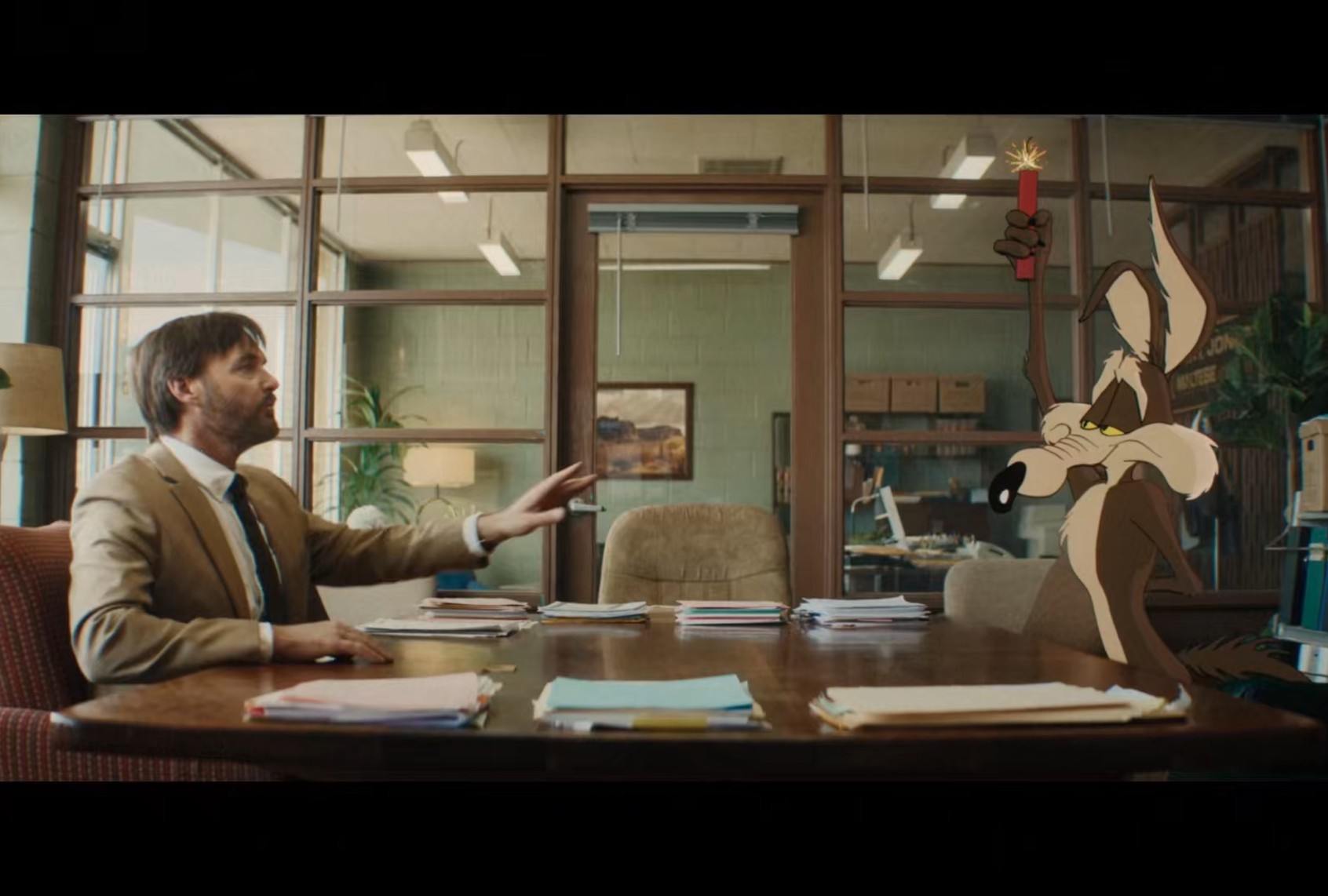
The journey of Coyote vs. Acme from a finished, highly anticipated hybrid feature to a shelved casualty of corporate tax strategies—and finally to a triumphant theatrical release—stands as one of the most remarkable modern sagas in Hollywood history. For nearly three years, the film hung in bureaucratic and financial limbo after Warner Bros. Discovery elected to write off the completed project for a reported $30 million tax credit.
What followed was an unprecedented backlash from filmmakers, guilds, and passionate moviegoers who refused to let a piece of art be sacrificed on the altar of quarterly balance sheets. Ultimately rescued by Ketchup Entertainment, the film’s arrival in theaters serves as both a loving tribute to the anarchic legacy of the Looney Tunes franchise and a stinging, accidental satire of contemporary mega-corporations. With its anti-capitalist themes mirroring ongoing real-world controversies, such as the massive proposed Paramount-Warner Bros. merger, Coyote vs. Acme is more than just a family comedy; it is a cultural touchstone demanding that audiences vote with their ticket stubs.
Detailed Chronology: From the Drawing Board to the Big Screen
The Genesis and Satirical Roots
The conceptual foundation of Coyote vs. Acme dates back decades, drawing deep inspiration from Ian Frazier’s celebrated 1990 New Yorker satirical article of the same name. Frazier brilliantly framed Wile E. Coyote’s endless, explosive trials with faulty products as a legitimate legal brief suing the Acme Corporation for damages.
Director Dave Green and writer Samy Burch seized upon this ingenious premise, expanding the short-form satire into a full-scale cinematic narrative. In the film, a thoroughly exasperated Wile E. Coyote—exhausted by plummeting into canyons, dodging fake desert murals, and enduring countless TNT detonations triggered by defective Acme rocket skates—decides to take corporate America to court. He enlists the services of Kevin Avery (Will Forte), a down-on-his-luck, small-time claims attorney specializing in cartoon injuries. Joined by Avery’s bright-eyed niece and legal aid, Paige (Lana Condor), the legal team pushes upward against corporate indifference, ultimately clashing with Acme’s slick, ruthless chief counsel, Buddy Crane (John Cena).
The 2023 Write-Down and Public Outcry
By late 2023, production on Coyote vs. Acme had wrapped, and test screenings had generated overwhelmingly positive buzz from critics and industry insiders alike. Yet, in a move that shocked Hollywood, Warner Bros. announced it was officially shelving the completed film to secure a $30 million tax write-off.
The decision provoked an immediate and volcanic backlash. The public lit up social media with condemnation, while Hollywood agents, actors, and prominent directors expressed open outrage. Fearing industry-wide normalization of destroying completed art for financial maneuvering, creatives flooded studio executives with angry messages and protests. Facing mounting public relations damage, Warner Bros. quietly permitted the filmmakers to shop the movie to competing studios.
Limbo and the Ketchup Entertainment Rescue
For roughly two years, Coyote vs. Acme drifted in distribution limbo while various suitors attempted to meet Warner Bros.’ asking price. After the tax write-down check successfully cleared, Warner Bros. eventually offloaded the film at a discount to Ketchup Entertainment in early 2025.
Following in the footsteps of another Ketchup-procured success—2025’s The Day the Earth Blew Up, which turned a modest $15 million profit on a $15 million budget—Coyote vs. Acme finally secured a wide theatrical release. Its debut transformed a quiet corporate asset disposal into a high-stakes referendum on intellectual property preservation and audience agency.
Supporting Context & Metrics: The Economics of Animation and Corporate Consolidation
The Shrinking Footprint of Theatrical Animation
The release of Coyote vs. Acme arrives at a precarious moment for theatrical animation, particularly for legacy properties like Looney Tunes. While television syndication and home video compilations have kept the classic shorts culturally ubiquitous, theatrical feature films derived from the brand have grown increasingly rare.
Prior to the 2021 hybrid sequel Space Jam: A New Legacy—which performed solidly at the box office but suffered from harsh critical and cultural reception—the franchise had not seen an original theatrical feature since 2003’s Looney Tunes: Back in Action.
For studios driven strictly by profit margins rather than break-even figures, underperforming legacy properties are routinely abandoned. Warner Bros.’ initial willingness to discard Coyote vs. Acme highlighted a broader industry trend: viewing artistic heritage strictly through short-term fiscal returns rather than long-term cultural capital.
The Real-World Parallels of Corporate Overreach
The satirical timing of Coyote vs. Acme could not be sharper. Hitting cinemas amidst intense public scrutiny over the proposed $111 billion Paramount-Warner Bros. merger, the film’s narrative about corporate impunity mirrors alarming real-world media trends.
In a striking echo of the movie’s fictional legal battles—where Acme’s defense team utilizes character assassination and intimidation against whistleblowers—recent real-world events have drawn parallel criticisms. Just weeks prior to the film’s premiere, high-profile figures faced public smear campaigns for speaking out against industry mega-mergers, proving that the film’s cartoonish corruption is uncomfortably close to reality.
Official Statements and Industry Reaction
The unprecedented decision to shelve a finished feature film prompted rare public pushback from the creative community responsible for its creation.
Director Dave Green expressed his gratitude and disbelief during early interviews following the rescue, noting:
"The fact that we can see it at all is a miracle in modern moviemaking, when so many productions never clear the enormous obstacles in their way. Doing what’s right is often a thankless endeavor, but that doesn’t make it any less important."
Industry analysts and guilds pointed to the Coyote vs. Acme debacle as a turning point in the conversation surrounding corporate tax loopholes. Writers Guild of America (WGA) representatives and prominent directors argued that utilizing completed creative works as financial write-offs destroys trust between talent and studios, threatening the foundational pipeline of American cinema.
While Warner Bros. executives initially hoped the eventual sale to Ketchup Entertainment would quietly sweep the controversy under the rug, the film’s theatrical debut transformed the project into a symbol of grassroots cinematic resistance.
Future Outlook: Why Supporting the Underdog Matters
As Coyote vs. Acme completes its theatrical run, the stakes extend far beyond the box office performance of a single family comedy. The film represents a crucial litmus test for moviegoers and industry observers alike.
The Message to Hollywood
If audiences fail to support theatrical releases born from corporate conflict, studios will take away a dangerous lesson: that public outcry has an expiration date, and that consumers will ultimately accept the quiet erasure of inconvenient art. Conversely, strong ticket sales send an unmistakable message to major conglomerates that heritage properties matter, that completed films deserve to be seen, and that audiences will actively reward resilience over corporate complacency.
Preserving the Legacy of Looney Tunes
Beyond striking a blow against corporate overreach, every dollar spent on Coyote vs. Acme directly contributes to the viability of future Looney Tunes theatrical projects. Sustaining the franchise requires proving to risk-averse executives that timeless characters like Wile E. Coyote, the Road Runner, and Daffy Duck still command passionate theatrical audiences.
Ultimately, Coyote vs. Acme reminds us that fighting against institutional apathy requires the same tireless, indefatigable spirit embodied by a certain persistent coyote. Whether facing down Acme Corporation’s defective gadgets or Hollywood’s calculating corporate suits, the ultimate victory belongs to those who refuse to stay down—both on the silver screen and in the real world.