

Executive Overview
For years, the conventional wisdom of American politics suggested that corruption was a neutralized issue. Pundits and strategists operated under the cynical assumption that voters viewed political malfeasance as a permanent, baked-in feature of public life—typified by the sweeping shrug of "they’re all corrupt anyway." This fatalistic perspective allowed figures like Donald Trump to achieve political invincibility, earning the moniker "Teflon Don" by weathering impeachments, felony convictions, and endless cascading scandals without taking permanent damage at the ballot box.
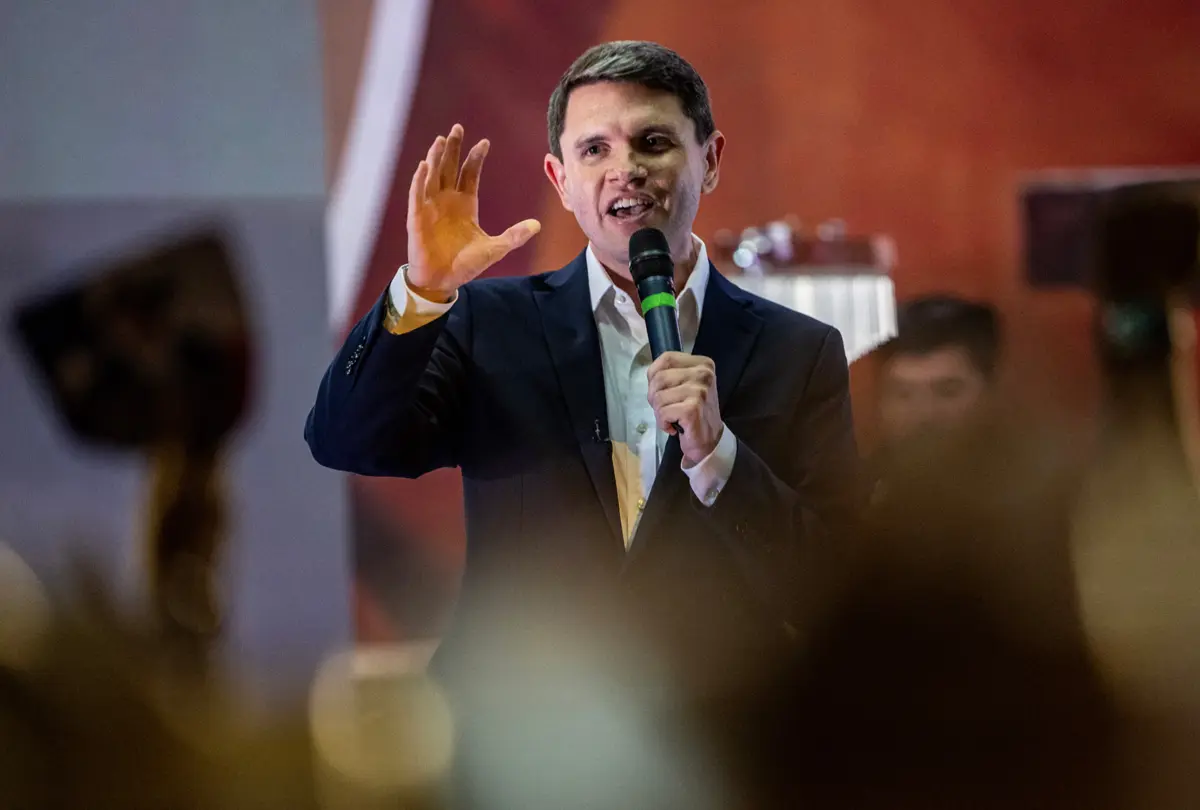
However, as the 2026 midterm landscape sharpens, a major political realignment is underway. In deep-red and traditionally competitive states alike, Democratic candidates are successfully rewriting the political rulebook. By placing ethics, institutional integrity, and personal character at the absolute center of their campaigns, Senate hopeful James Talarico in Texas and Senator Jon Ossoff in Georgia are mounting insurgent challenges that have upended national projections.
Rather than getting bogged down in dry, overly complex policy debates or conceding the moral high ground, Ossoff and Talarico have transformed government corruption from an abstract academic concept into a visceral, easily digestible narrative. By pairing high-profile investigations into their opponents with striking, memorable symbols—such as a stolen courthouse pen and an oligarchic private jet—these campaigns are tapping into a profound voter rage. As independent data from the Brennan Center indicates, corruption has emerged as the "sleeper issue" of the 2026 cycle, driven by an economic climate where everyday Americans struggle with basic affordability while watching political elites brazenly line their pockets.
Detailed Chronology: The Rise of the Anti-Corruption Insurgency
The shifting dynamics of the 2026 Senate landscape can be traced through a series of key political miscalculations by vulnerable Republican incumbents and challengers, and the strategic maneuvers by Democrats to exploit them.
Summer 2026: Hubris Meets the Breaking Point
- Early July 2026: Texas Attorney General and Republican Senate nominee Ken Paxton assumes his path to the U.S. Senate is virtually unassailable. Despite a career defined by extensive scandals—including an impeachment by his own party in the Texas House over bribery and abuse of office—Paxton relies on Donald Trump’s historic 56% victory in the state during the 2024 presidential election. Displaying supreme confidence, Paxton skips crucial summer campaigning to embark on a luxury European vacation with his alleged mistress, conservative influencer Tracy Duhon.
- Late July 2026: National polling begins to reflect deep discontent among the American electorate. A major survey published by NPR and the Brennan Center highlights that an overwhelming majority of citizens view political corruption not as an acceptable norm, but as an urgent, systemic crisis. Analysts begin labeling corruption the defining "sleeper issue" of the 2026 midterms, fueled by public exhaustion over astronomical, self-enriching windfalls at the top while working-class families grapple with inflation.
- August 18–20, 2026: In Georgia, Senator Jon Ossoff unleashes a devastating line of attack against the national Republican apparatus, labeling the broader Trump orbit the "Mar-a-Lago mafia" and denouncing the administration as historically corrupt. Ossoff captures national headlines—and fuels intense speculation regarding a potential 2028 presidential bid—by focusing public ire on absurd symbols of elite excess, such as a luxurious private jet gifted by foreign leaders and staffed by devoted aides.
- August 22, 2026: James Talarico hits the campaign trail in Beeville, Texas, as part of his "New American Dream Tour." Talarico’s campaign releases a viral, razor-sharp advertisement focusing on a seemingly minor yet symbolically devastating incident: surveillance footage from 2012 showing Paxton pocketing a $1,000 Montblanc pen accidentally left by a lawyer at a Collin County courthouse security checkpoint. The ad features the owner of the pen, attorney Joe Joplin, endorsing Talarico—turning a petty theft into a powerful synecdoche for Paxton’s entire career of moral bankruptcy.
- August 27, 2026: Recognizing the shifting momentum, Paxton scrambles to shore up his struggling campaign by flying Donald Trump into Texas to headline an emergency fundraiser. Simultaneously, Jon Ossoff publicly highlights a widening ethics scandal surrounding his opponent, Republican Representative Mike Collins, pointing to House Ethics Committee investigations, misuse of public funds, and a growing web of associations with white nationalists and neo-Nazi figures among Collins’ former staffers and family members.
- Late August 2026: Reflecting the dramatic ground shift, The Cook Political Report officially changes its rating for the Texas Senate race from "Leans Republican" to a pure "Toss-Up." Talarico’s lead in multiple polling aggregates marks the first time a statewide Texas Democratic candidate has held such a position deep into a general election cycle in decades.
Supporting Context & Metrics: The Mechanics of Voter Anger
To understand why the clean-government message is resonating so powerfully in 2026, one must examine the intersection of economic anxiety and unprecedented executive overreach.
For years, political scientists struggled to make voters care about complex bureaucratic scandals. Elaborate financial transactions, hidden shell companies, and subtle conflicts of interest often suffered from what researchers call the "complexity barrier." In an era dominated by hyper-fragmented media environments and endless social media feeds, asking voters to parse through multi-tiered legal indictments is a steep hill to climb.
However, two major forces dismantled this barrier in 2026:
- Economic Strain and Hypocrisy: Persistent inflation has left working-class and middle-class families rationing gas, groceries, and housing costs. When voters are forced to stretch every dollar, watching political figures openly leverage public office for astronomical financial gain—such as Trump’s reported multi-billion-dollar crypto windfalls and luxurious foreign gifts—provokes intense moral outrage. This anger is amplified when political leaders dismiss affordability concerns as "made-up issues."
- The Power of Synecdoche: Both Ossoff and Talarico mastered the art of distilling sprawling corruption into singular, emotionally resonant images.
- In Texas, Talarico bypassed dense legal jargon about securities fraud to focus on Ken Paxton swiping a $1,000 pen in plain sight of courthouse security cameras. It is an image that requires no legal degree to understand: a powerful official taking something that does not belong to him simply because he believes he can.
- In Georgia, Ossoff bypassed dry policy papers on institutional norms to focus on the grotesque imagery of political sycophancy aboard foreign-gifted aircraft. By tying these symbols to tangible misbehavior—such as Collins’ ongoing House Ethics investigations into payroll misuse and alarming ties to extremist elements—the campaigns successfully framed corruption not as a victimless crime, but as a direct assault on the dignity of everyday citizens.
Official Statements and Campaign Positioning
The distinct ideological framing employed by these Democratic candidates has forced defensive postures from their Republican rivals, who have struggled to counter a message anchored in personal integrity.
- James Talarico, framing his campaign around moral contrast:
"Public service is supposed to be about serving the least of these, not lining your own pockets or treating the law as a personal suggestion box. When leaders display contempt for basic honesty—whether it’s stealing a pen at a security checkpoint or defrauding investors—they forfeit the moral authority to lead."
- Senator Jon Ossoff, addressing systemic executive corruption:
"The American people are exhausted by the grift, the endless self-dealing, and the culture of impunity that surrounds this administration and its enablers in Congress. We are running on a simple premise: integrity matters, public office is a public trust, and accountability is coming."
- Independent Electoral Analysts on the Shift:
Michael Waldman of the Brennan Center for Justice encapsulated the mood of the electorate earlier this summer, noting that government integrity has evolved into the definitive "sleeper issue" of the cycle. Where political operatives expected voters to remain apathetic, polls indicate an electorate deeply galvanized by a perceived collapse in ethical standards across all levels of governance.
Future Outlook: Implications for the 2026 Midterms and Beyond
As the 2026 election cycle hurtles toward its final stretch, the success of Jon Ossoff in Georgia and James Talarico in Texas serves as a blueprint for progressive and pragmatic candidates operating in historically hostile terrain.
The traditional playbook—avoiding direct confrontations over ethics out of fear that "all politicians are viewed the same"—has been decisively shattered. By grounding their platforms in transparent accountability, economic fairness, and sharp moral contrasts, Ossoff and Talarico have proven that voters are acutely hungry for institutional hygiene.
If these insurgent campaigns successfully cross the finish line in November, the shockwaves will fundamentally alter national party strategies. No longer will candidates across the political spectrum feel safe ignoring ethical lapses or assuming that voter cynicism provides permanent cover for corruption. Instead, the 2026 midterms may be remembered as the moment the American electorate reclaimed accountability as a central pillar of democratic governance—proving that character, integrity, and clean government remain potent, winning forces in modern politics.
