


Executive Overview
In the sprawling landscape of comic book adaptations, traditional superhero origin stories typically rely on a singular, catalytic tragedy. Bruce Wayne witnesses the murder of his parents in an alleyway, transforming his grief into an eternal war on crime. Superman survives the literal apocalypse of Krypton, driven by a profound sense of responsibility to his adopted home. However, HBO’s ambitious new series Lanterns—co-created by Chris Mundy, Damon Lindelof, and Tom King—disrupts this comfortable genre formula from its opening frames.
The third episode of the series, titled "OutKast," introduces us to John Stewart (played in adulthood by Aaron Pierre, and in his youth by Cairo Cash Lee) not through a sudden accident of fate, but through a calculated, generational crucible. Rather than a singular moment of shock, Stewart’s origin unfolds as a meticulously managed conditioning program engineered by his parents, John Sr. (J. Alphonse Nicholson) and Bernadette (Jasmine Cephas Jones). It is a process designed to strip away fear, demand absolute perfection, and prepare a young Black boy for a universe that operates on inherently rigged terms.
This cultural and narrative pivot repositions John Stewart far away from the "Angry Black Man" tropes that frequently constrained his comic book origins under white creators. Instead, Lanterns crafts a deeply resonant meditation on excellence, systemic bias, and the crushing expectation placed upon those forced to perform at twice the level to secure half the recognition. By weaving cosmic mythology with the unyielding realities of the Black American experience, Lanterns establishes itself not merely as a high-budget superhero procedural, but as a biting cultural critique of the meritocracy myth.
Detailed Chronology: The Making of a Reluctant Sentinel
To understand the adult John Stewart portrayed by Aaron Pierre—a man defined by a terrifyingly glacial composure—one must trace the timeline of his upbringing, which begins on his fifth birthday.
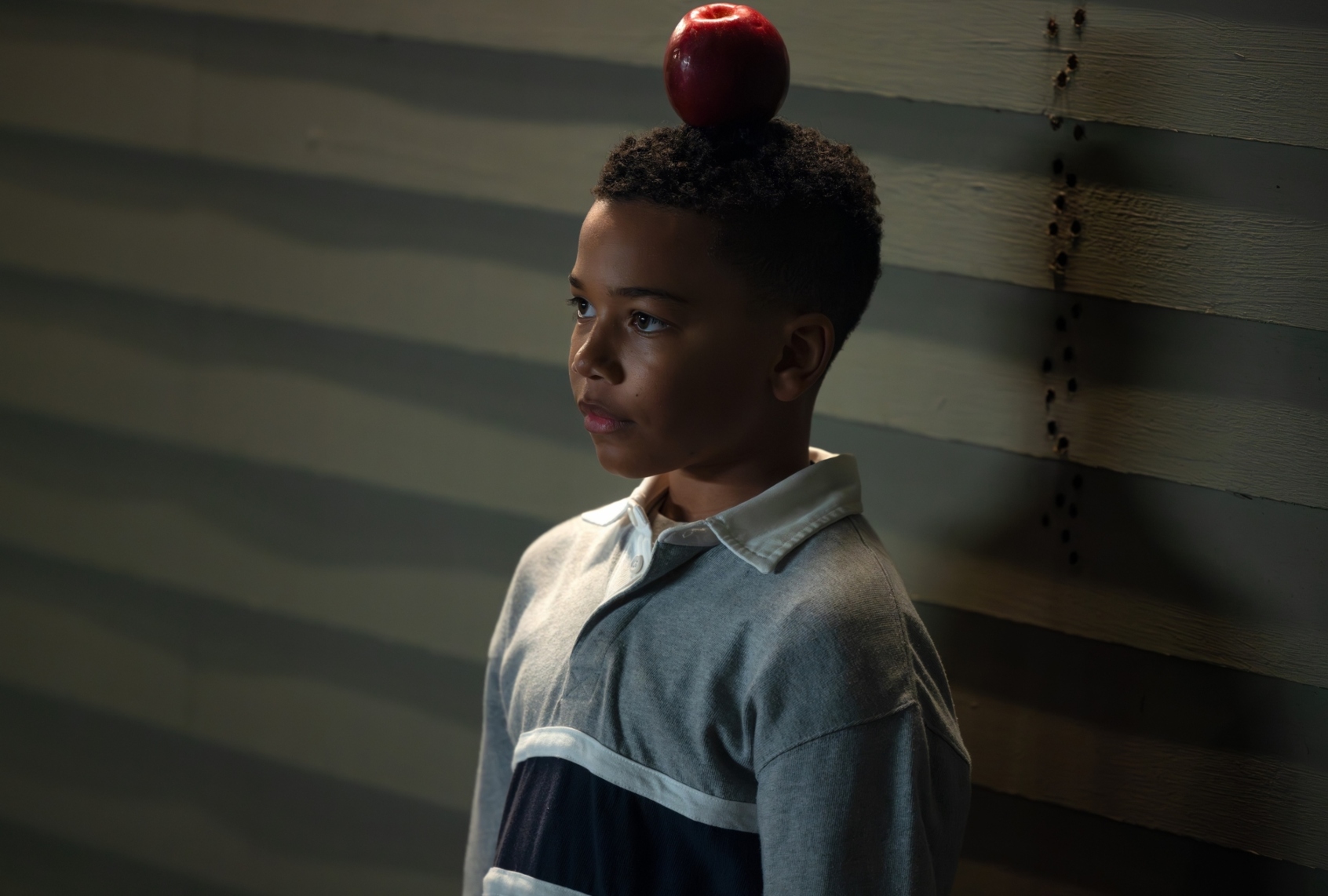
In "OutKast," the series utilizes flashbacks to dismantle the traditional myth of divine selection. When young John blows out the candles on his birthday cake, his father does not present him with a toy, but places a rifle in his hands. Later in his childhood, John Sr. aims a gun directly at his son, firing an apple off his head. The young boy stands unflinching, rewarded not with a comforting embrace of safety, but with the chilling validation that he did not show weakness.
[Age 5: The Rifle] ──► [Childhood Conditioning] ──► [Military Precision] ──► [The 9-Month Stakeout] ──► [The Dishonorable Discharge]
  Initiation to pressure     Rigid emotional control     Elite sniper status         Flawless execution met       Systemic repetition of
  and calculated risk.       and absence of fear.        achieved globally.          with institutional betrayal. historical exclusion.
Years later, this extreme training manifests in Stewart’s career as one of the world’s elite military snipers. Tasked with a top-secret international assassination mission, Stewart parachutes onto foreign soil, establishes a hidden shelter in the woods near his target, and waits in absolute isolation for nine months. It is an astonishing display of tactical discipline, patience, and unwavering focus—qualities that should have resulted in the highest military commendations. Instead, due to institutional prejudice and a painful repetition of systemic exclusion, the mission concludes with his dishonorable discharge.
When Stewart finally crosses paths with Hal Jordan (Kyle Chandler)—an older, entitled peer clinging desperately to fading glory—the stark contrast between their paths is laid bare. Jordan embodies the classic superhero archetype who attributes his success to honest hard work and keeping a clean record. Stewart, by contrast, has excelled through every hurdle Jordan faced, while simultaneously navigating a world where his parents had to systematically engineer the fear out of him just to ensure his survival.
Supporting Context & Metrics: Deconstructing the Myth of Merit
The thematic architecture of Lanterns draws a direct, intentional parallel to one of the most enduring cultural touchstones of modern television: Rowan Pope’s famous admonition to his daughter Olivia in Shonda Rhimes’s Scandal.
┌────────────────────────────────────────────────────────┐
│             THE PILLARS OF EXCELLENCE                  │
├──────────────────────────┬─────────────────────────────┤
│   The Pop Culture Meme   │   The "Lanterns" Reality    │
├──────────────────────────┼─────────────────────────────┤
│ "You have to be twice    │ John Stewart Sr. &          │
│ as good as them to get   │ Bernadette condition        │
│ half of what they have." │ their son for a universe    │
│ — Rowan Pope, Scandal    │ that routinely shuts doors. │
└──────────────────────────┴─────────────────────────────┘
The harsh gospel drilled into generations of high-achieving Black professionals—that one must perform at twice the standard to attain half the reward—serves as the emotional engine of Lanterns. While popular culture frequently replays the competitive drive of this philosophy, it often ignores the darker, prophetic warning that accompanies it: the illusion of safety crafted by the establishment, followed by swift, unyielding systemic betrayal.
In Lanterns, this allegory is literalized through the Guardians of the Universe. Flashbacks reveal that John Stewart Sr. was actually the Guardians’ first choice to be Earth’s initial Green Lantern. Yet, he failed their supposedly impartial evaluation because these ancient, near-omniscient cosmic entities fundamentally failed to comprehend the unique, daily terror of navigating life as a Black man in America.
As Bernadette furiously confronts a Guardian (played by Laura Linney) who attempts to apologize for ruining their lives:
"Do you understand how unfair it is to ask a Black man in America if he’s afraid? We are terrified daily of persecution and still show up sometimes better than everyone around us. Even in space, y’all don’t consider us."
This exchange exposes the fallacy at the heart of cosmic and earthly meritocracies alike: systems designed by the privileged cannot measure the resilience of those who must fight simply to exist within them.
Official Statements and Creative Vision
The deliberate modernization and cultural recalibration of John Stewart are the result of a concerted effort by the series’ creative team, including co-creators Chris Mundy, Damon Lindelof, and Tom King, alongside lead actor Aaron Pierre.

In development interviews and production notes, the team emphasized a departure from past adaptations that leaned into reactive anger. Instead, Pierre’s portrayal champions an unshakeable, centered stillness. This creative choice mirrors Damon Lindelof’s previous sociological deconstructions in HBO’s Watchmen, shifting the lens from standard cape-and-cowl heroism to an examination of structural power, historical oversight, and who gets to wield absolute authority without being questioned.
The inclusion of veteran actors like J. Alphonse Nicholson, Jasmine Cephas Jones, and Laura Linney anchors these high-concept cosmic debates in deeply emotional, grounded performances. Bernadette’s visible anguish when conditioning her young son highlights the tragic paradox of Black parenting under systemic oppression: the tools required to survive a hostile world are, by necessity, agonizing to administer.
Future Outlook: A New Paradigm for the DCU
As Lanterns continues its weekly rollout on HBO and Max, its deconstruction of John Stewart’s origin story signals a maturation of the modern DC Universe (DCU). By choosing to ground a cosmic superhero epic in the generational trauma of American systemic inequality, the series elevates the genre beyond mere escapism.
The narrative trajectory suggests that Stewart’s eventual embrace of the Green Lantern ring will not be framed as a stroke of blind luck or an unearned gift from the cosmos. Rather, it will be depicted as the inevitable culmination of a man who was prepared for the worst the universe had to offer, yet chose to endure. When Stewart eventually finds himself before a Guardian in the bowels of an abandoned mall, refusing to ask the naive question "Why me?" because he knows exactly why, it marks a watershed moment for representation in superhero media.
Lanterns proves that the most compelling heroes are not those born without fear, but those who have looked systemic injustice in the eye—across both Earth and the stars—and refused to blink.