

Executive Overview
In the high-stakes arena of direct-to-consumer (DTC) marketing, the margin between a fleeting viral moment and a generational brand partnership is often measured in hours, not months. For Factor, the prominent ready-to-eat meal kit brand, capitalizing on a major cultural crossroads required throwing out the traditional marketing playbook entirely.
When tennis icon Serena Williams announced her return to competitive play ahead of the US Open, Factor—in collaboration with Ryan Reynolds’ famed creative agency, Maximum Effort—achieved what can only be described as a logistical sprint: they conceptualized, planned, shot, and produced a multi-faceted national advertising campaign in a staggering seven days.
The resulting "Let’s Eat Real" campaign, anchored by a multi-year global ambassadorship with Williams, serves as the cornerstone of Factor’s aggressive strategy to capture the evolving demands of modern consumers. It bridges elite athletic performance, the realities of motherhood, and the fast-growing market for GLP-1-friendly nutritional solutions.
This deep dive explores the anatomy of an unprecedented marketing blitz, examining how Factor’s internal agility aligned with Hollywood-grade creative horsepower to hijack the news cycle. It also highlights the strategic integration of GLP-1-optimized meal offerings and the broader implications for the booming ready-to-eat meal kit industry.
Detailed Chronology: From Concept to Court
The Early Pursuit: Laying the Groundwork
Long before Serena Williams stunned the sports world with news of her return to the court, executives at Factor had their sights set on the 23-time Grand Slam champion. According to Factor Chief Marketing Officer Christopher Stadler, conversations and relationship-building with Williams’ team began as early as January.
Factor’s marketing leadership recognized that Williams occupied a rare cultural intersection. She is simultaneously an undisputed sporting legend, a high-profile entrepreneur, and a mother of two navigating the chaotic daily schedules familiar to millions of consumers. While the brand initially targeted Williams for her broad appeal and athletic legacy, a crucial modern narrative element emerged organically: her public advocacy for health, wellness, and transparency regarding weight management.
By June, the partnership was officially inked. However, the exact timing and execution of the launch remained flexible, awaiting the right cultural anchor. That anchor arrived when Williams signaled her intention to step back onto the court for the US Open. Recognizing a golden opportunity to tie high-performance nutrition directly into a massive global sporting event, Factor leadership sprang into action.
The Seven-Day Production Sprint
To capitalize on the sudden news cycle, Factor enlisted Maximum Effort, the creative agency renowned for its lightning-fast, culturally reactive advertising campaigns. The challenge was monumental: compress a workflow that typically spans three to six months into a single week.
Stadler noted that this marked the fastest campaign turnaround in Factor’s history. The compressed timeline demanded absolute synchronization between the brand’s internal marketing team, Maximum Effort’s creative directors, and Williams’ management.
- Days 1–2: Ideation, strategic alignment, and script approvals. The creative teams zeroed in on playing with the public’s expectations of Williams’ career moves, framing high-stakes sports drama around an entirely mundane, relatable decision: what to eat for dinner.
- Days 3–4: Production logistics, wardrobe, crew assembly, and location scouting near Williams’ home in Palm Beach, Florida.
- Day 5: A high-intensity, half-day production shoot.
- Days 6–7: Rapid post-production, editing, and media buying alignment to ensure the spots hit screens precisely as the US Open commenced.
Despite the breakneck speed, the production yielded an immense volume of content. In just a few hours on set, the team successfully filmed two full-length television commercials, captured 30 distinct still-photo assets for digital and print placements, and generated over an hour of raw user-generated content (UGC) designed for social media channels.
Supporting Context & Metrics: The GLP-1 Factor and Market Evolution
While the tennis narrative provides the immediate hook, the strategic foundation of the Serena Williams x Factor Collection speaks to a profound shift in consumer health trends: the rapid mainstream adoption of GLP-1 receptor agonists (such as Ozempic and Zepbound) for weight management and metabolic health.
Meeting the Moment: The Rise of GLP-1-Friendly Menus
Williams, 44, has been refreshingly transparent about her own wellness journey, serving as a prominent celebrity ambassador for the telehealth platform Ro, which provides patient access to GLP-1 medications. Having openly discussed her use of Zepbound following her second pregnancy, Williams stands out as the most visible elite athlete to compete at the highest tier while openly embracing modern metabolic treatments.
Factor’s partnership with Williams is not merely coincidental to this trend; it is the culmination of a deliberate, 18-month menu transformation. Stadler revealed that over the past year and a half, Factor has scaled its offerings of GLP-1-friendly meals from zero percent of its total menu to a robust 20 percent.
In the ready-to-eat meal kit sector, "GLP-1-friendly" carries specific nutritional parameters:
- Portion Control: Designed for individuals experiencing reduced appetite or early satiety.
- High Nutrient Density: Maximizing protein, fiber, and micronutrients per bite to prevent muscle wasting and nutrient deficiencies during weight loss.
- Balanced Macros: Carefully calibrated macronutrient ratios to support sustained energy levels without causing gastrointestinal distress.
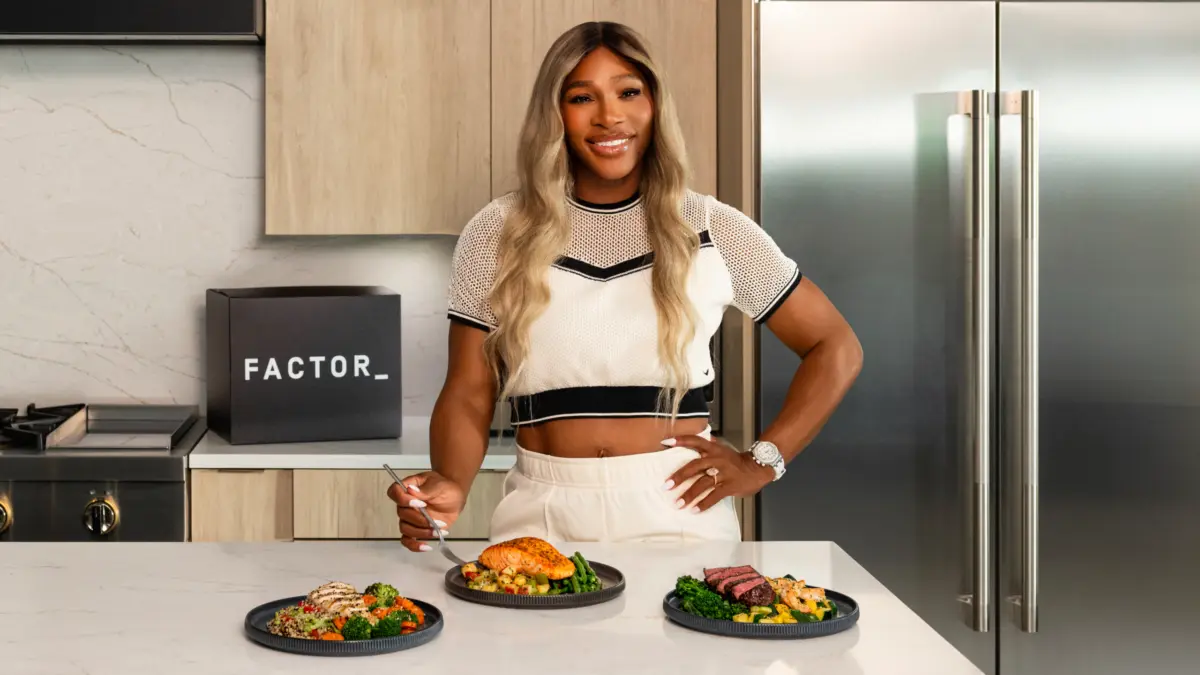
By aligning with Williams—an athlete renowned for physical excellence who also represents the modern realities of post-partum recovery and metabolic health—Factor has positioned itself at the cutting edge of functional nutrition. The current Serena Williams x Factor Collection features a curated rotation of high-protein dishes alongside specialized options tailored specifically for consumers utilizing GLP-1 treatments.
The Logistics of Ready-to-Eat Convenience
The DTC meal kit industry has undergone significant growing pains over the past decade, shifting away from traditional "cook-from-scratch" subscription models toward fully prepared, ready-to-heat solutions. Consumers increasingly demand restaurant-quality nutrition with zero prep work and zero cleanup.
Factor’s success within this hyper-competitive landscape relies heavily on operational efficiency, cold-chain logistics, and dynamic menu rotation. By incorporating a rotating monthly curation selected directly by Williams, the brand introduces fresh novelty to its subscriber base, driving retention and capturing consumer interest through high-profile celebrity endorsement.
Official Statements & Industry Perspectives
The partnership bridges corporate agility with personal authenticity, a sentiment echoed by both brand leadership and the tennis icon herself.
Christopher Stadler, Chief Marketing Officer at Factor, emphasized the cultural philosophy driving the collaboration:
"We moved quickly when we saw the opportunity. One of our core values as a brand and as a company is the power of agility, so we put that in action with this campaign. Serena’s athletic success and celebrity status made her a top prospect for our global ambassador role, but the fact that she’s been open about taking a GLP-1 was just the icing on the cake."
Stadler noted that beyond the athletic accolades, Williams embodies the ultimate modern consumer persona: a busy working mother for whom convenience and nutrition are non-negotiable pillars of daily life.
Serena Williams reflected on how the partnership integrates seamlessly into her demanding schedule:
"I’ve always believed that taking care of yourself starts with what you put into your body, but I also know how hard it can be to make that a priority when life gets busy. Factor makes it easy to have delicious, high-quality food even when my schedule is crazy, and that’s something I genuinely value."
The creative campaign highlights this dynamic through self-aware humor. In the primary ad spot, viewers are led to believe they are watching a tense, dramatic boardroom meeting regarding Williams’ professional future in tennis. The dramatic tension peaks when Williams solemnly announces she has changed her mind—only for the camera to reveal she is simply deliberating over whether to select a Factor chicken or steak dish for her evening meal.
A secondary spot leans further into comedic timing, showing Williams in intense, match-ready concentration with a digital timer ticking down as she aggressively faces off against her kitchen microwave, awaiting the completion of her Factor dinner.
Future Outlook: Setting a New Standard for Brand Agility
The success of the "Let’s Eat Real" campaign signals a broader evolution in how consumer brands must operate in an era defined by instantaneous digital communication and rapid news cycles. Traditional annual marketing calendars and months-long bureaucratic approval chains are increasingly proving obsolete. Brands that win today are those structured to execute with military precision at a moment’s notice.
For Factor, the collaboration with Serena Williams is designed as a multi-year partnership that will continuously evolve. As the brand expands its market share and refines its health-centric menu offerings—particularly within the burgeoning GLP-1 nutritional sector—the halo effect of Williams’ endorsement will serve as a powerful growth engine.
Looking forward, the partnership establishes a compelling case study for the DTC industry at large:
- Agility as a Competitive Advantage: Brands must build external agency partnerships (such as the Factor-Maximum Effort synergy) that allow for rapid creative deployment when cultural lightning strikes.
- Authenticity in Health Trends: Navigating sensitive health topics like GLP-1 usage requires authentic voices who champion transparency rather than clinical detachment.
- Holistic Consumer Appeal: Successful celebrity endorsements must transcend isolated achievements, connecting with audiences across multiple dimensions of daily life—career, wellness, family, and convenience.
As Factor continues to roll out Williams’ curated monthly collections throughout the multi-year partnership, the brand has firmly staked its claim on the future of functional, ready-to-eat nutrition. By matching Serena Williams’ legendary speed and precision on the court with operational agility in the boardroom, Factor has successfully served up a masterclass in modern marketing.
