

Executive Overview
In the modern digital economy, the boundary between brand equity and digital creator culture has grown increasingly porous. Corporations desperate for cultural relevance routinely hand the keys to their hard-earned brand identities over to nimble third-party influencers, hoping to capture fragmented audiences across rapidly shifting platforms.
Yet, when the high-stakes world of corporate golf manufacturing collides with the freewheeling ecosystem of YouTube golf creators, the resulting friction can instantly ignite a public relations inferno.
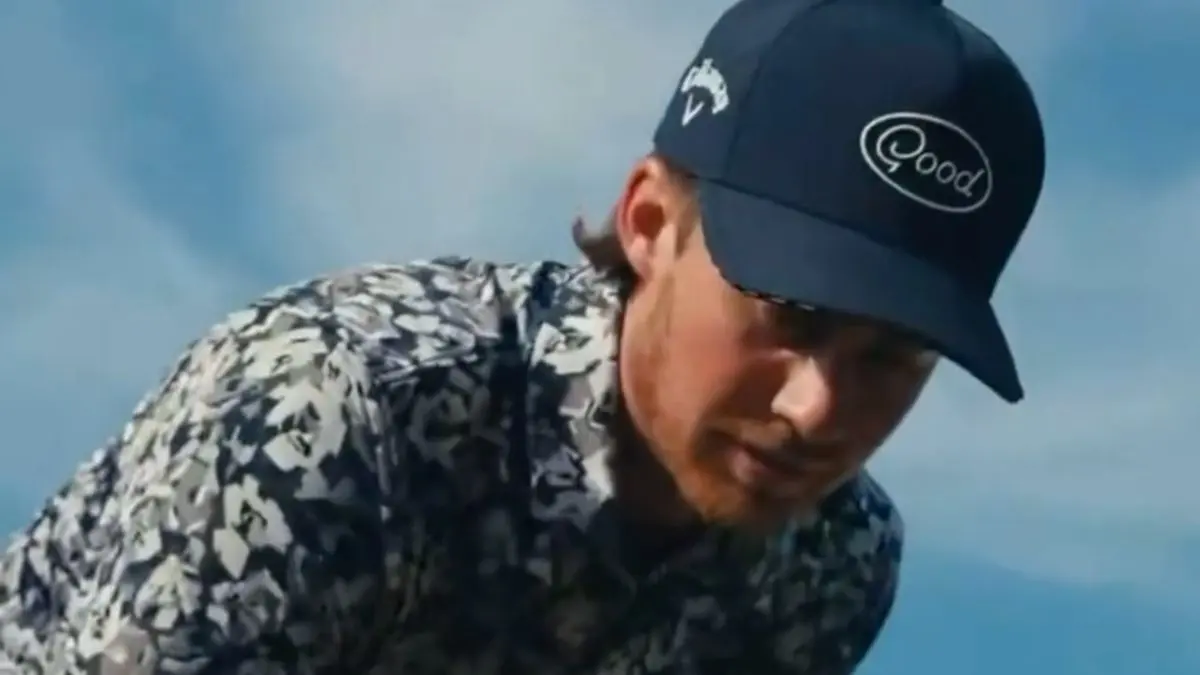
Consider the viral commercial that recently upended the relationship between golf monolith Callaway and popular creator collective Good Good. In the now-infamous clip, Good Good co-founder Garrett Clark aggressively shoves fellow creator Alexis Miestowski to the ground as she reaches for his new Callaway driver, standing over her with a menacing warning not to touch it.
Within days of its release, the ad was scrubbed from the internet, the partnership dissolved, retailers purged Good Good merchandise from their shelves, and the company abruptly withdrew as the title sponsor of a prominent PGA Tour event. In a desperate bid to salvage its reputation, Callaway pledged $1 million to organizations dedicated to preventing violence against women.
What followed was a very public, highly toxic blame game. Callaway CEO Chip Brewer pointed the finger at Good Good, conceding that while the brand reviewed the video, "that approval should have never happened." Good Good CEO Matt Kendrick retaliated by shattering an 11-year social media silence with a scathing post, accusing Callaway of instigating the concept, fully approving the final cut, and then turning around to throw his company under the bus in a "coordinated media blitz." When probed about potential legal action, Kendrick’s response was chillingly direct: "Not opposed."
However, the mutual finger-pointing misses the fundamental failure. The crisis is not merely about who stamped "approved" on a piece of toxic creative; it is about how a multi-million-dollar corporate enterprise and an established media brand possessed zero systemic checkpoints capable of flagging a glaring, offensive misstep before it ever reached the public eye.
As content velocity outpaces legacy corporate infrastructure, the Callaway-Good Good debacle serves as a watershed moment—exposing an urgent, systemic vulnerability in how modern creator partnerships are governed, reviewed, and protected.
Detailed Chronology of a PR Inferno
To understand how a single piece of promotional content could systematically dismantle a multi-million-dollar partnership in less than a week, one must examine the rapid, cascading sequence of events that transformed a marketing miscalculation into an existential corporate crisis.
Phase 1: The Concept and the Green Light
The partnership between Callaway and Good Good was built on a premise common in contemporary sports marketing: harness the authentic, direct-to-consumer reach of digital creators to move hardware in a traditional category. Good Good had cultivated a massive, highly engaged digital following by gamifying golf entertainment on YouTube. Callaway, eager to tap into this young, male-dominated, yet rapidly modernizing demographic, enlisted the collective to showcase its flagship equipment.
According to later statements from both sides, the conceptualization and execution of the ad followed the standard, albeit loose, pipelines typical of influencer marketing. A script or concept was pitched, captured by the creators, and routed through corporate approval channels. Callaway executives—trusting the creators’ pulse on what resonates with their digital audience—signed off on the final cut.
Phase 2: The Drop and Immediate Backlash
Upon its release, the ad immediately struck a discordant chord. Rather than coming across as edgy sports banter or playful ribbing, the physical altercation—depicting a male creator violently shoving a female creator to the ground over a golf club—crossed the line from provocative to genuinely disturbing.
Social media users immediately flagged the tonal dissonance, misogynistic undertones, and sheer bizarre nature of the violence in a golf equipment commercial. Within hours, the digital outrage spilled over into traditional media spaces, capturing the attention of industry watchers, advocacy groups, and golf purists alike.
Phase 3: The Corporate Scramble and Fallout
Recognizing the escalating severity of the backlash, Callaway and its retail partners executed an emergency containment protocol of unprecedented speed:
- Immediate Removal: The ad was swiftly pulled from all official channels, and Good Good scrubbed the content from its feeds.
- Partnership Termination: The collaboration was officially severed, bringing an abrupt halt to what was meant to be a flagship marketing alliance.
- Retailer Boycott: Major golf retailers distanced themselves from the fallout, pulling Good Good-branded merchandise from their physical and digital storefronts.
- Tournament Withdrawal: Good Good withdrew as the title sponsor of a high-profile PGA Tour event, attempting to stem the bleeding as tournament organizers faced mounting public pressure.
- The $1 Million Penance: In an extraordinary gesture of crisis management, Callaway pledged $1 million to organizations focused on preventing violence against women, effectively putting a multi-million-dollar price tag on the oversight.
Phase 4: The Blame Game Goes Public
As the dust settled, the fractures within the partnership widened into an open war of words. Callaway CEO Chip Brewer attempted to regain narrative control by throwing accountability back onto the creators, publicly lamenting that internal reviews failed to catch the toxic nature of the video.
Not to be outdone, Good Good CEO Matt Kendrick broke an 11-year Twitter (X) silence in the dead of night (3:38 a.m.) to launch a blistering counter-offensive. Kendrick alleged that Callaway didn’t just passively approve the ad—they actively requested it, monitored its creation, gave it the green light, and then abandoned ship via a "coordinated media blitz" to save face at the expense of their partners. When asked by industry reporters if litigation was on the horizon, Kendrick’s ominous reply—"Not opposed"—signaled that the legal battles resulting from this fallout are only just beginning.
Supporting Context & Metrics: The Broken Infrastructure of Modern Marketing
The fallout between Callaway and Good Good is not an isolated anomaly; it is the predictable byproduct of a structural mismatch in modern marketing.
The Creator-Brand Symbiosis and Its Inherent Risks
The modern marketing landscape operates on a fundamental dependency: brands need creators to pierce through consumer indifference and reach niche, digitally native communities that traditional advertising cannot touch. Conversely, creators need brands to monetize their influence, scale their operations, and transition from digital entertainers to legitimate business entities.
This relationship, however, requires an immense leap of faith. Legacy brands routinely take decades—sometimes centuries—of painstakingly built brand equity and place it into the hands of culturally nimble, fast-moving third parties. They ask these creators to translate corporate messaging for new audiences at breakneck speeds.
It is a high-risk, high-reward ecosystem. But the true crisis lies not in the inherent riskiness of creators, but in the fact that corporate infrastructure has completely failed to keep pace with digital content velocity.
Historically, legacy brands operated under a centralized model: a major campaign was conceptualized by an agency, meticulously researched through focus groups, legally vetted, and slowly rolled out over months. Today, brands must manage hundreds of decentralized, rapid-fire content decisions across multiple platforms, with dozens of external partners, on any given day. The old bureaucratic machinery was simply never built for this volume.
Hard Data: An Ad So Bad Even Algorithms Found It Offensive
To understand just how catastrophic the Good Good ad was from a consumer response standpoint, researchers at Zappi subjected the pulled commercial to rigorous post-campaign testing with U.S. consumers.
The results were staggering. The ad performed catastrophically below established advertising norms across every single key performance indicator:
- Appeal: Miniscule
- Behavioral Drive: Non-existent
- Brand Fit & Relevance: Severely disconnected
- Believability: Implausible
- Attention: Negative engagement
Even more telling than the low numerical scores were the qualitative reactions buried beneath them. Nearly one-third (33%) of respondents explicitly stated there was something offensive, unpleasant, or disturbing about the ad. Furthermore, consumer shock levels registered at eight times higher than normal advertising benchmarks.
The AI Smoke Detector: What Data Reveals About Preventable Disasters
Skeptics might argue that the teams at Callaway and Good Good were operating under intense time crunches, lacking the luxury of commissioning a multi-week, traditional market research study for a single piece of creator-driven digital content.
While that excuse highlights the operational pressures of modern marketing, it does not excuse the blind spot. If traditional human-led testing was too slow for the digital pipeline, technology offered a ready-made solution that was entirely ignored.
Testing the Ad with Synthetic Respondents
Following the public explosion, researchers at Zappi ran the identical piece of creative past 150 AI synthetic respondents—digital personas trained on vast repositories of real consumer response data.
The feedback loop was instantaneous, requiring only minutes to generate results. The verdict from the synthetic panel was unequivocal: the ad received the absolute lowest possible score (1 out of 5).
Crucially, even artificial intelligence was sophisticated enough to spot the glaring red flags embedded within the video’s narrative arc. The AI’s automated recommendation, read in hindsight after millions of dollars in brand damage were incurred, is almost hauntingly ironic:
"Soften or clarify the physical moment so it reads as playful rather than awkward."
AI as an Early Warning System
This experiment illuminates a critical truth for modern marketers: Human testing allows you to feel the fire and measure how hot it burned, but AI acts as an automated smoke detector.
To be abundantly clear, artificial intelligence should never be deployed as a cultural arbiter—it should not dictate what is morally acceptable, culturally resonant, or creatively brilliant. That responsibility must always rest with human judgment, empathy, and social awareness.
However, when content velocity moves infinitely faster than the sluggish infrastructure of legacy corporate hierarchies, AI serves as an invaluable, real-time early warning system. It is a tireless tripwire that can flag a piece of content, demanding that a human manager take a second, closer look before hard-earned brand equity goes up in flames.
Had Callaway or Good Good utilized synthetic pre-testing—a process taking mere minutes and costing a fraction of a percent of their overall campaign budget—the toxic nature of the physical confrontation would have been flagged instantly, averting a multi-million-dollar PR disaster.
Official Statements and Industry Fallout
The fallout has triggered intense soul-searching across the marketing and golf industries, drawing sharp divisions between corporate accountability and creator autonomy.
- Callaway’s Position: CEO Chip Brewer’s admission that the internal approval "should have never happened" attempts to walk a fine line between acknowledging corporate failure and underscoring the rogue nature of the creative execution. By committing $1 million to domestic violence prevention, Callaway sought to pivot the narrative from a corporate oversight issue to an active, restorative community investment.
- Good Good’s Counter-Offensive: CEO Matt Kendrick’s late-night Twitter broadside reframes the narrative entirely. By asserting that Callaway actively commissioned and signed off on the specific concept, Kendrick places the onus squarely back on the corporate sponsor. His threat of legal action suggests that creators are no longer willing to quietly absorb the fallout when legacy brands attempt to rewrite history to protect their stock prices.
- The Retail and Sponsorship Landscape: The swift, ruthless reaction of major golf retailers and tournament organizers demonstrates a zero-tolerance policy for brand safety violations in the post-cancel-culture era. For third-party distributors and event sponsors, association with toxic creative represents an immediate existential threat to their own bottom lines, prompting instantaneous economic excommunication.
Future Outlook: What Brand Leaders Must Learn
The Callaway-Good Good fiasco is a glaring symptom of a much larger, systemic malady facing the modern marketing apparatus. As we look toward the future of the creator economy, several immutable lessons emerge for brand leaders, corporate executives, and digital creators alike.
1. The Creator Economy is Here to Stay
Creator partnerships are not a passing fad; they are the bedrock of modern consumer engagement. Brands cannot abandon creators out of fear of controversy, just as creators cannot survive without the financial backing and mainstream credibility that major corporate partnerships provide.
2. Guardrails Must Scale with Velocity
The solution to preventing another "Callaway disaster" is not to artificially decelerate creator marketing until it mirrors the sluggish, bureaucratic workflows of traditional advertising. Doing so strips creator content of its authenticity, rendering it sterile and ineffective.
Instead, brands must modernize their operational infrastructure. They must build internal review processes capable of moving just as fast as the media platforms they are meant to govern.
3. Embrace Technical Safeguards
As demonstrated by synthetic AI testing, the tools to catch warning signs cost a minuscule fraction of the products being sold. Marketers must integrate automated pre-testing, synthetic consumer panels, and multi-layered digital compliance checks into their standard workflows. These tools do not replace human judgment; they protect humans from their own blind spots.
4. Mutual Protection of Assets
Ultimately, the Callaway-Good Good scandal proves that brand safety and creator livelihoods are inextricably linked. For brands, rigorous yet agile guardrails protect decades of hard-earned equity. For creators, those exact same guardrails protect the audience, trust, and career longevity they have spent years meticulously building.
The lesson for the industry is stark: In a media reality defined by hyper-speed content creation and microscopic public scrutiny, what the Callaway scandal makes abundantly clear is that AI and modern pre-testing infrastructure have an indispensable role to play—and that brands operating without them are flying blind into a storm.