

WASHINGTON — In an unprecedented convergence of modern digital media and capital punishment, the Trump administration’s plan to publicly broadcast the execution of convicted mass murderer Nidal Hasan has triggered a fierce national debate. The proposal, championed by Defense Secretary Pete Hegseth, would mark the first time the United States military has carried out an execution since 1961—and the first time in modern American history that such an event would be streamed live to the general public.
Scheduled for December 3 at Fort Hood, Texas, the execution by firing squad is designed to mirror the exact time and location of the 2009 mass shooting that claimed the lives of 13 people and injured dozens of others. However, rather than projecting unalloyed strength, the decision has fractured the political landscape. Bipartisan lawmakers, military ethics experts, and civil rights advocates have raised alarms, warning that turning a state execution into a public spectacle risks transforming a convicted terrorist into a digital martyr, provides fertile ground for extremist recruitment, and degrades the moral standing of the United States.
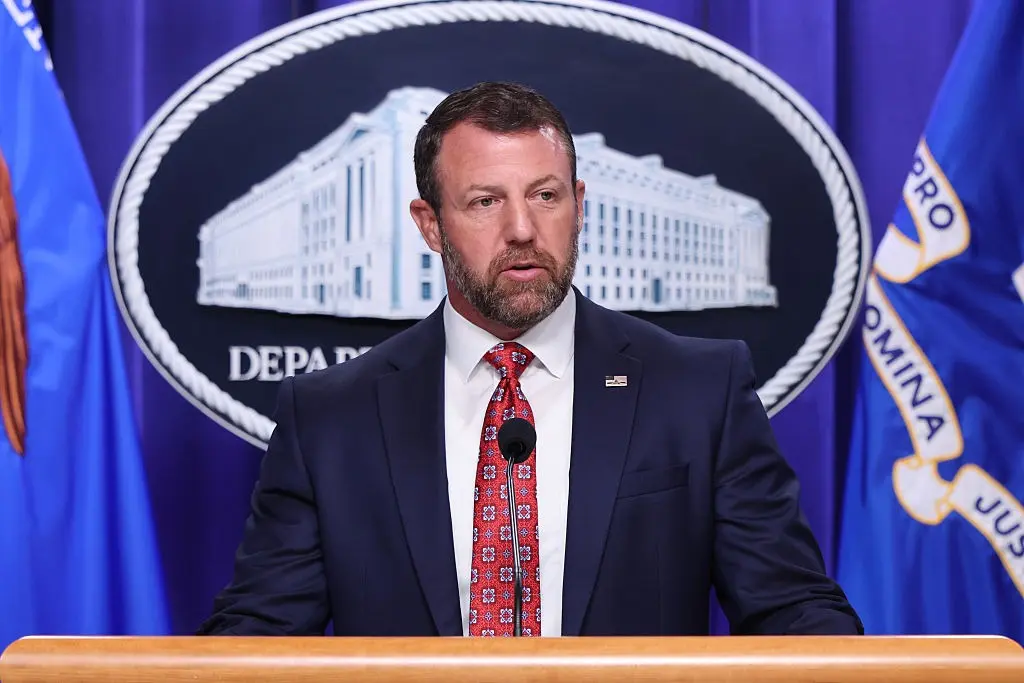
Despite the mounting bipartisan pushback, top administration officials have aggressively defended the initiative. Homeland Security Secretary Markwayne Mullin brushed aside concerns during a recent television appearance, telling critics they simply do not have to watch. Meanwhile, the ultimate authority rests with President Donald Trump, who has indicated he will make the final decision on whether the livestream proceeds. As the nation grapples with the ethics of televised state violence, the controversy also unfolds against the backdrop of a broader crisis in American capital punishment, underscored by recent botched lethal injections nationwide.
Detailed Chronology: From the Fort Hood Tragedy to the Pentagon’s Broadcast Plan
To understand the weight of the current controversy, one must examine the timeline that bridges a horrific historical act of domestic violence with a radical shift in modern penal policy.
- November 5, 2009: Major Nidal Hasan, an Army psychiatrist stationed at Fort Hood, Texas, opens fire on unarmed soldiers processing at a deployment center. Armed with two firearms, Hasan kills 13 people and wounds 32 others before being shot and paralyzed from the waist down by base police.
- August 23, 2013: Following a military court-martial that rejected his defense, a jury unanimously convicts Hasan on 13 counts of premeditated murder and 32 counts of attempted premeditated murder. He is sentenced to death by lethal injection.
- 1961 – 2026: The U.S. military effectively halts executions. While military courts continue to hand down death sentences, appeals processes, legal stagnation, and shifting executive priorities prevent any capital punishment from being carried out for over six decades.
- October 8, 2026: Defense Secretary Pete Hegseth shocks defense analysts and legal scholars by announcing that the military will break its 65-year hiatus. Hasan will be executed by firing squad at Fort Hood at 1:00 p.m. on December 3—the precise time and place of his original atrocity—and the entire event will be livestreamed.
- October 11, 2026: DHS Secretary Markwayne Mullin defends the administration’s stance on CBS’s Face the Nation, dismissing martyrdom concerns with the remark, "No one has to watch it." Concurrently, bipartisan opposition solidifies in Congress, with key Republican and Democratic senators condemning the spectacle.
- Present Day: President Donald Trump announces he will make the final determination on whether the livestream will be broadcast to the public, leaving the military apparatus and the American public in suspense as December 3 approaches.
Supporting Context & Metrics: The Mechanics, Precedents, and Broader Lethal Injection Crisis
The administration’s proposal does not exist in a vacuum; it arrives at a moment of profound national anxiety regarding the reliability, ethics, and optics of state-sanctioned executions.
The Return of the Firing Squad
While lethal injection has become the default method of execution in the United States over the past half-century, its implementation has grown increasingly fraught. Pharmaceutical companies have routinely restricted the sale of lethal drugs to correctional facilities, leading states to experiment with alternative methods, including nitrogen hypoxia and firing squads.
The U.S. military’s use of a firing squad is exceptionally rare in modern times. Historically, military executions were designed to be solemn, sober affairs intended to maintain the internal discipline and good order of the armed forces, rather than public entertainments or deterrence campaigns meant for civilian consumption.
The Broader Capital Punishment Crisis
The timing of the Pentagon’s announcement is further complicated by compounding failures within the state-level execution apparatus. Less than two weeks before Hegseth’s declaration, Tennessee made national headlines with a catastrophically botched execution. On September 30, death row inmate Christa Pike survived two separate doses of lethal injection drugs. Pike regained consciousness following the failed procedure, prompting her legal team to aggressively file motions to preserve evidence.
The incident in Tennessee—coupled with similar mechanical and procedural breakdowns in states utilizing alternative execution protocols—has intensified intense national scrutiny on capital punishment. Civil rights organizations, including the American Civil Liberties Union (ACLU), argue that introducing a livestreamed military execution against this backdrop represents an escalating descent into state-sponsored barbarism that normalizes institutional cruelty.
Official Statements: A Deep Divide Across the Political Spectrum
The debate over the Fort Hood execution livestream has ruptured traditional partisan boundaries, pitting hardline administration loyalists against institutionalists, defense hawks, and civil liberties advocates.
The Administration’s Defense
Defense Secretary Pete Hegseth defended the decision as a clear-cut matter of retributive justice. Speaking at a press briefing, Hegseth described the plan as a "no-brainer," asserting that executing Hasan via firing squad by soldiers at Fort Hood at the exact hour of the attack is a fitting closure for the victims’ families.
Homeland Security Secretary Markwayne Mullin doubled down on that sentiment during his appearance on Face the Nation. When pressed by host Margaret Brennan regarding the well-documented danger of radicalization and martyrdom—the phenomenon wherein terrorists use their own executions to recruit followers—Mullin was dismissive.
"No one has to watch it," Mullin said. "I don’t see an elevated risk at this point at all because of this… I give absolutely zero thought to the way that this man dies."
Bipartisan Congressional Condemnation
Conversely, a broad coalition of lawmakers from both sides of the aisle has forcefully rejected the administration’s strategy, warning of dangerous blowback.
- Sen. Lisa Murkowski (R-Alaska): Urged the Pentagon to reverse what she characterized as a "gruesome decision," cautioning that broadcasting the execution would hand Hasan the very platform, notoriety, and martyrdom he has sought since 2009.
- Sen. Thom Tillis (R-N.C.): Condemned the proposal outright, stating firmly that public executions and digital broadcasts belong to oppressive, authoritarian dictatorships, not the constitutional framework of the United States.
- Sen. Jack Reed (D-R.I.): Blast the Pentagon leadership, warning that a livestreamed execution of a convicted jihadist would provide invaluable propaganda material and recruitment collateral for extremist organizations operating globally.
- Rep. Austin Scott (R-Ga.): Stated that while he fully supports Hasan receiving a death sentence for his heinous crimes, he categorically opposes publicizing the event via the internet.
Surrounding Allies and Executive Hesitation
Religious conservatives and populist allies have rallied behind the administration’s core premise. Pastor Robert Jeffress of First Baptist Dallas argued that public capital punishment underscores the ultimate sanctity of human life. Meanwhile, high-ranking members of the executive branch have exhibited mixed signals: Vice President JD Vance publicly questioned whether the livestream will ultimately take place, noting that he personally would refuse to watch it, while President Donald Trump confirmed that he retains final authority over the broadcast’s fate.
Future Outlook: What Lies Ahead for the December 3 Execution
As the December 3 execution date rapidly approaches, all eyes remain fixed on the Oval Office. President Trump’s impending decision will set a monumental precedent for how the United States government handles capital punishment in the digital age.
If the administration moves forward with the livestream, it will shatter decades of legal and cultural norms, transforming a military execution into a globally accessible, high-definition media event. Such a move would likely trigger immediate constitutional and civil rights challenges in federal court, with defense attorneys arguing that publicizing state-sanctioned executions violates Eighth Amendment protections against cruel and unusual punishment, while national security analysts brace for potential retaliatory digital or physical threats.
Conversely, should the administration capitulate to bipartisan pressure and restrict the viewing to a closed military circuit or traditional witness pool, it would represent a rare retreat for defense leadership on a high-profile retributive promise. Regardless of the outcome, the debate has permanently altered the discourse surrounding state violence, opening a Pandora’s box regarding the intersection of entertainment, national security, and the ethics of justice in the twenty-first century.