

Executive Overview
The Trump administration is facing a fierce and mounting bipartisan backlash following a bold, unprecedented proposal by Defense Secretary Pete Hegseth to publicly livestream the execution of Nidal Hasan. Hasan, a former U.S. Army psychiatrist, was convicted of masterminding and carrying out the devastating 2009 mass shooting at Fort Hood, Texas, which left 13 people dead and over 30 others injured. Under Hegseth’s directive, Hasan is scheduled to face a firing squad on December 3—marking the first military execution carried out by the United States since 1961—with the grim proceedings broadcast live to the American public.
While the administration has vigorously defended the decision as a decisive exercise of justice and a stark warning to potential domestic and foreign attackers, critics from both sides of the aisle have condemned the move. Lawmakers, civil rights advocates, and national security experts have raised profound ethical, moral, and strategic objections. Opponents argue that broadcasting a state-sanctioned execution crosses a dangerous ethical Rubicon, reducing American criminal justice to the level of oppressive authoritarian regimes while risking the creation of a digital martyr whose death could be weaponized by extremist groups for international recruitment.
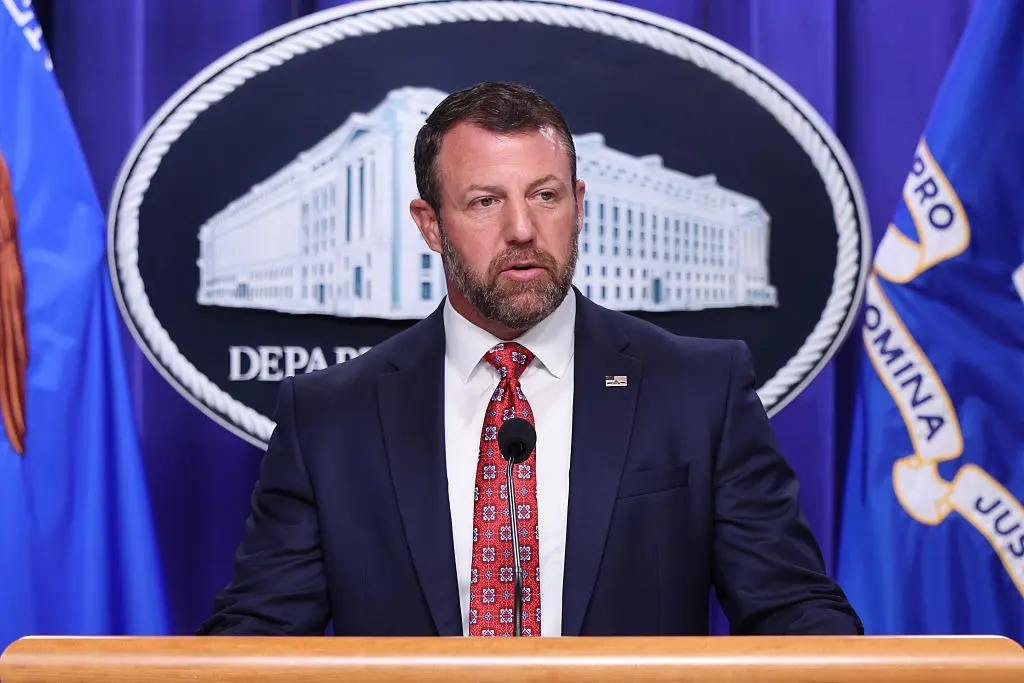
Despite the intense outcry, Department of Homeland Security (DHS) Secretary Markwayne Mullin doubled down on the administration’s stance during a Sunday television appearance, brushing off fears of radicalization with the remark, "No one has to watch it." As the debate intensifies, questions loom over whether the high-profile livestream will ultimately proceed as planned, with President Donald Trump indicating he holds the final authority on the matter.
Detailed Chronology of Events
The unfolding controversy over the Fort Hood execution and its unprecedented broadcast stems from a rapid sequence of policy announcements, historical precedents, and mounting political friction:
- November 5, 2009: Major Nidal Hasan opens fire inside a deployment processing center at Fort Hood, Texas, killing 12 soldiers and one civilian while wounding 32 others before being shot and paralyzed by base police officers.
- August 23, 2013: Following a high-profile military court-martial, a jury finds Hasan guilty of 13 specifications of premeditated murder and 32 specifications of attempted premeditated murder. He is sentenced to death by lethal injection.
- 1961: The United States military carries out its final executions prior to the modern era, hanging two soldiers—Private John A. Bennett and Army Seaman Hulan B. Mitchell—for separate crimes of rape and murder.
- October 2, 2026: Tennessee attempts to execute death row inmate Christa Pike via lethal injection, resulting in a severely botched procedure wherein Pike survives two doses of lethal drugs and later regains consciousness. The incident sparks renewed national scrutiny over capital punishment protocols.
- October 8, 2026: Defense Secretary Pete Hegseth publicly announces that the military will execute Nidal Hasan on December 3, 2026, at 1:00 p.m. local time at Fort Hood. Hegseth reveals that the execution will be performed by a firing squad of soldiers using rifles, and confirms that the event will be livestreamed to the public.
- October 9–10, 2026: Immediate bipartisan pushback emerges across Washington. Lawmakers including Sens. Lisa Murkowski (R-Alaska), Thom Tillis (R-North Carolina), and Jack Reed (D-Rhode Island) condemn the plan. Vice President JD Vance publicly questions whether the broadcast will actually occur, while President Donald Trump announces that he will make the final decision regarding the livestream.
- October 11, 2026: DHS Secretary Markwayne Mullin appears on CBS’s Face the Nation, dismissing national security concerns regarding martyrdom and publicly defending the administration’s intention to proceed without regard for the manner of Hasan’s death.
Supporting Context & Metrics
The decision to execute Hasan via firing squad and broadcast it globally intersects with a volatile landscape of domestic penal policy, security concerns, and historical military practices.
Capital punishment within the United States armed forces is historically rare. While federal and state executions have fluctuated over the decades depending on political administration and judicial rulings, military executions have been exceptionally infrequent since the mid-20th century. The transition from lethal injection to a firing squad for Hasan’s execution marks a deliberate return to older, more visceral forms of capital punishment. Pentagon officials noted that selecting Fort Hood—the site of the 2009 tragedy—and timing the execution for 1.00 p.m. (the exact hour of the original attack) is intended to provide symbolic closure to the victims’ families and the military community.
However, national security and counter-terrorism analysts point to significant empirical risks associated with public spectacles involving convicted terrorists. Historic precedents show that extremist organizations frequently exploit state-sponsored executions of high-profile figures to generate propaganda, portray the individuals as religious or ideological martyrs, and fuel online radicalization pipelines.
Simultaneously, the timing of the Pentagon’s announcement coincides with intense public debate over the mechanics of state killing. The botched lethal injection of Christa Pike in Tennessee on September 30 exposed systemic vulnerabilities and operational failures in traditional execution protocols, driving a renewed wave of civil rights litigation and legislative scrutiny. Critics argue that introducing a high-tech public livestream to a military execution distracts from—and potentially exacerbates—the deeply contentious ethical and constitutional debates surrounding the death penalty in America today.
Official Statements and Political Reactions
The unprecedented nature of the Pentagon’s plan has fractured conventional political alignments, drawing sharp rebukes from unexpected corners while solidifying support among staunch administration loyalists.
Defenders of the Proposal
Proponents of the livestream argue that transparency in capital punishment reinforces the gravity of justice and deters future acts of mass violence against Americans.
- DHS Secretary Markwayne Mullin: During his appearance on Face the Nation, Mullin aggressively defended the administration’s posture, dismissing fears that the broadcast would act as a recruiting tool for extremists. "No one has to watch it," Mullin stated. "I don’t see an elevated risk at this point at all because of this… I give absolutely zero thought to the way that this man dies." Mullin emphasized that the primary message of the broadcast is to demonstrate the unyielding consequences of attacking U.S. citizens and service members.
- Defense Secretary Pete Hegseth: Announcing the plans on military networks, Hegseth framed the decision as straightforward justice. "No-brainer—execution by firing squad… Of course we’re doing it at Fort Hood. We’re going to do it at 1 o’clock—which is when he did it. It’s going to be soldiers with rifles executing the firing squad."
- Religious and Political Allies: Prominent religious leaders, such as Dallas pastor Robert Jeffress, defended the measure by arguing that public executions underscore the ultimate sanctity of human life. Lawmakers like Rep. Andy Ogles (R-Tennessee) also voiced strong support for the administration’s transparency initiative.
Critics and Opponents
Bipartisan opponents have warned that broadcasting an execution degrades democratic values and plays directly into the hands of hostile actors seeking to radicalize vulnerable individuals.
- Sen. Lisa Murkowski (R-Alaska): Murkowski sharply criticized the administration, urging the Pentagon to reverse what she termed a "gruesome decision." She warned that a public broadcast would hand Hasan the exact notoriety and martyrdom he has sought for nearly two decades.
- Sen. Thom Tillis (R-North Carolina): Condemning the proposal on social media and in legislative briefings, Tillis asserted that public spectacles of execution are the hallmark of oppressive dictatorships, not a constitutional republic governed by the rule of law.
- Sen. Jack Reed (D-Rhode Island): In a formal statement blasting the initiative, Reed warned that livestreaming the execution would supply terrorist organizations with invaluable, high-impact raw material for international recruitment and anti-American propaganda.
- Civil Rights Organizations: The American Civil Liberties Union (ACLU) and various legal watchdogs have formally condemned the plan, arguing that turning capital punishment into mass entertainment erodes fundamental human rights standards and sets a dangerous precedent for state-sponsored media spectacles.
Future Outlook
As the December 3 execution date approaches, the fate of the unprecedented livestream hangs in a delicate balance. While cabinet officials like Pete Hegseth and Markwayne Mullin have championed the decision as a decisive break from bureaucratic norms, internal administration friction remains palpable. Vice President JD Vance has publicly expressed reservations about whether the broadcast will ultimately take place, and President Donald Trump has asserted that he retains the ultimate decision-making authority over the final execution protocol.
Legal challenges from defense attorneys, potential injunctions from federal judges, and continued pressure from congressional leaders across the political spectrum could force the administration to reconsider the broadcast component of the sentence, even if the firing squad execution at Fort Hood proceeds as scheduled. Regardless of the final outcome, the debate over the Hasan livestream has permanently altered the modern discourse on state execution, media transparency, and the intersection of criminal justice and national security in the 21st century.