

Executive Overview
In the world of pomology, autumn marks more than just a seasonal shift; it represents the apex of agricultural harvest and a critical period for varietal evaluation. Following the widespread public interest generated by the initial wave of field assessments, the self-proclaimed "Apple Snack Gang" has returned with a comprehensive, highly anticipated second installment of artisanal apple reviews.
This latest dispatch explores a diverse cohort of obscure, historic, and eccentric apple cultivars. Ranging from high-spice oddities and industrial cider fruit to historical anomalies allegedly tied to anti-royalist Puritan settlers, these evaluations peel back the layers of contemporary fruit marketing. Utilizing a rigorous, if deeply idiosyncratic, empirical scoring system ranging from 1 to 10, the ongoing investigation seeks to demystify the sensory profiles, structural integrity, and historical contexts of rare pomological specimens.
As the investigative tasting tour prepares to expand internationally across New York, New England, and Canada, this report aggregates the data, flavor profiles, and structural critiques of seven distinct varieties: Kickapoo Spice, St Edmunds Pippin, Sops of Wine, Fenceline Surprise, Americus Crab, Campfield (False), and Graham. The findings offer vital insight into the unpredictable nature of fruit maturation, the stark divergence between table fruit and cider stock, and the profound psychological impacts of aggressive textural profiles on the human consumer.
Detailed Chronology and Specimen Evaluations
The evaluation period encompasses a meticulous, bite-by-bite sensory breakdown of each specimen, tracking physical structural resistance, aromatic volatiles, juice yield, and lingering aftertastes. Below is the chronological breakdown of the second batch of field samples.

1. Kickapoo Spice
- Score: 6.9 / 10
- Structural Profile: Dense, unyielding, non-juicy.
- Aromatic & Flavor Profile: Heavy nutmeg, pronounced cinnamon, and secondary clove notes.
The evaluation commenced with a cultivar carrying a cinematic moniker: the Kickapoo Spice. Physically characterized as a dense, compact specimen, the fruit yielded high spice components dominated by heavy nutmeg profiles, complemented by subtle undertones of cinnamon and clove. True to its nomenclature, the "spice" designation proved entirely apropos.
However, structural deficiencies marred the overall experience. The specimen lacked appreciable juiciness, presenting instead an unusual, sub-optimal aftertaste reminiscent of freshly cut grass. Pomological experts note that apples exist on a volatile spectrum regarding post-harvest storage: certain varieties mature gracefully off the tree, while others begin an immediate descent into agricultural degradation. The Kickapoo Spice appeared to occupy a middle ground—an intriguing, highly aromatic fruit that likely suffered from suboptimal storage timing. Despite these shortcomings, its unique aromatic delivery secured a respectable, if humorous, score of 6.9 out of 10.
2. St Edmunds Pippin
- Score: 8.3 / 10
- Structural Profile: Shark-skin rough exterior, sharp-breaking, highly crunchy, exceptionally juicy.
- Aromatic & Flavor Profile: Bright, herbal, distinct fennel pollen notes balanced by underlying sweetness.
Emerging as the inaugural "proper" eating apple of the seasonal cycle, the St Edmunds Pippin proved to be an unmitigated triumph. The exterior skin presented a coarse, rugged texture—colorfully described by field testers as comparable to "licking a shark backward."
Upon breaching the skin, the cultivar delivered an audible, highly satisfying pop and crunch. Structurally, the fruit was exceptionally juicy and sharp-breaking. Flavor-wise, it offered a sophisticated interplay of bright, herbal notes reminiscent of fennel pollen, seamlessly anchored by a robust sweet-tart balance. This specimen serves as an optimal benchmark for how a slightly eccentric, funky heritage apple can deliver profound gustatory satisfaction. It earned a stellar 8.3 out of 10.

3. Sops of Wine
- Score: 3.5 / 10
- Structural Profile: Mealy, gritty, compromised structural integrity due to over-ripeness.
- Aromatic & Flavor Profile: Subacid (sweet-leaning), subtle vanilla, and faint spice notes.
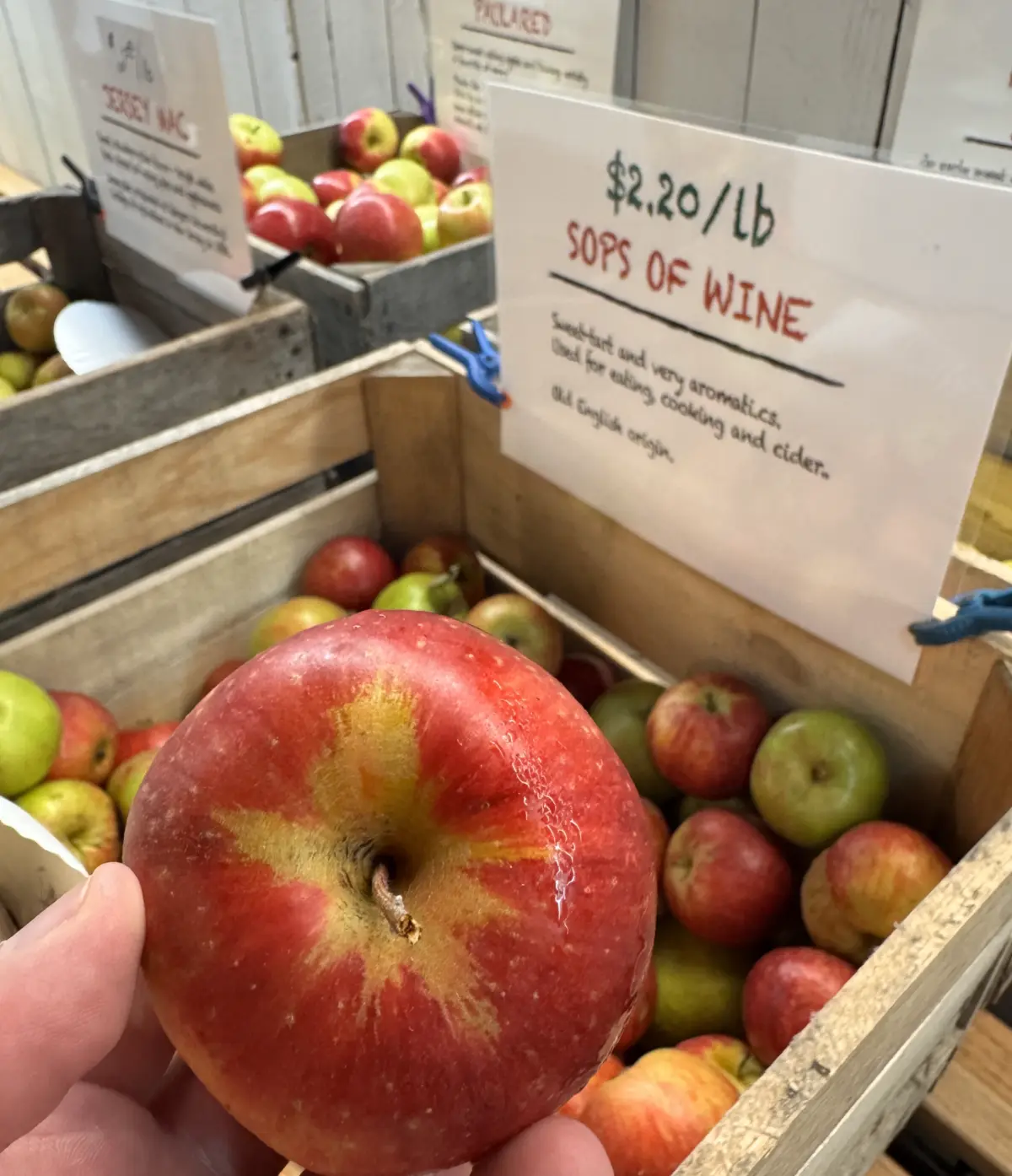
The Sops of Wine cultivar proved to be a psychological as much as a pomological challenge. Historically debated within botanical circles—specifically regarding whether it represents a singular distinct variety or an umbrella classification for multiple old heritage types—the specimen tested yielded disappointing physical results. Consumed days after acquisition, the fruit suffered from advanced post-harvest degradation, manifesting a distinctly mealy and gritty mouthfeel.
Despite its compromised texture, the underlying flavor profile retained pleasant, albeit muted, characteristics. Falling into the "subacid" category, it leaned sweet with faint notes of vanilla and spice. Rumors within the horticultural community suggest true Sops of Wine specimens often feature red-fleshed interiors or distinct red staining within white flesh; however, the tested specimen exhibited standard monochromatic flesh. Capping off at a mediocre 3.5 out of 10, the experience served as a cautionary tale regarding the rapid expiration of delicate heritage fruit.
4. Fenceline Surprise
- Score: 1.0 / 10
- Structural Profile: Bland, mushy, sandy mouthfeel.
- Aromatic & Flavor Profile: Faint, transient pear-like misting that rapidly dissipates into nothingness.
True to its cynical naming convention, the Fenceline Surprise delivered an overwhelmingly negative sensory experience. Despite signage at the point of purchase classifying it as a "firm apple," the specimen presented as an advanced, bland mush upon consumption.
A fleeting, ephemeral hint of flavor—akin to a distant misting of pear juice—briefly registered on the palate before instantly evaporating, leaving behind an unpleasant sensation comparable to chewing beach sand. Given its rapid transition to structural failure, investigators concluded the fruit was severely over-aged prior to purchase. While the nomenclature and outward visual aesthetics possessed potential, the biological reality warranted a near-failing grade of 1.0 out of 10, narrowly escaping a true zero solely due to its initial aesthetic presentation.

5. Americus Crab
- Score: 2.5 / 10
- Structural Profile: Extremely tough, highly tannic, structurally armored.
- Aromatic & Flavor Profile: Savory, hyper-tart, strictly non-culinary for fresh consumption.
Classified strictly as a crabapple, the Americus Crab challenged conventional parameters of table fruit consumption. Exhibiting an extreme concentration of tannins, the fruit is structurally tough, savory, and intensely tart.
Pomological investigators noted that while the cultivar is entirely unsuited for casual, out-of-hand consumption by the layperson, it possesses a certain avant-garde appeal for those who appreciate aggressive, unyielding agricultural specimens. It is a fruit that actively resists human ingestion, capturing a niche appeal scored at 2.5 out of 10.
6. Campfield (False)
- Score: 4.1 / 10
- Structural Profile: Chewy, callused-thumb density, intensely tannic.
- Aromatic & Flavor Profile: Overly sweet clashing with aggressive astringency.
Labeled cryptically as "(false)" in its cataloging, the Campfield variety presented a perplexing textural enigma, described evocatively as chewing on a callused thumb. The internal chemistry showcased a volatile war between excessive sweetness and towering tannin levels, creating the uncanny sensation that the fruit was aggressively digesting the consumer simultaneously.
However, historical context redeems the cultivar. Botanical records trace the Campfield lineage directly back to Matthew Canfield (alternatively spelled Campfield), an anti-royalist Puritan separatist who migrated from England during the Great Puritan Migration of 1637. A founding father of New Haven Colony, Norwalk, and Newark—where he is entombed beneath City Hall—Canfield operated farms and orchards bound by strict colonial decrees requiring freeholders to cultivate fruit trees for the production of high-grade winter cider. Because the Campfield is fundamentally an industrial cider apple rather than a dessert fruit, its abrasive human-tongue resistance is entirely historically consistent. It secures a 4.1 out of 10 for fresh eating.

7. Graham
- Score: 8.0 / 10
- Structural Profile: Monumentally dense, glacier-calving fracture patterns, jaw-taxing hardness.
- Aromatic & Flavor Profile: Unabashed, direct, and chemically unmistakable Juicy Fruit gum.
The final evaluation of the series focused on the Graham, an apple of terrifying structural integrity. So dense and hard was this cultivar that it threatened the mechanical stability of human molars, requiring jaw-straining exertion reminiscent of extreme athletic conditioning. Upon finally breaching the exterior, the flesh fractured with the cataclysmic energy of a calving glacier.
The ultimate reward, however, completely justified the structural hostility: the Graham offered a flavor profile that defied botanical expectations, delivering a direct, unreserved gustatory hit of classic Juicy Fruit chewing gum. Despite the physical toll exacted upon the consumer’s jaw, the sheer novelty and purity of this flavor profile earned the Graham an impressive 8.0 out of 10.
Supporting Context and Comparative Metrics
To synthesize the data compiled across the Apple Snack Gang’s field expeditions, the evaluated cultivars span a wide continuum of agricultural utility, structural durability, and consumer satisfaction.
| Cultivar Name | Assigned Score (out of 10) | Primary Structural Trait | Dominant Flavor / Aromatic Note | Designated Agricultural Use |
|---|---|---|---|---|
| St Edmunds Pippin | 8.3 | Sharp-breaking, crunchy, juicy | Fennel pollen, bright sweet-tart | Fresh dessert fruit |
| Graham | 8.0 | Glacier-calving density, rock-hard | Unmistakable Juicy Fruit gum | Fresh / Specialty consumption |
| Kickapoo Spice | 6.9 | Dense, dry, grass-like finish | Heavy nutmeg, cinnamon, clove | Specialty spice evaluation |
| Campfield (False) | 4.1 | Chewy, callused-thumb texture | Sweet-tannic astringency | Historical cider production |
| Sops of Wine | 3.5 | Mealy, gritty, over-mature | Subacid vanilla and faint spice | Fresh / Historic heritage fruit |
| Americus Crab | 2.5 | Tough, highly tannic, rugged | Savory, hyper-tart | Foraging / Specialty culinary |
| Fenceline Surprise | 1.0 | Bland mush, sandy mouthfeel | Fleeting pear misting | Discard / Failed stock |
The metrics clearly illustrate that structural density and post-harvest timing dictate consumer perception. Cultivars possessing high structural integrity combined with volatile aromatic compounds (St Edmunds Pippin, Graham) dominate the upper echelon, while varieties compromised by premature degradation or specialized industrial brewing genetics (Fenceline Surprise, Campfield) rank lower when assessed strictly as table fruit.

Official Statements and Industry Perspective
Pomological researchers and agricultural historians emphasize that evaluating heritage and specialty apples requires a distinct mental framework compared to assessing mass-market commercial varieties like the Red Delicious or Gala.
"Apples are inherently volatile organisms," notes historical horticultural commentary surrounding the harvest. "Some improve dramatically off the tree, while others begin their inexorable descent toward agricultural failure the moment they sever from the branch. Evaluating cider stock, such as the Campfield, through the lens of fresh table consumption is an inherently flawed exercise; these fruits are forged for the fermentation vat, awaiting transmutation by the catalysts of cider production."
Furthermore, the psychological dimension of fruit tasting—where tactile memories, literary hallucinations (such as vivid cinematic flashbacks to Tolkien’s Denethor consuming tomatoes), and pop-culture associations intertwine with gustatory data—highlights the deeply subjective nature of modern food journalism.
Future Outlook
As the autumn harvest reaches its zenith, the investigative apple-tasting expedition shows no signs of slowing down. With upcoming field research tours scheduled across New York, New England, and Canada, the Apple Snack Gang is poised to encounter entirely new microclimates, regional orchards, and localized heirloom varietals.

Consumers, pomologists, and culinary enthusiasts alike are encouraged to monitor upcoming public appearance schedules and contribute regional specimens to the ongoing investigation. As regional cold snaps lock in and northern orchards yield their final crops of the season, the quest to catalog, critique, and consume the world’s most fascinating apples continues unabated.