

Executive Overview
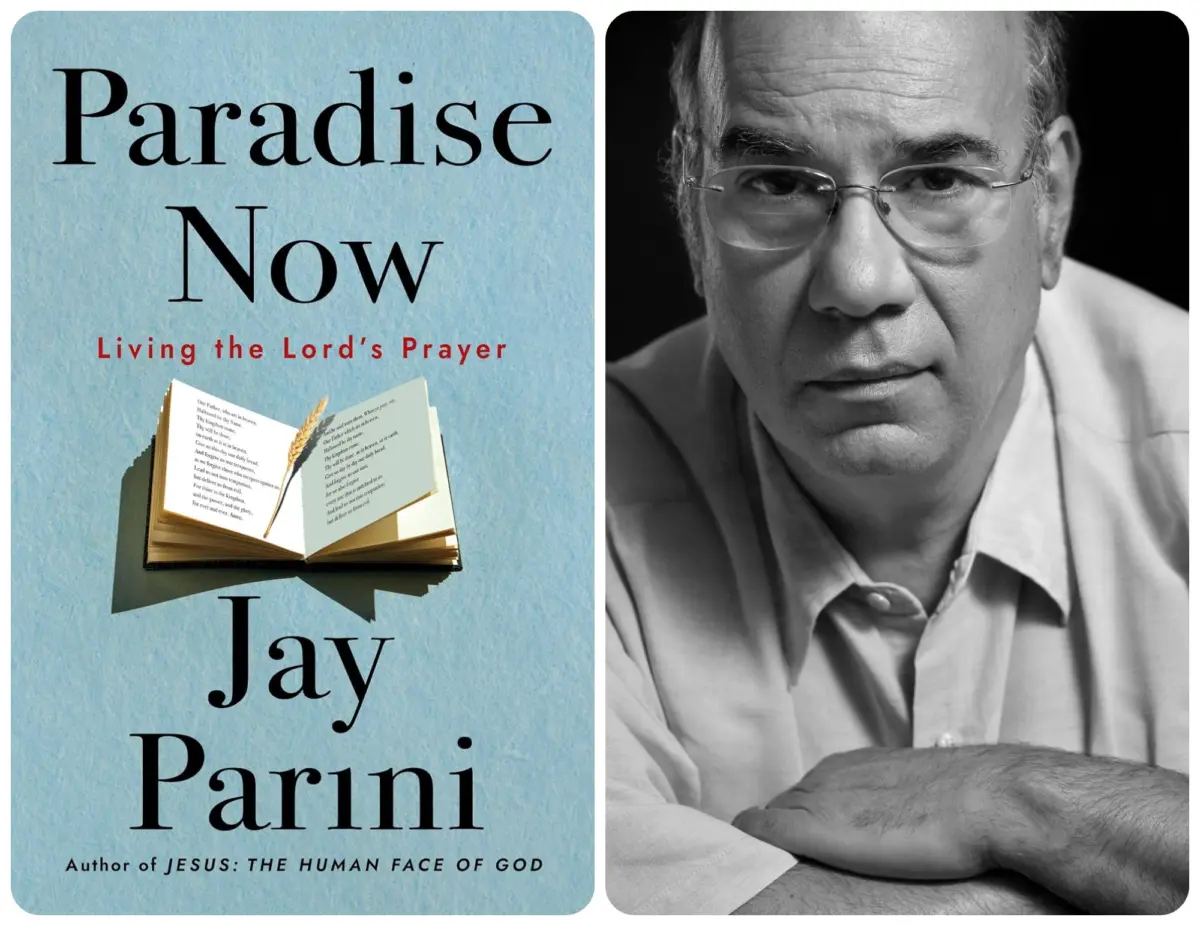
In an era characterized by accelerated living and increasing religious polarization, acclaimed author, poet, and academic Jay Parini is proposing a radical act of slow contemplation. Best known for his canonical biographical novels detailing the lives of Gore Vidal, Leo Tolstoy, and Jesus Christ, Parini is leveraging half a century of literary scholarship and classroom instruction to re-examine Christianity’s primary prayer. His new work, Paradise Now: Living the Lord’s Prayer (scheduled for publication in October by Morehouse Publishing), represents a multi-decade convergence of poetic sensibility, historical analysis, and theological meditation.
Rather than approaching the Lord’s Prayer—traditionally known as the Pater Noster—through the narrow lens of dogma or formal church doctrine, Parini treats the brief text as a flexible spiritual superstructure. Drawing from an eclectic array of thinkers including William Shakespeare, Mary Oliver, Carl Jung, Saint Augustine, Paul Tillich, and Rowan Williams, Paradise Now unpacks the prayer line by line. Parini’s central thesis contends that routine recitation has dulled the transformative potential of the prayer. By de-literalizing its metaphors and reading it through an intertextual, collage-like framework, he argues that the prayer ceases to be a mechanical ritual and becomes an accessible roadmap for present-moment illumination—a state he characterizes as "paradise, right here, right now." Furthermore, Parini highlights the prayer’s deep Abrahamic cross-currents, demonstrating its ethical and contemplative resonance for Jews, Muslims, and secular humanists alike.
Detailed Chronology: Decades of Scholarship Leading to Paradise Now
The publication of Paradise Now marks the culmination of a fifty-year intellectual journey spanning major American universities, literary movements, and theological inquiries.
+-----------------------------------------------------------------------------------+
| CHRONOLOGY OF INFLUENCE & DEVELOPMENT                                             |
+-----------------------------------------------------------------------------------+
| 1970s–1980s | Formative Academic Years                                            |
|             | • Begins academic career at Dartmouth College.                      |
|             | • Establishes dual tracks in poetry and literary criticism.         |
|             | • Deepens engagement with classical theology (Augustine, Aquinas).  |
+-------------+---------------------------------------------------------------------+
| 1980s–2010s | Mid-Career & Biographical Milestones                                |
|             | • Joins Middlebury College faculty as a professor of English.       |
|             | • Publishes *The Last Station* (Tolstoy) & biographies of Vidal.   |
|             | • Explores historical christology in *Jesus: The Human Face of God*.|
+-------------+---------------------------------------------------------------------+
| 2014–2023   | Conception & Composition Period                                     |
|             | • Begins deliberate, line-by-line notes on the Lord's Prayer.       |
|             | • Identifies issue of "rote recitation" in personal devotion.       |
|             | • Assembles intertextual collage (Jung, Oliver, Tillich, Williams). |
+-------------+---------------------------------------------------------------------+
| Oct 2024    | Publication & Public Engagement                                     |
|             | • *Paradise Now: Living the Lord’s Prayer* released by Morehouse.   |
|             | • Begins national media and lecture circuit on modern prayer.       |
+-----------------------------------------------------------------------------------+
The Early Academic Foundation (1970s–1980s)
Parini’s journey began during his early teaching career at Dartmouth College, where his dual focus on poetic form and classical literature laid the groundwork for his spiritual writings. During this period, Parini immersed himself in early Christian literature and medieval theology, reading Saint Augustine’s Confessions and Thomas Aquinas’s Summa Theologiae alongside modern poetry.
Literary Maturity and Historical Biographies (1980s–2010s)
After transitioning to Middlebury College, where he has taught English for decades, Parini established himself as one of America’s foremost literary biographers. His biographical novels—most notably The Last Station (1990), which chronicled the final days of Leo Tolstoy—explored the tension between spiritual ideals and human frailty. His subsequent works on Gore Vidal, Walter Benjamin, and his 2013 book Jesus: The Human Face of God reflected an increasing preoccupation with how historical figures construct meaning out of sacred and secular traditions.
The Ten-Year Genesis of Paradise Now (2014–2024)
Roughly a decade ago, Parini realized that his own spiritual practices had succumbed to routine. Reciting the Lord’s Prayer at standard speeds had rendered the words functionally invisible—a phenomenon psychologists refer to as semantic satiation. To counter this, Parini began keeping a dedicated notebook, systematically breaking down the prayer phrase by phrase. Over ten years, these notes expanded into a sprawling dialogue between his personal reflections and his lifelong reading list, ultimately yielding the manuscript for Paradise Now.
Supporting Context & Metrics: Re-Framing a Universal Text
The Crisis of Rote Recitation
In contemporary liturgical practice, the Lord’s Prayer is often recited in under twenty seconds. Parini’s project directly targets this mechanical speed, arguing that rapid repetition strips the text of its psychological and contemplative value.
+----------------------------------------------------------------------------------+
| COMPARATIVE ANALYSIS: ROTE VS. CONTEMPLATIVE READING                            |
+----------------------------------------------------------------------------------+
| Metric / Aspect         | Standard Liturgical Practice | Parini’s Hermeneutic   |
+-------------------------+------------------------------+-------------------------+
| Average Duration        | 15–25 Seconds                | Extended Meditation     |
| Psychological Mode      | Automatic / Rote Memory      | Active Intertextual     |
| Hermeneutic Focus       | Literal / Dogmatic           | Figurative / Psychological
| Inclusivity Framework   | Exclusively Denominational   | Universal / Interfaith  |
| Primary Textual Partners| Denominational Catechism     | Poets, Philosophers, Jung|
+-------------------------+------------------------------+-------------------------+
Comparative Hermeneutics: The Universal Abrahamic Core
A key dimension of Parini’s analysis is the assertion that the Lord’s Prayer transcends institutional Christian boundaries. When stripped of centuries of church-specific dogma, the text reveals structural and thematic alignment with the broader Abrahamic tradition and secular ethics.
                   THE UNIVERSAL ABRAHAMIC & ETHICAL CORE
                                     │
      ┌──────────────────────────────┼──────────────────────────────┐
      │                              │                              │
      ▼                              ▼                              ▼
JUDAIC ECO-SYSTEM             ISLAMIC CORRELATES             SECULAR / HUMANIST
• "Our Father" mirrors        • Daily reliance on Divine     • Universal ethics of
  Avinu Malkeinu                 sustenance (Rahman/Rahim)     forgiveness & mercy
• Sanctification echoes       • Protection from evil &       • Present-moment
the Kaddish spiritual straying mindfulness practices- Judaic Foundations: Phrases such as "Our Father in Heaven" directly echo traditional Jewish prayers like the Avinu Malkeinu, while "Hallowed be thy name" mirrors the opening lines of the Kaddish. The request for daily sustenance reflects the historical ethos of relying on divine providence detailed in the Hebrew Scriptures.
- Islamic Resonance: The prayer’s focus on total submission to divine will, requests for daily bread, and petitions for protection from evil closely mirror themes found in Al-Fatiha, the opening surah of the Quran.
- Secular and Humanist Appeal: The ethical directives—specifically the conditional nature of forgiveness ("forgive us our debts, as we forgive our debtors")—offer a psychological blueprint for emotional health and community restoration that operates independent of formal metaphysical belief.
The Methodology of Literary Collage
Parini structures his commentary not as a systematic theological treatise, but as an intertextual collage. By placing line-by-line fragments of the prayer alongside disparate cultural touchstones, he builds a multi-layered interpretive experience:
- Psychology: Integrating Carl Jung’s concepts of the shadow and collective unconscious to explore "deliver us from evil."
- Poetry: Pairing "Give us this day our daily bread" with Mary Oliver’s nature poetry to emphasize radical presence and environmental gratitude.
- Philosophy: Utilizing Søren Kierkegaard and Paul Tillich to frame "Thy kingdom come" as an existential transformation of human consciousness rather than a futuristic cosmic event.
Official Statements & Direct Reflections
Throughout his discussions regarding the book’s release, Parini has provided detailed commentary on his artistic choices, his intellectual influences, and his personal faith journey.
On the Origin and Purpose of the Project
Reflecting on the initial motivation for writing Paradise Now, Parini noted the need to disrupt long-standing habits of mechanical speech:
"The book had been in the back of my mind, and I’d been making notes on it for 10 years. I realized I was saying the prayer so quickly that I never really stopped to think about it. I would say it in a kind of rote fashion. So, I’m going to slow this down to an insane degree. It just shows you the levels of depth in that prayer."
On the Fusion of Literature, Pedagogy, and Prayer
Addressing how his professional career at Dartmouth and Middlebury influenced his spiritual perspective, Parini emphasized the continuity between his literary life and his devotional life:
"My reading life has been so intense, and I’ve constantly gone back to Saint Augustine, the Bible, Jewish and Christian scriptures, Thomas Aquinas, and more modern theologians like Paul Tillich, Kierkegaard, Rowan Williams, and so forth. I’ve been teaching English at Dartmouth first, then Middlebury, and writing poetry for half a century… I think about the Lord’s Prayer as a kind of superstructure to work within. I’m showing people how I pray."
On the Universal and Interfaith Reach of the Prayer
When asked about what surprised him most during his decade-long examination of the text, Parini highlighted its cross-religious utility:
"This is a central prayer of Christianity. It is also an essential prayer of Judaism. There’s nothing in this prayer that’s not in the essential prayer of a Muslim. Forgive others as we wish to be forgiven; thank you for our daily bread; keep us out of evil’s way—is there anything in here that anybody would find objectionable, no matter what your faith? I realized even an atheist could read this prayer and find it absolutely life-changing. This prayer is, in many ways, the universal prayer."
+----------------------------------------------------------------------------------+
| PARINI'S SPECTRUM OF INHERENT BENEFIT                                            |
+----------------------------------------------------------------------------------+
| AUDIENCE           | PRIMARY INTERPRETIVE BENEFIT                                |
+--------------------+-------------------------------------------------------------+
| Devout Christians  | Re-energizes familiar text; breaks rote habituation.        |
| Interfaith Readers | Highlights shared ethical & Abrahamic roots.                |
| Secular / Atheist  | Serves as a psychological framework for forgiveness & presence.|
+----------------------------------------------------------------------------------+
On "De-Literalization" and Spiritual Maturation
Parini spoke candidly about his intellectual evolution from childhood concepts of religion to a more nuanced, figurative understanding:
"I would like to think of myself as a mature Christian, and part of the process of maturation involves a de-literalization of the concepts. When kids think of heaven as a golden place above the clouds, with God with a long white beard on a throne, that’s obviously a kind of cartoon, a literal vision. As we spend decades praying, thinking, reading the scriptures, and reading the theological tradition, we begin to broaden our sense of the literal and make that journey from the literal to the figurative."
On the Practical Application for Readers
Describing his non-dogmatic, reflective approach, Parini detailed what he hopes readers will experience when engaging with Paradise Now:
"This book has no argument at all, and it’s not a work of theological scholarship. I’m simply saying I’m going to meditate on the Lord’s Prayer, line by line, and let my mind roam over the text and call up what it calls up. It’s a tour through my brain… I want them to discover that, in meditation and prayer, you encounter the eternal spirit. This rises from within you. If you just pause for a few minutes every day, you’ll see: ‘I’m living in paradise. Right here, right now.’"
Future Outlook & Impact on Literary Theology
Re-Energizing Contemplative Publishing
The October release of Paradise Now by Morehouse Publishing arrives at a significant juncture in religious trade publishing. As reader demographics shift away from dogmatic instructional texts toward contemplative, open-ended spiritual explorations, Parini’s collage-based approach offers a potential model for future works. By integrating modern poetry, depth psychology, and classical theology, the book bridges the gap between traditional academic theology and secular mindfulness literature.
             FUTURE IMPACT ON LITURGICAL & LITERARY SCHOLARSHIP
                                     │
      ┌──────────────────────────────┼──────────────────────────────┐
      │                              │                              │
      ▼                              ▼                              ▼
PUBLISHING TRENDS             INTERFAITH DIALOGUE            PEDAGOGICAL USE
• Shift toward hybrid         • Provides a neutral text      • Model for humanities-based
  literary-spiritual texts      for multi-faith panels         approaches to sacred texts
• Rise in secular-accessible  • Focuses on shared            • Application in creative
  contemplative guides          ethics over dogma              writing & world religions
Broader Cultural and Interfaith Implications
Beyond its immediate publishing context, Paradise Now provides a timely framework for interfaith dialogue. At a time when religious differences are frequently amplified in political discourse, Parini’s focus on the common ethical core of the Lord’s Prayer offers a practical path toward mutual understanding.
By framing prayer as a deliberate slowing-down of thought—an interior journey available to believers and non-believers alike—Parini’s work reinforces the enduring relevance of ancient texts in navigating modern life. His decade-long project ultimately demonstrates that deep engagement with a familiar phrase can transform routine recitation into a practice of present-moment awareness.