

Executive Overview
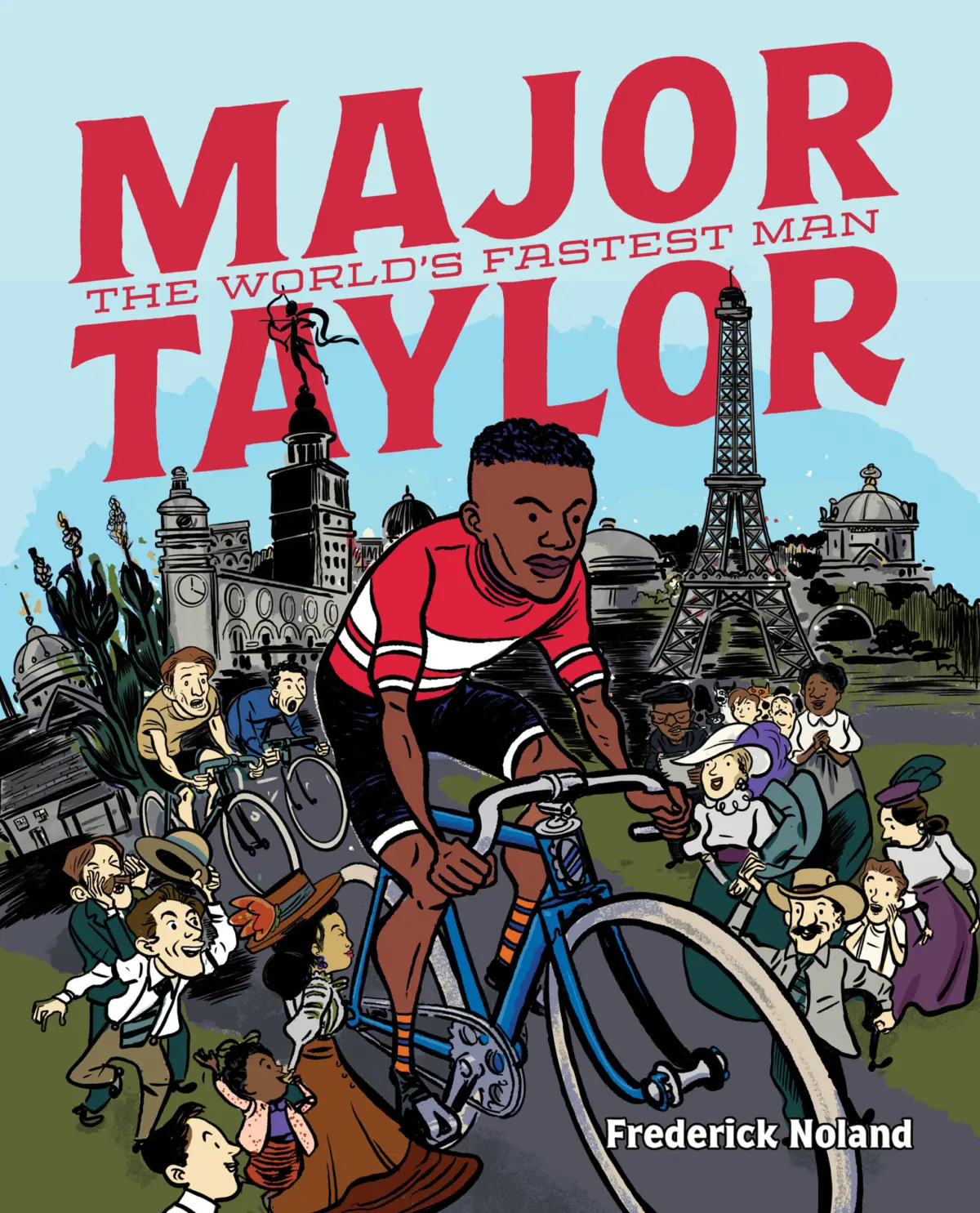
The publication of Frederick Noland’s graphic biography, Major Taylor: The World’s Fastest Man (Drawn & Quarterly), marks a significant milestone in both graphic literature and the recovery of American sports history. The work offers a deeply researched, visually compelling portrait of Marshall "Major" Taylor (1878–1932), a trailblazing athlete who rose from modest origins in Indianapolis to become the first internationally acclaimed Black superstar athlete. Operating at the turn of the 20th century—an era defined by the rise of Jim Crow segregation and violent anti-Black oppression—Taylor dominated track cycling, which was then the world’s most popular and lucrative spectator sport.
Noland’s biography goes beyond simple sports hagiography. By integrating historical rigor with dynamic visual storytelling, the book documents Taylor’s early life, his deep spiritual faith, his mechanical and strategic brilliance, and his perseverance against systemic attempts to bar him from competition.
In an excerpt featured alongside the release, readers are introduced to Taylor’s formative apprenticeship years. The narrative highlights his early interactions with key white allies and mentors—including high-wheel champion and bicycle manufacturer Louis "Birdie" Munger, alongside revered veterans Arthur Zimmerman and Willie Windle. Published by Drawn & Quarterly, Noland’s work re-evaluates Taylor’s legacy, placing him at the forefront of global athletic pioneers alongside figures like Jack Johnson, Moses Fleetwood Walker, and Jesse Owens.
Detailed Chronology: The Life, Ascent, and Legacy of Marshall "Major" Taylor
To understand the scope of Noland’s graphic biography, one must trace the timeline of Marshall Taylor’s life, a journey marked by unprecedented athletic success and relentless racial hostility.
+-----------------------------------------------------------------------------------+
| CHRONOLOGICAL MILESTONES: MARSHALL "MAJOR" TAYLOR                                |
+-----------------------------------------------------------------------------------+
| 1878        | Born in Indianapolis, Indiana.                                      |
| 1890–1892   | Hired by Hay & Willits bike shop; performs stunts in uniform ("Major").|
| 1892        | Wins first race at age 13; mentored by Louis "Birdie" Munger.     |
| 1895        | Relocates to Worcester, MA, to escape Midwestern Jim Crow laws.    |
| 1896        | Turns professional at age 18; competes at Madison Square Garden.  |
| 1899        | Wins 1-Mile Track Cycling World Championship in Montreal.         |
| 1900        | Secures the American Sprint Championship.                          |
| 1901–1904   | Embarks on triumphant European and Australian tours.               |
| 1910        | Retires from professional cycling at age 32.                      |
| 1928        | Self-publishes autobiography, "The Fastest Bicycle Rider in the World."|
| 1932        | Passes away in Chicago, IL; reinterred with honors in 1948.       |
+-----------------------------------------------------------------------------------+
1878–1892: Early Life and the Origin of "Major"
Marshall Walter Taylor was born on November 26, 1878, in rural Indianapolis, Indiana. His father, a Union Army veteran, worked as a coachman for a wealthy white family, the Southards. This connection allowed young Taylor to be raised alongside the Southard children, gaining access to educational opportunities and his first bicycle.
When the Southards relocated to Chicago, Taylor remained in Indianapolis, finding work at Hay & Willits, a local bicycle shop. To attract customers, the shop owners hired the 12-year-old Taylor to perform trick-riding stunts outside the storefront while dressed in a custom military-style officer’s uniform. Passersby began calling the talented young performer "Major," a moniker that stayed with him throughout his life.
1892–1895: Mentorship and the Northern Migration
In 1892, Taylor won his first official race—an amateur event organized by his employer—despite being given a handicap by older competitors. His natural speed caught the attention of Louis "Birdie" Munger, a former high-wheel champion turned bicycle manufacturer. Recognizing Taylor’s extraordinary lung capacity and athletic drive, Munger hired him as a shop assistant and personal protegee, training him in proper track mechanics, nutrition, and tactical positioning.
However, as racial segregation hardened across the Midwest during the mid-1890s, the League of American Wheelmen (L.A.W.)—the governing body for American cycling—enacted a "whites-only" membership clause in 1894. Facing death threats and outright bans from Midwestern velodromes, Taylor relocated with Munger in 1895 to Worcester, Massachusetts. Worcester was a booming manufacturing hub with a more permissive racial climate, providing Taylor with access to training facilities and supportive racing circuits.
1896–1900: Professional Breakthrough and World Supremacy
Taylor turned professional in late 1896 at the age of 18, debuting in the grueling six-day endurance races at New York’s Madison Square Garden. Despite sleep deprivation and hostile conditions, he finished eighth in a field of international veterans.
     1896: Debut at Madison Square Garden (8th Place finish)
       │
     1898: Breaks 7 World Records in multiple sprint distances
       │
     1899: Wins World Track Cycling Championship (Montreal, Canada)
       │
     1900: Crowned American Sprint Champion
Between 1898 and 1899, Taylor established himself as the fastest sprinter in the world, setting seven world records in distances ranging from the quarter-mile to the two-mile sprint. In August 1899, at the World Track Cycling Championship in Montreal, Canada, Taylor defeated the world’s elite racers to win the 1-mile sprint title. In doing so, he became the second Black athlete to win a world championship in any sport (following Canadian boxer George Dixon in 1890) and the first African American world champion.
1901–1910: Global Tours and Systematic Sabotage
Despite his world title, white American promoters routinely denied Taylor access to southern tracks, while white riders conspired against him on the velodrome. Riders frequently formed "pockets" on the track to physically block Taylor, and on several occasions, rivals tackled or choked him after races.
Seeking fairer competition and higher compensation, Taylor embarked on high-profile European and Australian tours between 1901 and 1904. He drew record-breaking crowds in Paris, Berlin, Sydney, and Melbourne, defeating national champions across both continents. He retired from professional competition in 1910 at the age of 32, leaving behind a legacy of unmatched velocity and grace under severe duress.
Supporting Context & Metrics: Early Cycling Economics and Visual Scholarship
To appreciate the significance of Noland’s work, one must understand the socio-economic impact of cycling in late 19th-century society, alongside the unique demands of converting this history into graphic journalism.
The Economics of the 1890s Cycling Boom
Before the widespread adoption of the automobile, track cycling was the dominant global sport, generating massive ticket sales, corporate sponsorships, and press coverage.
+-----------------------------------------------------------------------------------+
| SPORTING & ECONOMIC METRICS: TRACK CYCLING ERA (1895–1905)                        |
+-----------------------------------------------------------------------------------+
| Velodrome Spectator Attendance | 10,000 to 30,000 spectators per major event       |
| Top Track Speeds Achieved      | 45 mph to 50 mph (72–80 km/h) on wooden velodromes|
| Taylor's Peak Annual Earnings  | $10,000–$15,000 ($350k–$500k inflation adjusted) |
| World Records Set by Taylor    | 7 official world records (1898–1899)              |
+-----------------------------------------------------------------------------------+
Taylor’s earning power matched or exceeded the top baseball stars of his era. However, while white champions like Arthur Zimmerman and Willie Windle secured corporate sponsorships and lucrative manufacturing deals, Taylor had to continually fight for basic access to tracks and fair payment from American promoters.
Artistic Methodology and Historical Documentation
Frederick Noland’s graphic biography uses a combination of archival research, period photograph analysis, and sequential art techniques to convey both the physical speed of velodrome racing and the emotional weight of racial isolation.
       [ Archival Photography & Period Newspapers ]
                            │
                            ▼
     [ Sequential Line Art & Dynamic Motion Lines ]
                            │
                            ▼
    [ Narrative Reconstruction of Tactical Racing ]
                            │
                            ▼
 [ Depiction of Systemic Racism vs. Personal Integrity ]
Noland uses variable panel layouts and dynamic motion lines to simulate the high speeds—exceeding 45 miles per hour—achieved by track cyclists riding fixed-gear bicycles without brakes. The featured 12-page excerpt focuses on Taylor’s apprenticeship, detailing his relationships with Munger, Zimmerman, and Windle. Rather than presenting these white figures as simple saviors, Noland shows the complex reality of their mentorship: they recognized Taylor’s talent and provided access to training, yet Taylor still had to navigate an ecosystem saturated with structural prejudice.
Official Statements and Critical Reception
The publication of Major Taylor: The World’s Fastest Man has generated commentary from graphic novel critics, sports historians, and publishing professionals.
Frederick Noland, author and illustrator, reflected on his motivation for undertaking the project:
"Major Taylor’s story is not merely one of athletic genius; it is a profound lesson in resilience, strategy, and personal dignity. In illustrating his life, I wanted to move beyond the stat sheets and headline tallies to visually capture the physical reality of his effort—the grueling nature of the tracks, the hostility of the crowds, and the quiet, immovable faith that guided him through every trial."
In an official statement regarding the book’s release, Drawn & Quarterly highlighted the broader cultural importance of graphic biographies in preserving history:
"Frederick Noland has constructed an essential piece of non-fiction graphic literature. ‘Major Taylor’ bridges a historical gap, taking a complex era of American history and rendering it accessible, visceral, and uncompromisingly true to the archival record. We are proud to bring this long-overdue biography to readers worldwide."
Dr. Marcus Alston, a sports historian specializing in Jim Crow-era athletics, commented on the book’s scholarly contribution:
"For decades, Marshall Taylor was marginalized in the broader narrative of American sports history, overshadowed by figures who emerged mid-century. Noland’s graphic narrative restores Taylor to his rightful place as an international superstar who challenged the racial hierarchy decades before Jackie Robinson walked onto Ebbets Field."
Future Outlook: Legacy and Educational Integration
The release of Noland’s book comes amid a broader cultural re-evaluation of Major Taylor’s contributions to sports and civil rights.
+-----------------------------------------------------------------------------------+
| FUTURE OUTLOOK: REVITALIZATION & HISTORICAL LEGACY                                |
+-----------------------------------------------------------------------------------+
| Educational Adoption   | Integration into middle/high school history curricula.  |
| Cycling Advocacy       | Expansion of Major Taylor Cycling Clubs globally.       |
| Archival Preservation  | Digital cataloging of 1890s racing archives.             |
| Media Adaptation       | Potential feature film and documentary projects.         |
+-----------------------------------------------------------------------------------+
Academic and Curricular Impact
Educational institutions are increasingly adopting graphic non-fiction to teach complex historical eras. Major Taylor: The World’s Fastest Man is positioned to become a central resource in secondary and post-secondary African American history, sports sociology, and visual storytelling curricula. Its combination of primary-source research and accessible artwork provides educators with an effective tool to discuss Jim Crow restrictions, the rise of modern sports entertainment, and early civil rights resistance.
Modern Cycling and Cultural Commemoration
Taylor’s legacy continues to grow within contemporary cycling culture. The Major Taylor Association, based in Worcester, Massachusetts, continues to preserve his memory through educational outreach and public monuments. Furthermore, dozens of Major Taylor Cycling Clubs have formed across North America and Europe, promoting diversity, equity, and inclusion within modern cycling.
Through Frederick Noland’s biography, Marshall "Major" Taylor’s story receives the comprehensive visual treatment it deserves. By capturing both his high-speed victories and his lifelong battle against prejudice, the book ensures that the legacy of "The World’s Fastest Man" remains visible for generations to come.