

Executive Overview
In a coordinated escalation of global trade tensions, the United States, the European Union, and Japan have formally launched a high-stakes dispute settlement case against China at the World Trade Organization (WTO). Announced by President Barack Obama, the legal challenge targets Beijing’s aggressive export restrictions on rare earth elements, tungsten, and molybdenum—critical raw materials that serve as the foundational building blocks for the modern high-tech, green energy, and defense manufacturing sectors.
While Western leaders emphasize that China’s phenomenal economic rise benefits the global community, they argue that Beijing’s monopolistic control and restrictive trade practices violate international agreements. By artificially driving up the cost of these minerals outside of China while depressing domestic prices, Beijing has engineered an unfair competitive advantage. This dynamic places immense pressure on overseas manufacturers to relocate their factories, jobs, and intellectual property directly to Chinese soil.
Beijing has defended its regulatory framework as entirely compliant with WTO rules, asserting that its policies are designed to manage national resources and protect fragile local environments from the severe ecological degradation associated with mining. However, with China commanding nearly total dominion over the production of these essential elements—supplying 97% of the world’s rare earths, 91% of its tungsten, and over a third of its molybdenum—the WTO challenge sets the stage for a protracted legal and economic battle with far-reaching implications for global commerce, industrial policy, and national security.
Detailed Chronology and Diplomatic Escalation
The confrontation over rare earth elements is not a sudden development, but rather the culmination of years of escalating trade friction, policy tightening, and diplomatic maneuvering between Beijing and Western industrial powers.
The Path to WTO Action
Over the past decade, China progressively tightened its grip on strategic raw materials through a combination of escalating export taxes and severe quota reductions. The turning point for many international observers occurred in 2010, when Beijing slashed its export quotas by a dramatic 32% for domestic firms and a staggering 54% for foreign-invested enterprises. That same year, amidst a diplomatic dispute with Tokyo, China temporarily halted shipments of rare earth minerals to Japan entirely, triggering an immediate and alarming price spike on global markets.
Recognizing the existential vulnerability of their manufacturing and defense sectors, the United States, the EU, and Japan spent the intervening years raising the issue bilaterally with Beijing, yielding little to no diplomatic progress. Following a previous, separate WTO ruling regarding raw material restrictions—a case where China failed to dismantle its protectionist framework—Western trade officials concluded that formal litigation was the only remaining recourse.
The Formal Filing and Legal Timeline
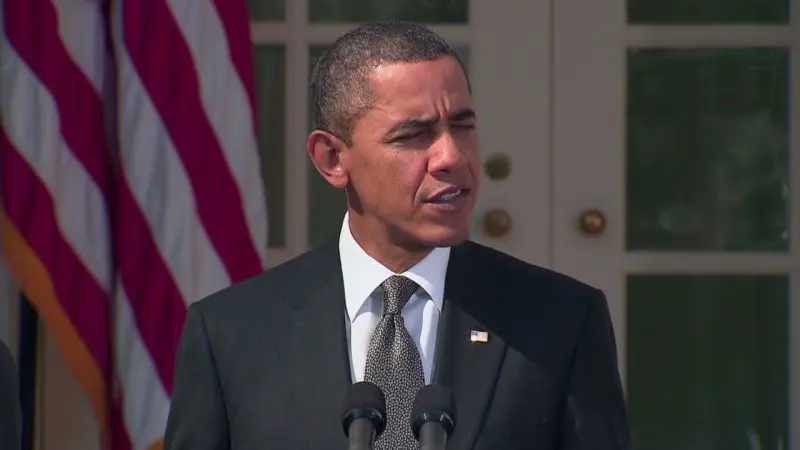
On a Tuesday morning at the White House, President Obama, flanked by key economic advisors, formally announced the multi-nation WTO challenge. Simultaneously, the European Commission released statements in Brussels confirming that Washington, Brussels, and Tokyo had formally requested dispute settlement consultations with China within the WTO framework.
Under WTO protocols, the legal battle now enters a strict procedural timeline:
- The 10-Day Window: China is legally required to formally respond to the joint challenge within 10 days of the filing.
- The 60-Day Consultation Period: The disputing parties are mandated to hold formal bilateral talks within two months to seek a negotiated settlement.
- Panel Escalation: If these consultations fail to produce a mutually agreeable resolution within the designated timeframe, the United States, the EU, and Japan possess the authority to request the establishment of a formal WTO dispute resolution panel to adjudicate the matter and issue a binding ruling.
Supporting Context, Economic Metrics, and Industrial Impact
To understand the gravity of the WTO challenge, one must examine the irreplaceable nature of the minerals in question and the profound economic distortions caused by China’s export regime.
The Anatomy of Strategic Minerals
The WTO challenge targets 17 specific rare earth elements—including cerium, neodymium, and dysprosium—alongside heavy industrial metals like tungsten and molybdenum. These materials possess unique magnetic, heat-resistant, and luminescent properties that make them virtually irreplaceable in advanced manufacturing.
- Rare Earth Elements (REEs): China produces a staggering 97% of the global supply of rare earths. These elements are indispensable components in flat-screen televisions, smartphones, hybrid and electric vehicle batteries, wind turbines, energy-efficient lighting systems, petroleum refining catalysts, and advanced electronics.
- Tungsten: Famed for its exceptional melting point and durability, tungsten is heavily utilized in advanced lighting technology, electronics, automotive components, aerospace engineering, and medical devices. China controls 91% of the world’s tungsten supply.
- Molybdenum: A crucial metallic element primarily used to create durable steel alloys and filaments for industrial and commercial lighting. China accounts for approximately 36% of global molybdenum production.
+-------------------------------------------------------------+
|               GLOBAL PRODUCTION SHARE BY CHINA              |
+-------------------------------------------------------------+
| Rare Earths  ████████████████████████████████████████  97%  |
| Tungsten     ████████████████████████████████████      91%  |
| Molybdenum   ██████████████████                        36%  |
+-------------------------------------------------------------+
The Cost Disparity and Supply Chain Disruption
According to trade representatives from both the United States and the European Union, China’s policy of restricting exports while subsidizing domestic consumption has created a deeply distorted two-tier pricing system.
Because rare earths cannot easily be substituted without requiring costly product redesigns, a disruption in their availability threatens to unravel entire industrial value chains. Manufacturers operating within China enjoy cheap, abundant access to these inputs, giving them an unfair structural advantage when competing against overseas firms in global markets. Conversely, Western manufacturers face inflated costs, chronic supply uncertainty, and immense economic pressure to relocate their facilities, research operations, and technical talent directly to China to secure stable access to raw materials.
Official Statements and Political Reactions
The announcement of the WTO challenge drew sharp commentary from political leaders, trade commissioners, and domestic lawmakers across the globe, highlighting the intersection of free-market economics, industrial policy, and national security.
White House and Executive Branch Perspective
President Obama framed the challenge not as an act of hostility toward China, but as an insistence on adherence to global rules of fair play.
"We want our companies building those products right here in America," President Obama declared during his White House address. "But to do that, American manufacturers need to have access to rare earth materials which China supplies. Now, if China would simply let the market work on its own, we’d have no objections. Instead, Chinese policies currently are preventing that from happening and they go against the very rules that China agreed to follow."
White House Press Secretary Jay Carney echoed these sentiments, emphasizing that China’s emergence as an economic powerhouse must be accompanied by adherence to multilateral norms. "We believe that China’s rise is a good thing for the Chinese people and for the global community… It is also important that, as China becomes a bigger and bigger economic power, that China play by the same set of rules that other major economic powers play by."
U.S. Trade Representative Ron Kirk underscored the devastating impact on American workers: "America’s workers and manufacturers are being hurt in both established and budding industrial sectors by these policies. China continues to make its export restraints more restrictive, resulting in massive distortions and harmful disruptions in supply chains for these materials throughout the global marketplace."
European Union and International Trade Leadership
Karel De Gucht, the EU Trade Commissioner, expressed deep frustration over Beijing’s persistent disregard for international trade obligations, noting that Brussels had exhausted diplomatic channels over several years.
"China’s restrictions on rare earths and other products violate international trade rules and must be removed," De Gucht stated. "These measures hurt our producers and consumers in the EU and across the world, including manufacturers. Despite rulings on other raw materials, China has made no attempt to remove the other export restrictions. This leaves us no choice but to challenge China’s export regime again to ensure fair access for our businesses to these materials."
Chinese Foreign Ministry Defense
In Beijing, the Chinese government pushed back vigorously against the Western allegations, maintaining that its governance of natural resources is fully consistent with international law.
Liu Weimin, a spokesman for the Chinese Ministry of Foreign Affairs, defended the country’s posture during a press briefing: "China has worked out its own policy on managing rare earths, which is in line with WTO regulations. Our policies tackle not only the export of rare earth but also its production and exploration."
While Western officials maintained that Beijing was hoarding resources for protectionist and strategic advantages, Chinese authorities consistently argued that export controls were fundamentally motivated by ecological preservation, resource conservation, and the severe environmental degradation—such as toxic chemical runoff and radioactive waste—inherent in the extraction and processing of rare earth metals.
Domestic Congressional Skepticism
While the executive branches of the U.S. and EU pursued multilateral litigation, some lawmakers argued that the WTO process was far too slow to protect domestic interests.
U.S. Senator Chuck Schumer (D-New York) voiced skepticism regarding the efficacy of WTO dispute resolution, which can take years to yield a final verdict. "There are faster ways to assert leverage on China than relying on the WTO, which could take years to resolve the case," Schumer argued in a statement, calling for aggressive domestic legislative maneuvers, including blocking Chinese-funded mining projects within the United States and restricting World Bank financing for Chinese mining ventures.
Future Outlook and Strategic Implications
The WTO dispute over rare earth minerals extends far beyond legalistic trade arguments; it represents a foundational battle over the future architecture of global high-tech and green energy supply chains.
National Security Dimensions
The urgency displayed by Washington and its allies is deeply compounded by national security concerns. Congressional hearings, including inquiries by the House Foreign Affairs Subcommittee on Asia and the Pacific, have underscored how vital these minerals are for cutting-edge military hardware, including precision-guided missile systems, unmanned aerial drones, and the advanced avionics of the F-35 Joint Strike Fighter program. Relying on a geopolitical rival for the core materials powering national defense assets is a vulnerability that Western military planners are increasingly unwilling to tolerate.
Diversification and Domestic Production
In response to these geopolitical pressures, Western industrial nations are accelerating efforts to decouple from Chinese mineral dominance. American companies are aggressively working to revive domestic extraction and processing capabilities. Firms like Molycorp Inc., which operates rare earth mines in California and Colorado, have urged federal lawmakers to implement robust policy support, financial incentives, and streamlined permitting to foster domestic research, development, and mining infrastructure. Similar initiatives are underway within the European Union, Australia, and Japan to secure alternative supply sources in Canada, Africa, and Central Asia.
Long-Term Prognosis
Whether the WTO challenge forces Beijing to dismantle its quota systems remains to be seen. Even if the United States, the EU, and Japan secure a favorable legal ruling through the WTO dispute panel, the broader economic reality is clear: the race to secure critical high-tech raw materials has fundamentally altered global industrial strategy. For Beijing, managing its strategic mineral reserves remains a powerful tool of statecraft. For Washington, Brussels, and Tokyo, the crisis has served as an urgent wake-up call to rebuild domestic supply chains and ensure that the industries of tomorrow are not held hostage by resource nationalism.
