In an era dominated by rapid algorithmic shifts, visual media, and short-form video, the foundational engine of digital commerce remains quietly, stubbornly written. Behind multi-million dollar software launches, high-ticket consulting agreements, and viral consumer brands lies direct-response copywriting—the strategic arrangement of words designed to compel action.
Historically viewed as a creative subset of the advertising industry, copywriting has undergone a profound structural evolution. Today, elite digital agencies and content syndicates, such as the seven-figure educational platform Copyblogger, treat written marketing not as an artistic endeavor, but as a systematic, data-backed customer acquisition channel.
This investigative report examines the operational frameworks used by leading digital marketers to turn written words into high-yielding business assets. Through an analysis of competitor intelligence, artificial intelligence integration, and rigorous return-on-investment (ROI) tracking, we deconstruct the modern copywriting methodologies that bypass superficial engagement in favor of measurable, bottom-line revenue.
Detailed Chronology: The Evolution of High-Conversion Copywriting
The trajectory of modern digital copywriting can be mapped across distinct operational phases, transitioning from intuitive creative writing to structured conversion engineering. Below is the chronological blueprint that successful copywriters and agencies employ to develop, validate, and scale high-performing copy.
Phase 1: Deep Audience Extraction (The Myth of the Blank Page)
The traditional image of the copywriter staring at a blank page, waiting for creative inspiration, has been systematically dismantled. Modern conversion copywriters begin their work in the archives of customer data. The primary objective is to capture the exact psychological profile of the prospect:
Their current daily realities and micro-frustrations.
The emotional and financial costs of their unsolved problems.
The deep-seated objections that prevent them from purchasing.
To achieve this, strategists bypass traditional demographic surveys in favor of qualitative data extraction. They interview active sales representatives to isolate recurring objections, analyze customer support transcripts, and mine decentralized public forums like Reddit and specialized Facebook groups.
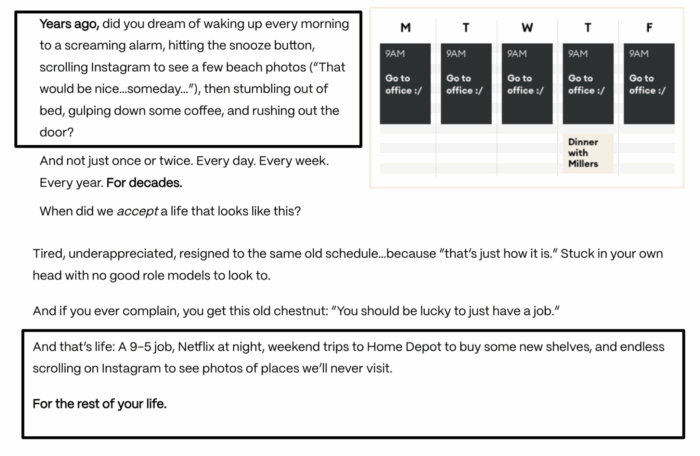
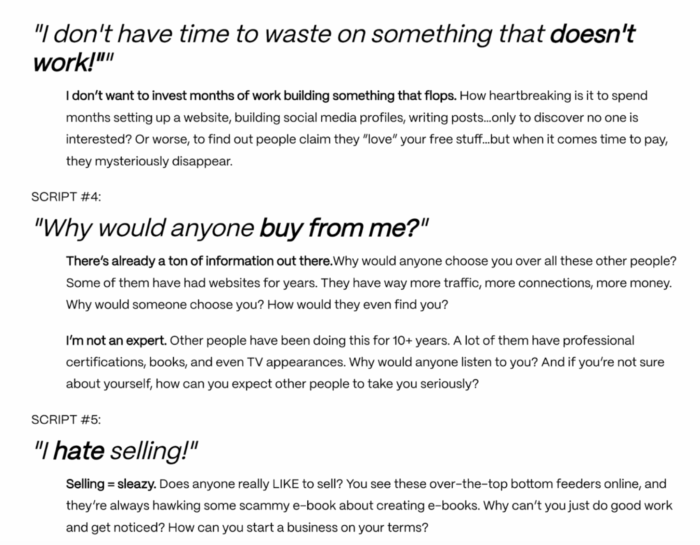
For example, when examining the marketing architecture of financial educator Ramit Sethi’s flagship course, Earnable, the copy does not rely on generic promises of wealth. Instead, it mirrors the hyper-specific daily realities of his target demographic: a rigid 9-to-5 job, evening Netflix habits, weekend trips to home improvement stores, and passive social media consumption. By reflecting the prospect’s exact reality back to them, the copy establishes immediate cognitive empathy and trust.
Phase 2: Competitive Reverse-Engineering
Rather than innovating in a vacuum, elite copywriters treat the competitive landscape as a pre-funded research and development lab. Major market competitors spend millions of dollars split-testing headlines, hooks, and value propositions.
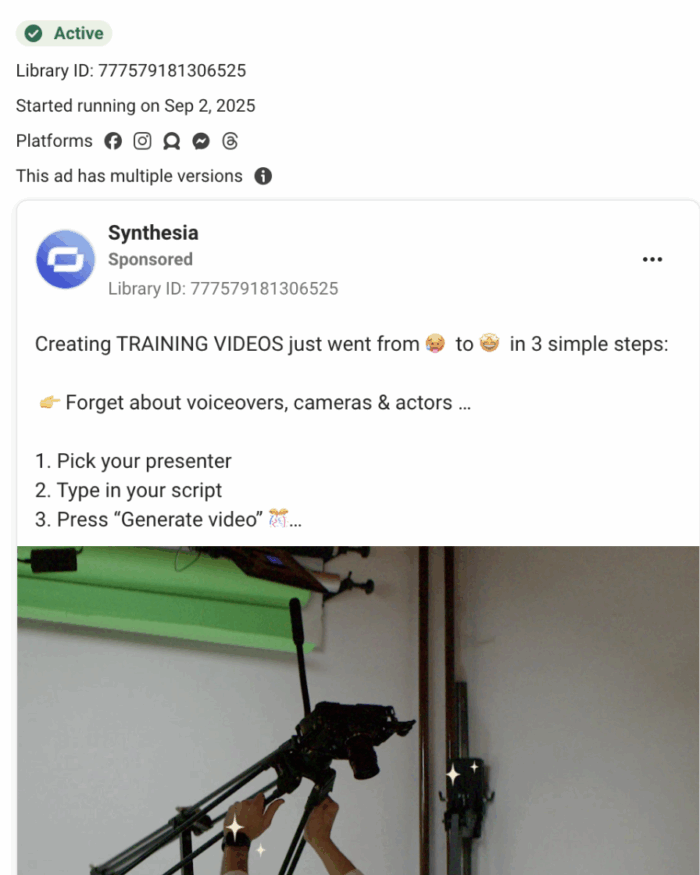
By utilizing public transparency tools—most notably the Meta (Facebook) Ads Library and the LinkedIn Ads Directory—strategists can identify which ad variations have been active the longest. In digital advertising, ad longevity is the most reliable proxy for profitability; unprofitable ads are disabled quickly, while winning copy is allowed to run for months.
An investigation into the ad creatives of enterprise platforms, such as the AI video generator Synthesia or CRM provider HubSpot, reveals a consistent focus on operational pain points—such as the logistical nightmare of coordinating video shoots or the revenue loss associated with disorganized CRM data. Modern copywriters extract these validated pain points and adapt them across emails, landing pages, and long-form articles.
Phase 3: Structural Systematization and the Swipe File
Once target pain points are isolated, copywriters organize their concepts using structured templates. The reliance on "swipe files"—curated digital repositories of historically successful sales letters, landing pages, and email subject lines—is a standard industry practice.
Resources like SwipeFile.com, curated by veteran copywriter Neville Medhora, serve as foundational reference points. By studying the structural patterns of proven copy, writers can construct frameworks that ensure every piece of content contains a compelling hook, a clear demonstration of value, an anticipation of objections, and an explicit call to action (CTA).
Phase 4: Empirical Market Validation
The final phase of the copywriting lifecycle is empirical validation. Writers are increasingly encouraged to operate their own digital sandboxes—such as niche affiliate websites, dropshipping stores, or personal social media channels.
This hands-on execution teaches a vital commercial lesson: the difference between writing for traffic versus writing for purchase intent. An article that attracts thousands of casual readers but zero conversions is a commercial failure; conversely, a highly targeted page that attracts only fifty visitors but generates five high-ticket sales is an asset.
Supporting Context & Metrics: Measuring ROI Over Vanity
The most significant friction point in the copywriting industry is the misalignment of performance metrics. Historically, writers and clients have focused on vanity metrics such as page views, social media likes, and shares. However, modern marketing operations require a strict transition to conversion-centric tracking.
Marketing Channel
Vanity Metrics (Low Business Value)
True ROI Metrics (High Business Value)
Primary Tracking Methodologies
Social Media / Ghostwriting
Likes, Retweets, Impressions
Demographic fit of engagement, inbound DM inquiries, direct lead capture
Qualitative analysis of commenter profiles (e.g., target executive titles); "How did you hear about us?" form fields.
SEO & Blog Content
Total organic traffic, keyword rankings
Qualified lead conversions, product sign-ups, pipeline contribution
Google Analytics 4 (GA4) custom event tracking; multi-touch attribution models.
Sales Pages & Email Funnels
Click-through rates, open rates
Customer Acquisition Cost (CAC), Customer Lifetime Value (LTV), total revenue
Direct link tagging (UTM parameters); CRM platform tracking (HubSpot, Salesforce, Klaviyo).
The Danger of Untargeted Traffic
In B2B and enterprise software markets, high traffic volumes can frequently obscure poor copywriting. If a cybersecurity firm publishes an article explaining basic security terminology, it may attract thousands of students and entry-level professionals. While the traffic metric looks impressive on a report, the financial return is zero.
By establishing robust conversion tracking through analytics suites, copywriters can calculate the exact dollar value generated by their work. This shift from "creative writer" to "revenue generator" fundamentally changes how copywriters are compensated, allowing them to charge premium retainers or performance-based percentages rather than flat hourly rates.
Official Statements: Industry Perspectives
The shift toward highly analytical, research-heavy copywriting is supported by the industry’s leading operators.
Tim Stoddart, partner at Copyblogger and founder of multiple seven-figure digital ventures, emphasizes that modern copywriting has very little to do with traditional literary talent:
"Becoming a better copywriter doesn’t mean you write more eloquently. In fact, the opposite is often true. Great copywriters are clear, concise, and ultimately convert readers into customers. Instead of focusing on improving the craft of writing more eloquently, focus on how to generate more revenue from your words."
This sentiment is echoed by Charles Miller, a prominent personal branding strategist and co-leader of the Copyblogger Academy. Miller highlights the necessity of community-driven feedback loops in a highly isolated digital landscape:
"Building a career as a copywriter can be a lonely and challenging process. Having direct access to experienced marketers who can review your work and provide real-time, objective feedback is the single fastest way to bridge the gap between theory and high-earning execution."
Furthermore, the philosophical foundation of modern execution-focused copywriting is often traced back to investor and philosopher Naval Ravikant, whose famous maxim serves as a guiding principle for scaling writers:
"Be impatient with action, and patient with results."
This balance of rapid, daily execution paired with long-term strategic patience is what separates sustainable marketing agencies from short-lived operations.
Future Outlook: AI Integration and Platform Mastery
As the digital landscape prepares for further disruption, two macroeconomic trends are poised to redefine the copywriting profession: the sophisticated integration of artificial intelligence and the rise of platform-specific algorithmic mastery.
While early fears suggested that platforms like ChatGPT would completely replace human copywriters, the reality has proven far more nuanced. AI has not replaced the strategist; instead, it has supercharged the copywriter’s research and editing capabilities.
Modern copywriters leverage AI as an analytical research partner through specific use cases:
Raw Pain-Point Extraction: Instead of manually reading hundreds of forum posts, copywriters feed transcriptions of sales calls or Reddit threads into AI engines to extract recurring emotional triggers and objections.
Syntactical Refinement: Writers use targeted prompts to rephrase complex technical jargon into clear, high-impact language, eliminating passive voice and fluff.
Expert Citation Harvesting: AI is utilized to rapidly locate credible real-world examples, case studies, and social media quotes from industry experts, adding authoritative weight to the copy.
Platform-Specific Algorithmic Mastery
The era of generic, cross-posted marketing copy has ended. Modern distribution channels require deep specialization:
LinkedIn & Twitter/X: Require high-impact hooks, personal narratives, and thought-leadership formats designed to foster professional discussion.
Search Engine Optimization (SEO): Demands highly structured, authoritative, and actionable search-intent matching that aligns with Google’s search algorithms.
Email Marketing: Relies on intimate, conversational, and direct-response formats optimized for deliverability and immediate action.
Ultimately, the copywriters who thrive in the coming decade will not be those who write the most beautiful sentences. The future belongs to the strategic communicators who combine deep human empathy with analytical tools, treating copywriting not as art, but as the ultimate engine of business growth.