

Executive Overview
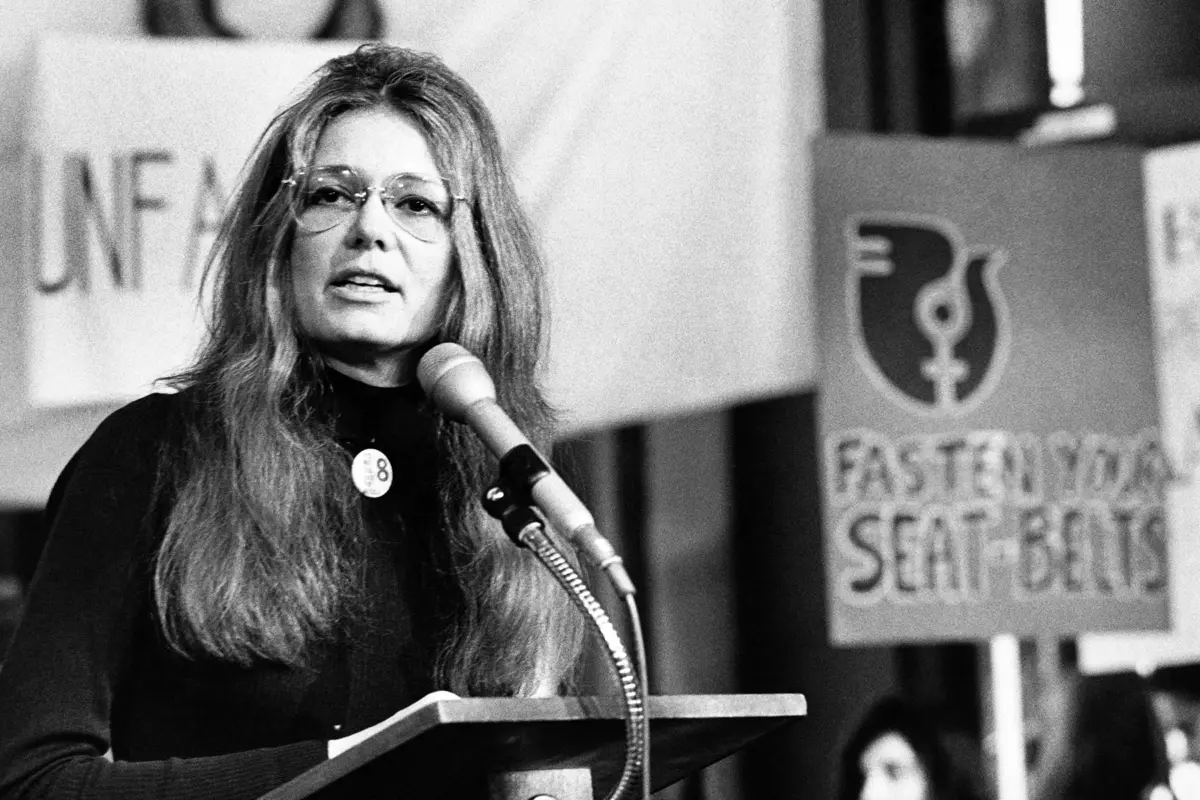
The passing of feminist trailblazer Gloria Steinem marks a profound psychological and political inflection point for women across the United States. For millions who discovered her writings—often late in life, beneath layers of ideological shielding—Steinem did not merely offer political theory; she provided a forbidden lexicon of liberation. Her work transformed nebulous domestic isolation and systemic subjugation into coherent, actionable anger.
Steinem’s death coincides with an alarming domestic regression. Across states like Iowa and Texas, foundational pillars of female autonomy—including reproductive freedom, no-fault divorce, and financial independence—are actively dismantled by coordinated legislative and judicial backlash. This rollback is accelerated by political actors and even women who have directly benefited from second-wave feminist victories. Yet, as the historical architecture of gender equality faces systematic demolition, the legacy of Steinem serves as both a map for survival and a call to radical resistance. The ideological struggles of the past are actively being recycled into contemporary policy. In response, modern feminists face a stark imperative: to abandon the impossible pedestal of pristine respectability and embrace the "monstrous" power required to defend human rights.
Detailed Chronology: From the Ideological Margins to the Front Lines
The trajectory of the modern feminist movement is intrinsically linked to personal awakening and institutional resistance. Tracing this history reveals a consistent pattern: the systematic suppression of female autonomy, countered by the explosive dissemination of consciousness-raising literature.
1. The Era of the Enclave (1980s–1990s)
- The Domestic Fortress: For many girls raised in hyper-conservative, fundamentalist households during the late 20th century, traditionalism was enforced as absolute divine law. Homeschooled in isolated environments, young women were systematically taught that liberation was synonymous with moral decay.
- The Gatekeeping of Knowledge: Educational materials, media consumption, and social interactions were heavily monitored. Institutions such as the Worldview Academy operated to inoculate young minds against secularism, framing feminist thought as an explicit attack on the family unit.
2. The Awakening and the Discovery of Ms. (College Years)
- Breaking the Boundary: Accessing higher education often required breaking away from familial control, enduring intense emotional friction, and navigating ideological re-education camps.
- The Power of the Print: Upon entering university libraries, many first-generation secular women encountered second-wave texts for the first time. Works like Naomi Wolf’s The Beauty Myth, Cathi Hanauer’s Bitch in the House, and foundational copies of Ms. Magazine acted as intellectual dynamite.
- Steinem’s Canon: Essays such as "In Praise of Women’s Bodies" and "If Men Could Menstruate" dismantled the internal shame associated with female biology. They replaced cultural pathology with structural critique, providing a vital framework for young women surviving systemic and interpersonal trauma.
3. The Post-Roe Backlash and Contemporary Reckoning (Present Day)
- The Fall of Protections: The overturning of Roe v. Wade inaugurated an era of rapid retrenchment. Reproductive care networks shifted underground, mirroring pre-1973 survival tactics.
- The Internalized Oppression: A defining feature of the contemporary backlash is the active participation of women who utilize the rights secured by second-wave feminism—such as professional advancement and financial credit—only to advocate for the removal of those very ladders for subsequent generations.
- The Passing of an Icon: Steinem’s death amid these systemic rollbacks casts a stark light on the vulnerability of current civil liberties, forcing a re-evaluation of how feminist history is taught, scrutinized, and weaponized.
Supporting Context & Metrics: The Anatomy of the Backlash
The cultural and political opposition facing women today is quantifiable, systemic, and deeply entrenched in institutional design. Understanding the current environment requires examining the statistical realities of rights erosion and the persistent double standards applied to female leadership.
Educational Erasure and Curriculum Gaps
A primary mechanism of the contemporary backlash is the systematic omission of women’s liberation histories from standard public education.
- In states like Iowa, public school curricula robustly cover traditional military history (e.g., the Revolutionary War, the War of 1812, the Bay of Pigs) and standard civil rights milestones.
- Conversely, second-wave feminism is largely absent from foundational coursework. When it is introduced, the curriculum frequently pathologizes the movement, emphasizing factionalism and internal debates over structural achievements.
- Media post-mortems reflect this bias. Obituaries for GloriaSteinemin major publications often dedicated more column inches to manufactured personal controversies than political obituaries of male architects of war crimes, highlighting the unreasonable moral standards demanded of female public figures.
Legislative Rollbacks on Bodily Autonomy
The economic and physical independence of modern women rests on a triad of legal victories achieved decades ago: reproductive healthcare access, financial non-discrimination (such as the Equal Credit Opportunity Act of 1974), and no-fault divorce.
- Reproductive Deserts: Following the dismantling of federal abortion protections, vast swaths of the American Midwest and South have transformed into reproductive deserts. Local abortion funds have had to shoulder the immense financial and logistical burdens of interstate travel for basic healthcare.
- Economic Vulnerability: Proposals from conservative think tanks, such as the Heritage Foundation, actively explore policy mechanisms designed to disincentivize or legally restrict no-fault divorce and limit access to long-acting reversible contraception (LARC) and emergency contraception (Plan B). These measures directly threaten women’s financial independence and physical safety.
| Right / Protections | Historical Milestone | Current Threat Level | Impact of Rollback |
|---|---|---|---|
| Reproductive Freedom | Roe v. Wade (1973) | Severe / Critical | Forced gestation, maternal mortality spikes, criminalization of care. |
| Financial Independence | Equal Credit Opportunity Act (1974) | Moderate / Emerging | Re-entrenchment of economic dependence on male co-signers/spouses. |
| Domestic Autonomy | No-Fault Divorce (Adopted nationwide by 2010) | High / Increasing | Trapping individuals in abusive or unviable domestic partnerships. |
| Contraceptive Access | Griswold v. Connecticut (1965) | High / Increasing | Restrictions on IUDs, emergency contraception, and family planning. |
Official Statements & Public Discourse
The cultural reaction to Steinem’s passing and the ongoing dismantling of women’s rights has exposed deep fractures within public discourse, particularly regarding the policing of female behavior and movement leadership.
The Double Standard of Perfection
Cultural commentators have frequently noted that public appraisals of Gloria Steinem—even in memorial—are heavily caveated with discussions of her perceived imperfections. This phenomenon reflects a broader systemic reality. As feminist writer Moira Donegan observed on social media:
"Feminism, as a movement for women’s liberation, is subjected to the same kind of moral standards that women themselves are — which is to say, often unreasonable and unattainable ones."
This constant demand for pristine perfection serves a political purpose: it delegitimizes the movement by holding it to an impossible standard that no major political party or traditional liberation struggle is forced to clear.
Institutional Resistance and Warnings from the Frontlines
Grassroots organizers working within restricted states emphasize that the current political climate is not a series of isolated policy disagreements, but a coordinated effort to return women to a status of legal and economic subjugation.
Activists note that the rhetorical framing utilized by contemporary anti-rights organizations often employs pastoral, domestic imagery to disguise the coercion inherent in their policy proposals. By romanticizing a fictionalized past of domestic compliance, these institutions obscure the material realities of domestic abuse, financial disenfranchisement, and restricted healthcare that characterized pre-feminist America.
Future Outlook: The Imperative of "Monstrous" Resistance
As the architecture of the 20th-century liberation movement faces sustained assault, the future of American feminism hinges on its ability to adapt, mobilize, and reject polite assimilation.
1. Decentralization and Generational Mentorship
Gloria Steinem consistently rejected the notion that she should be the sole face of women’s liberation. Her life’s work anticipated a core truth of modern activism: sustainable political change requires a multi-generational chorus of voices rather than a single charismatic leader. The future of the movement relies on older generations actively mentoring, funding, and protecting younger activists who are already bearing the brunt of the post-Roe reality.
2. Embracing the Rhetoric of Resistance
Historically, the dominant power structure has weaponized the label of the "monster" against women who step outside prescribed gender roles. Steinem herself was often granted conditional societal grace precisely because her aesthetic aligned with conventional standards of beauty—a nuance frequently underscored by her critics and biographers alike.
However, as institutional protections erode and the rights to bodily autonomy and economic self-determination are criminalized, the demand for polite, non-disruptive activism becomes obsolete. In an era where the fundamental rights of half the population are treated as negotiable, adopting a "monstrous" stance—uncompromising, vocal, and fiercely protective of bodily and economic sovereignty—is no longer just a rhetorical posture. It is a biological and political necessity.
Conclusion
The old world of unchecked patriarchal authority is fighting aggressively to reassert itself, utilizing legislative chokeholds, educational censorship, and economic intimidation. Yet, for those who have tasted the "forbidden knowledge" of autonomy, turning back is a statistical and psychological impossibility. The legacy of Gloria Steinem, preserved through the collective defiance of millions of women across Iowa, Texas, and the nation, stands as an unyielding barrier against the return of the dark. As the struggle enters its next critical phase, the mandate is clear: the movement must utilize every discordant, imperfect, and fierce voice at its disposal to ensure that freedom remains absolute and irreversible.