

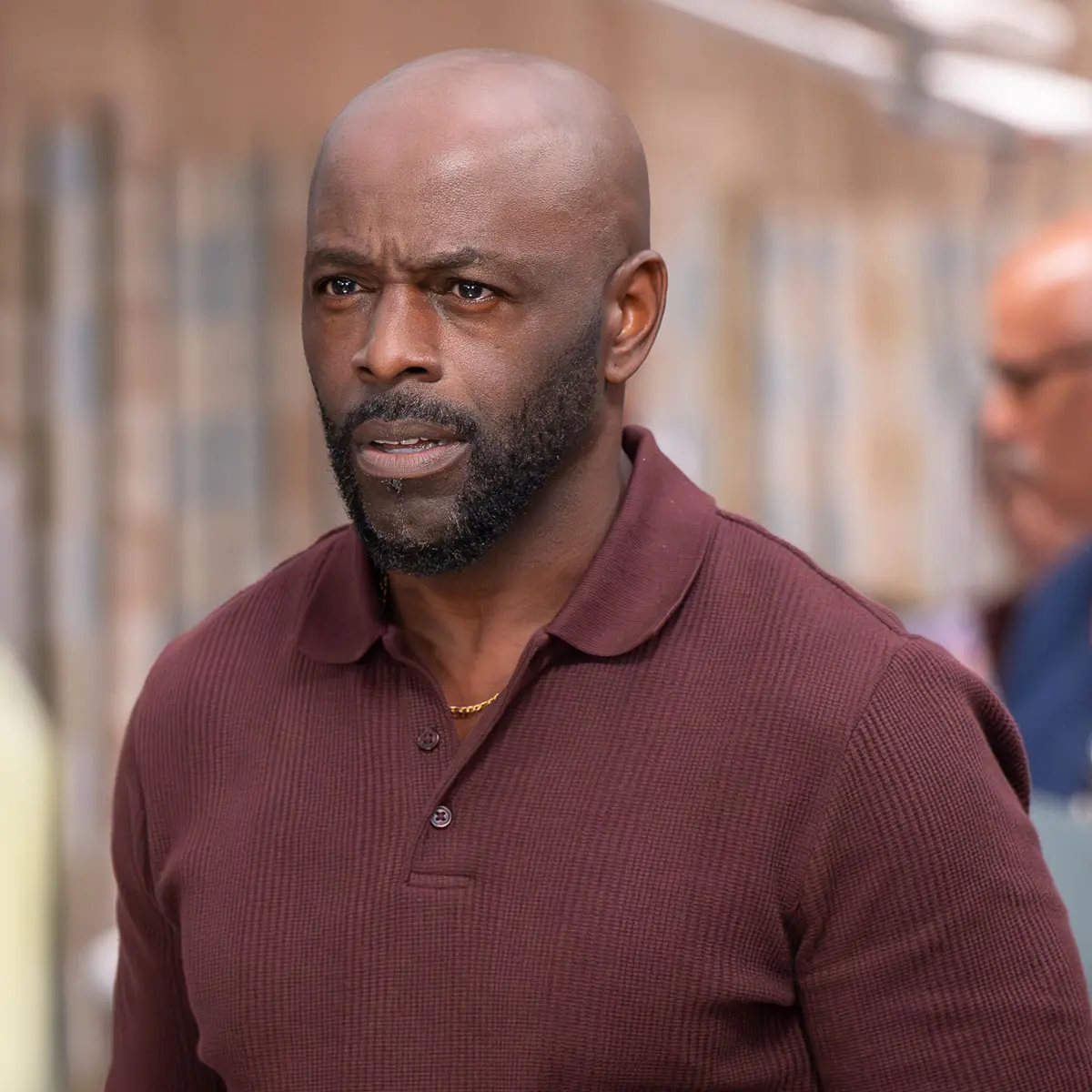
The landscape of daytime television is once again shifting, anchored by the enduring cultural footprint of the American soap opera. In a recent casting development that bridges decades of television history, seasoned actor Alimi Ballard is officially joining the cast of ABC’s long-running daytime drama General Hospital. Ballard is slated to step into the fictional, high-stakes community of Port Charles as a new character named William Baines, with his debut episode scheduled to air on September 3.
While specific details regarding Ballard’s character arc and the narrative trajectories of William Baines remain tightly under wraps, his arrival in Port Charles marks a notable homecoming. Ballard’s early professional foundation was forged within the very same network’s daytime ecosystem, having launched his on-camera career in the early 1990s on the now-defunct ABC soap opera Loving.
This casting announcement arrives at a fascinating intersection of television history, bringing to light the unique trajectory of soap operas as traditional incubators for Hollywood talent. Long before securing iconic roles in procedural crime dramas, superhero blockbusters, and Academy Award-winning cinematic features, a vast majority of contemporary film and television icons cut their teeth in daytime serials. From Brad Pitt and Leonardo DiCaprio to Julianne Moore, Michael B. Jordan, and Morgan Freeman, the rigorous, fast-paced environment of the daytime genre has historically functioned as Hollywood’s premier training ground. This report examines Ballard’s return to daytime television, reviews the structural and cultural significance of soap operas as talent incubators, and traces the historical pathways of major industry figures who transitioned from daytime drama to global cinematic prominence.
Detailed Chronology: Alimi Ballard’s Return to Port Charles
Alimi Ballard’s integration into the cast of General Hospital represents a full-circle moment in a career spanning more than three decades. Born and raised with an ambition for performance, Ballard’s professional breakthrough occurred in August 1993, when he landed his first major series-regular television role on the ABC daytime drama Loving. Playing the character of Frankie Hubbard, Ballard found himself thrust into the demanding, high-volume production schedule characteristic of daytime television.
When Loving concluded its run, Ballard transitioned the character of Frankie Hubbard to its spin-off series, The City, in 1995. Reflecting on this foundational period during a 2000 interview with Theatre Corner, Ballard underscored the profound impact that his early experiences had on his professional development. He credited his initial entry into the industry as his introduction to the realities of professional acting, emphasizing the rigorous audition processes and technical discipline required to sustain a daily shooting schedule.
Crucially, Ballard has frequently highlighted the mentorship he received from his onscreen mother, veteran actress Debbi Morgan. Working alongside Morgan provided Ballard with a masterclass in emotional accessibility, physical stamina, and professional dedication. He noted that Morgan’s command of her craft and her ability to anchor fictional, high-octane dramatic circumstances with raw authenticity set a benchmark for his entire career.
Following his foundational years in daytime television, Ballard transitioned into prime-time television, building an extensive and diverse resume. His career features notable multi-episode arcs and recurring guest roles across an array of television mainstays. Among his most recognizable early credits are the beloved ’90s sitcom Sabrina the Teenage Witch—where he portrayed the memorable Quizmaster—and critically acclaimed crime dramas such as Numb3rs, where he played FBI agent David Sinclair across all six seasons.
Over the subsequent decades, Ballard’s television footprint expanded exponentially. His credits span procedural hits and serialized dramas alike, including Criminal Minds, NCIS: Los Angeles, Queen Sugar, Castle, One of Us Is Lying, Lucifer, Elementary, Law & Order, and The Rookie. Most recently, Ballard demonstrated his ongoing versatility with a guest-starring appearance in a March 2026 episode of ABC’s Grey’s Anatomy, portraying patient Brent Wilson during the show’s 22nd season.
Now, with his upcoming debut as William Baines on General Hospital on September 3, Ballard returns to the medium that launched his career. While ABC executives and the show’s creative team have kept plot details surrounding William Baines heavily guarded, the casting has generated substantial anticipation among longtime viewers and industry analysts alike.
Supporting Context & Metrics: The Daytime Soap Opera as a Hollywood Incubator
To fully contextualize Alimi Ballard’s return to daytime television, one must examine the broader economic and cultural ecosystem of the soap opera genre. For more than half a century, daytime serials have functioned as the primary logistical and creative training ground for the American entertainment industry.
Unlike prime-time television or feature films—which typically afford actors weeks of preparation, multiple takes, and extensive rehearsal periods—daytime soap operas operate on an accelerated, high-pressure production schedule. Cast members are routinely required to memorize dozens of pages of complex dialogue overnight, execute emotionally charged scenes with minimal rehearsal, and hit emotional beats under punishing turnaround times. This unforgiving environment weeds out unprepared talent while forging exceptionally adaptable, disciplined performers.
The Metrics of Daytime Production
- Volume: Historically, a single soap opera produces roughly 250 original episodes per year, contrasting sharply with the 8-to-13-episode seasonal model dominant in modern streaming television.
- Output: Actors on daytime dramas are frequently tasked with delivering massive monologues and complex emotional payoffs on the first or second take, building an intuitive understanding of camera blocking, lighting angles, and continuity.
- Retention and Transition: Industry tracking demonstrates that actors who successfully anchor a daytime serial for two or more years possess the technical stamina required to navigate grueling feature film sets and demanding multi-camera prime-time productions.
This unique combination of high volume and rigorous discipline explains why so many contemporary household names trace their earliest professional credits back to the daytime block.
Historical Pathways: From Daytime to Global Stardom
The migration of talent from daytime television to cinematic greatness is a well-documented Hollywood phenomenon. A comprehensive survey of Academy Award winners, box-office powerhouses, and television icons reveals a striking common denominator: early roles in soap operas.
The Academy Award Winners
- Brad Pitt: Before commanding global box offices and collecting an Academy Award, Pitt secured his first speaking role on the NBC daytime drama Another World in 1987. Though his appearance was limited to a brief two-episode stint as a young basketball player, it marked his official entry into professional screen acting.
- Leonardo DiCaprio: Widely recognized as one of the definitive cinematic actors of his generation, DiCaprio’s early television resume included classic sitcom appearances on Roseanne and Growing Pains. However, his path also crossed into daytime television in 1990 via a brief, formative flashback sequence on the soap opera Santa Barbara.
- Julianne Moore: A titan of both independent cinema and blockbuster features, Moore achieved critical recognition early in her career when she won a Daytime Emmy Award in 1988. Her dual-role performance as long-lost half-sisters Frannie and Sabrina Hughes on As the World Turns showcased the formidable range that would eventually earn her an Academy Award.
- Morgan Freeman: Before establishing himself as one of the most revered and distinctive narrative voices in film history—earning multiple Oscar nominations and a win—Freeman laid his foundational professional groundwork on the classic daytime serials Ryan’s Hope and Another World.
- Tommy Lee Jones: A Harvard University graduate with a formidable dramatic pedigree, Jones played the cunning and morally ambiguous Dr. Mark Toland on ABC’s One Life to Live from 1971 to 1975, long before starring in blockbusters like Men in Black and winning an Academy Award for The Fugitive.
Television Icons and Prime-Time Stalwarts
- Demi Moore: Before commanding the box office in the late 1980s and 1990s as a defining cinematic star, Moore completed a pivotal tenure on General Hospital from 1982 to 1983. She portrayed Jackie Templeton, an ambitious investigative reporter from New York City tracking down her missing sister—a role that showcased her screen presence to a massive national audience.
- John Stamos: Decades before capturing the hearts of millions as Uncle Jesse on Full House, a young John Stamos stepped into Port Charles as teen rocker Blackie Parrish on General Hospital, proving his charisma within the formidable daytime machine.
- Justin Hartley & Chrishell Stause: Hartley, widely known for his celebrated work on prime-time dramas like This Is Us, first honed his craft on NBC’s Passions before transitioning to The Young and the Restless. Similarly, his contemporary Chrishell Stause built an extensive daytime resume on Days of Our Lives and The Young and the Restless before achieving global visibility on reality television via Selling Sunset.
- Nathan Fillion: Before anchoring long-running prime-time hits like Castle and The Rookie, the beloved Canadian actor established his early American television presence playing Joey Buchanan on One Life to Live from 1994 to 1997.
Contemporary Powerhouses
- Michael B. Jordan: Following breakout acclaim in the critically lauded HBO drama The Wire, Jordan stepped into the daytime arena on All My Children as teen character Reggie Montgomery. (Notably, the role was originally cast with the late Chadwick Boseman, who famously departed over concerns regarding character stereotypes). Jordan’s tenure on the soap from 2003 to 2006 bridged his early television work and his eventual ascent to cinematic stardom in franchises like Creed and Marvel’s Black Panther.
- Sarah Michelle Gellar: Gellar delivered an unforgettable, emotionally complex performance on All My Children as Kendall Hart, the vengeful, long-lost daughter of Erica Kane. Gellar’s work on the serial—which culminated in a Daytime Emmy win in 1995—directly preceded her transition to global television icon status in Buffy the Vampire Slayer.
Official Statements and Industry Reception
The announcement of Alimi Ballard’s casting has elicited widespread enthusiasm from both the daytime television community and the actor’s dedicated fanbase. While ABC and the production team at General Hospital have maintained a strict policy of narrative confidentiality regarding William Baines, industry insiders note that the introduction of a high-caliber guest star with Ballard’s extensive procedural background signals a deliberate creative push by the show’s writers.
Ballard’s return has also sparked renewed industry dialogue regarding the structural importance of legacy casting in daytime television. By welcoming back actors who understand the specific linguistic cadence and dramatic mechanics of daily serials, soap operas maintain a vital bridge between classic television traditions and modern streaming-era aesthetics.
Executive producers and casting directors across the industry have frequently noted that performers with soap opera backgrounds bring an unmatched level of professionalism to set environments. As Ballard prepares to step onto the Port Charles soundstages, his trajectory serves as a living testament to the enduring viability and rigor of the daytime medium.
Future Outlook
As the television landscape continues to fragment across an expanding array of streaming platforms and cable networks, the traditional daytime soap opera occupies a unique and resilient space in American media culture. The arrival of Alimi Ballard as William Baines on September 3 is more than a simple guest casting announcement; it is a celebration of institutional television history and a reaffirmation of the genre’s enduring power as a creative home.
Looking ahead, industry analysts will be closely monitoring how Ballard’s character integrates into the intricate web of Port Charles relationships. Given Ballard’s extensive background in crime dramas, legal thrillers, and medical serials—including his recent appearance on Grey’s Anatomy—speculation is naturally mounting as to whether William Baines will walk the halls of General Hospital as a medical professional, an investigator, or a disruptive wildcard in local affairs.
Ultimately, whether William Baines proves to be an ally or an adversary to the residents of Port Charles, Ballard’s return underscores a timeless Hollywood truth: while actors may venture into prime-time procedurals, cinematic blockbusters, and streaming prestige projects, the foundational discipline learned within the world of daytime television remains an indelible asset. As General Hospital approaches its September milestones, the stage is set for a compelling new chapter in both Ballard’s career and the storied history of Port Charles.
