

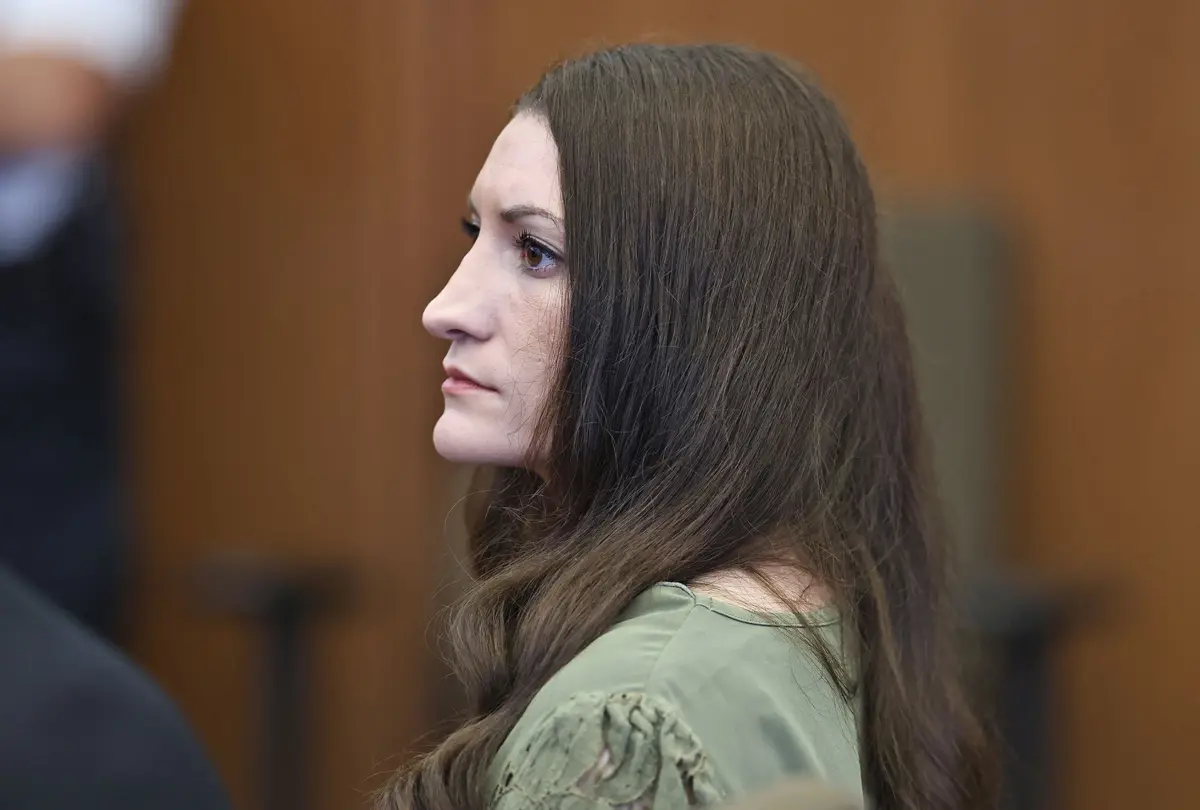
PLYMOUTH, Mass. — Following seven grueling days of deliberations and a deeply polarized trial that captivated and divided the nation, a Massachusetts judge declared a mistrial on Thursday in the high-profile murder case of Lindsay Clancy.
Clancy, a 36-year-old former labor and delivery nurse, stood accused of murdering her three young children—5-year-old Cora, 3-year-old Dawson, and 8-month-old Callan—in January 2023. The harrowing case thrust complex, deeply uncomfortable legal and medical questions into the national spotlight, centering primarily on the devastating intersection of severe mental health crises and criminal accountability.
Superior Court Judge William Sullivan officially declared the deadlock after the jury indicated it was utterly incapable of bridging its internal divide regarding Clancy’s state of mind at the time of the killings.
Executive Overview
The declaration of a mistrial brings an abrupt, albeit temporary, halt to a legal proceeding that has served as a cultural flashpoint for discussions surrounding postpartum mental illness, the criminal justice system, and the medicalization of motherhood.
For nearly three weeks, the Plymouth County courtroom played host to intense legal maneuvering, harrowing testimony, and starkly contrasting narratives. The defense maintained that Clancy was in the throes of a severe, unrecognized episode of postpartum psychosis—a rare and dangerous psychiatric emergency—when she strangled her children before attempting to take her own life by leaping from a second-story window. The suicide attempt left Clancy permanently paralyzed from the waist down.
Conversely, the prosecution argued that Clancy possessed the cognitive capacity to understand the gravity and consequences of her actions, characterizing the tragedy not as an involuntary medical catastrophe, but as calculated murder.
Ultimately, after logging dozens of hours in the jury room, the panel broke down, unable to reach the unanimity required under American law to deliver a verdict on charges of first-degree murder. With a single holdout refusing to align with the rest of the panel, Judge Sullivan was left with no procedural recourse other than to discharge the jury, resetting a legal battle that has deeply scarred a Massachusetts community and left legal experts debating the future of the case.
Detailed Chronology: From Tragic Morning to Deadlocked Courtroom
The Events of January 24, 2023
The origins of the courtroom drama date back to a chilling winter afternoon in Duxbury, Massachusetts. Emergency responders rushed to the Clancy family home following a 911 call placed by Clancy’s husband, Patrick Clancy, who returned home to find his wife severely injured in the yard and his three children unresponsive inside the house.
Cora, Dawson, and Callan Clancy were pronounced dead shortly after being transported to local hospitals. Lindsay Clancy survived her fall, but sustained catastrophic spinal injuries that confined her to a wheelchair for the remainder of her life, including throughout the courtroom proceedings.
The Trial Unfolds
The trial itself began in late August 2026, drawing immense media scrutiny. Over the course of the proceedings, the jury listened to emotionally wrenching testimony from first responders, medical professionals, and Patrick Clancy, who offered a poignant, complex portrait of his wife as a devoted mother who had undergone a terrifying, rapid psychological decline in the weeks leading up to the tragedy.
The defense built its case around the argument of lack of criminal responsibility due to mental disease or defect. Medical experts testified about the crushing weight of "overmedication" and the debilitating symptoms of postpartum psychosis—a condition characterized by hallucinations, delusions, and a complete detachment from reality. Witnesses detailed Clancy’s frantic search for psychiatric help in the weeks prior to the incident, illustrating a healthcare system that the defense argued failed to catch the severity of her illness.
The prosecution countered with expert testimony of its own, emphasizing that Clancy exhibited goal-directed behavior during and immediately after the incident. Prosecutors argued that Clancy methodically planned the timing of the killings while her husband was briefly out of the house picking up takeout, proving, in their view, that she knew right from wrong.
The Deadlock and Appeals
Deliberations stretched across seven tense days. Whispers of a deadlock began circulating mid-week when the jury’s foreperson sent a note to Judge Sullivan indicating that consensus was proving elusive.
By Thursday, the situation reached an impasse. The foreperson submitted a definitive note to the bench: "It is with a heavy heart that we report we are unable to come to a unanimous decision and will not be able to."
According to reports from the Associated Press, the friction within the jury room appeared to stem from a single holdout. The foreperson informed the judge that one juror was explicitly refusing to follow the court’s legal instructions regarding the threshold of reasonable doubt.
Judge Sullivan consulted with both defense counsel and prosecutors. While the defense sought alternative resolutions to preserve the trial, the prosecution ultimately acquiesced to a mistrial.
In a brief procedural twist, Judge Sullivan attempted to delay the inevitable by granting Clancy’s defense team one hour to file an emergency appeal. However, the Massachusetts Supreme Judicial Court swiftly rejected the appeal, cementing the mistrial. Judge Sullivan then formally thanked the jurors for their dedication and released them from service.
Supporting Context & Metrics: The Postpartum Crisis Debate
The Lindsay Clancy case has polarized the medical and legal communities, shining an uncomfortable light on how the American justice system evaluates severe psychiatric events experienced by primary caregivers.
Postpartum Psychosis: Rare, Dangerous, and Misunderstood
According to psychiatric literature, postpartum psychosis affects approximately 1 to 2 out of every 1,000 postpartum women. Unlike standard postpartum depression, which involves persistent sadness and fatigue, postpartum psychosis is a psychiatric emergency defined by a sudden onset of manic symptoms, paranoia, delusions, and auditory or visual hallucinations.
Advocates for maternal mental health reform watched the Clancy trial closely, arguing that prosecuting individuals experiencing acute psychosis sets a dangerous precedent that could deter struggling mothers from seeking medical intervention out of fear of criminal prosecution.
Critics of the defense’s strategy, however, point to the absolute horror of the crime, arguing that public sympathy should not override accountability. They contend that accepting postpartum psychosis as a blanket legal defense risks minimizing the intentionality behind violent acts, regardless of the perpetrator’s underlying psychiatric state.
Official Statements and Courtroom Reactions
The atmosphere inside the Plymouth County Superior Court on Thursday afternoon was heavy with exhaustion and emotional resonance.
Addressing the jury directly, Judge Sullivan praised the panel for their fortitude in enduring some of the most graphic and harrowing evidence ever presented in a Massachusetts courtroom.
"Members of the jury, at this point, I’m going to declare that the jury is deadlocked and I’m going to declare a mistrial," Judge Sullivan announced from the bench.
"Each one of you knew how long the case was going to go. You knew how difficult the case was going to be to listen to, facts wise. But still, you braced for that duty. I understood how hard everybody worked in this case. I understood that you all gave everything you could, and probably more than you thought you could."
Legal representatives for both the Commonwealth and the defense maintained a somber demeanor as the proceedings concluded. Neither side immediately detailed their comprehensive appellate or retrial strategies inside the courtroom, opting instead to preserve their positions for upcoming administrative sessions.
Future Outlook: What Comes Next?
With the mistrial now a matter of official record, the legal apparatus surrounding the Lindsay Clancy case must reset.
Judge Sullivan has scheduled a crucial status hearing for September 29, 2026. Legal analysts anticipate that during this hearing, Clancy’s defense attorneys will file motions seeking a judgment of acquittal, arguing that no reasonable jury could find her criminally responsible based on the evidentiary record established during the initial trial.
Should the judge deny that motion, the Plymouth County District Attorney’s office will face a formidable strategic dilemma: whether to commit the immense time, resources, and emotional toll required to mount a second full trial, or to pursue alternative resolutions.
For the broader community, the legal limbo continues. The tragic deaths of Cora, Dawson, and Callan Clancy remain an open wound in Duxbury, while the mistrial ensures that the intense national debate over mental health, motherhood, and the limits of criminal culpability will persist indefinitely.