


Executive Overview
In the contemporary digital economy, copywriting has transitioned from a purely creative discipline to an empirical driver of online business growth. Historically evaluated through the lens of stylistic eloquence and artistic prose, modern copy is increasingly measured by a single metric: measurable return on investment (ROI). As digital acquisition costs escalate across organic and paid channels, businesses are forced to view written marketing assets—ranging from long-form editorial content and email sequences to paid social advertising and landing pages—as direct revenue engines rather than branding expenses.
This investigative analysis evaluates the strategies, quantitative metrics, and workflow adaptations powering successful online enterprises, including insights from multi-million-dollar ventures such as Copyblogger. The findings indicate that high-converting copywriters consistently prioritize precise audience research, systematic competitor benchmarking, platform specialization, and rigorous analytics over technical literary skill. Furthermore, the integration of artificial intelligence (AI) as an operational intelligence layer—rather than a substitute for original thought—is redefining how top-tier copywriters conduct voice-of-customer research, structure message hierarchies, and optimize conversion pathways.

       TRADITIONAL COPYWRITING                 REVENUE-DRIVEN COPYWRITING
+-----------------------------------+    +-----------------------------------+
|  - Focus on literary eloquence    |    |  - Focus on clarity & conversion  |
|  - Measured by subjective style   | -> |  - Measured by ROI & GA4 metrics  |
|  - Broad, unsegmented messaging   |    |  - Mirroring customer language    |
|  - Manual research & execution    |    |  - AI-augmented research workflows|
+-----------------------------------+    +-----------------------------------+
Detailed Chronology & Methodology: The 10 Strategic Pillars
To understand how high-converting messaging is constructed, evaluated, and deployed, industry methodologies can be categorized into three distinct execution phases: Market Intelligence, Workflow Engineering, and Performance Scaling.
+-----------------------------------------------------------------------------+
|                            THE 10-PILLAR FRAMEWORK                          |
+------------------------------------+----------------------------------------+
| PHASE I: MARKET INTELLIGENCE       | 1. Customer Discovery & Voice Scraping |
|                                    | 2. Competitor Ad Arbitrage             |
|                                    | 3. Strategic Swipe File Curation       |
+------------------------------------+----------------------------------------+
| PHASE II: WORKFLOW ENGINEERING     | 4. Process Standardization             |
|                                    | 5. Practical Execution & Validation    |
|                                    | 6. AI Co-Pilot Integration             |
+------------------------------------+----------------------------------------+
| PHASE III: PERFORMANCE SCALING     | 7. Single-Platform Mastery             |
|                                    | 8. Revenue Attribution & Analytics     |
|                                    | 9. Peer Masterminds & Feedback Loops   |
|                                    | 10. Operational Velocity vs. Patience  |
+-----------------------------------------------------------------------------+
Phase I: Deep Market Intelligence and Competitive Auditing
1. Voice-of-Customer (VoC) Scraping and Customer Discovery
Effective copywriting relies on mirroring the exact psychological reality, language patterns, and internal friction experienced by prospective buyers. Rather than inventing value propositions in a vacuum, leading copywriters extract language directly from target audiences.
- Sales Transcript Mining: Copywriters leverage call recordings from enterprise sales teams. Transcripts are processed through Large Language Models (LLMs) to identify recurring objections, exact phrasing of pain points, and desired outcomes.
- Community Social Listening: When direct sales data is unavailable, copywriters audit unstructured online communities such as Reddit threads, specialized Facebook groups, and product review forums. This process exposes the emotional nuance surrounding a problem—for instance, distinguishing between a generic desire for "weight loss" and the hyper-specific anxiety of social events.
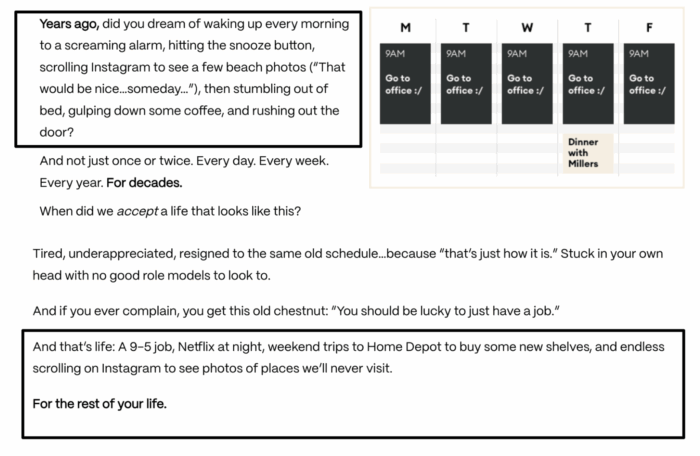
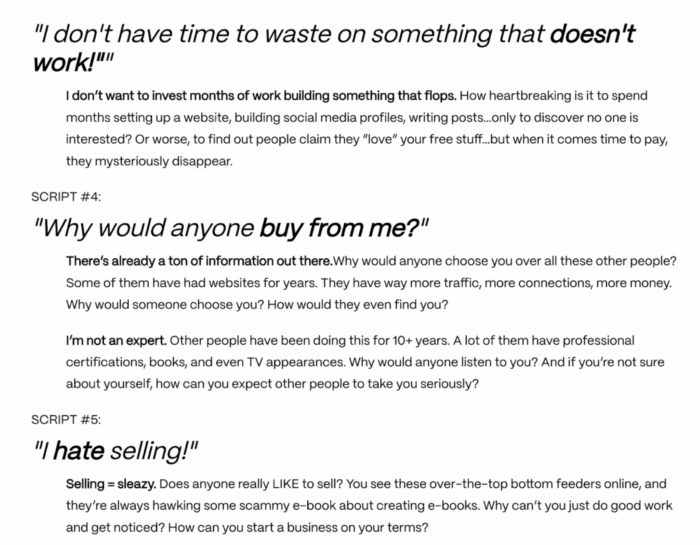
- Precision Pain Point Mirroring: High-converting landing pages, such as Ramit Sethi’s Earnable program, demonstrate this strategy by detailing daily routines (e.g., corporate 9-to-5 fatigue, evening streaming consumption, weekend errands) rather than offering vague financial promises. Replicating the prospect’s exact reality builds immediate cognitive rapport and trust.
[ Raw Customer Data ]
       │
       ├──> Sales Call Transcripts ──┐
       ├──> Reddit & Forum Posts    ──┼──> LLM Text Analysis ──> [ Voice-of-Customer (VoC) ]
       └──> Support Ticket Logs     ──┘                              │
                                                                     ▼
                                                          [ Exact Copy Mirroring ]
2. Competitive Ad Arbitrage and Intelligence
Top-performing market competitors routinely invest substantial capital testing headlines, hooks, and angle positioning. Copywriters analyze this external data to determine validated market angles without duplicating initial testing costs.
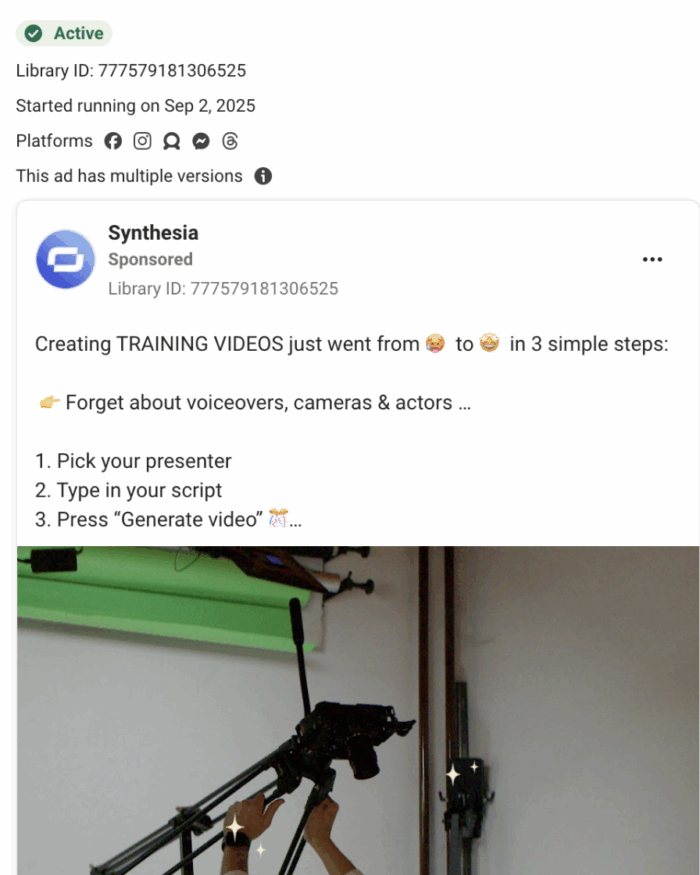
- Ad Library Diagnostics: By auditing open transparency tools like the Meta Ad Library and LinkedIn Ads Transparency Center, writers identify long-running campaigns. In paid media environments, ad longevity strongly correlates with profitability.
- Extracting Core Angles: For instance, analyzing long-standing advertisements from enterprise platforms like Synthesia or Close CRM reveals primary positioning levers—such as eliminating video production bottlenecks or reducing lead decay caused by chaotic CRM interfaces.
3. Strategic Swipe File Curation
Professional copywriters maintain systematic repositories ("swipe files") of proven advertising frameworks, high-click email subject lines, and successful sales landing pages.
- Curated Framework Analysis: Beyond personal collections, copywriters analyze curated industry databases like Neville Medhora’s SwipeFile.com to examine how experienced marketers structure urgency, scarcity, and value propositions across diverse verticals.
Phase II: Workflow Engineering and AI Augmentation
4. Process Standardization and Content Pipelines
Facing a blank page introduces operational friction and inconsistent output quality. Structured writing pipelines establish reliable quality baselines for every asset produced.
+-----------------------------------------------------------------------------+
|                        BLOG COPYWRITING PIPELINE                            |
+-----------------------------------------------------------------------------+
|  [STAGE 1: RESEARCH]   │  Audience intent, keyword analysis, competitor gaps |
+------------------------+----------------------------------------------------+
|  [STAGE 2: OUTLINE]    │  Headline variants, H2/H3 subheads, core narrative  |
+------------------------+----------------------------------------------------+
|  [STAGE 3: OBJECTIONS] │  Identify customer hesitations & embed counters    |
+------------------------+----------------------------------------------------+
|  [STAGE 4: DRAFTING]   │  Rapid non-stop generation against the outline     |
+------------------------+----------------------------------------------------+
|  [STAGE 5: REFINEMENT] │  Structural editing, CTA alignment, clarity check  |
+-----------------------------------------------------------------------------+
This structural approach guarantees that every piece of content directly answers target objections while eliminating writer’s block.

5. Practical Execution via Real-World Assets
Copywriting proficiency develops through market deployment rather than passive theoretical study. Developing commercial intuition requires exposure to real market feedback loops.
- Owned Channel Testing: Emerging copywriters frequently test messaging frameworks on owned digital properties—such as personal LinkedIn accounts, niche affiliate media sites, or micro-SaaS applications built using rapid development platforms like Lovable.
- Commercial Intent Lessons: Industry case studies highlight how operational projects yield fundamental marketing lessons. For example, generating traffic for a niche cuckoo clock repair project demonstrated that traffic seeking "repair tutorials" converted poorly for product sales, whereas searches targeting "local repair services" yielded immediate commercial transactions. This highlights the critical distinction between informational intent and commercial buyer intent.
6. Targeted AI Integration (The Co-Pilot Model)
While generative AI can synthesize information rapidly, unedited AI output often lacks human empathy, specific domain context, and original strategic insight. High-performing copywriters deploy AI models strictly as analytical assistants across three specific workflows:

+-----------------------------------------------------------------------------+
|                          TARGETED AI CO-PILOT MODEL                         |
+-----------------------------------+-----------------------------------------+
| AI WORKFLOW                       | OPERATIONAL EXECUTION                   |
+-----------------------------------+-----------------------------------------+
| 1. Memory Jogging & Pain Point    | Input broad audience queries to extract |
|    Research                       | underlying behavioral friction points.  |
+-----------------------------------+-----------------------------------------+
| 2. Structural Line Editing        | Request targeted clarity adjustments    |
|    & Rephrasing                   | without sacrificing core intent.        |
+-----------------------------------+-----------------------------------------+
| 3. Expert Quote & Citation        | Prompt AI to locate real-world subject  |
|    Discovery                      | matter expert commentary on LinkedIn.   |
+-----------------------------------+-----------------------------------------+
Phase III: Performance Scaling, Metrics, and Strategic Evolution
7. Single-Platform Mastery
Each media channel operates under distinct algorithmic rules, user consumption habits, and psychological contexts. Attempting to master multiple channels simultaneously often dilutes effectiveness.
- LinkedIn/Twitter (X): Requires hook-driven personal framing, strategic narrative structures, and executive thought leadership positioning.
- Search Engine Optimization (SEO) Content: Requires explicit search intent alignment, structured technical headings (H2/H3), and comprehensive topical coverage to satisfy search ranking algorithms.
8. Closed-Loop Revenue Attribution and Metrics
Evaluating copy solely through engagement metrics (likes, shares, raw pageviews) can obscure financial realities. High traffic volumes from low-intent demographics often yield minimal business value.

+-----------------------------------------------------------------------------+
|                      ATTRIBUTION MEASUREMENT MATRIX                         |
+---------------------+-------------------------+-----------------------------+
| MEDIA CHANNEL       | VANITY METRIC (LOW ROI) | BUSINESS METRIC (HIGH ROI)  |
+---------------------+-------------------------+-----------------------------+
| B2B Ghostwriting    | Total Post Impressions  | Comments by Target Titles   |
| (LinkedIn / X)      |                         | (e.g., Sales Directors)     |
+---------------------+-------------------------+-----------------------------+
| SEO Blog Content    | Gross Unique Visitors   | GA4 Custom Goal Conversions |
|                     |                         | (Demo Requests, Signups)    |
+---------------------+-------------------------+-----------------------------+
| Sales Landers &     | Click-Through Rate      | Completed Revenue /         |
| Email Funnels       | (CTR)                   | Customer Acquisition Cost   |
+---------------------+-------------------------+-----------------------------+
9. Strategic Peer Review and Community Masterminds
Writing in isolation can perpetuate uncorrected structural flaws. Professional growth accelerates when writers submit real-world campaigns to structured peer reviews led by seasoned marketers.
Foundational programs—such as Copyblogger Academy, led by digital marketers Tim Stoddart and Charles Miller—focus heavily on direct feedback loops. Accessing critique from experienced marketers helps writers correct structural weaknesses, refine message positioning, and calibrate pricing models before launching client or internal campaigns.

10. Strategic Execution Velocity versus Result Patience
Citing the operational framework popularised by investor Naval Ravikant—"Be impatient with action, patient with results"—successful copywriters maintain high daily output while extending their time horizons for commercial outcomes. Skill acquisition and search channel compounding require months of sustained execution before yielding significant financial dividends.
Supporting Context & Quantitative Analytics
To establish rigorous performance standards, copywriters must implement tracking architectures that connect written assets to underlying financial metrics. Relying solely on platform native analytics can paint an incomplete picture of channel efficacy.
Establishing Advanced GA4 Attribution for Written Content
Standard web analytics setups often track surface-level metrics like session duration and bounce rates. Measuring true content marketing efficacy requires explicit event tracking in Google Analytics 4 (GA4).
[ User Lands on Blog Post ]
           │
           ▼
[ Scrolls to High-Intent Call-to-Action (CTA) ]
           │
           ▼
[ Submits Lead Form / Initiates Trial ]
           │
           ▼
[ GA4 Event Triggered: "c_conversion_blog_lead" ]
           │
           ▼
[ Linked to CRM (HubSpot/Salesforce) -> Closed Won Revenue ]- Custom Conversion Event Creation: Define specific events (e.g.,
form_submit,trial_start,demo_request) as conversions within GA4 rather than tracking simple page views. - Pathing and First/Last-Touch Modeling: Analyze data using conversion paths to determine whether long-form informational content acts as a primary discovery mechanism (first-touch) or a direct conversion catalyst (last-touch).
- Qualitative Lead Sourcing: To capture non-linear attribution paths (e.g., dark social shares or social feed consumption), enterprises implement mandatory qualitative fields on lead forms: "How specifically did you first hear about us?" Options explicitly include writer-specific posts and targeted newsletter content.
Industry Perspectives & Strategic Frameworks
The modern copywriting landscape reflects a clear consensus among direct-response practitioners, digital agency founders, and executive strategy leaders: written marketing must directly support measurable business objectives.

Industry Insight:
"Becoming a better copywriter doesn’t mean you write more eloquently. In fact, the opposite is often true. Great copywriters are clear, concise, and ultimately convert readers into customers. Focus on how to generate more revenue from your words."
— Executive Leadership, Copyblogger
This perspective marks a broader shift across the digital marketing ecosystem. Brand strategy frameworks increasingly incorporate traditional direct-response principles, blending psychological triggers with modern product positioning.

+-------------------------------------------------------------------------+
|                  EXPERT STRATEGIC FRAMEWORKS MATRIX                     |
+-------------------+-----------------------------------------------------+
| LEADER / SOURCE   | CORE STRATEGIC PRINCIPLE                            |
+-------------------+-----------------------------------------------------+
| Ramit Sethi       | Address objections directly as explicitly labeled   |
| (I Will Teach You | "scripts" to alleviate buying friction before sales |
| To Be Rich)       | pitch execution.                                    |
+-------------------+-----------------------------------------------------+
| Naval Ravikant    | Decouple daily activity levels from immediate       |
| (Angel Investor)  | expectation; apply aggressive immediate execution   |
|                   | alongside long-term strategic compounding.          |
+-------------------+-----------------------------------------------------+
| Neville Medhora   | Deconstruct historically validated sales headlines  |
| (SwipeFile.com)   | to identify evergreen human psychological triggers. |
+-------------------+-----------------------------------------------------+
Future Outlook: The Evolution of High-Converting Copy
As AI generation tools continue to saturate digital media with high-volume, generic content, the competitive bar for high-converting copy will shift dramatically. Mass-produced AI text faces diminishing returns as audiences develop filter fatigue toward unoriginal phrasing and superficial advice.
                     [ AI Content Saturation ]
                                 │
                                 ▼
                     [ Reader Filter Fatigue ]
                                 │
                                 ▼
    +----------------------------+----------------------------+
    │                                                         │
    ▼                                                         ▼
[ Generic AI Output ]                       [ High-Value Human Copy ]
  - Decreasing Engagement                     - Voice-of-Customer Data
  - Declining Search Visibility               - Real Subject Matter Experts
  - Low Audience Trust                        - Validated Conversion Architecture
Key Trends Shaping the Next Era of Copywriting
- The Premium on Original Intelligence: Value will concentrate heavily on writers who execute original research—conducting direct customer interviews, mining proprietary sales transcripts, and integrating real subject matter expert insights that generative AI cannot replicate.
- Hybrid AI-Human Workflows: The industry baseline will demand mastery of modern AI toolchains. Successful writers will operate as strategic editors, utilizing AI to rapidly process raw qualitative research data, generate initial outline structures, and edit prose for maximum clarity.
- Algorithmic and Attribution Fluency: Pure text generation will continue to commoditize. High-earning copywriters will operate as comprehensive growth strategists—combining persuasive narrative design with a deep technical understanding of channel algorithms, search intent, and closed-loop revenue attribution.
In summary, the future of copywriting belongs to data-informed, process-driven strategists. By combining deep customer research with disciplined workflows and continuous market testing, writers transform copy from simple text into a powerful, scalable engine for business growth.