

Originally published in The Student Press Report, a national news desk highlighting the successes and challenges facing college journalism.
Executive Overview
Government officials and public institutions have mastered a subtle, devastating trick to keep the public from scrutinizing their actions: they rarely have to say an outright "no." Instead, they can weaponize administrative friction, making the retrieval of public records so financially burdensome, procedurally exhausting, and interminably delayed that no one wants to try.
For investigative journalists, this quiet erosion of transparency poses an existential threat. When securing public documents requires navigating a labyrinth of missed deadlines, frivolous legal exemptions, and exorbitant fees, the ultimate casualty is not just a single story—it is the public’s fundamental right to know.
This dynamic is particularly pronounced in higher education and across state governments, where the mechanisms designed to ensure accountability have devolved into rubber stamps for bureaucratic delay. For student journalists operating on razor-thin budgets and balancing demanding academic schedules, the toll of this stonewalling is uniquely punishing. It induces self-censorship, drains newsrooms of precious energy, and threatens to blind the public to institutional corruption.
Detailed Chronology: Anatomy of a Public Records Battle
The reality of modern public records obstruction is best understood not as an abstract legal debate, but as a grinding, day-to-day war of attrition.
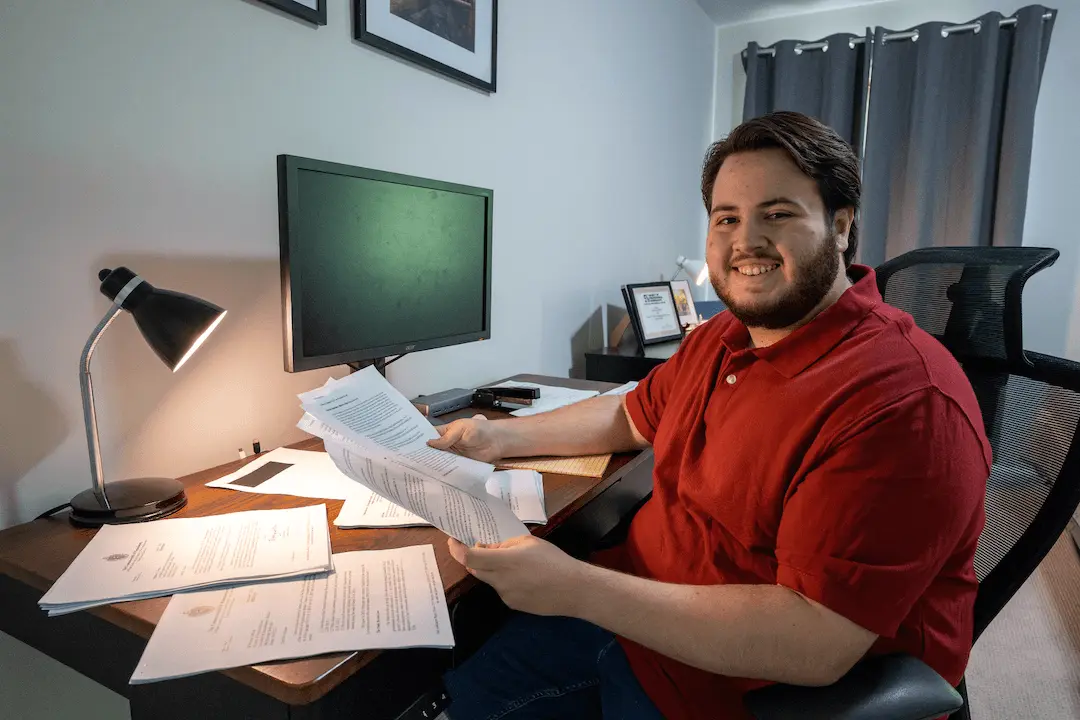
Earlier this year, The Mass Media, the student newspaper at UMass Boston, published an explosive investigation revealing the university’s financial involvement in a Vatican climate initiative, tracking some $380,000 in summit funds sent directly to Vatican accounts. Getting those numbers onto the page, however, required spending the better part of a year fighting UMass Boston’s relentless attempts to suppress the paper’s public records requests.
The obstruction followed a predictable, exhausting playbook:
- Missed Deadlines: At nearly every operational turn, university administrators ignored statutory timeframes, stretching a process meant to take days into weeks and months.
- Frivolous Exemptions: The administration claimed sweeping exemptions that the state’s supervisor of records subsequently rejected or called into question.
- Financial Barriers: UMass Boston levied fees exceeding $1,000 for administrative time, ostensibly required to review emails for protected student data—a transparent attempt to price a student-run newspaper out of the public record.
The psychological and professional toll of this process was severe. The stonewalling did not just inflate the reporting budget; it drained the reporter’s energy, creating an instinctive hesitation to pursue subsequent public records requests. When fighting for basic documents feels like walking through intellectual and emotional quicksand, journalists are naturally discouraged from asking tough questions.
Supporting Context & Metrics: A Systemic Failure of Transparency
The experience at UMass Boston is far from an isolated incident. Across the United States, the mechanisms meant to guarantee public access are buckling under the weight of institutional resistance.
The Massachusetts "Black Hole" Case Study
Massachusetts provides a grim case study in how strong laws on paper can be completely subverted in practice. On paper, the Commonwealth boasts an exemplary public records framework:
- Government entities are legally mandated to respond to requests within 10 business days.
- Documents are presumed public unless the agency can prove a specific, legally binding exemption applies.
- If a request is denied, requesters can appeal informally to the state’s supervisor of records, who holds the statutory power to "order timely and appropriate relief" and refer non-compliance to the attorney general.
In practice, however, this system is a paper tiger. When the supervisor of records rules in favor of a requester, the remedy is rarely immediate disclosure. Instead, the supervisor simply orders the custodian to provide a revised response. This triggers a legally sanctioned, month-long loop: the supervisor takes 10 business days to rule on the appeal, and then grants the custodian another 10 business days to issue a new response. If the custodian rewords the denial without changing its substance, the cycle repeats.
This systemic failure did not go unnoticed. The Society of Professional Journalists awarded Massachusetts its annual "Black Hole Award" for "the most heinous violations of the public’s right to know," citing broad exemptions, weak enforcement mechanisms, and persistent delays that render government information functionally inaccessible.
Federal Deficits and the Erosion of FOIA
The rot extends far beyond municipal and state levels. At the federal scale, the Freedom of Information Act (FOIA) is experiencing a historic crisis of compliance.
A comprehensive New York Times analysis revealed that federal agencies successfully released documents in response to only about 47% of FOIA requests in fiscal year 2025—a steep decline from 63% in 2010. Despite a statutory 20-day deadline under federal law, requesters now wait an average of 240 days for a substantive response.
Worse still, executive branch entities are actively seeking to dismantle legal safeguards. The Justice Department’s Office of Legal Counsel published a memorandum arguing that the Presidential Records Act—the Nixon-era legislation ensuring presidents preserve documents for public release—is unconstitutional. Should that interpretation gain traction, it threatens to gut one of the nation’s most vital historical transparency tools.
Official Statements and Institutional Tactics: The Weaponization of FERPA
Educational institutions have proven particularly adept at shielding themselves from public oversight by warping privacy laws to serve as broad shields against accountability.
Public schools and universities are subject to state and federal public records laws. However, they routinely invoke the Family Educational Rights and Privacy Act (FERPA)—a federal statute designed strictly to protect student educational records—as a catch-all justification to withhold any document containing even a passing reference to a student.
The Student Press Law Center (SPLC) has documented these abuses for decades, pointing to egregious instances where universities withheld:
- Parking ticket logs
- Public committee meeting minutes
- Lists of football ticket recipients
- Detailed financial records for student-athlete Name, Image, and Likeness (NIL) contracts
These institutional arguments routinely fail legal scrutiny. The U.S. Supreme Court has explicitly ruled that FERPA applies only to documents directly related to a student and maintained by the school as part of a formal, permanent educational file. State courts across California, Maryland, Michigan, North Carolina, and Ohio have consistently interpreted the statute narrowly.
As one North Carolina appeals court aptly noted: "FERPA does not provide a student with an invisible cloak so that the student can remain hidden from public view while enrolled."
Despite clear judicial precedent, colleges continue to weaponize privacy laws. By doing so, they create a chilling effect that deters the public—and student journalists—from ever asking for the records in the first place.
Future Outlook: The Chilling Effect on Investigative Journalism
The cumulative impact of these bureaucratic hurdles is a profound, systemic chilling effect on investigative journalism.
Reporters are practical by necessity. There are tight deadlines to meet, pages to fill, and newsrooms to run. A story that requires a year-long legal battle simply does not help get a paper out on time. The longer a records request languishes, the more likely the subject matter is to become outdated, turning months of investigative labor into wasted time spent chasing dead ends.
More insidiously, avoiding public records is often an act of self-preservation. Reporters—particularly student journalists juggling full course loads alongside newsroom responsibilities—must consciously protect themselves from the crushing stress of protracted administrative warfare. This is a tradeoff no journalist should be forced to make.
Public records have long been the lifeblood of accountability reporting, exposing government overreach, financial malfeasance, and public corruption. Without unfettered access to primary source documents, journalists are reduced to printing whatever sanitized narratives officials choose to hand them, leaving voters in the dark.
The government belongs to the people, and so do its records. Until public officials and institutional administrators are held accountable for procedural stonewalling, the public’s right to know will remain under siege.