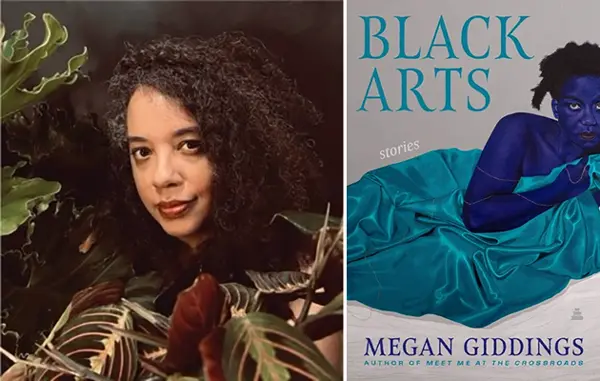
In her landmark short story collection Black Arts, acclaimed novelist Megan Giddings tackles one of the central dilemmas of contemporary letters: how marginalized creators navigate, negotiate, and render reality in a world where "truth" is increasingly fragmented. Following her critically lauded novels—including Lakewood and The Women Could Fly—Giddings’s latest work fuses literary character study with the unsettling tropes of horror, surrealism, and speculative fiction.
At the heart of Black Arts is an investigation into the lives of Black female artists who must constantly choose between depicting a market-palatable version of reality or honoring their own lived experiences. Rather than relying solely on traditional realism, Giddings leverages speculative conventions to zoom out to a macro perspective, examining how systemic oppression, interpersonal relationships, and technological shift alter human perception.
This report examines the structural underpinnings of Giddings’s literary philosophy, traces her development from an MFA graduate managing corporate social media to an influential voice in modern genre-bending fiction, presents an analytical breakdown of five seminal texts that informed Black Arts, and offers an industry outlook on the expanding role of speculative realism in modern publishing.
Detailed Chronology: The Intellectual & Narrative Evolution of Black Arts
The genesis of Black Arts spans several distinct phases in Giddings’s career, marked by professional milestones, editorial endeavors, and an unexpected philosophical epiphany abroad.
Phase 1: Post-MFA Disillusionment and Thematic Spark
After completing her Master of Fine Arts degree, Giddings entered the corporate workforce as a social media manager. Experiencing the psychological toll of digital overstimulation—characterized by anxiety-inducing work environments dominated by social media scheduling tools—she found her creative momentum stalled. Her revitalization as a writer occurred upon engaging with surrealist short fiction, notably Jen George’s The Babysitter at Rest, which demonstrated how fiction could capture the atrophy of reality under cultural pressure.
Phase 2: Editorial Engagement and Peer Discovery
As Giddings established herself within literary circles, she took on editorial responsibilities, directly shaping emerging voices in speculative fiction. During this period, she edited Ruth Joffre’s short story "Softening," marking one of Giddings’s earliest editorial contributions to a piece that would later achieve publication in a major collection (Night Beast). This hands-on editorial work deepened her appreciation for stories that manipulate character desire to warp environmental reality.
Phase 3: Novelistic Success and Genre Blending
Giddings earned widespread critical acclaim with novels that seamlessly melded social commentary with speculative dread. Works like Lakewood established her reputation for dissecting institutional exploitation through a horrific lens. These long-form successes provided the stylistic foundation for Black Arts, allowing her to refine her signature approach: anchoring speculative elements within tightly controlled literary portraiture.
Phase 4: The Dublin Epiphany and Conceptualization
The overarching thematic spine of Black Arts crystallized during an international trip to Dublin, Ireland. Jet-lagged in a hotel room, Giddings encountered a televised broadcast featuring a surreal combination of high-stakes darts, mathematics, and a panel discussion on artificial intelligence. A remark by one commentator—asserting that without regulatory frameworks, humanity risked losing "a shared reality"—struck a deep chord. Giddings realized that for marginalized communities, particularly Black women in America, a singular "shared reality" has never existed. This insight became the primary thematic engine for Black Arts.
Supporting Context & Metrics: Influences and Literary Catalog Analysis
To construct the surreal, hyper-realist landscapes of Black Arts, Giddings drew from a curated library of short fiction collections that subvert traditional narrative architecture. Moving beyond canonical titans such as Octavia Butler and Kelly Link, Giddings identified five essential works published across independent, translation-focused, and major trade imprints that directly informed her approach to world-building, tone, and character psychology.
Comparative Analytical Matrix of Primary Literary Influences
Title
Author
Publisher / Imprint
Format Specs
Primary Narrative Mechanism
Key Thematic Intersection with Black Arts
The Babysitter at Rest
Jen George
Dorothy, a Publishing Project
$16.00 TPB, 168p ISBN 978-0-9973666-2-4
Reality atrophy & extreme surrealist disruption
The infantilization of young women; weaponizing aesthetics and performance for social power.
Night Beast
Ruth Joffre
Black Cat
$16.00 TPB, 208p ISBN 978-0-8021-2808-9
Desire-driven environmental distortion
Psychological alignment with uncomfortable situations; character agency within toxic spaces.
Reconstruction
Alaya Dawn Johnson
Small Beer Press
$17.00 TPB, 256p ISBN 978-1-61873-177-7
Speculative paranoia & rumor dynamics
How collective trauma and societal fear construct alternative, oppressive realities.
Bliss Montage
Ling Ma
Farrar, Straus and Giroux
$25.00 HC, 240p ISBN 978-0-374-29351-2
Subverted domestic & literary realism
The impossibility of relationships changing fundamental identity; critique of literary conventions.
Once and Forever
Kenji Miyazawa (Trans. John Bester)
New York Review Books (NYRB)
$15.95 TPB, 288p ISBN 978-1-68137-260-0
Classical fable with anthropomorphic dread
Human vanity exerting control over nature; complex character motivations within traditional myth.
Deep-Dive Analysis of Essential Texts
1. The Babysitter at Rest by Jen George
Publishing Context: Distributed by Small Press Distribution (SPD) via Dorothy, a Publishing Project—a feminist press dedicated to innovative fiction.
Textual Impact: George’s title story explores the gradual erosion of physical and social reality around its protagonist. It scrutinizes the cultural impulse to infantilize young women and the hyper-calculating ways those women navigate such dynamics to convert beauty into cultural leverage. A notable set-piece—involving a disastrous cement stunt at a birthday party that results in a roommate’s death and a ruined pool—demonstrates how absurdism can amplify emotional truth.
2. Night Beast by Ruth Joffre
Publishing Context: Released under Grove Atlantic’s Black Cat imprint, known for dark, boundary-pushing literary voices.
Textual Impact: Joffre excels at situating characters in problematic or precarious environments while rendering their choices entirely logical within their psychological framework. In stories like "Softening"—which Giddings championed early in her editing career—reality bends not through grand magical mechanisms, but through the sheer force of character desire pressing against the parameters of the world.
3. Reconstruction by Alaya Dawn Johnson
Publishing Context: Published by Small Beer Press, a premier indie publisher of speculative literary fiction.
Textual Impact: Johnson investigates the mechanics of collective paranoia. In "They Shall Salt the Earth with Seeds of Glass," an Earth besieged by mysterious entities known as "The Glassmen" serves as a backdrop to study how human anxiety breeds rumors, which subsequently reshape public perception. The character of Libby exemplifies the tragic burden of emotional labor in apocalyptic landscapes.
4. Bliss Montage by Ling Ma
Publishing Context: Issued by Farrar, Straus and Giroux (FSG), representing mainstream critical recognition of speculative-literary hybrids.
Textual Impact: In the standout story "Returning," Ma bypasses overt surrealist gimmicks to deliver a grounded exploration of a writer traveling through Eastern Europe with her husband. The story examines marital infidelity and strange local rituals, demonstrating that while domestic partnerships offer a performative sanctuary, they cannot erase a character’s core existential realities.
5. Once and Forever by Kenji Miyazawa (Trans. John Bester)
Publishing Context: Reissued by New York Review Books Classics, bringing early 20th-century Japanese fable literature to modern English audiences.
Textual Impact: Written during Japan’s Meiji and Taisho eras, Miyazawa’s fables utilize anthropomorphic nature to deliver complex existential observations. In "The Dahlias and the Crane," a conflict between vanity-driven flowers and a detached crane culminates in a stark reminder of nature’s vulnerability to human whim, offering a template for using fable structures to deliver sharp, uncompromising social critiques.
Official Statements & Theoretical Framework
Megan Giddings on the Illusion of "Shared Reality"
Reflecting on her writing process and the core philosophy underpinning Black Arts, Giddings detailed how her observations of international media illuminated the American social landscape:
"Last year, I was in Dublin and very jet-lagged and watching TV in my hotel room. It is one of life’s great pleasures to be time-drunk and get to say, ‘Wait, this is what you all watch on TV?’ There was a show I could not stop talking about where people did math and threw darts, then held an actually engaged discussion on AI. One of the commentators said something along the lines of, ‘Without regulations, humanity would lose one of its most underrated resources: a shared reality.’
"I couldn’t stop thinking about this statement because it was so at odds with what I’ve experienced living in the U.S. I have always thought that if you’re writing about the lives of any marginalized people, you’re writing about how often your characters are living in a different reality than what the majority of people might encounter."
On the Artistic Dilemma in Black Arts
Addressing the specific thematic focus of her story collection, Giddings emphasized the tension between creative integrity and commercial expectations facing Black female creators:
"Black Arts is about the ways the many Black women artists in the collection try to capture reality in their works. Do they represent the reality that might sell or the reality they’ve experienced? How do the unhealthy and healthy relationships we have with others make us see the world?
"I still write fiction mostly in the literary tradition—I am deeply interested in how to write characters and render life in its small and large complexities—but I often like to use elements from speculative fiction, surrealism, and horror to force readers to think about reality in a macro way."
Future Outlook: Speculative Realism in Modern Publishing
The reception of Black Arts highlights a broader institutional shift in the publishing ecosystem. As literary fiction increasingly absorbs elements of horror, science fiction, and surrealism, industry analysts project several key trends:
┌────────────────────────────────────────────────────────────────────────┐
│                        INDUSTRY TREND LINES                            │
├────────────────────────────────────────────────────────────────────────┤
│ 1. Increased Acquisition of Speculative-Literary Hybrids               │
│ 2. Independent Presses Leading Aesthetic Innovation                     │
│ 3. Rise of Multi-Dimensional Marginalized Narratives                   │
│ 4. Algorithmic Realism & AI Debates Driving Narrative Themes           │
└────────────────────────────────────────────────────────────────────────┘
Growth of Genre-Hybrid Acquisitions: Major publishing houses are actively seeking manuscripts that merge traditional literary prose with genre mechanics. Driven by the success of authors like Ling Ma, Colson Whitehead, and Megan Giddings, trade publishers are reclassifying speculative horror from niche genre status to prestige literary fiction.
Independent Presses as Aesthetic Incubators: Presses such as Dorothy, Small Beer Press, and NYRB Classics continue to serve as vital testing grounds for radical narrative structures. As mainstream trade houses lean heavily on established formulas, independent publishers remain crucial for sustaining avant-garde approaches to short fiction.
Redefining Marginalized Representation: Contemporary literature is moving away from flat, trauma-centric realism. Collections like Black Arts establish a paradigm where marginalized characters navigate complex interior worlds, moral ambiguity, and surreal landscapes, redefining how authentic identity is depicted in trade publishing.
Cultural Interrogation of Technological Reality: As discussions surrounding artificial intelligence, digital echo chambers, and synthetic media expand, speculative fiction will increasingly focus on the fragmentation of human perception. Giddings’s exploration of "shared reality" serves as a prototype for future literary responses to digital alienation.
Through Black Arts, Megan Giddings secures her position at the forefront of contemporary American fiction. By channeling diverse influences—ranging from early 20th-century Japanese fables to modern indie surrealism—she provides a compelling model for how fiction can destabilize comfortable illusions, forcing readers to confront the fractured realities of the modern world.