

Executive Overview
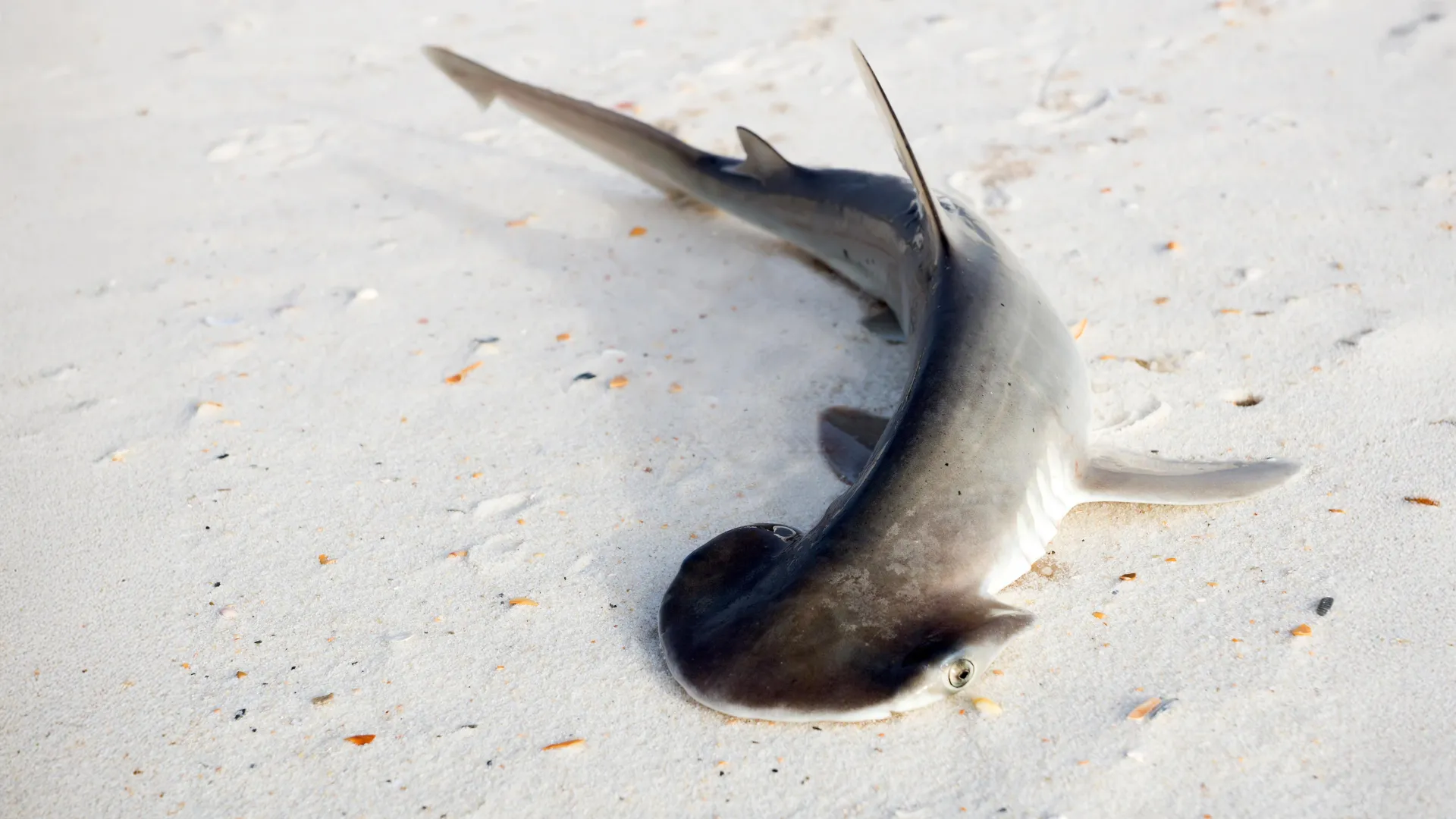
For decades, marine biologists have operated under a foundational assumption regarding the bonnethead shark (Sphyrna tiburo): that the distinctive, sexually dimorphic head shapes observed in adult males and females were the result of anatomical divergence occurring precisely at the onset of sexual maturity. Specifically, previous literature posited that males developed their signature, sharply pointed snouts as they matured, setting them apart from the smoother, more rounded profiles of mature females.
However, a comprehensive new study published in the journal Integrative Organismal Biology titled "A Head of the Curve: Bonnethead Shark (Sphyrna tiburo) Cephalofoil Morphology and Trophic Ecology" has decisively upended this established narrative. Led by researchers at the University of Miami Rosenstiel School of Marine, Atmospheric, and Earth Science—in collaboration with a multidisciplinary team from institutions including Minorities in Shark Science, the University of California, Merced, Havenworth Coastal Conservation, and California State University, Monterey Bay—the research proves that the reality of bonnethead cranial development is far more complex and unexpected than previously believed.
By examining 144 bonnethead sharks across two geographically distinct Florida ecosystems—Biscayne Bay and Tampa Bay—the research team tracked both morphological changes and dietary behaviors across various life stages. The findings reveal that juvenile bonnetheads of both sexes actually start life with more pointed heads. As the animals grow older, their shovel-shaped cephalofoils naturally become more rounded. Crucially, this rounding trajectory occurs in both sexes, but it is vastly more pronounced in females. Consequently, the distinct sexual dimorphism seen in adults is not the result of males developing pointed snouts upon reaching maturity, but rather the consequence of females undergoing a much more dramatic flattening and rounding process as they age.
Furthermore, the study investigated whether differing dietary habits or foraging strategies could explain the divergence in head shape. By employing stable isotope analysis on muscle tissue samples, the researchers determined that while populations in Biscayne Bay and Tampa Bay occupy distinct food webs, males and females living within the same habitat share remarkably similar diets. This effectively ruled out trophic ecology as the driving force behind the physical differences. As the scientific community reconsiders the evolutionary pressures shaping the bonnethead’s unique cephalofoil, this landmark study establishes a new methodological framework for combining high-precision photogrammetry with chemical ecology in elasmobranch research.
Detailed Chronology
The genesis of this investigative undertaking traces back to the collaborative efforts of marine scientists seeking to resolve long-standing questions regarding elasmobranch morphology. Between May 2022 and May 2023, the research team executed a rigorous, multi-site field sampling program across two of Florida’s most ecologically vital marine environments: Biscayne Bay on the state’s Atlantic coast and the Tampa Bay region on its Gulf coast.
Field Sampling and Capture Methodologies
To ensure a robust and representative dataset, the researchers deployed region-specific capture techniques tailored to the environmental conditions of each site. In the shallow waters of Biscayne Bay, scientists utilized specialized research longlines, a proven methodology for safely securing coastal shark species with minimal physiological stress. Meanwhile, sampling in the Tampa Bay region relied primarily on scientific gillnets, deployed in coordination with local conservation partners.
A total of 105 bonnethead sharks were sampled in Biscayne Bay, supplemented by an additional 39 specimens from the Tampa Bay region, bringing the aggregate study cohort to 144 individuals. The fieldwork protocol was meticulously designed to prioritize animal welfare and data integrity:
- Morphometric Measurement: Upon capture, each shark was immediately measured for standard length and overall body dimensions.
- Tissue Sampling: A small, non-lethal muscle tissue sample was collected from each animal for subsequent stable isotope analysis.
- Photographic Documentation: Researchers photographed both the dorsal and lateral aspects of each shark’s head against a specially calibrated grid board to provide a standardized scale for spatial analysis.
- Immediate Release: Following data collection, the animals were quickly released back into their native waters in healthy condition, with total handling times kept to an absolute minimum.
Laboratory Analysis and Digital Morphometrics
Back in the laboratory, the team utilized advanced digital image analysis to quantify cranial curvature with unprecedented precision. Using ImageJ—an open-source Java image processing program—the researchers analyzed the photographs taken against the grid boards. This approach allowed the team to map the precise contours of each shark’s cephalofoil, transforming visual observations into quantifiable geometric data. By comparing the curvature indices across individuals of varying sizes and sexes, the researchers were able to construct a comprehensive growth trajectory for both populations.
Concurrently, the muscle tissue samples underwent chemical preparation to extract carbon and nitrogen stable isotope signatures. These signatures act as long-term ecological "fingerprints," capturing the isotopic ratios of the prey items consumed by the sharks over an extended period. This biochemical approach provided a window into the trophic ecology of the specimens, bypassing the limitations of stomach-content analysis, which only reflects meals consumed within the immediate hours prior to capture.
Supporting Context & Metrics
To fully appreciate the significance of the Integrative Organismal Biology study, one must understand the unique biological profile of the bonnethead shark and the broader ecological context in which these findings were uncovered.
The Bonnethead: A Unique Elasmobranch
The bonnethead (Sphyrna tiburo) is a smaller, highly successful relative of the iconic hammerhead sharks. Distributed throughout the coastal waters of the Americas, they are readily identifiable by their broad, shovel-shaped head, known scientifically as a cephalofoil. Notably, the bonnethead holds a unique distinction within the entire shark lineage: it is the only known shark species to exhibit clear, consistent sexual dimorphism in its head shape.
Historically, this dimorphism manifested as a noticeable point along the anterior margin of the cephalofoil in adult males, contrasted against the smooth, gently curved margin typical of adult females. Because this physical disparity became most obvious in larger, mature individuals, earlier generations of scientists naturally inferred that the pointed snout was an adult male adaptation—perhaps linked to aggressive mating behaviors, territorial displays, or specialized foraging tactics.
Dissecting the Isotopic Data
The study’s chemical analyses yielded critical insights into how bonnetheads interact with their surrounding marine habitats. By analyzing the carbon and nitrogen isotope signatures of 137 individual sharks, the researchers mapped the trophic positions and foraging environments of the two distinct regional populations.
- Geographic Segregation: The isotope signatures of sharks sampled in Biscayne Bay showed virtually no overlap with those from Tampa Bay. This biochemical separation indicates that the Atlantic and Gulf populations inhabit ecosystems with fundamentally different baseline environmental signatures, driven by distinct primary producers and regional food web dynamics.
- Intra-Population Dietary Overlap: Despite the clear geographic differences between the two bays, male and female sharks residing within the same bay exhibited remarkably similar isotope values. This finding confirmed that within a given local ecosystem, both sexes depend on largely the same underlying food sources and occupy identical trophic niches.
By proving that males and females share local diets despite developing different head shapes, the researchers effectively eliminated dietary divergence as the primary mechanism behind sexual dimorphism.
Official Statements
The implications of this study extend far beyond the waters of Florida, challenging fundamental assumptions in elasmobranch biology and offering new directions for future research.
Kathy Liu, lead author of the study—conducted while she was completing her master’s degree at the Rosenstiel School—emphasized how the data upended initial hypotheses:
"Our findings show that the pointed head shape is not a feature that develops in males when they reach maturity," stated Liu. "Younger males and females both had more pointed heads, but the head became rounder as the sharks matured. That change was much greater in females."
Liu further elaborated on the dietary findings, noting the absence of a correlation between foraging habits and cranial morphology:
"Our findings provided no evidence that differences in diet or foraging were driving the development of the sharks’ sex-specific head shapes."
Dr. Catherine Macdonald, co-author of the study, associate professor in the Department of Environmental Science and Policy, and director of the Shark Research and Conservation Program at the Rosenstiel School, highlighted the methodological rigor that allowed the team to untangle this complex biological puzzle:
"This study helps narrow the drivers of a biological trait that has puzzled scientists," said Macdonald. "By examining body shape and diet in the same animals, we were able to assess whether diet and morphological changes co-occur. Our results suggest there is another cause behind the differences in head shape between male and female bonnetheads."
Future Outlook
With long-held assumptions regarding cranial development thoroughly dismantled, marine biologists are now tasked with identifying the true evolutionary and physiological drivers behind the bonnethead’s sexually dimorphic cephalofoil.
Unresolved Biological Questions
While the study successfully ruled out diet as a causative factor, scientists still do not know what selective advantages a pointed head provides to younger sharks or why females undergo such an extensive rounding process as they age. One leading hypothesis proposed by the research team is hydrodynamics: a more pointed snout may allow juvenile and smaller bonnetheads to swim with greater biomechanical efficiency. As females grow substantially larger to accommodate reproduction, gestation, and the physiological burdens of bearing live young, these hydrodynamic priorities may shift, rendering a rounded cephalofoil more advantageous.
To test this hypothesis, future research will need to incorporate advanced hydrodynamic modeling, swimming performance trials, and embryological studies. Tracking the ontogenetic development of the cephalofoil from embryonic stages through adulthood will pinpoint the exact developmental window when male and female trajectories diverge.
Conservation and Regional Management Implications
Beyond basic biology, the methodologies established in this study offer tangible benefits for shark conservation. The high-precision photographic and photogrammetric techniques utilized by Liu and her colleagues can be readily deployed to study bonnethead populations across their broader geographic range, including the Gulf of Mexico, the Caribbean, and Central America.
Comparing cranial morphology across disparate regional populations can reveal fine-scale phenotypic variations that might otherwise go unnoticed. In an era where coastal ecosystems face escalating pressures from habitat degradation, climate change, and overfishing, understanding these subtle biological and ecological distinctions is vital. Armed with comprehensive data on local populations, wildlife managers and conservation policymakers will be better equipped to design targeted, region-specific management strategies that protect vulnerable elasmobranch populations for generations to come.
Research Credits and Acknowledgements
The published study, "A Head of the Curve: Bonnethead Shark (Sphyrna tiburo) Cephalofoil Morphology and Trophic Ecology," stands as a collaborative achievement across multiple academic and conservation institutions.
- Lead Author: Kathy Liu (University of Miami Rosenstiel School and Field School)
- Co-Authors: Jasmin Graham (Minorities in Shark Science); H. Ro and S. L. Kim (University of California, Merced); T. R. Wiley and J. M. Gardiner (Havenworth Coastal Conservation); L. J. Baker (California State University, Monterey Bay); C. Macdonald (University of Miami Rosenstiel School and Field School)
- Funding and Support: Fieldwork and research operations were generously supported by the Field School and the University of Miami Shark Research and Conservation Program. Fieldwork in Tampa Bay received vital backing from the Tampa Bay Environmental Restoration Fund and the Disney Conservation Fund. Stable isotope analyses were facilitated by the University of California, Merced, with partial project funding provided by the Maxwell/Hanrahan Foundation.