

Executive Overview
In the rapidly evolving digital ecosystem of the 21st century, the demand for high-volume, high-quality content has completely outpaced traditional human capacity. Creators, marketers, enterprises, and solo entrepreneurs alike face an unyielding pressure to maintain active blogs, launch targeted social media campaigns, optimize search engine rankings, and craft compelling marketing copy. Enter artificial intelligence (AI)—a transformative force reshaping how the world conceptualizes, produces, and scales written media.
Artificial intelligence content generators have shifted from speculative technology to indispensable enterprise assets. Utilizing advanced Large Language Models (LLMs) and sophisticated neural networks, these platforms analyze vast quantities of data to generate human-like text tailored to specific brand voices, stylistic guidelines, and SEO requirements. Whether it is drafting long-form thought leadership articles, writing high-converting Facebook advertisements, or generating granular e-commerce product descriptions, AI writing assistants have democratized professional copywriting.
This investigative report examines the top ten AI content generation platforms available on the market, analyzing their core feature sets, pricing models, ideal user bases, and distinct operational advantages. By evaluating these digital tools through an authoritative and analytical lens, content creators and business strategists can make informed decisions to optimize their operational workflows and maximize return on investment.

Detailed Chronology of the AI Writing Landscape
The ascent of artificial intelligence in the publishing and marketing sectors did not happen overnight; it is the culmination of years of rapid advancements in Natural Language Processing (NLP) and deep learning architectures.
- The Early Era (Pre-2018): Early automated writing tools relied heavily on rudimentary rule-based systems and template matching. These systems were largely confined to generating basic financial summaries, weather reports, and automated sports scores. The output was stiff, highly predictable, and entirely unsuitable for nuanced marketing or creative storytelling.
- The Transformer Breakthrough (2018–2020): The introduction of Transformer-based models marked a monumental paradigm shift. Machines began to understand contextual relationships between words across entire sentences and paragraphs rather than processing them in isolated fragments. This era birthed the earliest iterations of dedicated AI marketing copy generators.
- Commercial Maturation and Specialization (2021–2022): As foundational AI models became more robust, software developers built sophisticated user interfaces on top of them. Tools like Jasper (formerly Jarvis), Copy.ai, and Writesonic emerged, offering specialized templates for specific professional use cases. This period established AI writers not merely as novel toys, but as core infrastructure for digital marketing agencies, SEO professionals, and freelance bloggers.
- Enterprise Integration and Advanced SEO (Present): Today, AI content generators feature integrated plagiarism checkers, deep SEO optimization metrics (via integrations with platforms like SurferSEO), real-time web search capabilities, and multimodal content support. What began as basic sentence completion software has evolved into comprehensive digital co-pilots capable of executing complex content strategies from keyword research to final publication.
Supporting Context & Metrics: The State of AI in Content Creation
The mass adoption of generative artificial intelligence is driven by undeniable economic and operational realities. According to recent digital marketing industry reports, businesses utilizing AI tools for content generation report a reduction in content production time of up to 70%, alongside significant decreases in per-piece operational costs.
Content creators face a perpetual state of digital noise. Maintaining a consistent publishing cadence across multiple channels—blogs, email newsletters, LinkedIn, Twitter/X, and ad networks—demands hundreds of hours of focused labor. AI tools bridge this productivity gap. However, the market is saturated with options, making it critical to evaluate tools based on specific performance criteria rather than broad marketing claims.
The following comprehensive breakdown profiles the top ten AI content generation tools, analyzing their specific ecosystems, advantages, and financial investments.
The Top 10 AI Content Generators: A Deep Dive
1. Jasper AI (Formerly Jarvis)
Jasper stands as a titan in the AI writing ecosystem. Designed specifically to identify optimal vocabulary and sentence structures for varied brand voices, Jasper excels at both short-form marketing copy and extensive long-form articles.
- Core Capabilities: Equipped with advanced templates, brand voice settings, and specialized modes like "Boss Mode," Jasper allows users to orchestrate long-form content generation with granular commands.
- Pricing: Premium tiers scale up to high-end enterprise options, including advanced features such as Boss Mode starting at approximately $99 per month. (Promotional partnerships frequently offer free introductory credit packages to new users).
- Best For: Mid-to-large enterprises, professional copywriters, and agencies requiring strict brand voice adherence and high-speed output.
2. Copy.ai
Copy.ai has earned a stellar reputation for its exceptionally intuitive user interface and vast library of over 90 specialized templates. From bullet points to blog outlines, hook texts, and general advertising copy, Copy.ai streamlines the creative process.

- Core Capabilities: Rapid ideation, social media post creation, digital ad copy generation, and short-form business utilities like product descriptions and sales reports.
- Pricing: Offers a robust free trial alongside a Pro Plan priced at $49 monthly (discounted to approximately $35 per month when billed annually). Special introductory offers often feature free word bonuses and steep discounts for early upgrades.
- Best For: Social media managers, e-commerce store owners, and digital marketers needing fast, creative short-form copy.
3. Frase AI
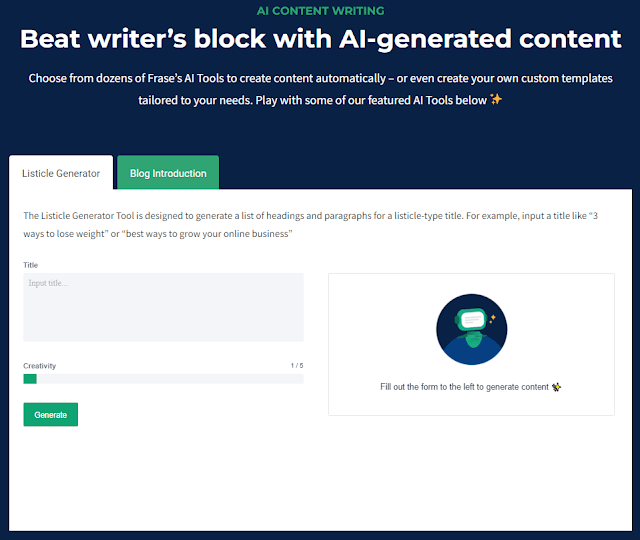
Positioned at the intersection of content creation and Search Engine Optimization (SEO), Frase helps users research, write, and optimize content to rank competitively in search engine results pages (SERPs).
- Core Capabilities: Automated content brief generation, SERP research, keyword optimization, and real-time content scoring based on top-ranking competitor pages.
- Pricing: Structured across tiered options including the Solo Plan ($14.99/mo), Basic Plan ($44.99/mo), and Team Plan ($114.99/mo), with annual billing discounts available. Optional SEO add-ons are offered for specialized power users.
- Best For: SEO specialists, content strategists, and inbound marketing teams focused on organic search traffic dominance.
4. Article Forge
Operating differently from conversational prompt-based AI models, Article Forge is built for maximum efficiency and automation. Rather than requiring detailed briefs, this software operates on a streamlined principle: provide a target keyword, and the system autonomously researches and generates a complete, cohesive article.
- Core Capabilities: Fully automated end-to-end article generation, automated image and video insertion, and guaranteed Copyscape-passing uniqueness.
- Pricing: Plans include the Basic Plan ($27/mo for 25k words), Standard Plan ($57/mo), and Unlimited Plan ($117/mo), backed by a 30-day money-back guarantee.
- Best For: PBN operators, affiliate marketers, and high-volume bloggers who prioritize speed, scale, and hands-off article creation.
5. Rytr
Rytr.me is celebrated for its lightweight, accessible, and budget-friendly approach to AI-assisted writing. It serves as an ideal entry point for individuals who want the benefits of AI without navigating a complex enterprise dashboard.
- Core Capabilities: Built-in plagiarism checker, tone adjustment slider (allowing users to shift from casual to authoritative instantly), and support for multiple languages and use cases.
- Pricing: Features a generous free tier (generating up to 5,000 characters per month), with paid upgrades like the Saver Plan starting at a modest $9 per month ($90 annually).
- Best For: Students, small business owners, casual bloggers, and freelancers on tight budgets.
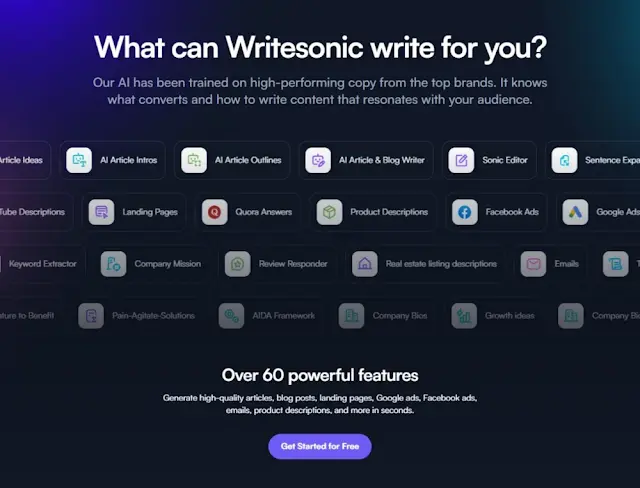
6. Writesonic
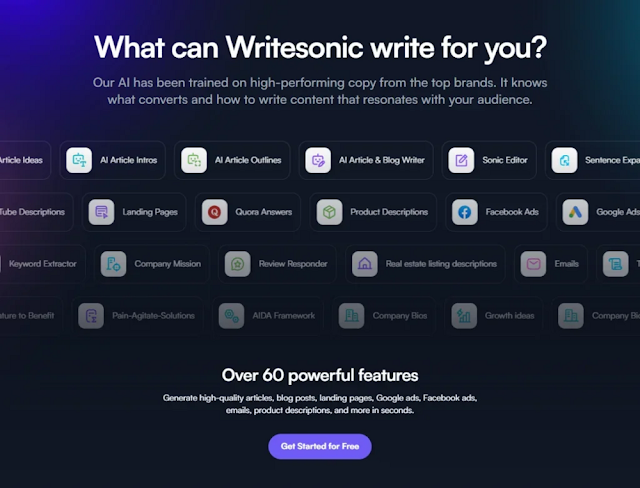
Writesonic bridges the gap between creative marketing copy and rigorous long-form article writing, bolstered by built-in grammar enhancement and plagiarism verification tools.
- Core Capabilities: Landing page copy generation, digital ad creation, long-form article writing assistance, and integrated quality-assurance checks.
- Pricing: Features a limited free trial credit system, transitioning into short-form ($15/mo) and long-form ($19/mo) tiered options.
- Best For: Solopreneurs and budget-conscious marketers who require multi-format copy backed by grammar and originality checks.
7. CopySmith
CopySmith is built specifically to handle high-demand professional writing environments, offering robust collaboration features and instantaneous content generation across varied formats.
- Core Capabilities: Bulk content generation, team collaboration workspaces, seamless e-commerce platform integrations, and diverse content templates.
- Pricing: Free trial options with no credit card required, followed by structured tiers such as the Starter Plan starting at $19 per month, scaling up to custom enterprise agreements.
- Best For: Large marketing teams, enterprise retail brands, and agencies managing multi-channel digital campaigns.
8. Hypotenuse.ai
Hypotenuse.ai stands out as a specialized powerhouse optimized for e-commerce brands and digital storefronts. It simplifies the arduous task of writing thousands of unique, engaging product descriptions.

- Core Capabilities: Bulk e-commerce product description generation, automated image captioning, campaign batch generation, and content expansion tools.
- Pricing: Free trial periods available, with paid tiers starting at the Starter Plan ($29/mo) and Growth Plan ($59/mo), alongside custom enterprise pricing.
- Best For: E-commerce merchants, Shopify store owners, and retail copywriters managing extensive product inventories.
9. Kafkai
Kafkai is engineered specifically with SEO professionals and niche affiliate marketers in mind. It acts as a specialized niche article writer capable of producing scaled content across diverse subject matters.
- Core Capabilities: Niche-specific article generation, unsupervised content creation modes, and bulk article export tools designed for programmatic SEO.
- Pricing: Offers a free trial followed by tiered volume plans: Writer Plan ($29/mo for 100 articles), Newsroom Plan ($49/mo), Printing Press Plan ($129/mo), and Industrial Printer Plan ($199/mo).
- Best For: Affiliate marketers, niche site builders, and SEO agencies running programmatic content networks.
10. Peppertype.ai
Peppertype.ai delivers a fast, user-friendly copywriting experience designed to empower small business owners and content creators to produce compelling marketing assets effortlessly.
- Core Capabilities: Intuitive dashboard, rapid ad copy and blog post ideation, content expansion, and rewording utilities.
- Pricing: Free trial available, with the Personal Plan starting at $35 per month and Team Plans scaling to $199 per month.
- Best For: Small business owners and marketing generalists seeking a straightforward, reliable copywriting assistant.
Official Statements and Industry Perspectives
As artificial intelligence reshapes the publishing landscape, industry leaders and digital ethicists have offered vital perspectives on its deployment. Technology analysts emphasize that AI should not be viewed as a complete replacement for human creativity, but rather as an advanced cognitive co-pilot.

"Artificial intelligence does not replace the human voice; it amplifies human efficiency. The most successful content strategies of the future will be those that combine the raw processing power and speed of machine learning with the nuanced emotional intelligence, fact-checking, and strategic oversight of human editors."
— Digital Marketing Strategy Review
Furthermore, major search engine conglomerates, including Google, have clarified their stance on AI-generated content. Official search guidelines emphasize that quality remains paramount. Whether content is written by a human or generated via an AI assistant, it must demonstrate Experience, Expertise, Authoritativeness, and Trustworthiness (E-E-A-T). Tools that incorporate robust SEO optimization, such as Frase and Jasper, help creators ensure their AI-assisted output meets these rigorous algorithmic standards.
Future Outlook: Where is AI Content Generation Heading?
Looking ahead, the trajectory of AI writing tools points toward hyper-personalization, multimodal integration, and real-time autonomous execution.
- Multimodal Content Ecosystems: Future iterations of AI generators will seamlessly blend text creation with dynamic image generation, automated video editing, and interactive data visualization within a single unified workspace.
- Advanced Fact-Checking and Verification: As hallucination rates decrease through the integration of live web-browsing capabilities and verified knowledge graphs, AI writers will become increasingly reliable for authoritative, news-driven, and academic journalism.
- Deeper Workflow Automation: Content generation tools will no longer operate as isolated writing pads. Instead, they will integrate deeply with Content Management Systems (CMS) like WordPress and Shopify to research, write, optimize, and publish articles autonomously based on ongoing analytics and trend monitoring.
Conclusion
The modern content creator’s dilemma—balancing the relentless demand for high-volume publishing with finite human hours—has found a powerful resolution in artificial intelligence. From budget-friendly options like Rytr and Copy.ai to enterprise-grade powerhouses like Jasper AI and specialized SEO tools like Frase, the market offers a tailored solution for every operational need and financial budget.
When selecting an AI content generator, organizations must carefully evaluate their primary objectives: whether that is scaling e-commerce product pages via Hypotenuse.ai, building programmatic niche sites with Kafkai, or crafting authoritative thought-leadership blogs with Jasper. By embracing these technologies thoughtfully—pairing automated scale with rigorous human editorial oversight—creators can future-proof their digital strategies and thrive in an increasingly competitive information economy.
