

Executive Overview
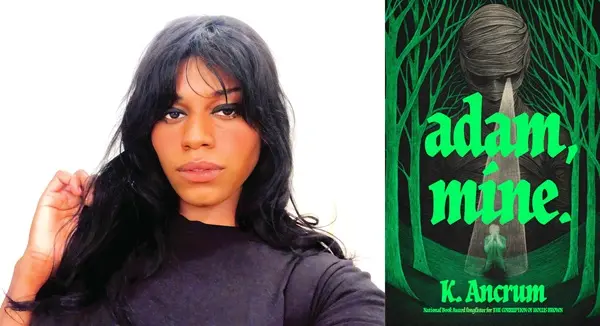
The publishing landscape is witnessing a structural shift in how foundational literary works are approached, adapted, and re-contextualized. Lambda Award–winning young adult fiction author K. Ancrum is set to release her historical novel debut, titled Adam, Mine., on September 8 under the HarperCollins imprint. Tailored for older teen audiences, the work serves as a dedicated ode to Mary Shelley’s canonical masterpiece, Frankenstein. The narrative tracks a young Victor Frankenstein as his early pursuits in advanced science launch him into a transformative and unforgettable trajectory.
However, rather than positioning the text within the established commercial categories of a conventional "retelling" or "reimagining," Ancrum has introduced a distinct conceptual taxonomy. Defining Adam, Mine. fundamentally as a "love letter," the author presents a critical departure from routine structural adaptations. By shifting the authorial posture from derivative reproduction to intimate conversation, Ancrum challenges prevailing publishing conventions regarding classic mythos. This executive analysis details the narrative development, thematic mechanics, structural differentiation, and prospective market impact of Ancrum’s upcoming release.
+-----------------------------------------------------------------------------------+
|                            PROJECT IDENTIFICATION MATRIX                          |
+--------------------------+--------------------------------------------------------+
| Title                    | Adam, Mine.                                            |
| Author                   | K. Ancrum (Lambda Award Winner)                        |
| Publisher                | HarperCollins                                          |
| Publication Date         | September 8                                            |
| Target Audience          | Older Teen / Young Adult (YA)                          |
| Literary Paradigm        | Historical Novel / Philosophical Love Letter           |
| Source Text Inspiration  | Frankenstein (Mary Shelley)                            |
+--------------------------+--------------------------------------------------------+
Detailed Chronology: Project Inception and Paradigm Shift
The development and conceptualization of Adam, Mine. reflect a deliberate evolution in how contemporary writers engage with historic source material. The operational timeline of the project highlights key developmental milestones that led to its upcoming autumn release.
  INCEPTION & PITCH                CONCEPTUAL RE-FRAMING                 PUBLICATION
  Author formulates pitch          Departure from standard              Scheduled launch via
  to HarperCollins editor          retelling; adoption of               HarperCollins imprint
  as a "love letter."              "love letter" paradigm.              for older teens.
        |                                   |                                   |
        v                                   v                                   v
  [ Phase I ] ------------------------> [ Phase II ] ------------------------> [ September 8 ]
Phase I: Pitch and Editor Alignment
When Ancrum initially brought Adam, Mine. to her editorial team at HarperCollins, the project was framed explicitly through the lens of a "love letter" rather than a standard reimagining. The editorial team immediately recognized the distinction: an acknowledgment that a text as culturally monumental and layered as Frankenstein demands an engagement grounded in dialogue rather than mechanical replication.
Phase II: Structural Refinement and Philosophical Framing
Following the pitch, the development of Adam, Mine. focused on identifying the granular, under-explored nuances of the source material. Rather than attempting to replicate the broad narrative beats of the 1818 original, Ancrum directed her focus toward the smaller, less prominent elements of the original dialogue—the quiet details that remain central to the core work yet are frequently overlooked in macro-level adaptations.
Phase III: Final Production and Launch Schedule
With the theoretical framework locked, the production proceeded under HarperCollins, targeting a September 8 release date. The book stands as Ancrum’s first foray into historical novel length, serving as a key milestone in her literary progression following her previous recognized achievements in young adult fiction.
Supporting Context & Metrics: Comparative Framework Analysis
To understand the operational and narrative mechanics of Adam, Mine., it is necessary to examine how Ancrum differentiates a conventional literary "retelling" from an epistolary "love letter."
The Anatomy of Retellings vs. The Mechanics of a Love Letter
Traditional retellings operate within well-defined structural parameters designed to test or update existing works. In contrast, the methodology applied in Adam, Mine. prioritizes thematic depth and character intimacy over programmatic plot mapping.
+---------------------------------------------------------------------------------------+
|                    STRUCTURAL COMPARISON: RETELLING VS. LOVE LETTER                   |
+-----------------------+----------------------------------+----------------------------+
| Feature               | Standard Retelling / Reimagining | Ancrum's "Love Letter"     |
+-----------------------+----------------------------------+----------------------------+
| Core Objective        | Plot duplication / modernization | Philosophical conversation |
| Narrative Focus       | Macro-level plot beats           | Intimate thematic detail   |
| Relationship to Text  | Adaptation / Deconstruction      | Interpersonal dialogic     |
| Theoretical Stance    | Mechanical stress-testing        | Intimate exploration       |
| Primary Driver        | Structural re-mapping            | Emotional resonance        |
+-----------------------+----------------------------------+----------------------------+
Analytical Breakdown of Literary Retellings
According to Ancrum, retellings retain a persistent presence in the cultural consciousness because powerful stories demand public involvement. This involvement manifests through several distinct creative mechanisms:
- Adaptation and Deconstruction: Breaking down core narrative components to analyze their baseline effectiveness.
- Furious Analysis and Dogged Repetition: Continually examining and re-enacting key plot points across successive generations.
- Self-Insertion and Political Anachronism: Injecting contemporary perspectives or personal vantage points into historical frameworks.
- Form Stress-Testing: Pushing the boundaries of narrative structure until the medium reaches its limit.
The Mechanics of the "Love Letter" Paradigm
Ancrum posits that Frankenstein represents both a "maximalist feast of philosophy" and the "primordial soup of tropes." Attempting to simply re-execute or regurgitate a work of such immense cultural weight presents an inherent impossibility. The "love letter" model operates under entirely different artistic principles:
- Prioritization of Conversation over Regurgitation: Rather than repeating well-known plot beats, the text addresses the foundational author directly, acknowledging the subtle, smaller aspects of the original conversation.
- Focus on Intimacy and Vulnerability: The approach targets what Ancrum characterizes as the "soft underbelly"—the deep shadows, warm wet places, and emotional core of the narrative designed to stir the reader.
- Magnification of Specific Philosophical Themes: The work isolates precise thematic vectors within the original mythos, specifically:
- The malleability of destiny
- The sin of pride
- The terror of technological and scientific invention
- The glimmer of desire
- Overwhelming grief
+-----------------------------------------------------------------------------------+
|                        THEMATIC CORE OF "ADAM, MINE."                             |
+-----------------------------------------------------------------------------------+
|  [Malleability of Destiny] ---> [Sin of Pride] ---> [Terror of Invention]         |
|                                       |                                           |
|                                       v                                           |
|  [Overwhelming Grief] <--- [Glimmer of Desire] <--- [Youth & Inheritance]         |
+-----------------------------------------------------------------------------------+
Official Statements and Authorial Discourse
In her reflection on the creation of Adam, Mine., K. Ancrum provides an authoritative statement regarding her artistic motivations, her relationship with Mary Shelley’s legacy, and the psychological process of original adaptation.
Deference to "Mother Science Fiction"
Ancrum pays homage to Mary Shelley, framing her as the foundational figure of the genre:
"I sit at her feet, her hand in my hair. Mother Science Fiction: socialite, nepo-baby, genius, scandalous gossip, philosopher, all. How could I write anything less than a love letter, with my cheek upon her knee?"
Reflecting on the sheer scale of Frankenstein and its enduring presence in modern literature, Ancrum emphasizes the humility required to engage with such source material:
"What a thing to be the very first, in a modern age: it drags my head and hands to the ground, prostrate in the shadow it casts. How could I dare to try and ‘retell’ any of that? Instead, Adam, Mine. says, ‘I see what you’ve done, Mother—the smallest parts that are the least of the conversation. I saw them, and I want you to know that I saw.’"
On the Nature of Literary Intimacy and Human Transition
Highlighting the fundamental difference between formal adaptation and intimate correspondence, Ancrum explains the internal mechanics driving her upcoming novel:
"A formal analysis and adaptation requires an assessment of the largest parts of its creation and a dance that hits all the well-known beats. But a love letter is about intimacy. Lingering on the soft underbelly, the deep shadows, the warm wet places, it is about seeing and loving and knowing and trying your best to stir your reader to heat and ripeness."
She further articulates how Adam, Mine. explores the human element behind the mythos, placing particular emphasis on the transition from adolescence to adulthood:
"In a love letter, even the changes must be expressions of knowing. The vulnerable insecurity of youth, the pressure of inheritance, a conversation about Monsters and Men are magnified via exploration of what it means to become a man at all—in this story about two teenagers who aren’t children anymore and must decide what they are becoming instead."
The Psychological Cycle of Creative Address
Describing the experience of writing a dedicated homage to a monumental cultural classic, Ancrum outlines a distinct, recurring cycle of creative evolution:
"I have been asked what it means to write a love letter to classic mythos, and how. The answer is plain. It is how every love letter has ever been written, since the very beginning: First with humiliation for writing it at all, then with increasing hunger until there is nothing left but the grotesque. And yet, still it is sweet. It comes to the tongue, to the ear, sweet."
Future Outlook and Industry Impact
The release of Adam, Mine. on September 8 represents a notable moment for HarperCollins and the broader young adult fiction sector. As authors and publishers navigate an oversaturated market of classic adaptations, Ancrum’s explicitly articulated "love letter" framework offers a potential model for future historical and speculative fiction projects.
+-----------------------------------------------------------------------------------+
|                             MARKET IMPACT & OUTLOOK                               |
+-------------------------+---------------------------------------------------------+
| Category Focus          | Young Adult / Historical Fiction / Speculative Science  |
| Narrative Innovation    | Departure from standard plot-beat retellings            |
| Target Audience Impact  | Deeper philosophical engagement for older teen readers  |
| Imprint                 | HarperCollins                                           |
| Release Target          | September 8                                             |
+-------------------------+---------------------------------------------------------+
Redefining the YA Historical Novel
By focusing on young Victor Frankenstein’s early encounters with advanced science through the lens of identity, grief, inheritance, and transition, Adam, Mine. positions itself to resonate strongly with older teen readers facing their own transitions into adulthood. The novel moves past simple surface-level tropes, aiming to deliver a nuanced exploration of what it means to transition out of childhood while grappling with the consequences of creation and ambition.
Editorial and Critical Implications
Ancrum’s shift from traditional reimagining to conversation-based tribute invites critical reassessment of how modern authors interact with foundational texts. Should Adam, Mine. achieve the critical and commercial reception anticipated by HarperCollins, it may establish a blueprint for future authorial engagements with historical classics—proving that the most profound way to honor literary origins is not through mechanical repetition, but through deliberate, intimate, and deeply felt artistic dialogue.
