

Executive Overview
In an era dominated by hyper-condensed media, algorithmic feeds, and the illusion that all human knowledge is instantly accessible via a simple web search, a rare cinematic achievement arrives to challenge our relationship with information. Chronovisor, the startling and visionary debut feature written and directed by Jack Auen and Kevin Walker under the Cosmic Salon label, is a bibliographic thriller that demands active intellectual engagement. Blending rigorous academic conspiracy with chilling analog aesthetics, the film acts as a cinematic portal to the past, present, and future.
At its center is Béatrice, a fictionalized researcher and professor portrayed with striking authenticity by real-life academic Anne Laure Sellier. As Béatrice unravels a labyrinthine historical mystery inside the wood-paneled reading rooms of Manhattan and the archives of the Yale Club, Chronovisor transforms scholarly research into a pulse-pounding thriller. Relies heavily on translated archival text, spectral typographic design, and crackling 16mm film stock, the film refuses to spoon-feed its audience. Instead, it invites viewers to experience the profound, sometimes overwhelming thrill of archival discovery.
Far from being a mere exercise in style, Chronovisor addresses a fundamental contemporary anxiety: our drift into an empathy crisis fueled by digital isolation. By championing the analog, the tactile, and the deliberately hidden, Auen and Walker have constructed an enduring, ancient-feeling masterwork that stands as the most intellectually invigorating narrative feature of the year.
Detailed Chronology: Unraveling the Legend of the Chronovisor
To understand the narrative weight of Auen and Walker’s film, one must trace the historical thread that inspired it—a thread the filmmakers pull with painstaking precision throughout the runtime of the movie.
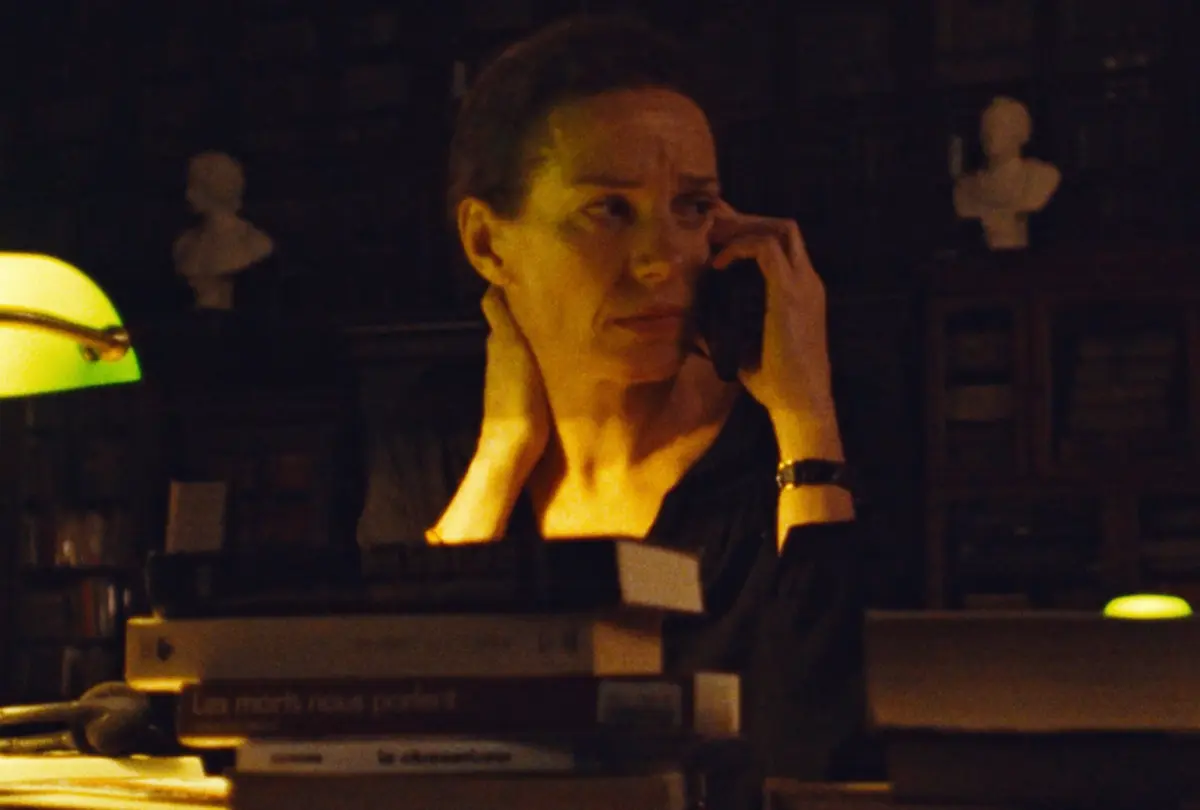
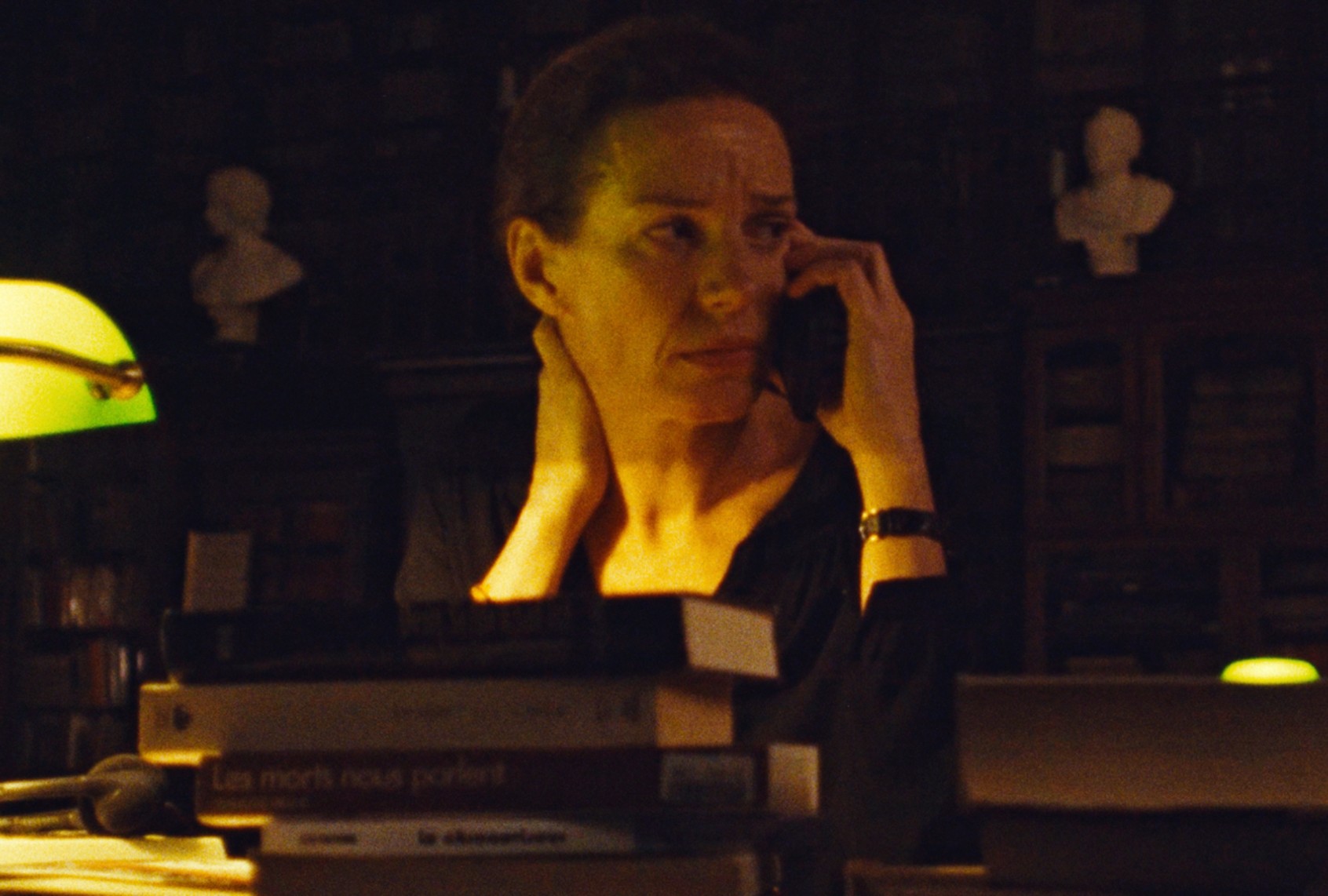
The story within Chronovisor begins innocently enough. While conducting research for her monograph on memory and mind-palace theory, Béatrice finds herself poring over picturesque archives at the Yale Club in a wintry Upper East Side Manhattan. Amid the quiet rustle of paper and the amber glow of table lamps, she stumbles upon a curious, weathered audiotape.
The voice on the recording recounts one of the 20th century’s most bizarre and debated fringe histories: the invention of the "Chronovisor." Developed allegedly by an Italian Benedictine priest and scientist named Pellegrino Ernetti alongside a team of prominent physicists, the device was purported to capture electromagnetic residual waves from the ether. According to the legend, the machine projected historical events onto a television-sized screen, allowing operators to witness sights as monumental and harrowing as the crucifixion of Jesus Christ.
As the historical record shows, Ernetti’s sensationalized claims quickly divided the public. While true believers embraced the device as proof of divine and temporal interconnectivity, skeptics dismissed it as an elaborate hoax. The controversy deepened when Ernetti produced a photograph he claimed was akin to the Christ he had witnessed through the machine—an image that was subsequently debunked as a close-up photograph of a common wooden church sculpture.
In Chronovisor, Auen and Walker use this historical crux as the entry point for Béatrice’s descent into the rabbit hole. As she listens to the audiotape, the line between academic inquiry and conspiratorial obsession blurs. Every thread she pulls reveals new ripples of a long-buried cover-up. When she discovers that Ernetti’s photograph was merely intended to approximate his vision rather than offer a direct reproduction, she realizes she is simultaneously back at square one and too far gone to turn back. The audience travels this path hand-in-hand with Béatrice, experiencing the exact moment curiosity hardens into an irreversible quest for truth.
Supporting Context & Metrics: The Death of Instant Access and the Power of the Analog
One of Chronovisor’s most astute thematic triumphs is its critique of modern information consumption. With millions of Wikipedia entries and hyper-technological search engines at our fingertips, contemporary society suffers from the hubris of presumed omniscience. We assume that if a fact cannot be retrieved in three seconds, it does not exist.
Chronovisor shatters this illusion by reminding viewers of the vast, impenetrable mountain of human knowledge that remains out of reach. Extensive archives sit un-digitized in foreign languages across the globe; rare texts are locked behind physical gates; translation software remains dangerously unreliable. True academic research—the kind portrayed with such reverence in the film—is messy, elusive, and frequently humbling.
Production and Aesthetic Metrics
- Medium: Filmed entirely on lush, tactile, and crackling 16mm film stock, rejecting clean digital aesthetics in favor of organic decay and celestial static.
- Narrative Delivery: A substantial portion of the plot is communicated through on-screen text—meticulously translated archival material superimposed in English over original printed matter.
- Atmospheric Design: Dominated by Dutch angles, spectral typographic design, and warm amber interiors that evoke the quiet intellectual refuge of elite libraries.
- Cinematic Lineage: Critics and early viewers have drawn atmospheric parallels to other elite masterworks of analog horror and intellectual dread, notably Cecelia Condit’s short film Possibly in Michigan and John Carpenter’s Prince of Darkness.
By favoring the analog over the digital, Chronovisor taps into a rare cinematic quality: the feeling of witnessing something that transcends time, something that has always existed. It positions the library not as a dusty relic of the past, but as a living, breathing chamber where secrets wait silently between the pages, daring someone brave enough to read them.
Official Statements & Creative Vision
The creative minds behind Cosmic Salon, Jack Auen and Kevin Walker, approached the production of Chronovisor with the meticulousness of veteran historians coupled with the formal daring of avant-garde filmmakers. Their collaboration with real-life academic Anne Laure Sellier bridges the gap between fiction and documentary realism, creating a character whose intellectual hunger feels entirely lived-in.
In promotional and critical discourse surrounding the film’s release, the directors have consistently emphasized that Chronovisor is not designed for passive consumption. In an era where streaming platforms cater to the lowest common denominator with background noise viewing, Auen and Walker have deliberately crafted an interactive cinematic maze.
"To access this lucidity—the answer to all strife from the dawn of history to the present—you must pay close attention. Don’t you dare look away," the filmmakers suggest through the narrative structure of the film.
Scholars do not dedicate their lives to research simply to elevate themselves above others; rather, they operate under an imperative duty to help humanity navigate the crushing, complex experience of being alive. Chronovisor operationalizes this philosophy. The directors understand that humanity is currently trapped within a profound empathy crisis, with modern institutions rapidly sealing off traditional pathways to connection. In response, Chronovisor functions as a cinematic trapdoor—a hidden escape hatch for viewers willing to pause, look around, and immerse themselves in the quiet static of shared human history.
Future Outlook: A New Benchmark for Independent Cinema
As Chronovisor rolls out to audiences and festivals under the banner of Grasshopper Film, its legacy within contemporary independent cinema is already beginning to take shape. By proving that intellectual rigor, historical depth, and demanding narrative structures can coexist within a visually sumptuous thriller, Auen and Walker have raised the bar for what narrative features can achieve on a modest scale.
The film serves as a vital antidote to franchise fatigue and algorithmic filmmaking. It signals to studios and independent creators alike that audiences are hungry for art that respects their intelligence—art that does not hand over every answer wrapped in plastic, but instead leaves room for interpretation, debate, and lingering nocturnal unease.
In the final accounting, Chronovisor does not merely tell a story about a mysterious machine that views the past; it becomes a machine itself. When the screen fades to static, and the viewer is left staring at their own reflection in a dark room or glancing nervously at the stack of unread books and lingering browser tabs on their desk, the true purpose of the film is revealed. Like Béatrice, like Ernetti, and like the writer staring into the ether, humanity has always engaged in the same fundamental pursuit: trying desperately to get someone else to pay attention. Chronovisor ensures that, at least for one breathtaking cinematic hour, we are listening.
