

Executive Overview
In early August 2026, an attempted drone strike at Leipzig/Halle Airport in eastern Germany pierced the carefully managed illusion of distance between Western Europe and the grinding war in Ukraine. Initially treated as an isolated security breach, the incident was formally addressed in a grim Berlin press conference where senior German ministers laid the blame squarely on the Kremlin. Foreign Minister Johann Wadephul stated that the configuration, components, explosives, and detonation systems recovered from the drones bore the unmistakable fingerprint of Russian hybrid warfare.
The attack—involving multiple explosives-laden drones discovered near Ukrainian cargo planes at a critical logistical hub—has ignited a firestorm across European capitals. While avoiding the legally and politically explosive designation of an "act of war," German federal prosecutors categorized the incident as a calculated assault on the nation’s critical transport and infrastructure, effectively targeting the European Union and NATO by extension.
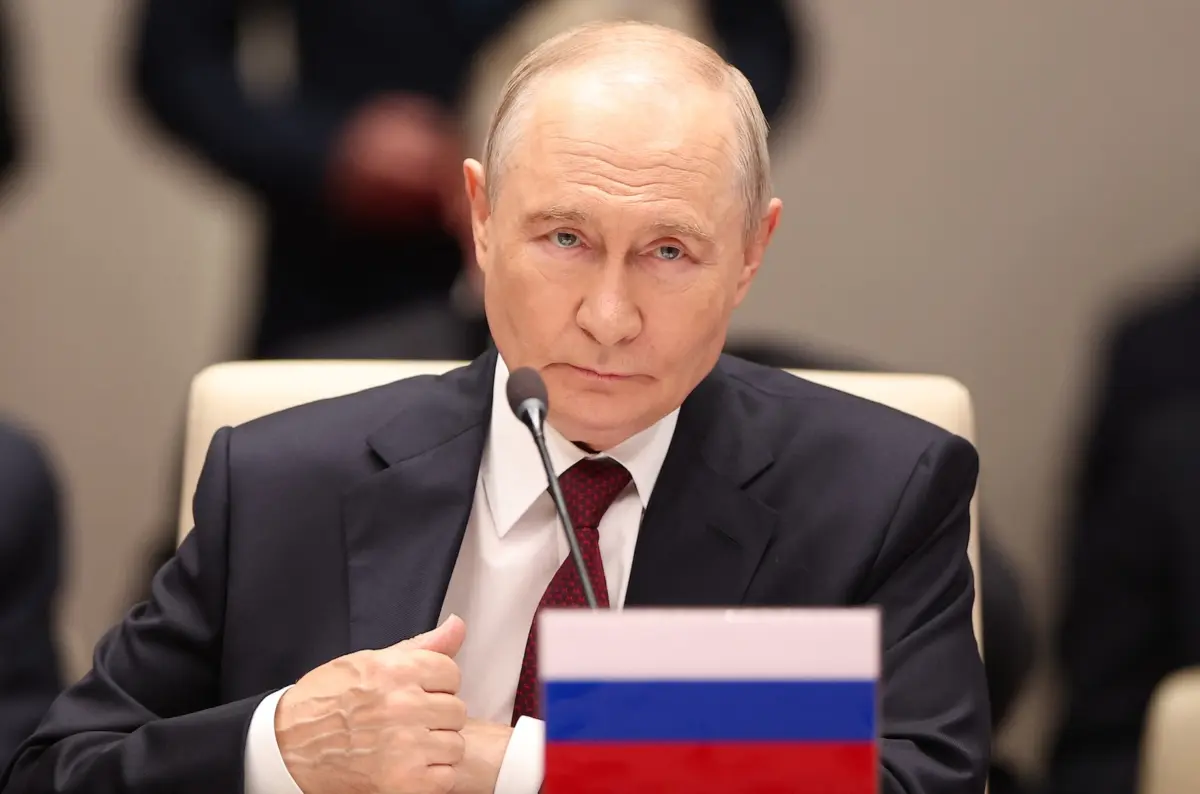
This commentary-driven analysis explores how the Leipzig drone episode exposes the terrifying reality of gray-zone warfare in the mid-2020s. Far from signaling a conventional Russian invasion of Western Europe, the attack operates as a high-stakes psychological probe—a diplomatic and tactical stress test executed by an intelligence-trained Russian President, Vladimir Putin, to measure Western resolve, probe alliance vulnerabilities, and force the covert conflict out of the shadows and squarely into the public eye.
Detailed Chronology: The Leipzig Incident and Its Immediate Aftermath
The timeline of the Leipzig/Halle Airport incident reveals a creeping realization among European intelligence agencies that hybrid operations have crossed a critical threshold from digital disruption and minor sabotage to physical attacks on strategic Western soil.
- Early August 2026 (approx. Aug 4): Airport security and counterterrorism personnel identify at least two—possibly three—drones outfitted with explosive payloads at Leipzig/Halle Airport. Crucially, one of the drones is discovered parked adjacent to two Ukrainian cargo planes. Leipzig, situated roughly a three-hour flight from Kyiv, serves as a vital transit lifeline, processing billions of dollars in military hardware, humanitarian aid, and logistical supplies destined for Ukraine’s front lines.
- Mid-August 2026: Investigative journalists and regional security analysts begin piecing together a pattern of escalating covert operations across the continent. Foreign Policy columnist Christian Caryl publishes an extensive inventory of covert Russian activities spanning previous months, highlighting a coordinated campaign of European sabotage that largely eluded mainstream headlines.
- Late August to Early September 2026: European foreign policy apparatuses mobilize. EU foreign policy chief Kaja Kallas convenes European foreign ministers in Ireland, explicitly labeling the Leipzig incident as bearing "all the hallmarks of state-sponsored terrorism," while publicly voicing deep frustration over the lack of a cohesive retaliatory playbook.
- September 7, 2026: The German federal government officially shatters its traditional diplomatic reticence. In a high-profile press conference, Foreign Minister Johann Wadephul and federal prosecutors formally attribute the drone attack to Russian state actors, framing it as an escalation of Putin’s ongoing war against Ukraine’s allies. European capitals swiftly follow suit by summoning Russian ambassadors for formal rebukes, while U.S. and NATO officials issue statements of solidarity.
Supporting Context & Metrics: The Anatomy of Gray-Zone Warfare
To understand why the Leipzig drone attack has rattled European leadership far beyond the physical damage it inflicted—which was mitigated by the failure of the payloads to detonate—one must examine the mechanics of contemporary hybrid warfare.
"Hybrid warfare" is the modern term of art for a fluid, multi-domain conflict matrix that bypasses traditional declarations of war. It relies on a spectrum of non-traditional hostilities, including:
- Clandestine Sabotage: Targeting logistics nodes, communication cables, energy grids, and transit hubs.
- Digital and Cyber Warfare: Disrupting critical administrative databases and infrastructure controls.
- Information Operations: Weaponizing social media ecosystems to amplify political polarization, stoke anti-immigrant sentiment, and elevate pro-Kremlin political factions.
The choice of Leipzig/Halle Airport as a target was inherently calculated. As a premier logistics and transshipment hub for European aid to Ukraine, striking or even threatening the airport strikes at the logistical spine of Western military backing for Kyiv.
Furthermore, the operational ambiguity is a feature, not a bug. By deploying small, hard-to-trace drones with unexploded or purposefully deactivated payloads, Moscow maintains plausible deniability. The methodology allows the Kremlin to conduct empirical stress tests against Western air defense configurations, bureaucratic decision-making speeds, and political cohesion. It asks a fundamental question through kinetic action: How much chaos can be injected into NATO territory before the alliance fractures under the weight of its own internal disagreements?
Official Statements and Diplomatic Fallout
The public attribution by Berlin represents a seismic psychological shift for a German political establishment historically defined by caution, meticulous diplomacy, and deep-seated economic ties to Moscow. For decades, successive German governments maintained a relatively cordial, pragmatic baseline with Russia. The decision by the current, wobbly centrist coalition to break silence signals a consensus within German intelligence that the threat has become too acute to sweep under the rug.
Reactions across the transatlantic alliance reflect a mixture of resolute solidarity and underlying disorientation:
- Germany: Federal prosecutors classified the event as a "serious attack on Germany’s transport and logistics infrastructure," signaling that while the threshold of Article 5 (collective defense) has not been formally crossed, the nation views the attack as a direct assault on the European Union and NATO architecture.
- The European Union: Kaja Kallas, the EU’s High Representative for Foreign Affairs and Security Policy (and former Estonian prime minister), walked the diplomatic tightrope at the Irish foreign ministers’ conference. While stopping just short of declaring war, she bluntly characterized the attack as state-sponsored terrorism, lamenting the absence of an immediate, effective enforcement mechanism to punish such aggression.
- The United States and NATO: The response from Washington has been characteristically muted, complicated by the shifting rhetoric of the current U.S. administration. U.S. Ambassador to NATO Matt Whitaker offered a guarded statement on social media, emphasizing solidarity and alliance deterrence without directly naming Moscow or detailing the specifics of the Leipzig attack. When queried by investigative journalists, the U.S. State Department declined to explicitly endorse Berlin’s findings, underscoring a widening transatlantic gap in crisis communication regarding Russian aggression.
- The Kremlin: Moscow has predictably deployed its standard playbook of deflection and gaslighting. Russian officials flat out denied the occurrence of the attack, accusing German authorities of manufacturing or planting false-flag evidence. Simultaneously, a vast ecosystem of pro-Kremlin online influencers and alternative media actors flooded platforms like X (formerly Twitter) with narratives claiming the incident was an intricate false-flag operation designed by European "warmongers" to drag an unwilling NATO into an unmitigated escalation.
Future Outlook: Navigating an Overheating Cold War
The Leipzig drone incident serves as a glaring symptom of a larger, systemic reality: the Cold War has not merely thawed; it is rapidly overheating, morphing into a permanent state of gray-zone hostilities that defy traditional diplomatic containment.
Vladimir Putin, a former intelligence officer schooled in the fine art of subversion and asymmetric pressure, is acutely aware of his limitations. He is neither suicidal nor irrational; his geopolitical ambitions do not currently entail a direct, conventional military mobilization against the full might of the NATO alliance. Instead, his strategy centers on psychological exhaustion. With the war in Ukraine grinding through protracted attrition and Western political landscapes facing internal fractures—economic inequality, political polarization, and administrative paralysis—Putin is weaponizing the West’s own anxieties.
As European nations prepare to enact yet another round of toothless economic sanctions against Russian oligarchs and entities, the structural dilemma remains unsolved. Sanctions alone have proven utterly incapable of deterring hybrid probes, sabotage missions, and psychological intimidation campaigns.
The Leipzig drone attack forces Western democracies into an uncomfortable reckoning. It demonstrates that the geopolitical buffer zones are gone. The front lines of the new century are no longer confined to the muddy trenches of the Donbas; they run directly across the runways of central European cargo hubs, through digital fiber-optic cables, and into the fragile political consciousness of democratic societies struggling to defend themselves without knowing how to name the war they are already fighting.