

Executive Overview
When award-winning author Dashka Slater completed her acclaimed Young Adult (YA) investigative work Accountable—a harrowing, multi-year examination of a high school hate-crime scandal—she found herself emotionally exhausted. Having built a reputation for dissecting dark, complex social issues confronting modern youth, Slater jocularly told audiences on her book tour that her next project would concern "puppies or bunnies." What began as an offhand joke, however, soon coalesced into an investigative narrative after a local news item caught her journalistic eye.
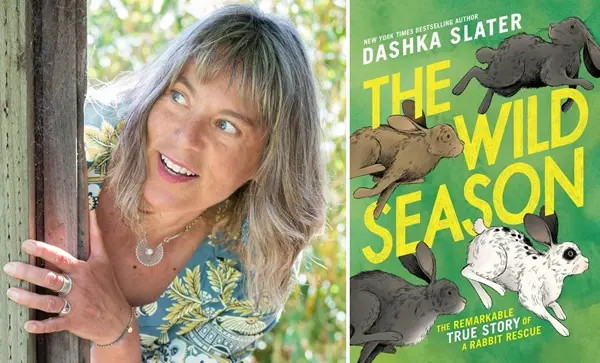
That story—a human-interest item in the San Francisco Chronicle detailing an intergenerational group of residents recognized by their neighborhood for rescuing abandoned animals—served as the genesis for The Wild Season (Little, Brown, Sept. 8). Marking Slater’s middle-grade nonfiction debut, the book chronicles the real-world crisis of domestic rabbit dumping in San Francisco’s Golden Gate Heights Park.
Told through a multi-perspective framework that encompasses human rescuers, professional rehabilitators, and the animals themselves, The Wild Season blends narrative tension with ecological analysis and community organizing. Beyond its charming surface, the work sheds light on a systemic issue facing urban centers across the United States: the widespread misunderstanding of domesticated lagomorphs, the ecological disruption caused by pet abandonment, and the power of localized, grass-roots environmental action.
Detailed Chronology
Phase 1: The Crisis in Golden Gate Heights Park
The narrative begins in Golden Gate Heights Park, a windswept, elevated green space in western San Francisco known for its panoramic views and native coastal scrub. Like many urban parks across North America, the location had quietly become a dumping ground for unwanted pets—specifically domesticated rabbits (Oryctolagus cuniculus). Often purchased impulsively around holidays like Easter, these animals were frequently abandoned under the mistaken assumption that they could survive in the wild.
In reality, domesticated rabbits lack the camouflage, foraging instincts, and biological defenses of native wild species. Released into the park, the abandoned animals faced immediate threats from local predators (including hawks, coyotes, and off-leash dogs), vehicle traffic, starvation, and infectious diseases. Because rabbits reproduce exponentially, a handful of released animals quickly resulted in an expanding population of domestic rabbits suffering in an unfamiliar environment.
+-------------------------------------------------------------------+
|               CHRONOLOGY OF THE GOLDEN GATE HEIGHTS RESCUE        |
+-------------------------------------------------------------------+
| 1. INITIAL DISCOVERY                                              |
|    - Domestic rabbits dumped in Golden Gate Heights Park.         |
|    - Local dog walker Jean Kind (77) notices suffering animals.   |
+-------------------------------------------------------------------+
| 2. GRASSROOTS MOBILIZATION                                        |
|    - Kind mobilizes neighbors; 9-year-old Sam forms "Bunny Club." |
|    - 16-year-old Allison joins, developing humane trapping method.|
+-------------------------------------------------------------------+
| 3. EXPERT INTERVENTION                                            |
|    - Coalition brings in Jessica, a professional rabbit rescuer.   |
|    - Systematized trapping, medical triage, and foster housing.   |
+-------------------------------------------------------------------+
| 4. PUBLIC RECOGNITION & LITERARY ADAPTATION                       |
|    - Rescuers receive local neighborhood achievement award.       |
|    - Article in SF Chronicle captures Dashka Slater's attention.  |
|    - Slater researches and writes "The Wild Season" for Little,   |
|      Brown (Sept. 8 release).                                     |
+-------------------------------------------------------------------+
Phase 2: Grassroots Mobilization
The turn of events began when Jean Kind, a 77-year-old local dog walker, observed the deteriorating state of the park’s rabbit population. Recognizing that municipal animal control agencies were frequently overwhelmed and under-resourced for specialized field captures, Kind initiated a grass-roots organizing effort. Utilizing her deep neighborhood network, she rallied residents of varying ages to coordinate a rescue mission.
The initiative rapidly took on an intergenerational character:
- Jean Kind (Age 77): Served as the primary community organizer, bridging communication between local residents, city figures, and animal welfare groups.
- Sam (Age 9): Formed the neighborhood "Bunny Club," organizing peers to keep watch, report sightings, and build public awareness about pet abandonment.
- Allison (Age 16): Developed specialized, gentle netting and lure techniques to capture the evasive animals without causing capture myopathy—a fatal muscle-breakdown condition caused by extreme stress in prey animals.
Phase 3: Tactical Field Operations and Rescue Dynamics
As the scope of the operation expanded, the local team realized they needed specialized expertise. Enter Jessica, a veteran professional rabbit rescuer whose home functioned as a sanctuary and triage center for high-risk rescues.
Jessica introduced tactical humane trapping protocols, established health evaluation pipelines, and integrated the captured rabbits into a network of foster homes. The rescue operations required late-night field tracking, weather monitoring, meticulous record-keeping, and emergency veterinary care for sick, injured, or pregnant rabbits.
Phase 4: Public Recognition and Literary Conception
The success of the Golden Gate Heights effort eventually attracted civic recognition, with the neighborhood association presenting formal awards to Kind, Sam, and Allison. An article in the San Francisco Chronicle covering the awards ceremony caught the eye of Dashka Slater.
Recognizing the innate narrative Arc—a real-life adventure combining intergenerational teamwork, environmental stewardship, and animal welfare—Slater began conducting extensive interviews with the rescuers, synthesizing field reports, and studying lagomorph biology to transform the event into a middle-grade narrative.
Supporting Context & Metrics
The Biological and Ecological Disconnect
A central educational pillar of The Wild Season is clarifying the stark biological differences between domesticated rabbits and wild lagomorphs. Public misunderstanding of these differences directly fuels pet abandonment.
| Feature / Trait | Domestic Rabbit (Oryctolagus cuniculus) | Native Wild Rabbit (e.g., Cottontail / Sylvilagus) |
|---|---|---|
| Origins | Descended from European wild rabbits; bred for centuries. | Native to North American ecosystems. |
| Coat & Camouflage | Diverse colors (white, spotted, black, cream); low camouflage. | Agouti/earth tones specifically evolved for natural blending. |
| Behavior & Survival | Reliant on human care; lacks instinctual predator evasion. | High-speed agility; highly tuned threat-detection instincts. |
| Social Structure | Highly social; requires complex pair-bonding or group dynamics. | Solitary or territorial depending on species; independent. |
| Ecological Role | Invasive/introduced; damages local flora, lacks natural balance. | Integral component of local food webs and native ecology. |
When pet owners release a domestic rabbit into an urban park, they are not returning it to its "natural habitat." Instead, they are introducing a domestic animal into an alien environment where it faces high mortality rates while inadvertently disrupting native plant life and urban ecosystems.
Animal Shelter Metrics and the Abandonment Pipeline
Rabbits represent the third most frequently surrendered or abandoned pet species in North America, behind dogs and cats. According to animal welfare data:
- Post-Holiday Surrenders: Surrenders and abandonments spike by an estimated 40% to 60% in the three to six months following Easter.
- Shelter Capacity Constraints: Most municipal shelters lack specialized rabbit housing, leading to high euthanasia rates or reliance on private, non-profit rescue networks.
- Surgical & Veterinary Needs: Domestic rabbits require specialized exotic veterinary care, including mandatory spaying/neutering to prevent rapid breeding and reproductive cancers—a cost factor that frequently deters owners from retaining pets.
[Impulse Purchase (Easter/Pet Stores)]
                 │
                 ▼
[Lack of Care Education / Unexpected Costs]
                 │
                 ▼
[Illegal Abandonment in Public Parks]
                 │
  ┌──────────────┴──────────────┐
  ▼                             ▼
[Severe Predation / Death]   [Uncontrolled Breeding & Ecological Damage]
  │                             │
  └──────────────┬──────────────┘
                 ▼
[Grassroots / Non-Profit Rescue Interventions]
The Middle-Grade Nonfiction Trend
In recent years, middle-grade literature (targeting readers aged 8–12) has shifted significantly toward high-stakes, real-world narrative nonfiction. Authors increasingly avoid overly didactic tones, opting instead for cinematic storytelling that respects the intellectual agency of young readers. Slater’s integration of multiple perspectives—including chapters written from the non-verbal sensory perspectives of the rabbits—reflects a growing trend in educational publishing that combines rigorous facts with empathetic storytelling.
Official Statements & Commentary
Dashka Slater on Transitioning from Darkness to Hope
Reflecting on her decision to take on a lighter subject after years of investigative reporting on dark social issues, Slater noted the profound contrast in emotional weight between her previous work and The Wild Season:
"I wrote two very intense, pretty dark YA narratives that were about teenagers in peril and hate crimes and everything awful. I was exhausted at the end of the second one, Accountable, which had been very harrowing to report… When I read this little human interest story in the San Francisco Chronicle about three of the main characters getting an award from their neighborhood, something about it tugged at me in this way that I think of as my journalistic spidey sense. It really felt like a middle grade novel… that there was an older woman and a kid and a teenager, and they were all teaming up to rescue rabbits in their neighborhood."
Slater emphasized that middle-grade nonfiction offers a unique medium for exploring real-world impact:
"When I was a middle grade reader, I loved adventure stories, animal stories, and stories in which something magical happened to ordinary kids. And even though this is nonfiction without any literal magic, it has that feeling."
+-----------------------------------------------------------------------+
|                    KEY FIGURES IN THE WILD SEASON                     |
+-------------------+---------------------------------------------------+
| PERSON            | ROLE & CONTRIBUTION                               |
+-------------------+---------------------------------------------------+
| Dashka Slater     | Author, Journalist; Stonewall Book Award Winner   |
| Jean Kind         | 77-Year-Old Dog Walker; Primary Community Catalyst|
| Sam               | 9-Year-Old Founder of the Neighborhood "Bunny Club"|
| Allison           | 16-Year-Old Field Capture Specialist              |
| Jessica           | Professional Rabbit Rescuer & Foster Coordinator  |
+-------------------+---------------------------------------------------+
On the Importance of Public Education Regarding Domesticated Animals
Addressing the core message of the book, Slater stressed the urgent need to correct public misperceptions surrounding pet rabbits:
"The information [about the difference] between domestic and wild rabbits feels really important because I think people generally don’t know that. Rabbits are this weird category of animal where people think of them as wild because they see them in the wild. People know a dog isn’t wild, but they don’t necessarily know that a domesticated rabbit isn’t, and people are constantly dumping animals into parks and forests and all kinds of places thinking they’ll be fine, and that can have really dire consequences, both for the animal and for the ecosystem."
Unconventional Rehabilitative Practices: Rabbit Social Bonding
During her research, Slater gained deep insight into the complex behavioral needs of lagomorphs through her interactions with professional rescuer Jessica. One notable aspect omitted from the primary text for pacing was the intricate process of rabbit matchmaking, essential for socialized foster care:
"One of the things that Jessica does is making matches for rabbits because she believes that they shouldn’t be alone: they’re a social animal and they have these very romantic pairings. But it’s not easy, because they’re also very picky. So she holds these rabbit speed-dating events where she brings in all kinds of rabbits that she’s fostering and then she puts them together, holding them one in each hand, so they don’t do what they call ‘tornado,’ where the rabbits start fighting."
Slater recounted hosting one of these intense socialization sessions directly in her own home:
"She did all of this at my house; there were 20 rabbits, all in separate little pens. So even though I’ve never had my own rabbit, I did have a lot of rabbits in my house."
Future Outlook
Literary and Educational Footprint
Scheduled for release on September 8 by Little, Brown, The Wild Season is poised to serve as an educational tool for schools, public libraries, and humane education programs. By pairing narrative tension with practical scientific and ecological context, the book provides a model for how civic education can be integrated into youth literature.
Educators anticipate that the book will spur conversations regarding:
- Responsible Pet Ownership: Understanding the long-term commitments required for non-traditional pets.
- Civic Agency for Youth: Demonstrating that young people—working alongside adult allies—can organize effective solutions to local community challenges.
- Urban Ecology: Raising awareness of how human decisions impact fragile municipal biodiversity.
Policy and Animal Welfare Impact
The publication comes at a time when city councils and animal welfare organizations across North America are re-evaluating pet store sales regulations and municipal shelter funding for exotic animals. Municipalities including San Francisco, Los Angeles, and New York have increasingly moved to restrict the commercial sale of unsterilized rabbits in retail pet shops, favoring adoption-only models.
By spotlighting the Golden Gate Heights Park rescue, The Wild Season highlights the vital role played by private citizens and non-profit networks in filling regulatory gaps. As urban centers continue to contend with issues of habitat fragmentation and domestic pet dumping, Slater’s chronicle offers a case study in how empathy, scientific literacy, and neighborhood organization can convert a localized crisis into a blueprint for community resilience.
