

Executive Overview
In a coordinated and high-stakes escalation of global trade tensions, the United States, the European Union, and Japan jointly filed a formal dispute settlement challenge against China at the World Trade Organization (WTO). Announced by President Barack Obama, the legal action targets Beijing’s stringent export restrictions on rare earth elements, tungsten, and molybdenum—materials that form the invisible backbone of modern manufacturing, green technology, and advanced military hardware.
The core of the Western grievance is that China, which holds a near-monopoly on the production of these critical materials, has systematically utilized export quotas, escalating export duties, and administrative red tape to hoard these resources domestically. By doing so, Washington, Brussels, and Tokyo argue that Beijing is artificially inflating global prices while depressing domestic Chinese costs, creating an unfair economic advantage. This dynamic places immense pressure on international tech companies, automotive manufacturers, and defense contractors to relocate their operations, jobs, and intellectual property directly to China.
While the Obama administration emphasized that China’s phenomenal economic rise is fundamentally beneficial to the global community, it stressed that superpowers must abide by established international trade frameworks. Conversely, Beijing has defended its policies as compliant with WTO regulations, maintaining that its measures are driven by environmental conservation and sustainable resource management rather than geopolitical maneuvering or economic coercion. With the WTO dispute mechanism now formally initiated, China faces a strict window to respond, setting the stage for what could be a watershed legal battle over access to the building blocks of the 21st-century economy.
Detailed Chronology and Legal Escalation
The confrontation at the WTO did not materialize overnight; it is the culmination of years of mounting anxieties, broken diplomatic channels, and progressively aggressive trade policies enacted by Beijing.
For years, Western nations watched with growing alarm as China tightened its grip on the rare earths market. The turning point for many international observers occurred in 2010. Following a diplomatic maritime dispute between Tokyo and Beijing, China temporarily halted shipments of rare earth minerals to Japan. The embargo sent shockwaves through global markets, triggering a meteoric, unprecedented spike in mineral prices and laying bare the extreme vulnerability of international supply chains dependent on a single source.
Sensing a systemic threat to their industrial and technological bases, the United States, the European Union, and Japan repeatedly raised the issue through bilateral and multilateral diplomatic channels over the subsequent years. According to EU trade officials, numerous formal and informal warnings were issued to Beijing regarding the restrictive nature of its export quotas. However, these diplomatic overtures yielded little to no substantive reform.
Frustrated by diplomatic dead ends, the European Union previously challenged China over separate raw materials restrictions at the WTO. Although that challenge yielded a favorable ruling, trade commissioners noted that Beijing made no meaningful attempt to dismantle its broader export control apparatus. This intransigence left Western allies with no viable alternative.
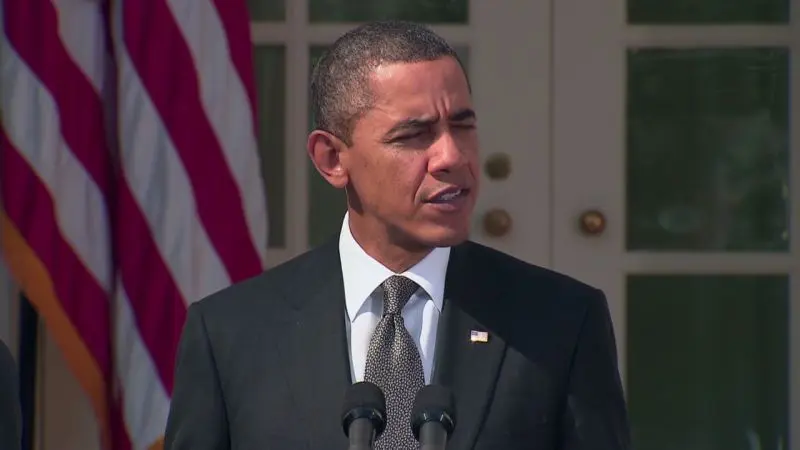
On a Tuesday morning at the White House, President Obama formally altered the landscape of the dispute. Flanked by trade representatives, he announced that the U.S., EU, and Japan were taking the definitive step of filing a formal request for dispute settlement consultations with China at the WTO. Under WTO protocols, this filing marks the official start of a legal marathon. China was given 10 days to formally acknowledge and respond to the case, and both sides are legally mandated to engage in formal talks within two months. Should these consultations fail to produce a mutually agreeable resolution within the stipulated timeframe, the dispute will escalate to a formal WTO panel for adjudication—a process that could span several years.
Supporting Context & Metrics: The Anatomy of a Monopoly
To understand the ferocious urgency behind the Western legal challenge, one must examine the staggering statistics governing the global supply of these specialized elements. Rare earth minerals—a group of 17 chemically similar metallic elements that include cerium, neodymium, and dysprosium—are indispensable to modern industry.
According to data compiled by the European Union and the United States Trade Representative (USTR):
- Rare Earths: China commands a staggering 97% of the world’s total production of rare earth elements.
- Tungsten: China produces 91% of the global supply of tungsten, a vital material utilized in high-intensity lighting, advanced electronics, automotive components, aerospace engineering, and medical equipment.
- Molybdenum: China accounts for 36% of global production of this essential metallic element, widely used for filaments and high-strength steel alloys.
The economic footprint of these materials is ubiquitous. They are foundational components in flat-screen televisions, smartphones, high-capacity hybrid and electric vehicle batteries, wind turbines, energy-efficient lighting, refined petroleum products, and complex chemical catalysts. Furthermore, industry experts emphasize that for the vast majority of these applications, rare earths cannot be substituted with alternative materials without forcing a complete, highly expensive redesign of the product. Consequently, a disruption in the supply chain of a single rare earth element can cascade into the paralysis of entire industrial value chains.
The mechanism of China’s restriction has been multi-layered. Beijing has systematically escalated export taxes while drastically depressing export quotas. In 2010 alone, China slashed its export quotas by 32% for domestic companies and by a crippling 54% for foreign-invested firms operating within its borders.
The USTR argued that this bifurcated economic policy has created a profound distortion in the global marketplace. By artificially restricting exports, China floods its domestic market with cheap inputs while starving international competitors. This price dynamic grants Chinese manufacturers an insurmountable competitive edge—enabling them to produce downstream goods more cheaply than their American, European, or Japanese counterparts, whether selling into China’s domestic market or competing globally.
Official Statements and Divergent Perspectives
The war of words surrounding the WTO challenge highlights a deep ideological and economic divide between the established Western market economies and Beijing’s state-directed model of capitalism.
The Western Perspective: Rule of Law and Level Playing Fields
At the White House press briefing, President Obama was unequivocal about the motivations driving the litigation. "We want our companies building those products right here in America," Obama told reporters. "But to do that, American manufacturers need to have access to rare earth materials which China supplies. Now, if China would simply let the market work on its own, we’d have no objections." Instead, Obama asserted, Chinese state intervention directly contravened the free-trade rules Beijing freely agreed to adhere to upon joining the WTO.
White House Press Secretary Jay Carney reinforced this sentiment, framing the action not as an attempt to stifle China’s development, but as a defense of universal economic norms. "We believe that China’s rise is a good thing for the Chinese people and for the global community, a good thing for the United States," Carney stated. "It is also important that, as China becomes a bigger and bigger economic power, that China play by the same set of rules that other major economic powers play by."
U.S. Trade Representative Ron Kirk echoed these points, noting that American workers and innovators across both legacy and nascent industries were suffering tangible harm. Kirk stressed that China’s tightening constraints were causing "massive distortions and harmful disruptions in supply chains for these materials throughout the global marketplace."
From the European Union, EU Trade Commissioner Karel De Gucht pulled no punches. "China’s restrictions on rare earths and other products violate international trade rules and must be removed," De Gucht declared in an official statement. "These measures hurt our producers and consumers in the EU and across the world, including manufacturers."
The Beijing Perspective: Environmental Stewardship and Sovereignty
In Beijing, the response was swift and defensive. Liu Weimin, a spokesman for the Chinese Ministry of Foreign Affairs, strongly defended his nation’s trade practices during a regular news conference.
"China has worked out its own policy on managing rare earths, which is in line with WTO regulations," Liu asserted. He emphasized that China’s regulatory framework was holistic, governing not merely the final act of exportation, but also domestic extraction, environmental remediation, and resource exploration.
While Western officials frequently accuse China of hoarding minerals for strategic advantage, Beijing has consistently maintained that its export limitations are motivated by pressing environmental concerns. The extraction and processing of rare earth minerals are notoriously dirty and chemically hazardous processes, often resulting in severe soil contamination, toxic wastewater runoff, and radioactive waste byproducts. Chinese authorities argue that stringent caps are necessary to curb ecological degradation and enforce sustainable mining practices within its borders.
Future Outlook: Strategic Vulnerabilities and Domestic Solutions
While the WTO consultation process moves forward, policymakers and industry leaders recognize that legal disputes can take years to yield a final verdict. This realization has sparked intense debate in Washington regarding whether more aggressive, immediate measures are necessary to counter China’s near-monopoly.
U.S. Senator Chuck Schumer (D-New York) voiced skepticism regarding the efficacy of the WTO route. "There are faster ways to assert leverage on China than relying on the WTO, which could take years to resolve the case," Schumer argued in a statement. He called for aggressive legislative and financial actions, including U.S. efforts to actively block Chinese-funded mining projects domestically, as well as restricting World Bank financing for mining initiatives inside China.
Beyond commercial applications in consumer electronics and green energy, the U.S. security establishment has grown increasingly vocal about national security vulnerabilities. In September, the House Foreign Affairs Subcommittee on Asia and the Pacific held dedicated hearings to examine the strategic risks posed by rare earth dependency. Lawmakers expressed acute alarm over the reliance of advanced American military hardware—including missile guidance systems, tactical military drones, and the next-generation F-35 Joint Strike Fighter—on Chinese-supplied rare earth elements.
In response to these strategic pressures, private enterprise is attempting to bridge the supply gap. Molycorp Inc., one of the rare commercial producers of rare earth minerals operating outside of China, has lobbied Congress heavily to stimulate domestic research, development, and mining infrastructure. Operating primary extraction facilities in California and Colorado, Molycorp and similar entities represent the frontline of Western efforts to rebuild a sovereign, diversified supply chain.
Ultimately, the WTO challenge initiated by the United States, the European Union, and Japan represents much more than a routine trade dispute over industrial metals. It is a defining test case for the global trading system—a high-stakes referendum on whether international institutions can successfully regulate the resource policies of rising economic superpowers, and whether Western nations can secure the critical minerals required to power the technological future without falling victim to economic coercion.