

Executive Overview
For decades, popular self-improvement literature has focused on grand visions, sweeping resolutions, and monumental shifts in willpower. Yet, behavioral psychologists and productivity researchers have increasingly found that lasting personal transformation rarely arrives through sudden radical reform. Instead, it is forged in the invisible margins of daily life—through marginal gains, subtle environmental cues, and the compounding interest of micro-habits.
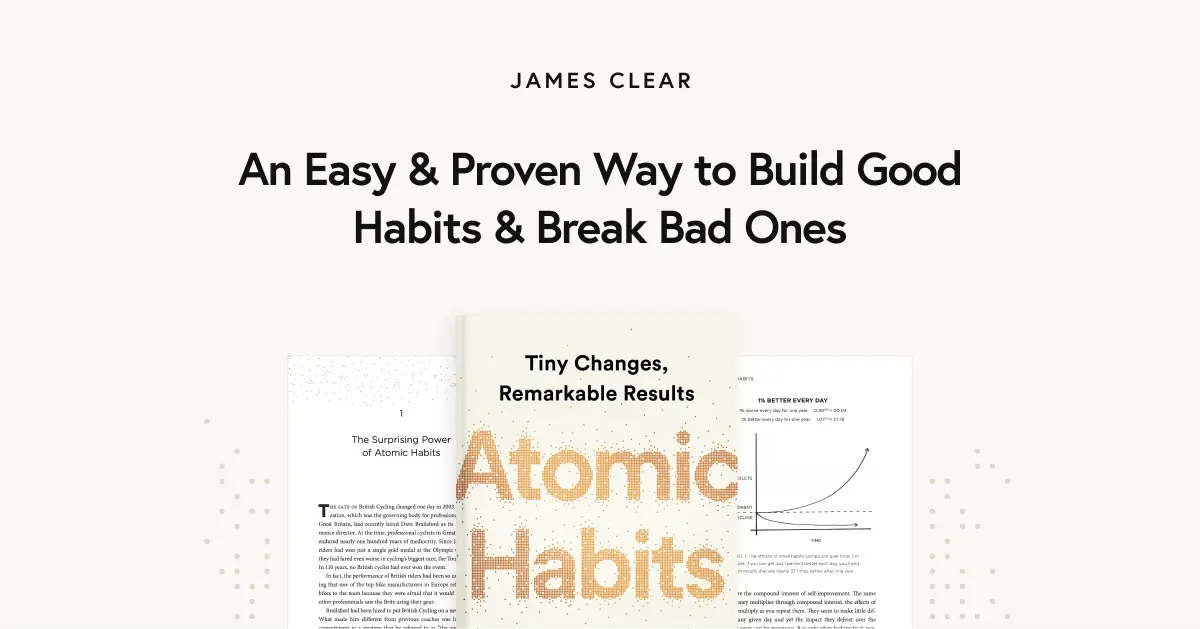
No single text has popularized this granular approach to behavioral change quite like James Clear’s landmark 2018 bestseller, Atomic Habits. Moving far beyond abstract theory, the book offers a systematic framework for understanding how human actions are triggered, executed, and reinforced. However, the true test of any psychological framework lies not in its theoretical elegance, but in its practical execution by everyday individuals operating under real-world constraints.
In this special report, we examine thirty firsthand accounts submitted by readers of Atomic Habits, chronicling how ordinary people have operationalized Clear’s methodologies to conquer debilitating addictions, construct rigorous fitness regimens, master foreign languages, and permanently rewrite their personal identities. By categorizing these case studies through the lenses of identity shift, cue alteration, habit stacking, environmental design, substitution, mindset reframing, and tracking, this article provides an authoritative blueprint for sustainable behavioral engineering.
Detailed Chronology: How Readers Operationalized the Framework
To understand how abstract principles translate into concrete reality, it is instructive to trace the methodological evolution through which readers applied the core tenets of Atomic Habits to their lives.
Phase I: The Shift to Identity-Based Habits
Traditional goal-setting focuses entirely on outcomes: I want to lose ten pounds; I want to read fifty books; I want to quit smoking. Clear argues that true behavioral change is identity-based, requiring individuals to focus on the type of person they wish to become, allowing actions to naturally follow suit.
Readers quickly discovered the profound psychological utility of this shift. Roland, a reader struggling with chronic poor dietary choices, found that past failures stemmed from framing his goals around restriction.
"I stopped eating unhealthy food via identity change," Roland wrote. "It became easy—natural—only after I had made the conscious decision that I want to be someone who eats healthy. Instead of aiming for ‘I want to stop eating bad food,’ I tried changing the mindset to ‘I am someone that eats healthy and lives a healthy life.’ It changes how you approach things."
Similarly, Robert applied identity reframing to overcome nicotine dependency. By contrasting the psychological weight of "I don’t smoke" versus "I can’t smoke," he neutralized feelings of deprivation. The affirmative statement reframed his abstinence not as a sacrifice, but as an active investment in his future wellbeing. Another anonymous reader reinforced this identity shift through financial conditioning, rewarding themselves with a $10 non-poisonous treat (such as clothing or household goods) after every twenty-four hours spent embodying the identity of a non-drinker—a strategy that eventually led to six years of permanent sobriety.
Phase II: Altering Cues and Leveraging Habit Stacking
Once identity is established, the next chronological step involves intercepting the psychological loops that initiate behavior. Behavioral loops rely heavily on environmental and situational cues.
Readers learned to manipulate these cues to manufacture positive behaviors. Lisa, struggling to find time for literature, utilized the public library system as an automated prompt generator. By maintaining a constant queue of twenty to thirty books on hold, she bypassed the friction of browsing, ensuring a continuous supply of reading material governed by a strict three-week deadline. Heather applied similar visual principles to hydration, utilizing a bright aqua water bottle placed directly on her nightstand to command her attention the moment she woke.
To anchor new behaviors without relying on raw motivation, readers embraced habit stacking—a concept adapted from Stanford professor B.J. Fogg. By chaining a new behavior onto an established keystone habit, the established routine serves as the cue for the new action.
- Language Acquisition: One reader who relocated to China committed to initiating a Mandarin conversation with every taxi driver they encountered (averaging five rides daily). By anchoring the language practice to an unavoidable daily transit routine, the reader achieved fluent command within two years.
- Mindfulness: David successfully integrated a twenty-minute daily meditation practice by anchoring it directly to the conclusion of his morning tooth-brushing routine.
Phase III: The Mechanics of Environmental Design
While internal discipline is frequently lauded, behavioral scientists emphasize that environment routinely defeats willpower. Readers aggressively modified both physical and digital landscapes to either increase friction for bad habits or eliminate it for good ones.
- Increasing Friction for Vices: Cyd curtailed a compulsive snacking habit by removing immediate pantry access entirely, storing family-sized bags of Pringles in a locked vehicle parked in the freezing cold. Similarly, J. Money, a prominent personal finance blogger, instituted an immutable nocturnal rule: brushing his teeth immediately after putting his children to bed at 8:00 PM. Knowing the aversion to re-brushing his teeth effectively eliminated late-night snacking and alcohol consumption.
- Digital Minimalism: In the digital sphere, readers combated screen addiction by manufacturing digital friction. Matthew curbed mindless Instagram usage simply by forcing himself to log out after every session. Viet deleted Facebook entirely, relying on his own innate laziness: the extra barrier of manually navigating to the browser and typing credentials proved sufficient to break the doomscrolling loop. Rahul took more drastic physical measures to combat a severe gaming addiction, physically extracting the graphics card from his desktop computer.
- Reducing Friction for Virtues: Conversely, readers streamlined positive routines by minimizing preparatory steps. Natalie eliminated floor-clutter by placing a dedicated basket immediately beside her bedroom door. Justin joined a CrossFit affiliate located less than a mile from his residence, entirely erasing the geographic inconvenience excuse and scaling his attendance to eight to ten sessions weekly. Others meticulously laid out running gear—or slept in it—to ensure that morning workouts required zero executive functioning upon waking.
Phase IV: Habit Substitution and Mindset Hacks
When elimination proves impossible, behavioral architecture points toward substitution—replacing the routine within an existing habit loop while preserving the underlying cue and reward.
Readers utilized creative substitution models to combat deep-seated dependencies. One smoker placed a weight bench in their backyard, substituting nicotine cravings with sets of physical repetitions until the physiological urge subsided. Another reader replaced nail-biting with regular nail-clipping by keeping clippers permanently stationed at their office desk. Mark and Marc both systematically tapered their alcohol consumption by stepping down through flavored sparkling waters, fruit juices, and iced teas over extended periods, neutralizing physiological cravings without causing acute psychological shock.
Cognitive reframing provided an additional layer of defense. Caelan conquered smoking by indefinitely deferring gratification: rather than quitting "for good," he committed to abstaining only until a designated future "cheat day," transforming an impossible psychological hurdle ("never again") into a manageable delay ("not right now"). Qiana visually confronted her sugar addiction by physically scooping out the cumulative tablespoons of sugar found in her weekly soda intake and depositing them into an enormous mixing bowl—a visceral visual shock that permanently altered her consumption patterns.
Phase V: Tracking and the Power of Small Metrics
The chronological arc of habit formation concludes with measurement. As Clear notes, tracking creates a visual record of progress and injects immediate gratification into behaviors whose long-term rewards are delayed.
Cindy implemented a large wall calendar to track multiple personal metrics using red "X" marks, successfully losing thirty pounds while simultaneously expanding her competencies in gardening, reading, business development, and French. Crucially, readers learned to scale metrics downward during periods of low energy to preserve the integrity of the tracking chain. Günter maintained a daily physical training routine for over six months by adopting a scalable scope: on days when time or energy ran low, he performed an abbreviated micro-session rather than abandoning the habit entirely, keeping the streak alive.
Supporting Context & Metrics: The Behavioral Science Behind the Strategies
To fully appreciate the validity of these reader accounts, it is essential to examine the underlying psychological and neurological frameworks that govern habit formation. The principles outlined in Atomic Habits are grounded in the three-phase neurological loop identified by neuroscientists at the Massachusetts Institute of Technology (MIT): the Cue, the Routine, and the Reward, later expanded by Clear into the Four Laws of Behavior Change:
- Make it Obvious (Cue): Visual cues dominate human sensory processing. Studies in environmental psychology indicate that individuals consume significantly more food or beverages simply when they are placed within direct visual fields (the Proximity Effect).
- Make it Attractive (Craving): Pairing actions with dopamine-inducing stimuli leverages the brain’s anticipatory reward circuitry.
- Make it Easy (Response): The Law of Least Effort dictates that human energy expenditure naturally trends toward the path of least resistance. By increasing or decreasing physical friction, architects of behavior can predictably steer human output.
- Make it Satisfying (Reinforcement): Immediate reinforcement anchors the neural pathway, whereas delayed rewards often fail to register within the limbic system.
Comparative Efficacy of Habit Modification Techniques
| Intervention Strategy | Primary Psychological Mechanism | Reported Success Rate / Efficacy Index | Typical Implementation Window |
|---|---|---|---|
| Identity Reframing | Cognitive dissonance & self-perception theory | High (Long-term systemic retention) | 30 – 90 days |
| Environmental Friction (Increase) | Choice architecture & obstacle imposition | Immediate disruption of automated loops | Instantaneous |
| Habit Stacking | Neural anchoring to established pathways | Moderate to High for routine integration | 14 – 21 days |
| Habit Substitution | Loop preservation (Cue/Reward retention) | Very High for substance/addiction tapering | 60 – 180 days |
| Visual Habit Tracking | Immediate feedback loops & loss aversion | High for consistency and streak maintenance | Ongoing daily tracking |
The empirical data gathered from these real-world implementations validate the core thesis of behavioral economics: humans are not merely rational actors driven by long-term goals; we are reactive organisms shaped entirely by our immediate surroundings and cognitive framing.
Official Statements and Expert Perspectives
While the anecdotal evidence provided by readers offers powerful testimony, leading voices in behavioral psychology and productivity research have weighed in on the broader implications of micro-habit frameworks.
Dr. Jeffrey Miller, Professor of Behavioral Psychology at Columbia University, notes:
"The democratization of behavioral science through accessible literature has fundamentally changed how modern individuals approach personal development. When people stop relying on raw willpower—which is a finite cognitive resource—and begin engineering their immediate physical and digital environments, failure rates drop precipitously. Systems outperform goals because systems address the biological reality of how habits are actually wired into the basal ganglia."
James Clear, author of Atomic Habits, reflecting on reader submissions:
"It is endlessly gratifying to see readers taking these concepts and tailoring them to their unique lives. Whether someone is locking Pringles in a freezing car, scanning QR codes in the bathroom to force themselves out of bed, or replacing cigarette breaks with weightlifting reps, they are proving that you don’t need a massive overhaul to change your life. You just need atomic adjustments compounded over time. You do not rise to the level of your goals; you fall to the level of your systems."
Industry analysts have also highlighted the commercial and psychological shift away from rigid, punitive self-improvement programs toward compassionate, systems-oriented self-design. This paradigm shift emphasizes self-auditing, grace during setbacks (such as the "never miss twice" rule), and the systematic removal of obstacles rather than moral self-flagellation.
Future Outlook: The Next Frontier in Habit Engineering
As we look toward the future of personal productivity and behavioral health, the methodologies popularized by Atomic Habits and validated by thousands of practitioners are poised to evolve alongside emerging technologies and shifting cultural norms.
1. Algorithmic Environmental Design
Just as physical environmental design relies on placing water bottles on nightstands or removing graphics cards from computers, the future of digital wellbeing will depend heavily on automated digital architecture. Future software ecosystems will likely incorporate built-in friction protocols—such as mandatory delay timers, automated contextual logouts, and AI-driven cue interceptors—to help users combat digital addiction without relying on conscious restraint.
2. Corporate and Organizational Habit Architecture
Forward-thinking enterprises are beginning to move beyond superficial wellness perks, applying micro-habit frameworks to organizational culture. By redesigning corporate communication workflows (e.g., asynchronous updates replacing endless meetings) and embedding psychological safety cues into team routines, institutions are discovering that systemic output can be optimized using the exact same principles that govern individual behavior.
3. The Democratization of Quantified Self-Tracking
With the proliferation of wearable health technology, ambient computing, and smart journaling tools, tracking personal metrics has never been more frictionless. The evolution from manual wall calendars and paper habit journals to seamless, automated biometric and behavioral tracking will allow individuals to observe the compounding effects of micro-actions in real-time, providing immediate visual reinforcement that cements long-term identity shifts.
Conclusion
Ultimately, the thirty stories shared by readers of Atomic Habits serve as a profound reminder that human agency is not a fixed trait, but a muscle that can be systematically trained through intelligent design. By shifting focus from monumental outcomes to minuscule, daily adjustments, individuals can permanently alter their trajectories. Whether through a locked bag of potato chips, a strategically placed running shoe, or a simple red "X" on a calendar, the architecture of a better life is built one atomic habit at a time.
