Fifteen years after signing off from Fox, Mike Judge and Greg Daniels’ beloved animated satirical sitcom King of the Hill returns to television screens via Hulu. Helmed alongside new showrunner Saladin K. Patterson, the revival drops viewers back into the fictional, sweltering suburb of Arlen, Texas, picking up precisely a decade and a half after audiences last saw its iconic cast of characters.
The premise of the revival cleverly removes Hank and Peggy Hill from American soil for much of that intervening gap. Following a lengthy overseas stint on an American oil compound in Saudi Arabia—where Hank continued his lifelong ministry of selling propane and propane accessories, and Peggy lived out a midcentury housewife fantasy—the couple returns to a homeland fundamentally altered by rideshares, digital ubiquity, and a shifting social landscape.
Rather than leaning into defensive cynicism or reactionary rage, the revival positions Hank and Peggy as figures of steadfast, unyielding decency. In an era marked by severe political polarization, economic anxiety, and an epidemic of loneliness, the King of the Hill revival proves that its creators’ distinctive brand of empathetic observation remains sharply relevant. Without preaching or punching down, the series bridges the widening chasm between urban progressive norms and rural traditional values, offering a rare piece of cultural media that looks at a divided America and asks its audience to find common ground.
Detailed Chronology: The Evolution of Arlen and the Hills
The original run of King of the Hill, spanning 1997 to 2010, captured a specific snapshot of late-20th and early-21st-century American life. Its characters were ordinary, flawed individuals wrestling with shifting cultural currents, economic anxieties, and generational divides. When the series ended, the political and social climate of the United States was already undergoing seismic shifts, transitioning from the post-9/11 George W. Bush era into the Obama administration and beyond.
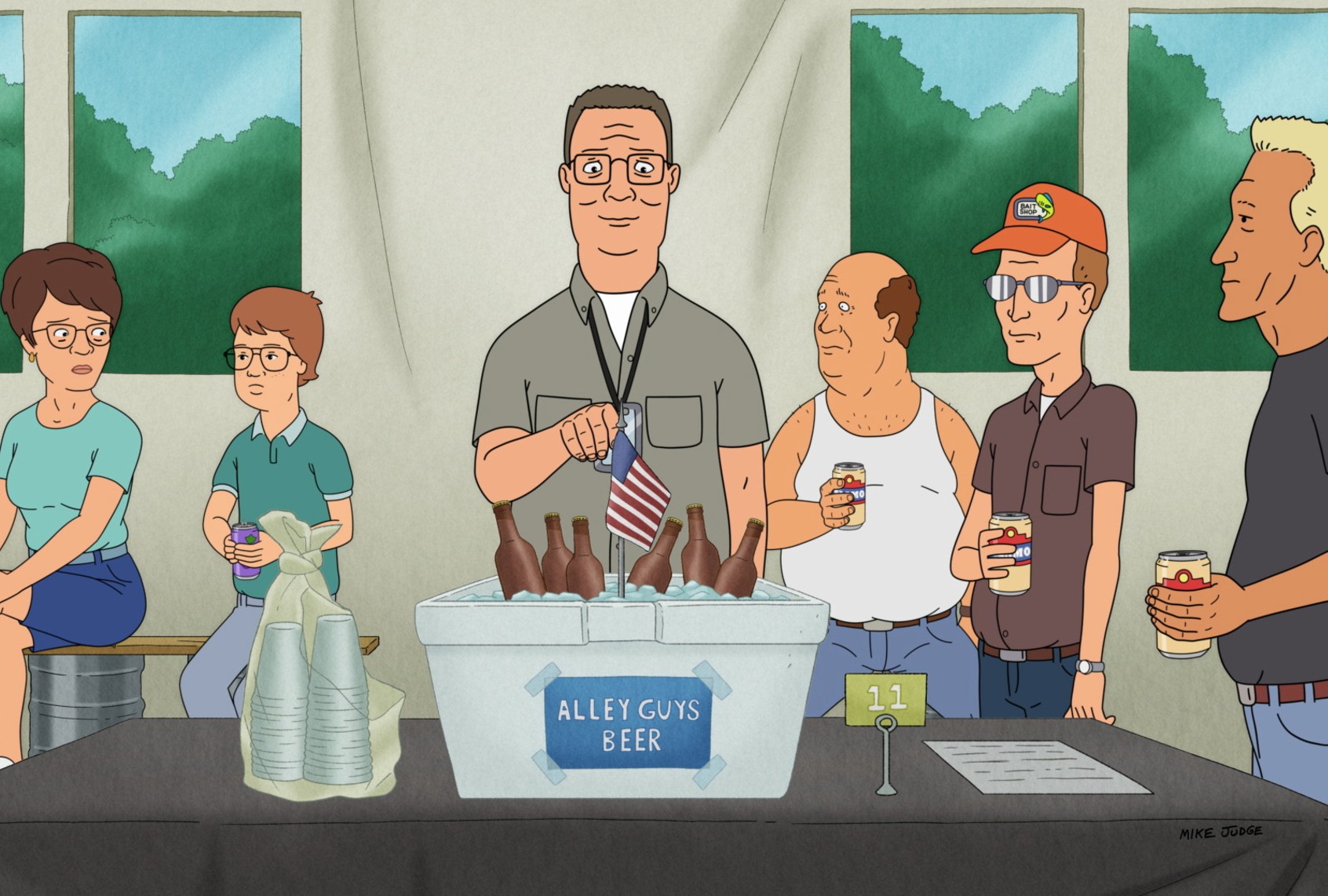
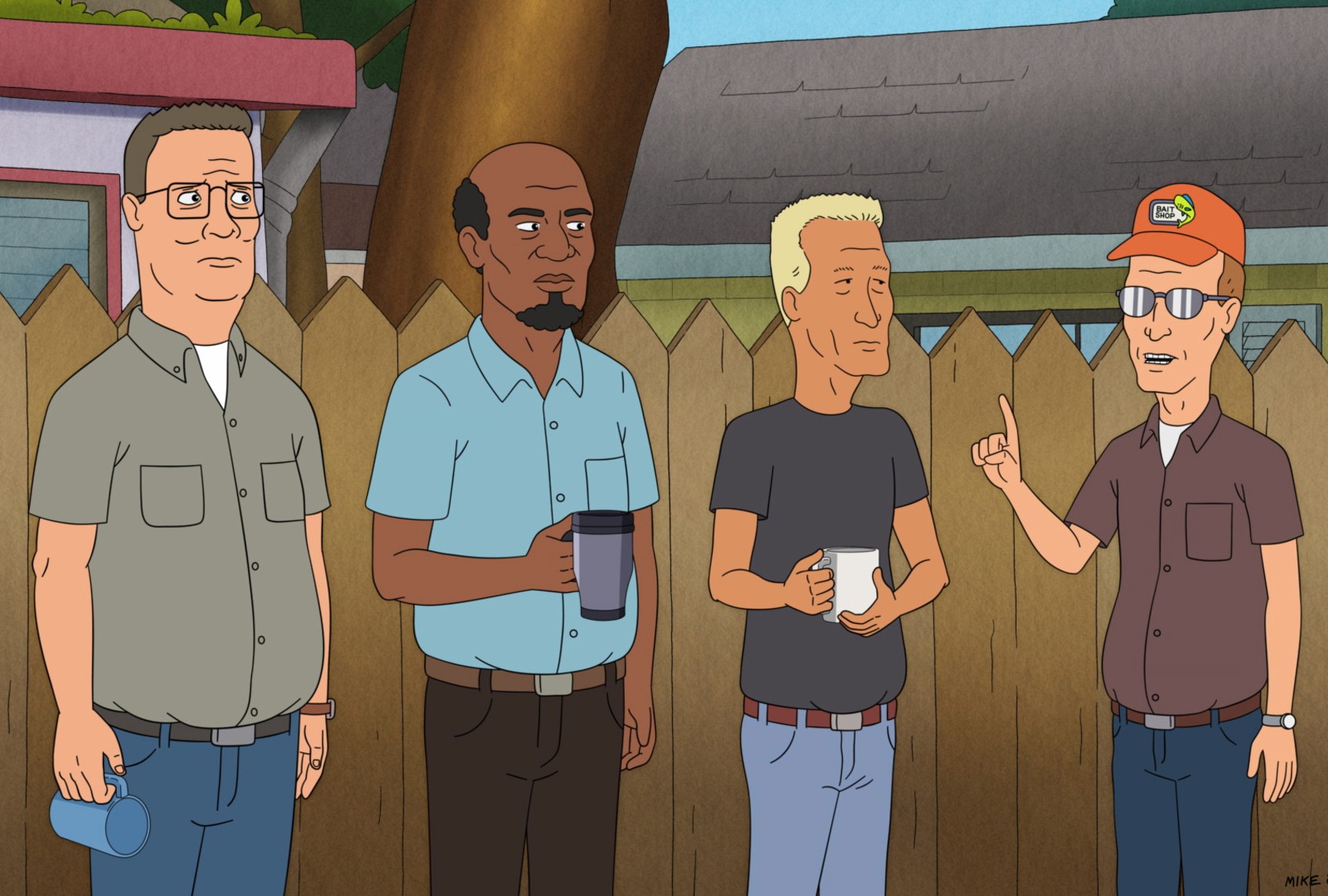
The new Hulu revival confronts the passage of time head-on by leaping 15 years into the future. Upon returning to Arlen, the Hills find their neighborhood bearing the scars of absence. During Hank and Peggy’s time abroad, their faithful tenant Brian Robinson (voiced by Keith David) kept up alley beer-drinking traditions alongside Boomhauer, Dale Gribble, and a chronically spiraling Bill Dauterive. Yet, even with steady companionship, the absence of the neighborhood’s moral anchor left structural vulnerabilities exposed.
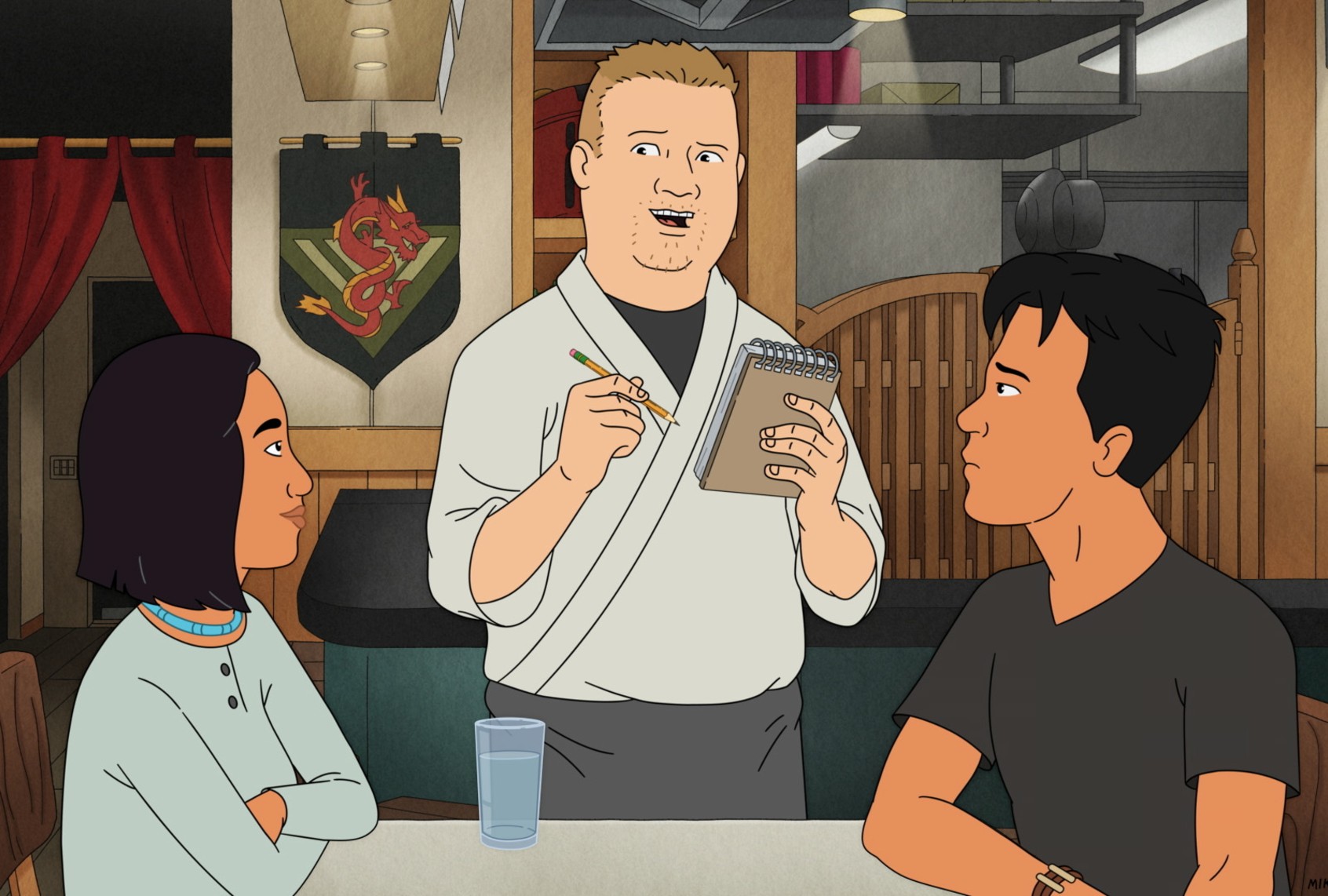
Meanwhile, the younger generation has grown up entirely. Bobby Hill, once the perennial disappointment of his father’s "That boy ain’t right" worldview, has blossomed into an ambitious young man. Now the executive chef and co-owner of a Japanese-German fusion restaurant, Bobby displays a modern entrepreneurial work ethic that fills Hank with pride—though Hank remains blissfully, characteristically unaware that his son’s grilled delicacies are cooked over the "devil’s charcoal." Conversely, Bobby’s childhood friend and neighbor, Connie Souphanousinphone, has graduated from college, giving her parents, Kahn and Minh, fresh ammunition to lord over the Hills.
The premiere establishes the tone quickly: Hank is not horrified by modern conveniences, merely deeply, comically confused by them. Whether navigating all-gender public restrooms or figuring out app-enabled NIMBYism, Hank wriggles in his discomfort before ultimately seeking a path toward peaceful coexistence.
Supporting Context & Metrics: Satire, Politics, and the Search for Middle Ground
To understand why the King of the Hill revival resonates so deeply, one must examine how animated television treats the American landscape. Long-running animated staples like The Simpsons (Springfield) or Family Guy (Quahog, Rhode Island) rely on a politically neutral, geography-agnostic "Anyplace, U.S.A." framework. South Park utilizes its Colorado setting to puncture targets on both sides of the aisle with aggressive, unfiltered satire.
King of the Hill, however, occupies a unique sociological and geographical middle ground. It treats its exurban Texas setting with anthropological seriousness, acknowledging an American populace whose religious, family, and rural values are frequently mocked or misunderstood by cultural "elites." As journalist Matt Bai astutely theorized in a New York Times Magazine profile back in 2005:
"If Hank votes Republican, it’s because, as a voter who cares about religious and rural values, he probably doesn’t see much choice… But Hank and his neighbors resemble many independent voters, open to proposals that challenge their assumptions about the world, as long as those ideas don’t come from someone who seems to disrespect what they believe."
Looking back two decades later, it is evident that many cultural critics and political commentators missed the warning signs of America’s deepening polarization because they failed to heed the cultural truths embedded in Arlen. The revival avoids falling into partisan traps by refusing to name-drop specific political figures or anchor its narrative to daily news cycles. Instead, it targets universal cultural touchstones:
The toxic sales pitches of the modern "manosphere" and online misogyny.
The solipsism and oversharing tendencies of younger generations.
The challenges of modern loneliness and disconnection.
When Hank takes up a retirement hobby as a neighborhood handyman, he discovers that his younger millennial and Gen Z clients expect free emotional therapy alongside home repairs. Rather than reducing this dynamic to cheap generational punchlines, the writers use it to gently force Hank to reckon with his own lifelong emotional constipation. Through these interactions, the show illustrates a mutual softening: the youth learn the value of pragmatic labor and steadfast reliability, while the older generation learns the necessity of vulnerability.
Official Statements and Production Realities: Honoring a Legacy Amid Tragedy
Bringing back a legendary ensemble cast after a 15-year hiatus is an extraordinary creative undertaking, made even more poignant by real-world loss. The core heartbeat of the show remains intact: Mike Judge returns to voice the rigid yet deeply honorable Hank Hill, while Kathy Najimy resumes her role as Peggy Hill—whose delusions regarding her linguistic mastery remain delightfully unmitigated. (Her false confidence in her Spanish teaching is mirrored by her disastrous belief in her Arabic fluency upon returning from "Saw-dye Arabia.") Pamela Adlon returns with her signature friendly rasp to voice Bobby.
However, the shadow of time and mortality hangs heavily over the production. Several iconic cast members from the original run passed away in the years leading up to the revival:
Brittany Murphy, who breathed iconic life into Luanne Platter, passed away in 2009.
Tom Petty, who voiced Luanne’s husband, Lucky Kleinschmidt, died in 2017.
Johnny Hardwick, the beloved voice of conspiracy theorist Dale Gribble, recorded lines for a handful of episodes before his passing in 2023. Actor Toby Huss seamlessly steps in to voice Dale for the remainder of the season.
Most tragically, Jonathan Joss, who gave voice and deep cultural nuance to John Redcorn, recorded his final lines for the series before his sudden, violent death in June in San Antonio, Texas. Law enforcement officials investigated the shooting as a potential hate crime; Joss’s husband, Kern de Gonzales, publicly shared that the couple faced recurring harassment due to their relationship. The loss of Joss serves as a somber, jarring reminder of the real-world consequences born of intolerance and societal regression—underscoring why cultural touchstones emphasizing empathy and community are more critical than ever.
Future Outlook: Why Arlen Still Matters
As streaming platforms continue to mine intellectual property for nostalgic reboots, revivals frequently fall flat, relying on cynical member-berries or heavy-handed updates to modern sensibilities. King of the Hill successfully avoids this trap by staying entirely true to its foundational ethos.
The revival does not sanitize Arlen into a progressive utopia, nor does it pander to far-right reactionary grievance. It presents a community where immigrants, Indigenous Americans, and traditional Texans live side-by-side, navigating deep-seated discomforts, unspoken tensions, and persistent human flaws. It even allows the show’s longest-running, unspoken joke—the obvious parentage of Dale’s son, Joseph, who bears a striking resemblance to John Redcorn—to persist as a testament to the community’s complex capacity for collective denial and grace.
In a cultural landscape heavily fragmented by algorithmic silos and toxic digital discourse, the return of Hank and Peggy Hill feels less like a corporate nostalgia play and more like a public service. By refusing to reduce its characters to political caricatures, King of the Hill reminds viewers that beneath the layers of political division and cultural anxiety, there are still millions of people who value basic human decency, neighborly love, and the quiet comfort of doing things the right way.
As a minor Girl Scout selling cookies observes in one poignant moment of the new season, it is fundamentally nice to be nice. For audiences exhausted by the relentless hostility of the modern media landscape, checking back into Arlen, Texas, isn’t just a trip down memory lane—it’s a much-needed breath of fresh, propane-heated air.