

Executive Overview
Nine years after the horrific "Unite the Right" rally in Charlottesville, Virginia, the ideological currents that fueled those torch-lit marches have not receded; rather, they have been mainstreamed into the architecture of modern American conservatism. What was once relegated to the fringe elements of the alt-right has successfully migrated into the upper echelons of federal power.
At the core of this transformation is a concerted effort by key political figures—most notably Vice President JD Vance—to redefine the fundamental nature of the United States. Rejecting the traditional view of the nation as a "creedal nation" bound by ideals, the modern populist right increasingly champions a blood-and-soil framework reminiscent of European völkisch movements. This doctrine, often whispered or coded as "Heritage American" identity, seeks to tie national belonging strictly to ancestral lineages dating back to colonial, Anglo-Protestant roots.
As state legislatures pursue policies that marginalize naturalized citizens and the Supreme Court wrestles with foundational questions of citizenship, the ideological battlelines are stark. At stake is whether the United States will remain an open republic defined by universal principles of liberty and equality, or devolve into an exclusionary ethnostate defined by ancestry and nativist dogma.
Detailed Chronology: From Charlottesville to the Halls of Power
To understand how nativist ideology infiltrated mainstream American governance, it is necessary to trace its trajectory over the past decade through a series of watershed moments:
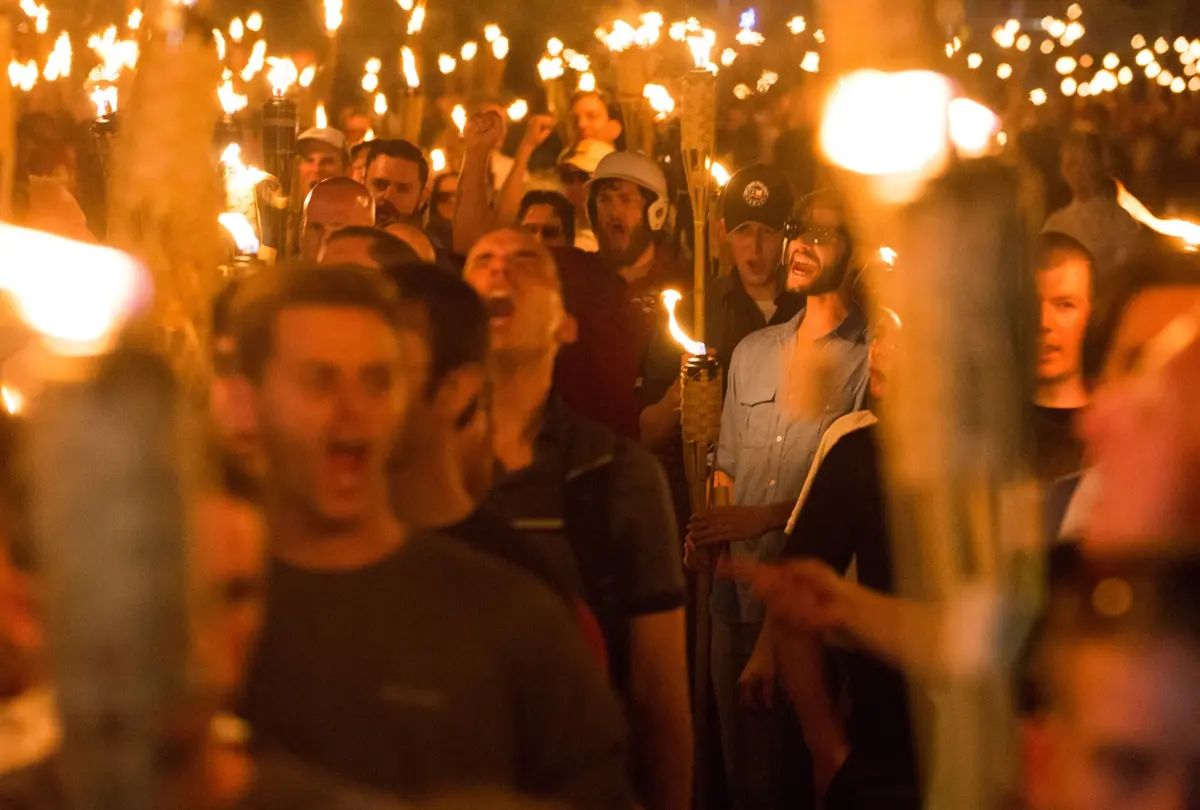
- August 11–12, 2017: The "Unite the Right" rally in Charlottesville, Virginia, introduces the modern alt-right to the public consciousness. Hundreds of young white men march with tiki torches, chanting antisemitic and fascist slogans ("Jews will not replace us" and "Blood and soil!"). Counterprotester Heather Heyer is killed when a participant drives his car into the crowd. President Donald Trump later remarks that there were "very fine people on both sides," signaling a dangerous political normalization of extremist rhetoric.
- July 2024: During his acceptance speech at the Republican National Convention, Vice President JD Vance explicitly lays the groundwork for a blood-and-soil definition of the nation. Declaring that "America is not just an idea," Vance romanticizes his ancestral burial grounds in Eastern Kentucky, asserting that citizens "will not fight for abstraction, but they will fight for their home."
- May 2025: Political analysts and media outlets document the accelerating rise of the "Heritage American" concept within online right-wing spaces and conservative think tanks, formalizing the exclusionary belief that true citizenship requires European ancestry tracing back to early colonial settlers.
- May 2026: Supreme Court Justice Neil Gorsuch, while promoting a children’s book on a media tour, pushes back against the rising tide of Christian nationalism and nativism. Explicitly defending the traditional view, Gorsuch states, "Our nation is not founded on a religion… It’s not based on a common culture even, or heritage. It’s based on those ideas. We’re a creedal nation." The remarks draw immediate backlash from Heritage American theorists.
- July 2026: In the wake of rulings such as Trump v. Barbara—where a conservative minority sought to curtail automatic birthright citizenship—several red-state legislatures introduce bills attempting to bar naturalized citizens from holding public office, effectively trying to establish a two-tiered system of citizenship.
- August 2026: Marking the ninth anniversary of Charlottesville, political commentators note the total integration of once-fringe nativist dogmas into official Republican platforms, setting the stage for imminent constitutional battles at the Supreme Court.
Supporting Context & Metrics: The Deconstruction of the Creedal Republic
The ideological friction currently dominating American politics centers on two fundamentally incompatible definitions of national identity: the creedal nation versus the blood-and-soil homeland.
The Myth of the Homogeneous Founding
Proponents of the "Heritage American" doctrine argue that the United States was historically built by, and exclusively for, early Anglo-Protestant and Scotch-Irish settlers. However, preeminent historians of the Revolutionary era, such as the late Gordon Wood, have thoroughly dismantled this historical revisionism.
Even at the nation’s founding, the population of the American colonies was remarkably diverse. Census estimates and historical records from the late 18th century indicate:
- Approximately 750,000 individuals of African descent—the vast majority enslaved—resided within the colonies.
- Vast and varied Native American nations inhabited the continent alongside European settlers.
- European immigrants represented multiple nations and cultures, extending far beyond British ancestry.
Because the early American populace lacked a unified ethnic or linguistic lineage, the founders could not anchor national identity in shared bloodlines. Instead, they forged a nation around abstract, revolutionary principles: the self-evident truths of liberty, equality, and natural rights articulated in the Declaration of Independence and later codified in the Bill of Rights. As Wood observed, America is unique because its people did not form a nation prior to organizing a state; rather, the adherence to a shared political creed made them a people.
The Hypocrisy of the "Heritage" Standard
The modern push for exclusionary citizenship quickly collapses under logical and genealogical scrutiny. Prominent advocates of nativist doctrines often find their own personal histories at odds with their exclusionary rhetoric.
For instance, JD Vance proudly emphasizes his Kentucky lineage, yet his own children are the product of his marriage to the daughter of recent immigrants. Applying a strict "Heritage American" or bloodline standard would logically relegate his children—and countless other Americans with mixed or recent immigrant heritage—to second-class status.
Furthermore, historical analysis reveals the absurdity of applying strict nativist filters to the nation’s political and judicial elite. Figures across the conservative movement, including Supreme Court Justice Samuel Alito (whose family immigrated in the 20th century) and Donald Trump (whose mother and current/former wives hail from foreign nations), would fail the stringent purity tests demanded by the most radical factions of their own political coalition.
Official Statements and Ideological Fault Lines
The ideological split within the American right—and within the conservative judicial apparatus—was laid bare during recent public discourse involving Supreme Court Justice Neil Gorsuch.
The insistence that the United States was explicitly founded as a Christian, European-heritage nation is a cornerstone of the evangelical and far-right coalition. For decades, this narrative has been deployed to mobilize voters and justify restrictive immigration policies. Thus, when Justice Gorsuch publicly reaffirmed the classical liberal doctrine, his words sent shockwaves through the movement:
"Our nation is not founded on a religion. It’s not based on a common culture even, or heritage. It’s based on those ideas. We’re a creedal nation. And I hope we take a moment to reflect on that and to recommit ourselves to that."
This declaration directly challenges the foundational premise of figures like Tucker Carlson, JD Vance, and various online populist influencers who argue that shared heritage and cultural homogeneity are prerequisites for national survival.
On the legislative front, state-level maneuvers reflect an aggressive push to codify nativism into law. As reported by The Atlantic, several Republican-led states have advanced legislative packages designed to prevent naturalized citizens from holding elected office. These initiatives aim to bypass the Fourteenth Amendment and establish a caste system of citizenship, effectively segregating "natural-born" heritage Americans from citizens who earned their status through naturalization.
Future Outlook: Constitutional Showdowns Ahead
As these state-level exclusionary laws inevitably wind their way through the federal court system, they are guaranteed to reach a deeply conservative Supreme Court. This looming confrontation will force the judiciary to decide whether the Fourteenth Amendment and the nation’s foundational creedal framework still hold legal and moral weight.
The attempt to rebrand the United States as a white nationalist völkisch state represents a profound departure from the historic American experiment. While the nation has frequently struggled to live up to its founding ideals—and the path toward equality has been marked by painful regressions—abandoning the creedal model in favor of blood-and-soil nativism threatens to dismantle the very foundation of the republic.
Ultimately, as historians have long maintained, to be an American has never meant sharing a specific bloodline, geography, or ancestral burial site. In a country that has absorbed populations from every corner of the globe, citizenship has always been defined by an adherence to shared democratic ideals. As the political and legal battles of the coming years unfold, the enduring question for the United States will be whether it chooses to honor that creed or surrender to the dark, regressive impulses of nativism.