

Executive Overview
In an era where geopolitical tensions frequently spill over into the digital realm, a peculiar and uniquely modern battleground has emerged: the naming of the Earth’s physical features. President Donald Trump’s administration has reignited a contentious debate over cartographic sovereignty, igniting a high-stakes cultural, legal, and linguistic standoff that pits the executive branch against international bodies, state governments, major technology corporations, and the global press.
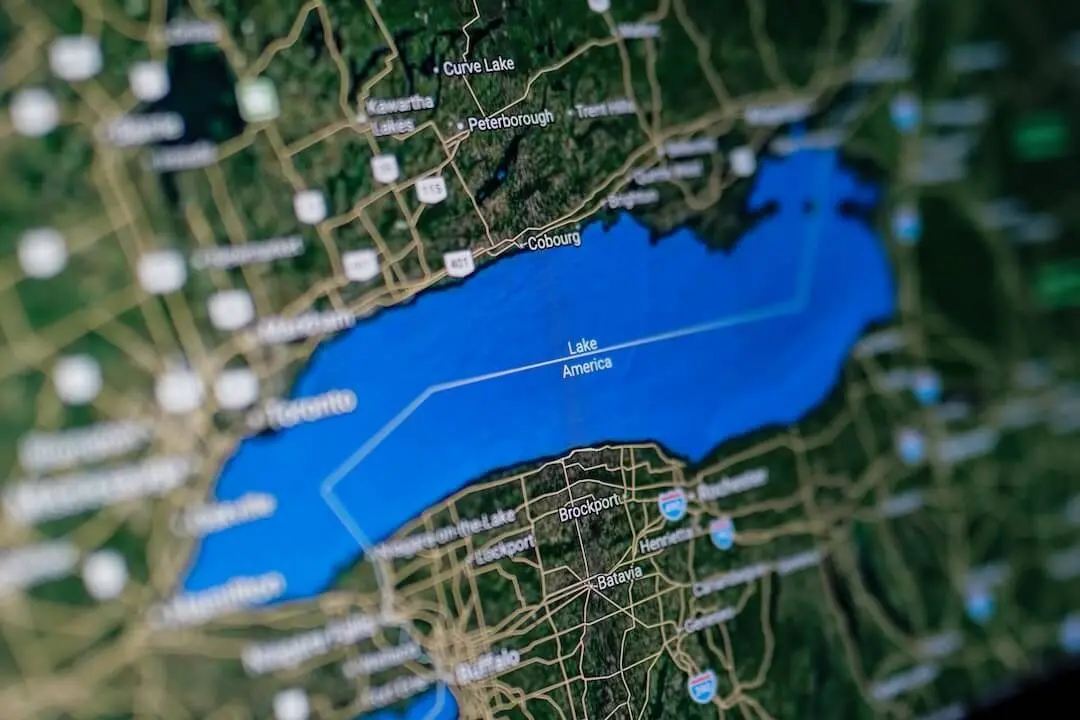
The latest flashpoint arrived on August 27, when—amidst a mounting trade dispute with Canada—President Trump issued an executive order directing the federal government to officially rename Lake Ontario as "Lake America." This directive follows a pattern established earlier in his second term. In January 2025, executive orders sought to rebrand the Gulf of Mexico as the "Gulf of America" and restore the name Mount McKinley to Alaska’s Denali.
"If you think about it, we have a gulf and we have a lake," Trump remarked during the signing ceremony for the Lake Ontario order. "Now, all we need is an ocean."
This presidential ambition to reshape North American topography has triggered immediate ripples across institutional landscapes. The Associated Press (AP), the arbiter of journalistic style for tens of millions worldwide, has formally rejected the new moniker, opting instead for historical longevity. Silicon Valley giants have split down ideological and commercial lines: Google and Apple have adopted the name for U.S. users, while competitors like MapQuest have deliberately bucked the trend, experiencing a massive surge in downloads as a result. Meanwhile, Canadian authorities, New York state officials, and a decisive majority of the American public have offered sharp pushback against the change.
As the Trump administration attempts to imprint its nationalist vision onto federal maps, the resistance highlights the complex limits of executive power over global geography, media stylebooks, and the collective memory of nations.
Detailed Chronology: From the Gulf of Mexico to Lake America
To understand the current friction over Lake Ontario, one must trace the rapid escalation of the White House’s geographical renaming campaign since the onset of President Trump’s second term in January 2025.
Phase One: The 2025 Overhauls
Within weeks of taking office in January 2025, the administration signaled its intent to aggressively revise domestic and regional geographical designations. Through a pair of executive actions, the White House ordered the renaming of the Gulf of Mexico to the "Gulf of America" and mandated the reversion of Alaska’s highest peak from Denali back to Mount McKinley—reviving a name it had held from 1917 until the Obama administration changed it in 2015.
The administration gave Interior Secretary Doug Burgum a tight 30-day window to update federal maps, signs, communications, and contracts. While the directive carried legal weight within federal agencies, it immediately exposed jurisdictional limits: state governments, foreign nations, and international organizations were under no legal obligation to comply.
Phase Two: The AP Stance and White House Retaliation
The Associated Press, whose stylebook influences reporting reaching an estimated 45.5 million users monthly across 100 countries, faced an immediate editorial dilemma. In February 2025, the AP accepted the change regarding Mount McKinley, noting that the mountain sits entirely within U.S. borders and that the president holds clear authority over domestic federal geographic names.
However, the AP flatly refused to adopt "Gulf of America," asserting that the traditional name had endured for four centuries and that a global news agency must prioritize place names easily recognizable to worldwide audiences.
The consequences of this editorial independence were swift and severe. Citing the AP’s refusal to toe the administration’s stylistic line, the White House barred AP journalists from Air Force One and restricted their access to executive press events. This retaliation prompted the AP to file a federal lawsuit (Associated Press v. Budowich) in February 2025, arguing that excluding a news organization based on its editorial viewpoint directly violated the First Amendment.
By April 2025, a U.S. District Court judge ordered the White House to restore AP press access, ending a 44-day exile from the Oval Office. Although the U.S. Court of Appeals for the District of Columbia Circuit subsequently stayed parts of the ruling while the administration appealed, the legal battle established a tense baseline for future conflicts over executive overreach and press freedom.
Phase Three: The Great Lakes Front
On August 27, 2026—against the backdrop of escalating trade tensions with Canada—President Trump expanded his geographic campaign northward. The executive order targeting Lake Ontario mandated its transformation into "Lake America," ordering federal agencies to reflect the change within 30 days.
Unlike Mount McKinley, which rests entirely inside U.S. territory, Lake Ontario forms a vital international boundary and transboundary ecosystem shared between the United States and Canada. This added immediate geopolitical complexity, turning a domestic renaming exercise into an international diplomatic friction point.
Supporting Context & Metrics: Public Opinion, Linguistics, and Tech Fractures
The fallout from the Lake Ontario executive order has played out across multiple data-driven fronts, revealing deep skepticism among the American public, a fascinating divergence in Big Tech responses, and a striking linguistic evolution within the media.
Public Sentiment: A Cold Reception
Despite the administration’s framing of the executive order as a patriotic gesture, polling data indicates that the American electorate overwhelmingly rejects the new name.
- The Ipsos/Reuters Poll: Published on September 1, 2026, and surveying 1,023 U.S. adults, the poll revealed that 63% of respondents opposed the renaming of Lake Ontario. Opposition spanned political lines: 84% of Democrats and 65% of independents disapproved of the order. Notably, even among Republicans, more respondents opposed the change (43%) than supported it (33%).
- The Economist-YouGov Survey: Released on August 31, 2026, among 1,592 U.S. adults, this survey found that 68% of respondents opposed the name change, including 43% of those who voted for Trump in the 2024 election.
The Etymology of Ontario
The administration’s push to replace "Ontario" ran headlong into centuries of rich indigenous and colonial history. According to Canadian government archives, the earliest recorded use of "Ontario" dates to 1641, applied originally to a land mass on the northern shore of the easternmost Great Lake.
Linguists and historians trace the word to the Iroquois term kanadario, which translates to "sparkling." Alternatively, the Prescott, Arizona-based Museum of Indigenous People notes a connection to the Huron-Wyandot word Ontarí:io (or Ontare), meaning "great lake" or "beautiful lake"—an origin highlighted on social media by Canadian Prime Minister Mark Carney.
Big Tech Splits and the MapQuest Surge
Silicon Valley found itself sharply divided over how to handle the federal update:
- Google: On August 29, 2026, Google updated its mapping products to display "Lake America" for users inside the United States, aligning with the U.S. Geographic Names Information System (GNIS) updates. International users, however, continue to see both "Ontario" and "America."
- Apple: Following what administration officials described as a personal appeal from the president to Secretary Burgum, Apple adopted "Lake America" on September 1, 2026.
- MapQuest: In a high-profile move of corporate defiance, MapQuest refused to adopt the moniker. The mapping platform retained "Lake Ontario," capitalizing on consumer sentiment by experiencing an immediate and massive surge in app downloads. This mirrored MapQuest’s earlier stance on the Gulf of Mexico, where it not only kept the traditional name but introduced a feature allowing users to customize the gulf’s name to their liking.
The Media Shift: Tracking Lexical Choices
An analysis of journalistic output underscores how the media has managed these executive directives over time. Research by Nieman Lab’s Joshua Benton examined how national media outlets utilized the term "Gulf of Mexico" versus "Gulf of America" following the 2025 order.
Initially, outlets favored by conservative audiences adopted the administration’s preferred terminology. However, over time, a profound reversion occurred across the board. By the end of the studied period, even Republican-favored outlets were utilizing "Gulf of Mexico" over "Gulf of America" by a factor of 3.13 to 1. Across the entire media ecosystem, traditional geographical terms overwhelmingly held their ground against executive fiat.
Official Statements and Institutional Responses
The institutional resistance to "Lake America" has been swift, multi-layered, and coordinated across international borders.
The Associated Press Style Guidance
On September 1, 2026, the AP updated its digital stylebook, cementing its refusal to bow to the new federal mandate. The guidance reads:
"Lake Ontario has carried that name for more than 400 years. Refer to it by its original name. If it is relevant to the story, acknowledge and explain the name Trump has chosen."
In an accompanying editorial note, the AP clarified that Trump’s executive order carries weight solely within the administrative apparatus of the U.S. government. Canada, foreign nations, and international governing bodies possess zero obligation to recognize the domestic re-designation.
To justify its editorial policy, the AP pointed to longstanding global precedents where bodies of water possess multiple names depending on national jurisdiction. For instance, the water separating Baja California and mainland Mexico is designated by the U.S. as the Gulf of California, while Mexico officially terms it the Sea of Cortez—distinctions the AP navigates contextually. Similarly, the body of water known internationally as the Persian Gulf is frequently referenced across Arab nations as the Arabian Gulf.
Cross-Border Defiance: New York and Canada
Regional leaders on both sides of the international border mounted visible campaigns to preserve the historical name:
- Ontario Premier Doug Ford joined local dignitaries to unveil a massive billboard on the Canadian shore of the lake, emblazoned with the defiant slogan: "Lake Ontario — Now and Always."
- New York Governor Kathy Hochul took to social media to push back against the federal order, posting a regional map and declaring bluntly: "New York won’t be calling it that."
- Oswego County Officials: In New York—the sole U.S. state bordering the lake—local legislators issued a mild yet firm rebuke, announcing they would maintain "Lake Ontario" across all official county and business materials.
The International Joint Commission’s Neutrality
As a binational organization established by the U.S.-Canada Boundary Waters Treaty of 1909, the International Joint Commission (IJC) caught the brunt of inquiries regarding how transboundary water management would navigate the renaming dispute.
In an email statement, IJC spokesperson Kevin Bunch maintained strict institutional neutrality. He noted that while the agency delivers science-based advice and coordinates transboundary water issues, it explicitly abstains from commenting on domestic political matters or the internal policy maneuvers of either sovereign nation.
Future Outlook
As September 2026 progresses, the standoff over Lake Ontario highlights a fundamental friction between executive ambition and institutional inertia.
The White House’s strategy relies on leveraging federal administrative compliance, securing tech-sector adoption through direct pressure, and utilizing the machinery of the executive branch to reshape the linguistic landscape. Yet, this campaign has run up against formidable structural barriers: a skeptical public, defiant state and international governments, a fiercely independent global news media, and corporations willing to bank on traditional geography for consumer loyalty.
For the Associated Press and the broader journalistic community, the stylebook entry is set. Reporters will continue to use "Lake Ontario" as the primary identifier, explaining the administration’s preferred nomenclature only when context demands it. Whether past is prologue—and whether the administration will attempt further punitive measures against media access, as it did during the 2025 Gulf of Mexico dispute—remains to be seen.
What is certain, however, is that while a president can issue an executive order altering federal maps within 30 days, centuries of shared history, international treaties, and cultural identity cannot be so easily overwritten by the stroke of a pen.
