

Executive Overview
For decades, the landscape of modern journalism has been shaped by reporters who chase breaking news, rapid updates, and superficial headlines. Yet, a rare echelon of writers transcends the daily news cycle, capturing the soul of historical trauma with the precision of an investigator and the grace of a poet. Among that elite group stood Jim Dwyer of The New York Times.
To read Dwyer’s byline was to understand that whatever followed would not merely inform, but deeply resonate. He emerged, in the minds of readers and peers alike, as the quintessential prose-poet of September 11—a journalist who chronicled the cascading, lingering aftermath of America’s darkest day with extraordinary decency, moral clarity, and stylistic power.
This retrospective explores Dwyer’s monumental contributions to narrative journalism, specifically examining his landmark 2006 investigation into the surfacing of 9/11 emergency dispatch recordings. Originally analyzed by Poynter senior scholar Roy Peter Clark five years after the attacks, Dwyer’s work remains a masterclass in the intersection of rigorous reporting and literary craftsmanship. As we reflect on the quarter-century mark since that fateful morning, Dwyer’s legacy offers a timeless blueprint for how the press must handle collective trauma: balancing undeniable empirical evidence with deep emotional resonance, refusing to let history calcify into mere statistics.
Detailed Chronology: The Anatomy of a Chronicle
To understand the enduring brilliance of Jim Dwyer’s storytelling, one must trace the chronology of his coverage, which systematically transformed physical relics and auditory fragments into poignant historical testaments.
Phase One: The Relics of the Towers (October 2001)
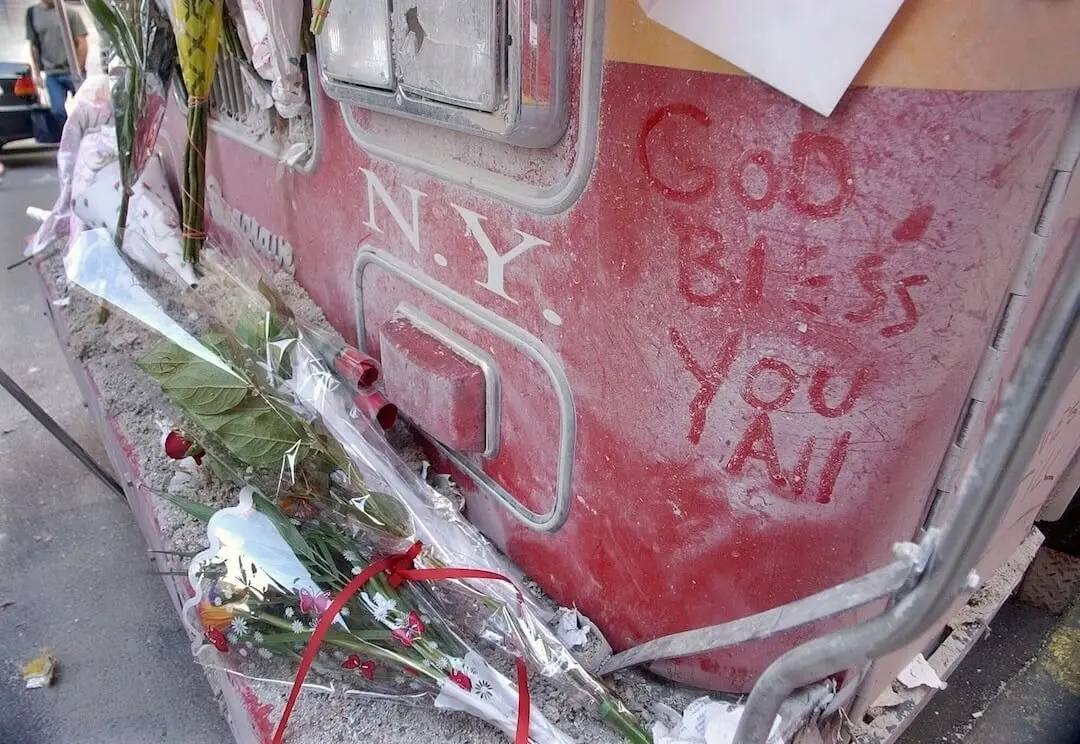
In the immediate wake of the World Trade Center collapse, the journalistic world scrambled to quantify the losses—counting bodies, missing persons, and economic damage. Dwyer, however, recognized that the true scale of the tragedy resided in the micro-narratives of everyday objects.
For his short stories focusing on specific items recovered from the ruins, Dwyer earned an ASNE Distinguished Writing Award. His subjects were deceptively simple yet profoundly symbolic:
- A window-washing squeegee utilized by trapped office workers to force open an elevator shaft, engineering a miraculous escape fifty floors above the Manhattan streets.
- A dust-covered family photograph unearthed from tons of gray rubble, representing the severed threads of domestic life.
- A paper cup passed among terrified survivors to share precious sips of water in the suffocating darkness.
Through these items, Dwyer bypassed the paralyzing abstraction of thousands of casualties, grounding the cataclysm in tangible human artifacts.
Phase Two: The Resurgence of Pain (March 2006)
Five years after the towers fell, the physical debris had long been cleared, but the emotional shrapnel continued to tear through the families of the lost. In March 2006, Dwyer published a groundbreaking story centered on a devastating new revelation: the city had processed and released emergency 9/11 dispatch tapes containing the final, recorded voices of victims who had called for help from inside the burning skyscrapers.
Dwyer’s lead structure demonstrated a clinical yet deeply empathetic understanding of narrative pacing. He introduced three distinct families confronting the agonizing choice of whether to listen to their loved ones’ final moments:
- The Hanleys: Joe and Marie Hanley initially resolved not to listen to the recording of their son, Chris, calling desperately for help from the Windows on the World restaurant atop the North Tower.
- The Gentuls: Jack Gentul and his sons similarly agreed they had no intention of playing the audio of Alayne Gentul, a wife and mother trapped in the South Tower.
- The Andreacchio Family: Debbie Andreacchio experienced a profound shock when the mayor’s office contacted her on a Monday—which coincidentally was her late brother Jack’s birthday—to inform her that he had dialed 9/11 four and a half years prior.
By altering the established rhythmic pattern—moving from a definitive "no" regarding the Hanleys and Gentuls to a jarring, disruptive revelation for the Andreacchios—Dwyer utilized literary mechanics to mirror the unpredictability of grief itself.
Supporting Context & Metrics: The Mechanics of Literary Journalism
What elevated Dwyer’s reporting above standard newsroom output was his mastery of literary devices fused with uncompromising journalistic standards. Roy Peter Clark’s foundational analysis of Dwyer’s technique highlights several essential pillars of narrative non-fiction:
The Power of Three
Dwyer inherently understood that in narrative structure, the number three represents the whole. By focusing his 2006 feature on the Hanley, Gentul, and Andreacchio families, he did not merely tell three isolated anecdotes; he encapsulated the collective, agonizing dilemma faced by every family touched by the tragedy. The triad served as a structural skeleton holding the heavy emotional weight of the piece.
Vocabulary as an Emotional Portal
Journalism often restricts its vocabulary to plain, clinical language to maintain objectivity. Dwyer, however, recognized that unprecedented events demand unprecedented lexicon. In his reporting, he integrated words and phrases rarely found in standard news columns:
- Aural relics: Describing the emergency dispatch tapes not merely as audio files, but as sacred artifacts carrying the weight of history.
- Portals: Framing the recordings as dangerous doorways into a lost, unseen moment in time for grieving relatives.
- The Sisyphean march: Describing the public’s and families’ relationship with the passage of time since 9/11. Drawing directly from Greek mythology, Dwyer wrote: "For many of those closest to the day, the release of the tapes is yet another Sisyphean moment in the march away from Sept. 11, in which every step forward in time seems to be matched by one that sends them lurching back toward the day again."
This deployment of mythic and poetic language did not obscure the facts; rather, it provided readers with a deeper psychological framework to comprehend a disaster of biblical proportions.
The Standard of "Reproducible Results"
Despite his undeniable literary flair, Dwyer was, at his core, a relentless reporter of the old school. He firmly rejected the notion that narrative journalism could afford to play fast and loose with the facts. Dwyer frequently championed what he called "reproducible results"—a journalistic standard where the narrative, no matter how poetic, remains anchored to verifiable evidence, meticulous sourcing, and cross-checked facts that stand up to rigorous scrutiny. He proved that style and substance are not mutually exclusive; poetry and proof could coexist on the front page of The New York Times.
Official Statements & Institutional Reflection
The release of the 9/11 emergency dispatch tapes in 2006 forced municipal and federal institutions to reconcile the public’s right to information with the profound privacy and trauma of surviving family members.
City officials defended the release of the archival audio under Freedom of Information Act (FOIA) mandates and legal settlements following prolonged media lawsuits. However, the institutional calculus—balancing public transparency against the visceral re-traumatization of victims’ relatives—drew intense scrutiny.
In statements released during the 2006 audio rollout, representatives for family support networks underscored the delicate tightrope walked by civic leaders:
"The release of these recordings strips away the protective silence that families have relied upon for years. While transparency is vital for historical accountability, the government must recognize that these tapes are not mere public records; they are the private, final heartbeats of our loved ones broadcasted into the public square."
Jim Dwyer’s reporting gave institutional voice to these exact tensions, forcing the city and the public to confront the human cost of open-records laws when applied to national catastrophes. His work served as an unofficial bridge between institutional policy and human empathy.
Future Outlook: The Legacy of Jim Dwyer in Modern Journalism
As the media landscape evolves into an era dominated by algorithmic feeds, hyper-concise summaries, and real-time social media reactions, the legacy of Jim Dwyer—who passed away in 2020—serves as both a nostalgic reminder and a vital roadmap for the future of investigative storytelling.
The challenges facing modern journalism—covering mass casualty events, climate disasters, and protracted societal traumas—risk becoming desensitized through endless data streams and rapid news cycles. Dwyer’s body of work challenges contemporary journalists to resist this numbness.
Future generations of reporters can glean several critical takeaways from Dwyer’s enduring methodology:
- Honor the Micro-Narrative: Never let grand historical events erase the individual human experience. The macro-crisis is always best understood through the micro-lens of personal reality.
- Embrace Narrative Architecture: Utilize structural techniques—such as the rule of three, deliberate pacing, and rhythmic patterns—to guide readers safely through emotionally harrowing terrain.
- Maintain Empirical Rigor: Literary ambition must never supersede factual accuracy. True power in reporting stems from stories that are beautifully told and undeniably true.
- Refuse to Let History Fade: As historical milestones recede into the past, journalism must continue to find innovative ways to make the trauma of yesterday relevant, urgent, and deeply felt by tomorrow’s generations.
Jim Dwyer’s chronicle of September 11 reminds us that the primary duty of the journalist is not merely to record what happened, but to ensure that humanity is never lost in the telling. In an age of fleeting digital memory, his prose remains an enduring monument to truth, empathy, and the unbreakable power of the written word.