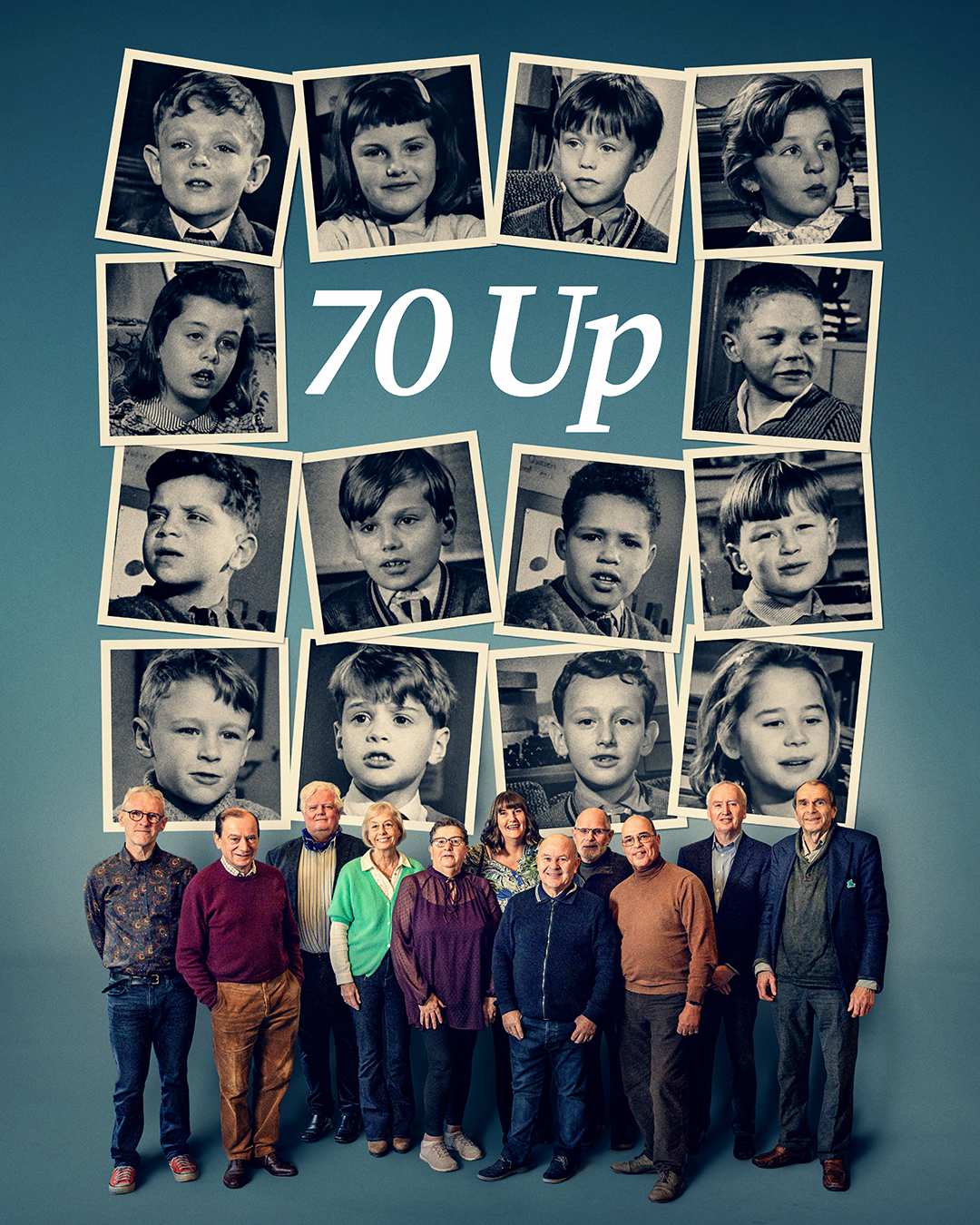
Few cinematic endeavors in the history of television match the sweeping sociological scope, profound emotional resonance, and methodological audacity of the British Up documentary series. Guided for decades by the late director Michael Apted, the project began with a simple yet formidable premise rooted in the Jesuit maxim: "Give me a child until he is seven and I will give you the man."
By capturing the lives of 14 British children from wildly disparate socio-economic strata every seven years, the franchise evolved from a one-off television broadcast in 1964 into an unprecedented longitudinal study of human aging, class rigidity, resilience, and personal evolution. Spanning over half a century, the series has cataloged the participants’ transitions from bright-eyed seven-year-olds into awkward teens, jaded young adults, middle-aged pragmatists, and, finally, seniors entering their twilight years.
Now, following the passing of Michael Apted in 2021, the monumental project reaches its latest chapter with the release of 70 Up, directed by Academy Award-winning filmmaker Asif Kapadia. As the surviving participants face the realities of septuagenarian life, the release offers both a bittersweet conclusion to a television milestone and an opportunity to reflect on one of the most comprehensive psychological portraits ever committed to film. This report examines the historical architecture of the franchise, its deep sociological implications, the transition of directorial leadership, and the enduring lessons gleaned from watching real lives unfold across the decades.
Detailed Chronology: A Half-Century in Seven-Year Intervals
To understand the magnitude of 70 Up, one must trace the chronological milestones that have defined the project since its inception in the mid-1960s. Commissioned initially by Granada Television as a standalone episode of World in Action, the original 1964 film—titled 7 Up—was designed to examine the British class system by selecting children from contrasting backgrounds, ranging from elite London boarding schools to impoverished inner-city slums and rural Yorkshire.
Michael Apted, then a young researcher on the production team, likely could not have predicted that this sociological snapshot would become his life’s work. When the participants reached age 14, Apted returned to check in on them, setting a precedent for a recurring seven-year cycle that would span generations.
The Formative Years: 7 Up to 21 Up
7 Up (1964): The project introduces 10 boys and 4 girls. The children express their naive ambitions—some want to be jockeys, others desire wealth, while working-class boys express resignation about their futures in factories. The underlying thesis of the film suggests that Britain’s class stratification is already firmly entrenched by early childhood.
14 Up (1970): Directed by Apted, this installment captures the onset of adolescence. The divides widen: elite children discuss attending Oxford and Cambridge, while working-class participants confront the harsh reality of leaving school at 15 to enter the workforce. The political and social realities of the late-20th-century United Kingdom begin to shape their worldview.
21 Up (1977): Widely regarded as a masterpiece of documentary filmmaking, this installment catches the participants at a volatile crossroads. University students grapple with radical politics, while others have married young, taken blue-collar jobs, or fled the country. Suzanne Dewey’s cynical remarks about marriage and her move to Paris at age 16 capture the restlessness and disillusionment characteristic of the era.
The Turbulent Decades: 28 Up to 56 Up
28 Up (1984): At this stage, the participants reach full adulthood. Many have started families, experienced divorce, or solidified their career paths. The film demonstrates that while class background exerts a massive gravitational pull, individual agency, personality quirks, and sheer luck can alter life trajectories in unexpected ways.
35 Up (1991) & 42 Up (1998): Mid-life introspection takes center stage. Participants reckon with unfulfilled dreams, health scares, and the complexities of raising children. The documentary morphs from a study of class destiny into a mirror for viewers worldwide, forcing audiences to reflect on their own choices, successes, and failures.
49 Up (2005) & 56 Up (2012): Approaching retirement age, the surviving cohort exhibits a surprising psychological shift. Across multiple episodes, a common thread begins to emerge: despite the hardships, heartbreaks, and physical decline associated with aging, most participants report being happier and more at peace in their fifties than they were in their twenties or thirties. The armor of ego begins to shed, replaced by self-acceptance.
The Modern Era: 63 Up and 70 Up
63 Up (2019): Released when the participants were in their early sixties, this film grappled with physical infirmity, the loss of parents, and, tragically, the death of original participant Neil Hughes (though Neil’s complex, wandering life journey remains one of the series’ most compelling narrative arcs). Apted managed to helm this installment just years before his death, maintaining the intimate, empathetic tone that defined his stewardship.
70 Up (2026): Marking the first installment directed entirely without Apted, the baton was passed to Asif Kapadia (Senna, Amy). Navigating the immense pressure of honoring Apted’s legacy while bringing his own documentary lens to the project, Kapadia captures the cohort entering their seventies, confronting mortality, retirement, and the profound perspective that only seven decades of living can provide.
Supporting Context, Methodology, and Metrics
The Up series is frequently cited in academic literature across sociology, psychology, and media studies. Its methodology—while unorthodox by modern documentary standards due to its longitudinal nature and the ongoing relationship between the filmmaker and subjects—has yielded unprecedented qualitative data on human development.
The Socio-Economic Matrix
The original selection of 14 children was never meant to be a statistically rigorous cross-section of the British population, but rather a dramatic illustration of class division. The cohort included:
The Privileged: Upper-class boys John, Andrew, and Charles, hailing from elite preparatory backgrounds, destined for Oxbridge and traditional pillars of the British establishment.
The Working Class: Children from Liverpool, London tenements, and rural areas, such as Lynn, Jackie, and Sue, whose early educational ceilings were tightly restricted by the post-war British schooling system.
The Outsiders: Participants like Tony, who dreamed of being a jockey and eventually became a London cab driver, and Neil, whose bright childhood gave way to severe mental health struggles and a nomadic existence across the UK.
Retention and Attrition
Maintaining a longitudinal study over 63 years presents logistical nightmares. Over the decades, participant fatigue, public scrutiny, and personal privacy concerns led a few individuals to temporarily or permanently withdraw from filming. Notably, Charles Lloyd-Pack opted out of the project after 28 Up, choosing a private life away from television cameras. Meanwhile, others embraced the cameras as a bizarre form of historical diary, returning faithfully every seven years to bare their souls to a global audience.
Official Statements and Industry Reflections
The release of 70 Up has prompted widespread commentary from cultural critics, television executives, and filmmakers alike, reflecting on the profound impact of the franchise on modern visual storytelling.
Industry analysts have noted that the Up series effectively invented the template for modern reality television and documentary serials, long before the terms "binge-watching" or "franchise" entered the lexicon. However, unlike manufactured reality programming, the stakes of the Up series are entirely real—marked by genuine joy, real-world tragedy, and the unvarnished passage of time.
Reflecting on taking over the directorial reins from Michael Apted, Asif Kapadia noted in early press statements the immense emotional weight of stepping into a universe that millions of viewers have intimately followed for generations:
"Michael didn’t just make a documentary series; he built a living monument to the human condition. Stepping in to guide these remarkable individuals into their seventies was both the greatest honor and the most daunting challenge of my career. What these participants have given to the world—their vulnerabilities, their resilience, and their willingness to be seen aging in real-time—is an unmatched gift to humanity."
Cultural commentators have also marveled at the therapeutic nature of the series for viewers. Watching the cohort transition from sweet, naive children into scarred, resilient seniors offers a comforting counter-narrative to youth-obsessed media. As psychological studies surrounding the series often suggest, watching the Up films acts as a collective exercise in empathy, proving that while external circumstances vary drastically based on class and privilege, the internal struggles of love, loss, identity, and meaning are fundamentally universal.
Future Outlook and Legacy
As 70 Up rolls out to audiences worldwide, questions naturally arise regarding the future of the franchise. Given the biological reality of human lifespans, reaching a potential 77 Up would place the surviving participants well into their late seventies and eighties, introducing unprecedented logistical and ethical hurdles regarding health, consent, and memory.
Regardless of whether the project continues past this milestone, the Up series has already secured its place as an immortal achievement in cinematic history. It stands as a testament to the power of patience in art—a reminder that profound truths cannot be captured in a single investigative report or a fast-paced docuseries, but require the slow, steady accumulation of decades.
For viewers who have grown up alongside Suzy, Tony, Symon, and the rest of the cohort, watching 70 Up is not merely an act of consumption, but an act of witness. It reminds us that every human life is an epic narrative filled with unexpected plot twists, redemptive arcs, and quiet triumphs. As the participants navigate the autumn of their lives, their collective journey offers a final, bolstering message: no matter how turbulent the earlier chapters may be, humans possess an extraordinary capacity to come more fully into themselves with age.