


Executive Overview
In the hyper-competitive landscape of freelance writing, talent alone is rarely enough to secure a sustainable career. Thousands of capable writers enter the market every month, armed with impressive portfolios, pristine grammar, and a genuine passion for storytelling. Yet, an overwhelming majority struggle to cross the threshold of profitability, often wondering why their carefully crafted pitches vanish into a digital black hole.
According to industry veterans and data-backed outreach strategies, the missing link in most freelancers’ acquisition pipelines is not the quality of their initial pitch—it is the absence of a systematic follow-up strategy.
Too many independent professionals treat cold emailing as a one-and-done transaction: they send a single message, receive no immediate reply, and cross the prospect off their list. In doing so, they abandon the vast majority of potential revenue. Sales statistics consistently reveal that the vast majority of closed deals require multiple points of contact. For freelance writers looking to scale their businesses—such as those aiming to clear their first $1,000 in thirty days or less—mastering the cadence, psychology, and tracking of email follow-ups is no longer optional; it is the definitive differentiator between feast and famine.
Detailed Chronology: The Anatomy of a Modern Outreach Campaign
To understand why follow-ups are so vital, one must examine the typical lifecycle of a cold outreach campaign. The process begins long before a single word is typed into an email composition window; it starts with deep research and targeted prospecting.
Phase 1: The Initial Introduction (Day 0)
A successful campaign kicks off with a Letter of Introduction (LOI) or a personalized cold email. Unlike generic templates scraped from automated directories, a professional outreach message must demonstrate genuine familiarity with the recipient’s business, publication, or brand.
Industry experts emphasize that personalization does not require rewriting an entire essay for every single lead. Often, customizing the opening sentence—referencing a recent article the prospect wrote, a product launch they managed, or a specific pain point their company is facing—is enough to cut through the digital noise. However, even the most brilliant introductory email will frequently stall due to poor timing. When a writer’s message lands in an editor or marketing manager’s inbox, the odds that the recipient has an immediate, burning need for content at that exact second are remarkably slim.
Phase 2: The Silence and the Psychological Trap (Days 1–4)
Once the initial email is sent, the waiting game begins. This is where psychological friction occurs. Many beginner freelancers interpret silence as rejection. If an editor does not reply within twenty-four hours, the sender assumes the worst and abandons the lead.
Veterans of the industry argue that this assumption is fundamentally flawed. Inboxes are battlegrounds. Decision-makers juggle dozens of priorities, urgent meetings, and hundreds of daily messages. An email that arrives during a chaotic morning will likely be opened, mentally bookmarked, and instantly buried beneath an avalanche of new correspondence. Silence rarely means "no"; more often, it simply means "not right now."
Phase 3: The Strategic Follow-Up Cadence (Days 5 and Beyond)
Recognizing that timing is fluid, successful freelancers implement a structured follow-up cadence. The golden rule of initial outreach is to avoid following up the very next day, which can easily read as desperate or aggressive. Instead, waiting two to five days establishes a respectful buffer.

From there, a disciplined schedule takes over. Rather than guessing when to write next, professionals map out seasonal or periodic check-ins. For instance, a strategic follow-up plan might look like this:
- Initial Follow-Up: 3 to 5 days after the first email.
- Quarterly Touchpoints: Aligning subsequent emails with natural business cycles—such as end-of-year rush cleanups in late November, fresh planning sessions in mid-January, or mid-year content refreshes in the spring and summer.
By maintaining this steady, respectful rhythm, the writer shifts from being an annoying spammer to a reliable, top-of-mind resource who happens to be available when a sudden content gap opens up.
Supporting Context & Metrics: The Science of Persistence
The reluctance to follow up is largely emotional, driven by a fear of being a nuisance. However, empirical data paints a vastly different picture of sales and outreach dynamics.
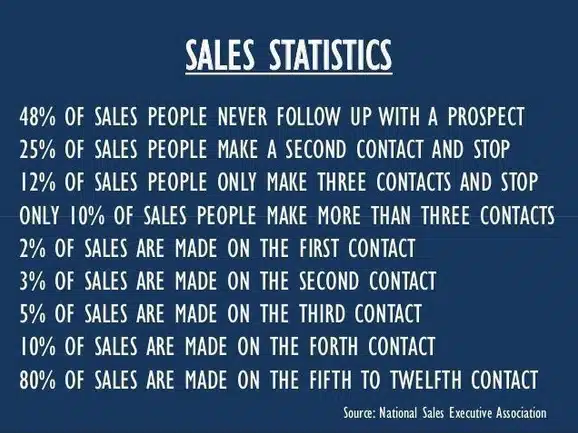
Industry sales metrics compiled across digital marketing and B2B sectors reveal a striking reality about human responsiveness:
- 2% of sales are made on the first contact.
- 3% of sales are made on the second contact.
- 5% of sales are made on the third contact.
- 10% of sales are made on the fourth contact.
- 80% of sales are made between the fifth and twelfth contact.
While freelance writing differs from high-ticket enterprise software sales, the underlying psychology remains identical. Decision-makers rarely buy or hire on impulse from a stranger. Trust is accumulated incrementally. When a freelancer sends only one email, they are effectively playing a game where they forfeit 98% of potential opportunities before the match has even truly begun.
Furthermore, context matters immensely. When a freelancer checks in with a polite, value-driven follow-up message, they are frequently doing the client a favor. Editorial calendars shift, staff writers burn out or move on, and sudden project approvals create an unexpected demand for external talent. If a busy manager has to actively search for a writer, the friction is high. If, however, a polite follow-up from a professional writer lands in their inbox at the exact moment a content bottleneck occurs, the transaction becomes effortless.
Official Perspectives and Expert Insights
Sean Ogle, founder of Location Rebel and a veteran educator who has spent over a decade teaching digital entrepreneurs how to build sustainable online businesses, has long advocated for the power of systematic outreach. According to Ogle, the landscape of cold email is heavily polluted by low-effort, AI-generated spam, which has unfortunately earned cold outreach an undeservedly poor reputation.
"I get so many crappy emails," Ogle notes. "They’re not personalized. Perhaps they were written by AI, and then you get follow-ups every day that are also not personalized, and it drives me crazy. Those people give a bad rap to the people who do it properly. Everyone hates getting cold emails, and those people are why."
The distinction between effective outreach and unwelcome spam lies entirely in personalization, respect, and utility. Ogle emphasizes that a thoughtful approach combined with an "easy out"—a low-pressure closing line that relieves the prospect of any heavy obligation to reply if the timing isn’t right—keeps communication channels open without crossing into harassment.
When a freelancer treats outreach as relationship-building rather than a high-pressure sales pitch, the entire dynamic shifts. It ceases to be an intrusion and transforms into a professional introduction between peers.
Modern Tools and Systems for Streamlining Outreach
Consistency is the ultimate hurdle in executing a multi-touch outreach campaign. Remembering who to email, when to follow up, and what was discussed in the previous message can quickly become overwhelming for a solo operator managing multiple client projects.
Fortunately, modern digital tools have democratized Customer Relationship Management (CRM) for freelancers.
1. Gmail-Integrated CRMs (e.g., Streak)
For writers who live inside their email clients, tools like Streak turn a standard Gmail inbox into a fully functional, lightweight CRM. These platforms allow users to track whether an email has been opened, schedule future sends, categorize leads by their pipeline status (e.g., Lead, Contacted, Follow-Up 1, Pitched), and attach contextual notes. Best of all, they can automate reminders so that the writer never misses a crucial follow-up window.
2. AI-Assisted Tracking and Management
For those who prefer conversational organization over traditional spreadsheets, advanced AI tools like Claude or ChatGPT can serve as virtual marketing assistants. By maintaining an ongoing chat log that details outreach dates, company names, contact details, and response statuses, writers can query the AI for periodic summaries—such as tracking conversion rates from cold email to discovery call, or generating weekly task lists. This removes the administrative friction from the process, allowing the freelancer to focus on what they do best: writing.
Future Outlook: The Evolution of Freelance Client Acquisition
As artificial intelligence continues to saturate the digital landscape, the volume of automated, generic outreach messages flooding editorial and marketing inboxes will only increase. In response, decision-makers will build even stronger psychological and technical filters to block out noise.
Paradoxically, this technological shift makes human-centric persistence and genuine personalization vastly more valuable. While an AI can generate a thousand generic pitches in a minute, it cannot authentically follow up with a warm, contextual check-in tailored to a specific business milestone.
Freelancers who master the art of the follow-up—combining respectful timing, customized opening hooks, low-friction closing strategies, and robust tracking systems—will continue to outpace their peers. By refusing to let promising leads slip away after a single unanswered message, they position themselves to capture the lucrative 80% of opportunities that lie beneath the surface of the modern digital inbox.
