

Executive Overview
The 78th Primetime Emmy Awards at the Peacock Theater in Los Angeles offered a familiar paradox: an evening dedicated to celebrating the pinnacle of television achievement often materializes as one of the most grueling broadcasts of the calendar year. While television as a medium continues to enjoy a golden age defined by narrative ambition, cinematic production values, and daring writing, its highest-acclaimed celebration remains fundamentally resistant to fluid, compelling live television production.
The primary catalyst for this year’s friction was the selection of Law & Order: SVU icon Mariska Hargitay as master of ceremonies. On paper, Hargitay represented an unimpeachable choice—a beloved, durable television fixture who recently garnered critical acclaim for her self-directed documentary My Mom Jayne and her theatrical debut in Broadway’s Every Brilliant Thing. Yet, live awards show hosting is a specialized, unforgiving discipline. Hargitay’s misfire, characterized by an awkward opening musical medley and an overly earnest tone, underscored a persistent dilemma for the Television Academy: how to bridge the gap between prestige television prestige and live entertainment dynamics.
Beneath the missteps of the telecast, however, lay a historic and deeply competitive slate of winners. Matthew Rhys carved his name into the annals of Emmy history by capturing lead acting trophies across three distinct categories, while critical darlings like The Pitt, Hacks, and Widow’s Bay battled fiercely for supremacy. From poignant tributes to departed industry legends to a few glaring omissions in nostalgic reunions, the 2026 Emmys provided a complex case study in what works—and what catastrophically fails—on Hollywood’s biggest stages.
Detailed Chronology: A Night of Historic Wins and Cringe-Worthy Musical Numbers
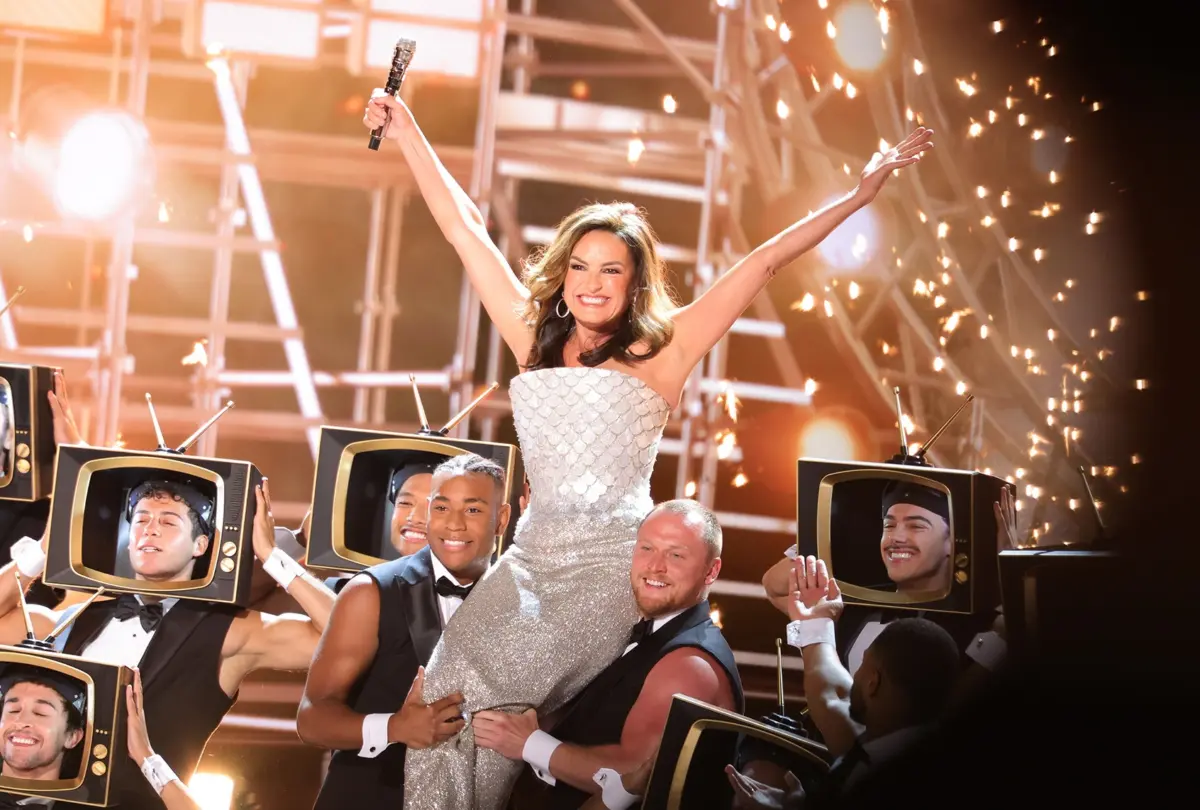
The evening began with high aspirations that quickly unraveled. Mariska Hargitay took to the stage to open the 78th Primetime Emmy Awards with an ill-advised rendition of "I Love TV Screens," a lyrical pivot of Joan Jett’s classic "I Love Rock ’N’ Roll." The performance immediately set an uneasy tone, lacking the satirical edge or comedic timing that viewers have come to expect from modern awards show monologues.
Worse still, it was not an isolated incident. Later in the broadcast, actor Andrew Rannells was roped into an equally unnecessary musical interlude, butchering Supertramp’s "Goodbye Stranger." While comedic actors possess the improvisational muscle required to salvage a teleprompter mishap—as John Mulaney later proved during a brilliant, biting rant about modern masculinity—primetime drama stalwarts often struggle to project live comedic vulnerability to an audience of millions.
Despite the tonal turbulence of the telecast’s opening acts, the competitive races delivered genuine drama and historic milestones:
- The Early Favorites Hold Strong: Entering the evening with a staggering 25 nominations, medical drama The Pitt and its anchor, Noah Wyle, easily swept their anticipated categories. Meanwhile, Jean Smart added another feather to her cap, cementing her legacy in HBO’s Hacks with her eighth career Emmy win, capping off a historic 24-nomination run for the comedy juggernaut.
- The Upset in Comedy: Hacks was eventually dethroned in the coveted Outstanding Comedy Series category by Widow’s Bay, a dark horse with 19 nominations. Widow’s Bay capitalized on its momentum with individual wins for Matthew Rhys, Stephen Root, and Kate O’Flynn.
- Matthew Rhys Makes History: Rhys achieved an unprecedented milestone by securing the Emmy for Best Actor in a Comedy Series (Widow’s Bay), adding to his previous trophy for Best Actor in a Drama Series (The Americans, 2018) and his triumph for Best Actor in a Limited Series (The Beast in Me). He stands alone as the first performer to sweep lead acting accolades across all three major television genres, as well as the first man to capture two lead acting trophies on the same evening.
- Glory for Seehorn and Gilligan: In the dramatic and limited series fields, Pluribus star Rhea Seehorn finally claimed the elusive Lead Actress statuette that had long evaded her, while series creator Vince Gilligan secured a well-earned writing victory. Tom Pelphrey (Task) and Allison Janney (The Diplomat) also added to their respective mantlepieces, while Stephen Colbert’s The Late Show signed off with a poignant farewell victory in the variety series space.
Supporting Context & Metrics: Analyzing the Telecast’s Production Economics
To understand why the Emmys continually struggle with audience retention and critical panning, one must look closely at the structural mechanics of television production and voter behavior.
[Television Academy Voting Bloc]
       │
       ▼ (Predictable Nominations)
[High Concentration of Repeat Winners]
       │
       ▼ (Stifled Dynamic Tension)
[Reliance on Host to Inject Energy]
       │
       ▼ (Casting Mismatch: Hargitay)
[Uncomfortable Musical/Sketch Padding]
       │
       ▼
[Critical Backlash & Ratings Volatility]
The Television Academy’s voting body is notoriously cyclical, frequently rewarding the same programs and performers year after year. This creates a predictable baseline that strips the evening of organic tension. Consequently, the telecast producer relies entirely on the host to manufacture momentum, pace the evening, and bridge the gaps between predictable envelope-openers.
When a host fails to establish comedic rapport, the production’s structural padding—such as forced sponsor integrations (Marriott’s heavy footprint during the telecast), excessive pre-taped sketches, and poorly conceptualized musical numbers—becomes painfully obvious. For instance, an ambitious pre-recorded SVU parody featuring pop superstar Taylor Swift and her Scottish Fold cat (named Olivia Benson) felt less like a clever crossover and more like a desperate bid for social media engagement, overshadowing the evening’s actual artistic merits.
Furthermore, the broadcast’s pacing issues manifested in strange ways: despite several long-winded segments, the show actually concluded five minutes early. This abrupt truncation was largely necessitated by Matthew McConaughey and Woody Harrelson stalling on stage to burn through a 10-minute scheduling gap, highlighting the unpredictable nature of live timing when scripts and banter fail to hit their marks.
Official Statements & Industry Reactions
Reactions from attendees, critics, and industry insiders exposed deep fissures regarding the tone of the evening. While the broadcast largely avoided overt political discourse—save for Alan Cumming using The Traitors‘ Best Reality Series acceptance speech to urge voter registration, and Sally Field railing against arts censorship during her victory for Remarkably Bright Creatures—the emotional weight of the night shifted dramatically during the in-memoriam and tribute segments.
Industry leaders praised the heartfelt recognition of Michael J. Fox, who accepted the Bob Hope Humanitarian Award, and the poignant tributes paid to departed television icons. Macaulay Culkin, Dan Levy, and Annie Murphy delivered a touching remembrance of the late Catherine O’Hara, prompting widespread emotional resonance online and offline. Similarly, Jamie Lee Curtis brought the house to tears during a tribute to legendary sitcom director James Burrows and the late Rob and Michele Reiner, reminding viewers of the profound, parasocial intimacy television fosters between audiences and performers.
Conversely, legacy tributes drew sharp criticism for execution. The 50th-anniversary celebration of Charlie’s Angels—featuring Kate Jackson, Jaclyn Smith, and Cheryl Ladd—amounted to little more than a silent wave. More glaring was the Buffy the Vampire Slayer reunion featuring David Boreanaz and Sarah Michelle Gellar. Gellar cryptically alluded to a difficult period for the cast and crew without uttering the names of recently deceased alumni Anthony Head, Nicholas Brendon, or Michelle Trachtenberg. The omission drew immediate ire from fans and cultural commentators alike, who questioned how a show with minutes to spare could bypass honoring its core ensemble by name.
Future Outlook: Does the Emmys Need a Host?
As the dust settles on the 78th Primetime Emmy Awards, industry analysts are once again reviving a perennial debate: Should the Emmys permanently abandon the concept of a host?
History shows that the format can thrive without a ringmaster. Fox successfully executed host-free ceremonies in 2003 and 2019, proving that a streamlined telecast focused entirely on rapid-fire awards presentations and acceptance speeches can keep audiences engaged without forcing actors into uncomfortable comedic routines.
Yet, the Television Academy faces a recruiting bottleneck. Polarizing stand-up comedians and a shrinking pool of late-night network television anchors have made selecting a traditional host an increasingly high-stakes gamble. Opting for Mariska Hargitay was a pivot toward safety and mainstream respectability—an attempt to find a universally adored figure who could anchor the night with grace.
The experiment demonstrated conclusively that dramatic gravitas does not translate automatically to live comedic hosting. As the Television Academy looks ahead to the 79th iteration of the awards, producers face a critical fork in the road: either return to seasoned comedic professionals who understand how to control a room, or strip the ceremony down to its bare essentials and let the historic achievements of television speak entirely for themselves. Until then, the industry is left filing away the memory of 2026 as a well-intentioned misfire best left unrepeated.