

Executive Overview
On a Tuesday evening that began with the grim routine of urban emergency reporting, the suburban Los Angeles neighborhood of Chatsworth became the epicenter of an unprecedented double tragedy. What initially registered as a severe motor vehicle collision between an SUV and a Metro bus—an accident that claimed two lives on the ground—escalated into a catastrophic aviation disaster when a news helicopter covering the scene plummeted from the sky.
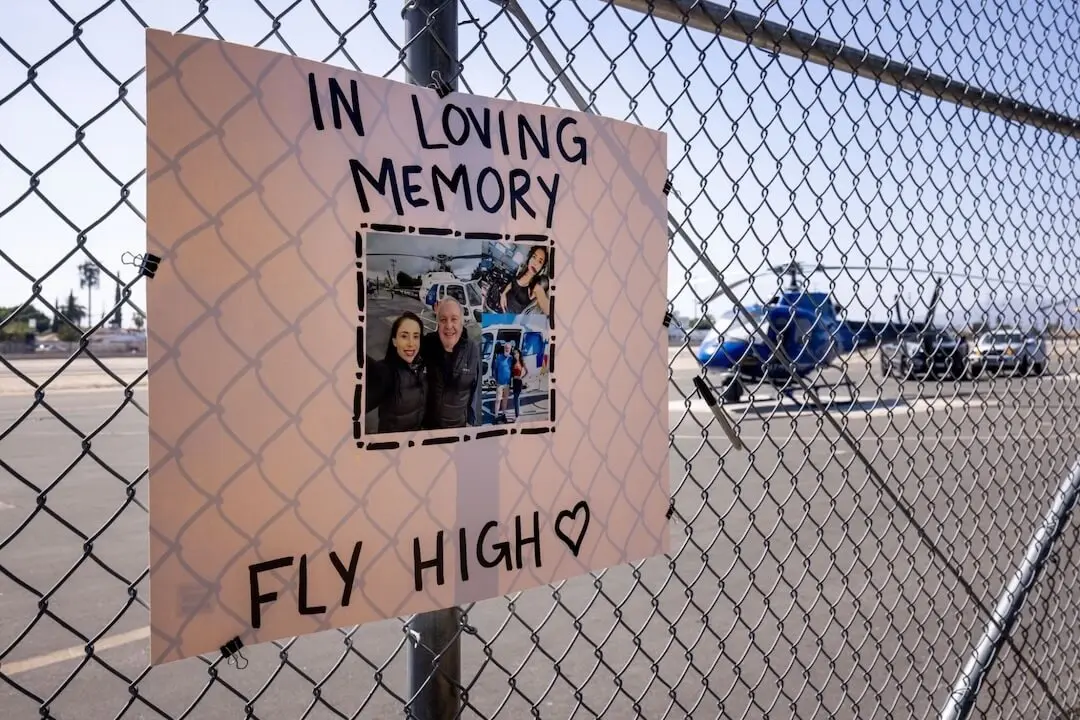
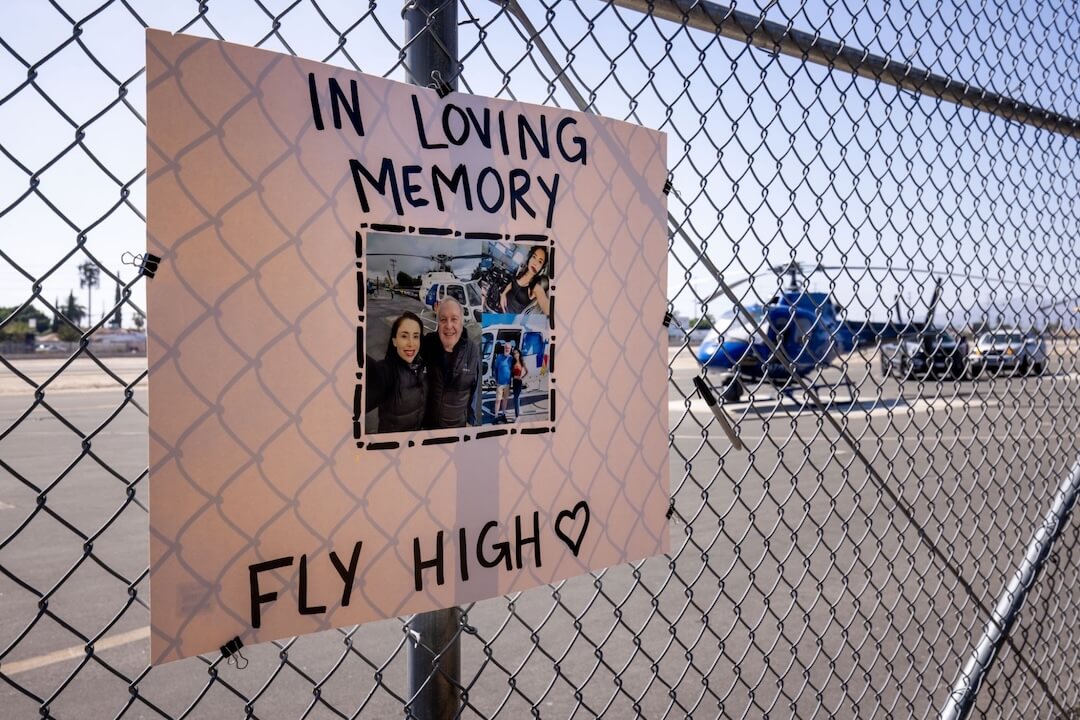
The subsequent crash and ensuing inferno claimed the lives of all three individuals aboard and involved: veteran NBC4 aerial photojournalist Eliana Moreno, experienced pilot George Marciniw, and 29-year-old Edy Gutierrez Mejia, who was struck on the ground. Operated by Angel City Air and providing vital aerial coverage for both NBC4 and Telemundo 52, the aircraft went down at approximately 7:00 p.m. Pacific time.
This devastating incident has sent shockwaves through the Southern California media landscape—a region where competitive, real-time aerial newsgathering is woven directly into the fabric of local broadcasting. As federal investigators sift through the wreckage to determine the precise mechanical or environmental failure, media executives, safety advocates, and journalists are grappling with a painful reality: the very tools used to keep the public informed carry profound, unavoidable risks. This report provides an exhaustive examination of the chronology of the crash, the profiles of those lost, the inherent hazards of metropolitan news aviation, and broader developments shaking the contemporary media industry.
Detailed Chronology: From Highway Collision to Aviation Disaster
The Initial Response
The sequence of events began late Tuesday afternoon on a busy thoroughfare in Chatsworth, a residential and commercial suburb in the northwest San Fernando Valley of Los Angeles. An SUV had collided violently with a Los Angeles County Metropolitan Transportation Authority (Metro) bus. The impact was catastrophic, instantly claiming the lives of two individuals and leaving numerous others with varying degrees of injuries. Emergency services converged rapidly on the location, transforming the intersection into a frantic scene of flashing lights, sirens, and rescue operations.
As is standard practice in the sprawling metropolis of Los Angeles—where traffic congestion frequently paralyzes ground transit—local newsrooms dispatched mobile units and aerial assets to capture the unfolding situation. The Angel City Air helicopter, contracted by NBC4 and Telemundo 52, arrived on station to provide live aerial feeds for the networks’ evening broadcasts.
The Final Moments on Live Broadcast
Tragically, the final moments of Moreno and Marciniw’s flight were captured and broadcast in real-time, unfolding before thousands of viewers and their own newsroom colleagues.
According to reports compiled by The Los Angeles Times journalists Iris Kwok, Terry Castleman, Karen Garcia, and Richard Winton, the broadcast feed showed an overhead, stable view of the bus collision while the heavy thrum of the helicopter’s engine echoed in the audio background. Without warning, the acoustic character of the flight shifted. The engine’s motor could be heard visibly and audibly winding down. The camera’s perspective tilted downward into a sharp descent, and photojournalist Eliana Moreno’s voice rang out over the intercom or open mic, asking a chilling final question:
"You can’t pull up?"
Before an answer could be registered, the feed cut to black. Moments later, a massive plume of black smoke billowed just blocks away from the original accident scene as the aircraft struck the ground and erupted into flames.
Expert Analysis of the Descent
Zoey Tur, a veteran news helicopter pilot who has operated the exact model of aircraft flown by the NBC4 crew, offered critical technical insights into the final seconds of the flight during an interview with The Times. Tur explained that these aircraft are equipped with distinct auditory warnings, including an emergency horn designed to activate during a low rotor RPM (revolutions per minute) event or a sudden loss of hydraulic pressure.
"If you listen carefully to the on-board transmission, the microphone picks up the engine shutting down," Tur detailed. "First, the engine starts winding down, which in turn reduces power to the rotor blades. Then you hear the horn warning of low rotor RPM. You can even hear the blade slap slow down."
Tur noted that the aircraft likely did not experience fuel starvation, as the violent impact resulted in an immediate post-crash fire. Investigators from the National Transportation Safety Board (NTSB) and the Federal Aviation Administration (FAA) subsequently seized the wreckage to analyze flight data recorders, maintenance logs, and wreckage patterns to establish the exact root cause of the power failure.
Supporting Context & Metrics: The Risks of Aerial Journalism
Southern California’s Unique Aviation Culture
The use of rotary-wing aircraft to cover breaking news is a nationwide practice, but nowhere is it more institutionalized, competitive, or culturally embedded than in Southern California.
As noted by CNN correspondents Karina Tsui and Andy Rose, the modern news helicopter was born in Los Angeles. In 1958, local station KTLA revolutionized broadcasting by debuting the "Telecopter," introducing viewers to the concept of aerial reporting. Decades later, in 1992, the region pioneered the live televised car chase—a format that proved so hypnotic to viewers that audiences actively jammed station phone lines to complain whenever broadcasts returned to regular programming.
By 1994, when a white Ford Bronco carrying O.J. Simpson meandered across Los Angeles freeways pursued by dozens of police cruisers, local stations possessed sophisticated, well-rehearsed aerial infrastructure. That broadcast transformed local police pursuits into a global media phenomenon.
However, this competitive edge demands compromise. To secure dramatic aerial vistas of wildfires, protests, high-speed pursuits, and major accidents, pilots must routinely navigate congested airspace, variable microclimates, power lines, and dense urban obstacles.
Industry Hazards and Safety Records
The hazards inherent in this high-stakes reporting style were starkly highlighted by The New York Times journalist Shawn Hubler, who reported that the crashed NBC4 helicopter was part of a massive fleet operated largely by private contractors. These entities supply both the hardware and the specialized personnel to local news outlets.
While these aircraft are indispensable for navigating a metropolis spanning thousands of square miles, they operate in high-risk environments. Hubler noted federal accident records and news archives reveal that since the year 2000, there have been at least eight fatal crashes involving news helicopters in the United States, resulting in 16 fatalities.
Crews across the country report that daily operations require hyper-vigilance against a growing array of modern hazards, including unauthorized commercial drones, unexpected bird strikes, mechanical anomalies, and the persistent pressure to deliver live, uninterrupted visuals under tight deadlines.
Official Statements and Tributes
Newsroom Reactions
The sudden loss hit the Southern California broadcasting community with devastating force. On NBC4, news anchor Colleen Williams visibly struggled to maintain composure as she addressed viewers shortly after the crash.
"We are going to take a couple of minutes to think about that, to process, and to regroup," Williams told viewers before cutting away.
When NBC4 resumed live programming later that evening at approximately 9:40 p.m., Williams provided a heart-wrenching account of the newsroom’s realization:
"Our helicopter team had been out covering the bus crash. We’re getting ready to go on the air with that… and we see this large plume of smoke, and realize something else has happened. Just a couple blocks away, our helicopter went down, it crashed."
In a joint statement released late Tuesday, executives for NBC4 and Telemundo 52 expressed their grief:
"We are deeply saddened to share that a helicopter providing aerial news coverage for NBC4 and Telemundo 52 was involved in a fatal accident in Los Angeles on Tuesday evening. We extend our heartfelt condolences to the families, friends and colleagues of those who lost their lives."
Honoring the Fallen
Biographical details compiled by Los Angeles Times reporters Karen Garcia, Iris Kwok, Terry Castleman, and Meg James paint a picture of two dedicated professionals at the top of their fields.
- Eliana Moreno was a proud alumna of Chapman University, where she earned a degree in broadcast journalism and political science. A seasoned professional who had been flying in news choppers since 2010, she was widely respected for her exhaustive institutional knowledge of law enforcement operations and local civic affairs. Anchor Annabelle Sedano remembered her on-air with deep emotion: "Here at NBC4, our hearts are broken… She was impressive, with a great knowledge of the inner workings of law enforcement. On the anchor desk, we knew we could ask her anything."
- George Marciniw was a Southern California native who graduated from Burbank High School in 1974. A veteran pilot with decades of stick-and-rudder experience, Marciniw deeply loved his occupation. Colleagues recalled that he frequently expressed how much he enjoyed working alongside Moreno.
- Edy Gutierrez Mejia, 29 years old, was tragically caught in the disaster on the ground, representing an innocent life lost to an unfolding emergency overhead.
David Dreier, chair of the Fallen Journalists Memorial Foundation, issued a poignant statement emphasizing the often-overlooked dangers faced by behind-the-scenes media workers:
"The tragic deaths of the KNBC reporting team of Eliana Moreno and George Marciniw in a helicopter crash yesterday is a devastating loss for local journalism in Southern California. It is a painful reminder that gathering the news can carry very real risks. Eliana and George lost their lives while doing what they had done so many times before, going toward a breaking story so that the public could be informed. The work of journalism depends not only on the reporters whose voices and bylines we know, but also on the photographers, pilots, technicians and many others who make newsgathering possible."
Future Outlook: Industry Implications and Regulatory Scrutiny
The Chatsworth tragedy is expected to trigger rigorous evaluations across multiple fronts:
- Aviation Safety Protocols: Federal investigators from the NTSB will examine Angel City Air’s maintenance records, pilot rest requirements, and the airworthiness of the specific helicopter model. The incident may prompt calls for enhanced technological redundancies, such as mandatory flight data monitoring systems or stricter guidelines for low-altitude urban hovering.
- The Economics of Contracted Aerial Services: As local television stations face severe revenue contractions and digital migration pressures, many have outsourced their aerial fleets to third-party charter companies. Industry analysts are questioning whether economic pressures inadvertently impact maintenance schedules or pilot workloads.
- The Balance Between Safety and Speed: The insatiable public appetite for real-time, high-definition visual coverage places immense pressure on news operations. As drone technology advances, newsrooms may increasingly weigh the cost-benefit analysis of deploying crewed helicopters versus unmanned aerial systems (UAS) in non-essential reconnaissance scenarios—though drones cannot yet replicate the range, payload, and endurance required for major metropolitan breaking news.
Ultimately, the lives lost in Chatsworth serve as a solemn reminder of the human cost exacted by the daily pursuit of truth and transparency. As the investigation presses forward, the journalism community is left to mourn three individuals who simply went where the story called them.