

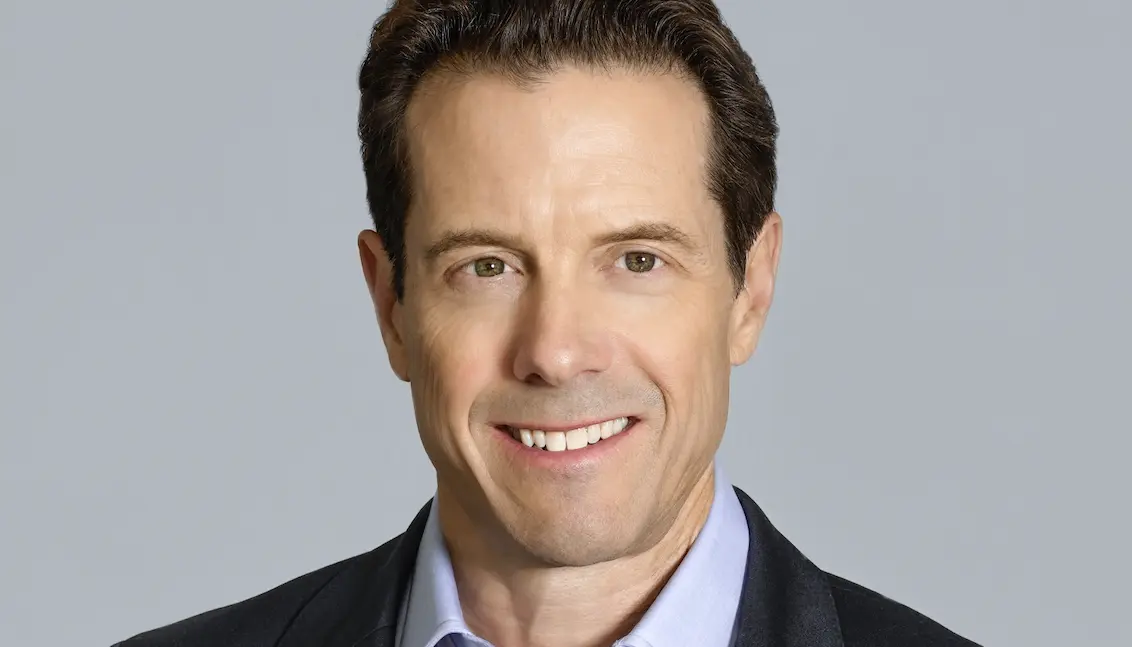
BURBANK, Calif. — In a decisive maneuver that underscores its aggressive pivot toward profitability and technological integration in the streaming sector, The Walt Disney Company has announced a high-level executive realignment. Adam Smith, a veteran technology and product architect within the media conglomerate, has been named Chairman of Direct-to-Consumer (DTC) for Disney Entertainment.
The appointment, formally announced on Thursday by Dana Walden, Co-Chairman of Disney Entertainment, arrives on the heels of sweeping marketing leadership changes across the studio. It signals an institutional doubling-down on the operational mechanics that govern Disney+, Hulu, and the company’s broader subscription video-on-demand (SVOD) ecosystem.
For industry watchers, the elevation of Smith is more than a routine corporate shuffle; it is a clear indicator that Disney’s next evolution in entertainment will be defined less by raw subscriber acquisition at all costs and far more by sophisticated engineering, advanced ad-tech monetization, and deeply personalized user experiences on a global scale.
Executive Overview: A Calculated Bet on Engineering and Product Mastery
The appointment of Adam Smith to the newly minted role of Chairman of Direct-to-Consumer for Disney Entertainment places a technologist at the helm of the company’s most vital revenue-generating engine. Historically, the streaming revolution was driven by content creators and traditional Hollywood executives who treated digital distribution as a digital-age extension of the traditional television window. However, as the streaming market has matured—transitioning from a land-grab phase to a hyper-competitive battleground defined by churn reduction, average revenue per user (ARPU), and ad-supported tiers—the requisite skillset for leadership has fundamentally shifted.
In his new capacity, Smith will assume command of Disney’s global entertainment SVOD business. His remit spans the orchestration of overarching strategy, continuous product development, and technological innovation across Disney’s flagship streaming platforms. Crucially, Smith will maintain direct oversight of the product, engineering, and ad-technology operations for both Disney+ and Hulu.
This consolidation of product and technology under a single, seasoned operational leader reflects Disney’s recognition that the future of streaming belongs to platforms that can seamlessly blend premium intellectual property with frictionless user interfaces, robust recommendation algorithms, and dynamic advertising capabilities. By elevating Smith, Disney is signaling to Wall Street and Silicon Valley alike that the technological architecture of its streaming apps is just as important as the Hollywood blockbusters streamed through them.
Detailed Chronology: The Anatomy of Disney’s Leadership Restructuring
To understand the strategic gravity of Adam Smith’s promotion, one must examine the rapid, deliberate sequence of organizational transformations that The Walt Disney Company has undergone over the past twenty-four months under CEO Bob Iger and his executive leadership team.
The Post-Pandemic Realignment
When Bob Iger returned to lead Disney in late 2022, the company was grappling with the staggering financial realities of scaling its streaming services. The early strategy of aggressive, unfettered spending on content had created massive subscriber volumes for Disney+, but it had also yielded billions in operating losses. Iger immediately instituted a structural reorganization designed to restore creative accountability and operational efficiency. This resulted in the creation of three core business segments: Disney Entertainment (led by Dana Walden and Alan Bergman), ESPN, and Disney Parks, Experiences and Products.
Within Disney Entertainment, the direct-to-consumer apparatus required a delicate balance between creative vision and technical execution. While Dana Walden and Alan Bergman oversaw what content was produced and how it was marketed, the underlying delivery mechanisms—apps, streaming servers, recommendation engines, and billing systems—operated as distinct technical entities.
Smith’s Ascendance Through the Ranks
Adam Smith’s rise within Disney is a study in internal corporate mobility driven by measurable technical success. Over the past two years, Smith has spearheaded the reinvention of Disney+’s technological infrastructure. Tasked with building and mentoring a world-class team of product and technology leaders, Smith was the chief architect behind several critical global updates to the Disney+ user experience.
During his tenure leading product and technology prior to this promotion, Smith oversaw:
- The Disney+ and Hulu App Integration: The rollout of the "bundle" experience, which integrated Hulu content catalogs directly into the Disney+ application for domestic subscribers, creating a unified domestic super-app.
- Algorithmic Enhancement: Upgrades to the platform’s recommendation engines, driving higher engagement and longer session times across international territories.
- Infrastructure Stabilization: Scaling the platform to handle massive concurrent streams for high-profile live events, sports integrations, and major theatrical premieres without service degradation.
The Immediate Catalyst: Marketing and DTC Synergy
Smith’s appointment does not occur in a vacuum. It follows closely behind major marketing leadership changes within Disney Entertainment, where the company has sought to bridge the gap between audience acquisition campaigns and retention-focused product design. By pairing modernized marketing leadership with Smith’s deep command of ad-tech and product engineering, Disney has effectively closed the loop between how a consumer is introduced to a Disney product and how they experience, consume, and are monetized within that product.
Supporting Context & Metrics: The Modern Streaming Economics Landscape
To fully contextualize Smith’s new role, one must analyze the macroeconomic and operational pressures currently reshaping the global streaming industry. The era of cheap capital and unmitigated subscriber growth has officially ended. Today, streaming divisions must stand on their own financial feet, contributing positively to corporate operating income.
The Shift to Profitability and ARPU Optimization
Disney’s streaming business, which encompasses Disney+, Hulu, and ESPN+, achieved profitability ahead of the company’s initial projections, marking a major milestone in its turnaround strategy. However, maintaining and expanding those margins requires advanced technological execution—precisely the domain in which Smith excels.
| Metric Focus | Legacy Streaming Strategy | Modern Disney DTC Strategy (Under Smith) |
|---|---|---|
| Primary Goal | Raw Subscriber Growth (Volume) | Retention, Engagement, and ARPU (Value) |
| Monetization | Pure Subscription (Ad-Free Focus) | Hybrid Model (Robust Ad-Supported Tiers) |
| Technology | White-label Solutions / Basic Apps | Proprietary, Scalable Engineering & Ad-Tech |
| User Experience | Fragmented App Ecosystems | Integrated Super-Apps (Disney+/Hulu) |
The Ad-Tech Imperative
One of the most critical components of Smith’s expanded portfolio is ad-tech. As consumers increasingly migrate toward lower-priced, ad-supported subscription tiers—a trend accelerated by consumer fatigue over rising subscription costs—the ability to deliver targeted, dynamic advertising without interrupting the user experience has become a primary driver of profitability.
Disney has invested heavily in proprietary advertising technologies that allow brands to target audiences with unprecedented precision across its streaming ecosystem. Under Smith’s guidance, the engineering teams will be tasked with optimizing ad-load frequencies, minimizing latency, enhancing programmatic buying capabilities, and creating interactive ad formats that maximize yield for advertisers while preserving user satisfaction.
Global Scale and Localization
Operating a global SVOD service requires navigating fragmented regulatory environments, varying bandwidth infrastructures, and diverse cultural content preferences across more than 150 markets. Smith’s oversight of global strategy includes ensuring that the technological backbone of Disney+ can deliver high-definition and 4K streaming reliably in regions ranging from high-bandwidth urban centers to developing markets reliant on mobile-first consumption.
Official Statements and Industry Reception
The corporate announcement was met with warm, forward-looking endorsements from Disney’s highest-ranking executives, highlighting Smith’s reputation as an indispensable operational leader.
In her official statement released on Thursday, Dana Walden, President and Chief Creative Officer of The Walt Disney Company, emphasized Smith’s proven track record:
"Over the past two years, Adam has done an exceptional job building a world-class team of product and technology leaders and has significantly enhanced the Disney+ user experience globally. As we look to the future of our direct-to-consumer business, Adam’s strategic vision, deep technical expertise, and commitment to innovation make him the ideal leader to drive the next phase of growth for our streaming platforms."
Industry analysts and Wall Street observers have similarly reacted with cautious optimism. For years, critics argued that traditional entertainment conglomerates struggled to compete with Silicon Valley tech giants (such as Netflix, Apple, and Amazon) because traditional studios lacked deep, native technological DNA. By placing a seasoned product and engineering leader at the absolute apex of its direct-to-consumer division, Disney is explicitly dismantling that critique.
Media technology analysts note that Smith’s background bridges the traditional chasm between Hollywood storytelling and engineering-driven product management. In an environment where user interface design, personalized content rails, and seamless cross-platform transitions dictate whether a subscriber remains loyal or cancels their service, having an engineer chairing the DTC division provides Disney with a distinct competitive advantage.
Future Outlook: What Smith’s Leadership Means for the Future of Disney Entertainment
As Adam Smith steps into his role as Chairman of Direct-to-Consumer for Disney Entertainment, the roadmap ahead is both challenging and full of transformative potential. Several key strategic initiatives will define his tenure and dictate the trajectory of Disney’s digital future.
1. The Full Realization of the Disney Streaming Ecosystem
While the domestic integration of Disney+ and Hulu has made significant strides, the global implementation of unified app experiences, localized content bundles, and streamlined consumer touchpoints remains an ongoing initiative. Smith will be tasked with standardizing this technological framework across international markets, ensuring that users worldwide experience a cohesive, high-performance interface regardless of device or geography.
2. Next-Generation Ad-Tech and Personalization
With the advertising tier serving as the primary growth engine for new subscriber acquisition, Smith’s engineering teams will spearhead the integration of advanced machine learning models to refine ad-targeting. Expect to see innovations in contextual advertising, shoppable video formats, and automated programmatic ad insertion designed to maximize advertiser ROI while reducing ad fatigue among viewers.
3. Deepening Engagement Through Interactive and Immersive Features
As streaming matures into an interactive medium, the expectations of younger demographics are evolving. Beyond passive video consumption, Smith’s product teams will explore how features like synchronized group-watching, real-time data overlays (particularly for sports and live entertainment integrations), and personalized recommendation feeds can be woven into the core Disney+ and Hulu applications.
4. Fortifying Against Churn in a Hyper-Competitive Market
With consumer choices proliferating and household budgets tightening, combating churn is the holy grail of the modern streaming economy. Smith’s mandate is clear: utilize product innovation, predictive analytics, and frictionless user experiences to make Disney+ and Hulu indispensable fixtures of the modern digital household.
Conclusion
Adam Smith’s promotion to Chairman of Direct-to-Consumer is much more than a routine executive shuffle within the corridors of Burbank. It represents a watershed moment for The Walt Disney Company—a definitive acknowledgment that the future of the world’s most iconic entertainment enterprise will be forged at the intersection of timeless storytelling and world-class engineering. As Smith takes the reins of Disney’s global streaming architecture, the industry will be watching closely to see how this marriage of Hollywood magic and Silicon Valley product mastery reshapes the future of home entertainment.