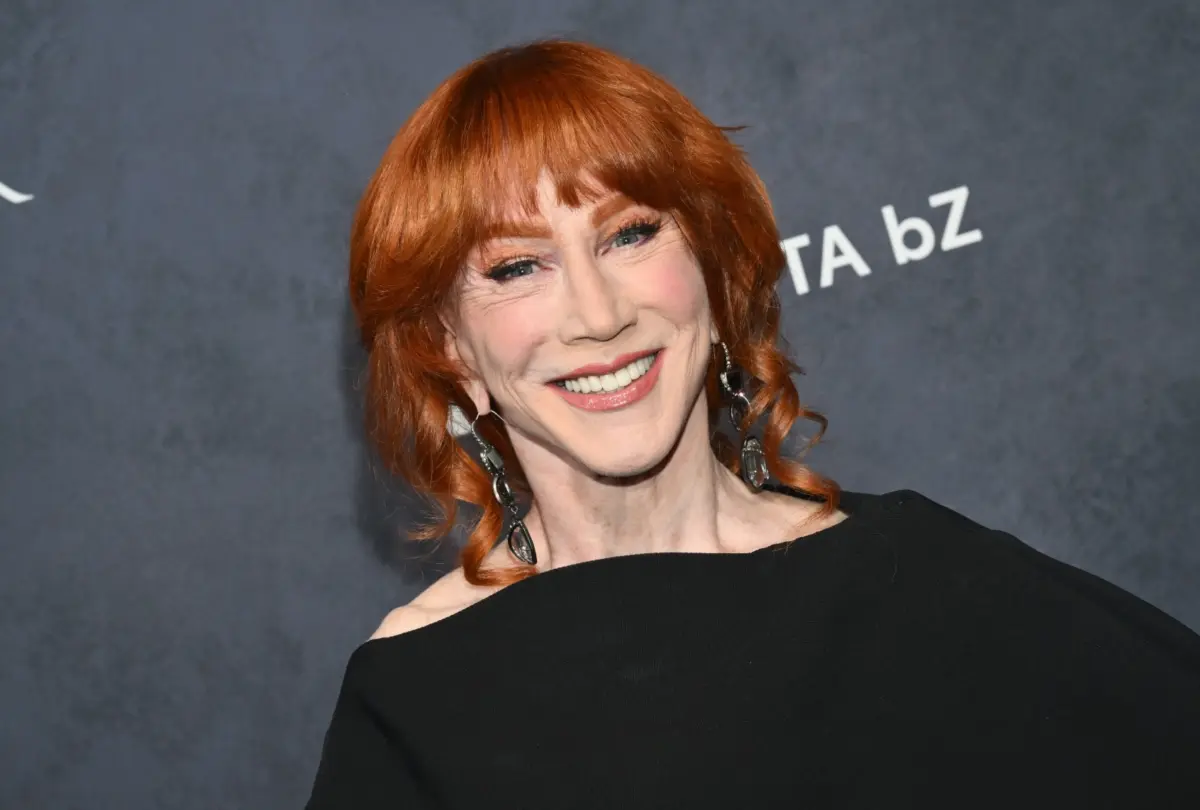
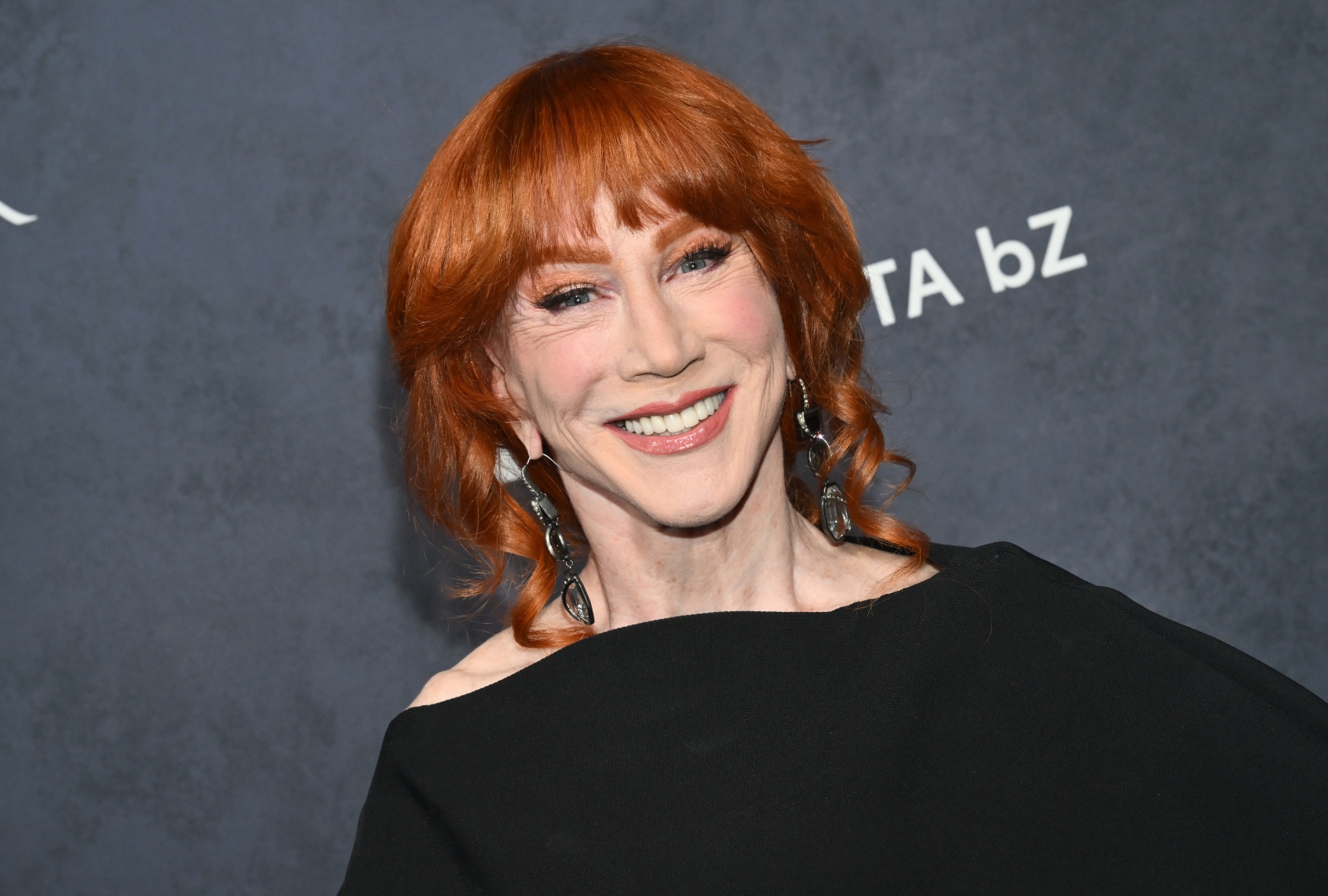
Nearly a decade after a single controversial image nearly obliterated her career, comedian Kathy Griffin occupies a singular space in American pop culture. Long before the modern lexicon of "cancel culture" became a ubiquitous talking point for late-night monologues and self-absorbed Netflix specials, Griffin lived through its most destructive, state-sponsored extreme. In 2017, she found herself blacklisted, investigated by the federal government, and publicly castigated across the political spectrum after posing with a mask stylized to resemble the bloodied head of then-President Donald Trump.
Today, Griffin is mounting an assertive, multifaceted comeback. From her unvarnished, living-room-set YouTube talk series, Talk Your Head Off with Kathy Griffin, to her expansive 50-city "New Face, New Tour" and a forthcoming Palm Springs residency, the two-time Emmy winner is refusing to fade into obscurity.
In a wide-ranging interview, Griffin reflects on the severe toll of her years-long exile, critiques the toothless complaints of contemporary "canceled" stand-up bros, and challenges today’s biggest entertainment stars to find their backbone—specifically pointing to recent controversies surrounding artists like Ed Sheeran and Macklemore. As comedy grapples with a polarized political landscape, shifting cultural sensitivities, and the dominance of hyper-masculine podcast bro-culture, Griffin remains an unapologetic outlier: a battle-tested survivor who knows firsthand what it means when "the cheese stands alone."
Detailed Chronology: From the D-List to Federal Investigation and Beyond
To understand Kathy Griffin’s current worldview, one must revisit the seismic events of May 2017. For decades, Griffin built a reputation as a relentless, unfiltered Hollywood insider. Through her Bravo reality hit My Life on the D-List and her sharp-tongued tenure on E!’s Fashion Police, she carved out a niche as the queen of self-deprecating, pop-culture-obsessed satire.
However, her career trajectory shattered overnight following a photo shoot with artist Tyler Shields. The image—depicting Griffin holding up the likeness of a bloodied, decapitated Donald Trump—ignited immediate, furious global backlash.
The consequences were swift and catastrophic:
The Immediate Fallout: CNN promptly fired Griffin from her lucrative, multi-year gig co-hosting their annual New Year’s Eve broadcast alongside Anderson Cooper. Venues across the country canceled her scheduled stand-up dates within hours.
The Federal Crucible: The backlash quickly escalated beyond public relations into the machinery of the state. Griffin was subjected to a formal two-month federal investigation by the Secret Service, the Department of Justice, and the U.S. Attorney’s Office.
The Financial and Professional Blackout: For nearly eight years, Griffin faced an unyielding industry blacklist. Despite headlining Carnegie Hall five times previously, she was rendered entirely unbookable in mainstream venues, leading to an extended period without income and a harrowing descent into severe trauma—a period she laid bare in her 2024 comeback special, My Life on the PTSD List, which documented her subsequent suicide attempt and road to recovery.
Rather than remaining permanently sidelined, Griffin utilized the arduous rebuilding process to forge a political and personal phoenix narrative. Her current 50-city tour and upcoming 2027 Palm Springs residency demonstrate that while the industry tried to erase her, her core audience—and her appetite for provocation—remained intact.
Supporting Context & Metrics: Redefining "Cancel Culture" in Modern Comedy
Griffin’s unique status gives her a perspective shared by virtually no other contemporary entertainer. While modern comedians frequently complain on stage about the perils of accountability and the fictional constraints of "cancel culture," Griffin points out the stark contrast between being mildly criticized on social media and experiencing a genuine career annihilation.
"What I’m saying is, do not whine to Kathy Griffin about cancel culture," notes the cultural reality of her ordeal. "She’s lived through it, not the version stand-up bros claim to have suffered during their latest Netflix specials."
This dynamic was sharply highlighted during recent industry events, such as the controversy involving pop superstar Ed Sheeran and rapper Macklemore. Reports surfaced that billionaire stadium owner Robert Kraft pressured Sheeran to remove Macklemore from his tour lineup after the rapper performed his pro-Palestinian protest anthem, Hind’s Hall, punctuated by a definitive "Free Palestine" declaration.
Griffin, drawing a direct line from her own persecution to Sheeran’s alleged capitulation, did not hold back:
"I am just a D-lister . . . but I have been under more pressure than Ed Sheeran. I know what it’s like to be pressured by authorities to change something you’re doing in your art or what you do for a living. If I can stand up to the president of the United States and the Department of Justice and the Attorney General of the United States, the U.S. Attorney’s Office, and the Secret Service, and say ‘No, I’m doing what I want,’ then so can everyone else."
Griffin argues that today’s megastars suffer from a profound lack of courage. "It’s time that all public people with a platform grow some balls, because I had to in 2017," she asserts. "And let me tell you, the cheese stood alone."
Official Statements and Industry Perspectives: Navigating the Bro-Comedy Era
Griffin’s transition into topical, conversational digital media via Talk Your Head Off with Kathy Griffin has re-energized her creative output. Shot entirely in her Malibu living room amid a rotating pack of rescue dogs and domestic commotion, the self-produced YouTube series relies on authenticity rather than high-gloss Hollywood studio backing.
"The only way I know that is it doesn’t get like a gazillion views, but I’m in the Daily Mail and Page Six pretty much every two weeks," Griffin quips. "It’s funny, they finally figured out that if they want to get me in trouble and keep bringing me up about how, you know, anti-Trump I am… all they have to do is watch the half-hour YouTube show, and they can get all the sound bites."
Yet, as Griffin tackles sociopolitical topics head-on, she observes a stark double standard in how male comedians navigate political discourse without facing professional ruin. She points to figures like Dave Chappelle, whose anti-trans commentary in specials like The Closer sparked widespread cultural debate and emboldened political actors to pursue restrictive legislation against the transgender community. While Griffin admits Chappelle’s situation is complicated—noting that she considers him a friend despite disagreeing with his messaging—she highlights the disparity in consequences: "He got like ‘fake canceled,’ but he didn’t get Kathy Griffin-ed, which is the ultimate."
Furthermore, Griffin takes direct aim at the hyper-masculine, podcast-driven "Joe Rogan-type bros" dominating the modern comedy landscape, accusing them of actively resisting cultural progress:
"Comedy is a fluid art, and I really believe strongly you have to change along with it; you’ve got to go with it. And in my case, I try to drive it in my little storytelling way… I don’t tell hacky one-liners that their buddies wrote for them backstage. I write all my own material. It all comes out of my life. I tell stories that are all true."
Griffin dismisses contemporary male comics who whine about restrictive language as exhibiting "childlike behavior," contrasting their calculated shock-value tactics with her own commitment to lived-experience storytelling.
Future Outlook: The Happy Warrior of Malibu
Today, Kathy Griffin’s professional outlook is defined by resilience, autonomy, and a refusal to self-censor. Even as residual hostility from her 2017 controversy occasionally manifests as small pockets of roadside protesters outside her tour venues—often featuring bizarrely customized vehicles plastered with Rambo-esque imagery of Donald Trump—Griffin views them less as threats and more as fodder for her social media feeds.
"They’re so pitiful because they’re usually just, like, 20 people," she laughs, "and they’ve detailed their car where there’s a picture of Trump, but he looks like Rambo. They’ve painted it on their actual vehicle. I mean, they’re always fun to film, so please watch my socials."
As she balances her burgeoning digital talk show, extensive national touring schedules, and forthcoming residencies, Griffin embodies the evolution of a cultural figure who hit rock bottom and engineered her own architectural rebuild. Armed with unyielding honesty and an irrepressible sense of humor, she serves as both a cautionary tale of political overreach and a living blueprint for surviving public execution in the digital age.
Kathy Griffin’s comeback special, "My Life on the PTSD List," is currently available to stream on YouTube.