

Executive Overview
In the architecture of modern governance and authoritarian systems, one of the most enduring and effective instruments is the systematic dissolution of accountability. By manipulating language, statecraft, and public narratives, political and military leaders frequently manage to frame systemic harms, protracted conflicts, and human suffering not as the consequences of deliberate decisions, but as inevitable natural phenomena or personal failures.
This mechanism of narrative deflection—often studied by cultural anthropologists and political scientists—is vividly illustrated by recent events surrounding the aircraft carrier USS Abraham Lincoln. Following an arduous, extended deployment amidst an undeclared conflict with Iran, the vessel’s return to port brought to light acute crew fatigue, deteriorating mental health conditions, and mounting anxiety among military families. Yet, rather than addressing the structural policy decisions that prolonged the mission, political leadership dismissed these concerns, arguing that the deployment "was not nearly long enough."
This dynamic of evasion is not confined to the military. Across various sectors of federal policy, from immigration enforcement to foreign interventions, a prevailing rhetorical strategy consistently transforms structural coercion into voluntary choice. By examining the linguistic patterns of the second Trump administration, the lived experiences of service members’ families, and historical precedents of institutional doublespeak, this report investigates how power talks its way out of responsibility—and why reclaiming the full historical record remains essential to democratic accountability.
Detailed Chronology: The Extended Odyssey of the USS Abraham Lincoln
The recent controversy surrounding the USS Abraham Lincoln underscores the growing disconnect between military command decisions and the human cost borne by service members and their families.
- Late 2025 to Early 2026: The USS Abraham Lincoln carrier strike group is dispatched to the Middle East amid escalating tensions and an undeclared, congressionally unapproved conflict involving Iran. Throughout the deployment, surrounding destroyers are forced to intercept multiple ballistic missile and drone attacks directed at the carrier.
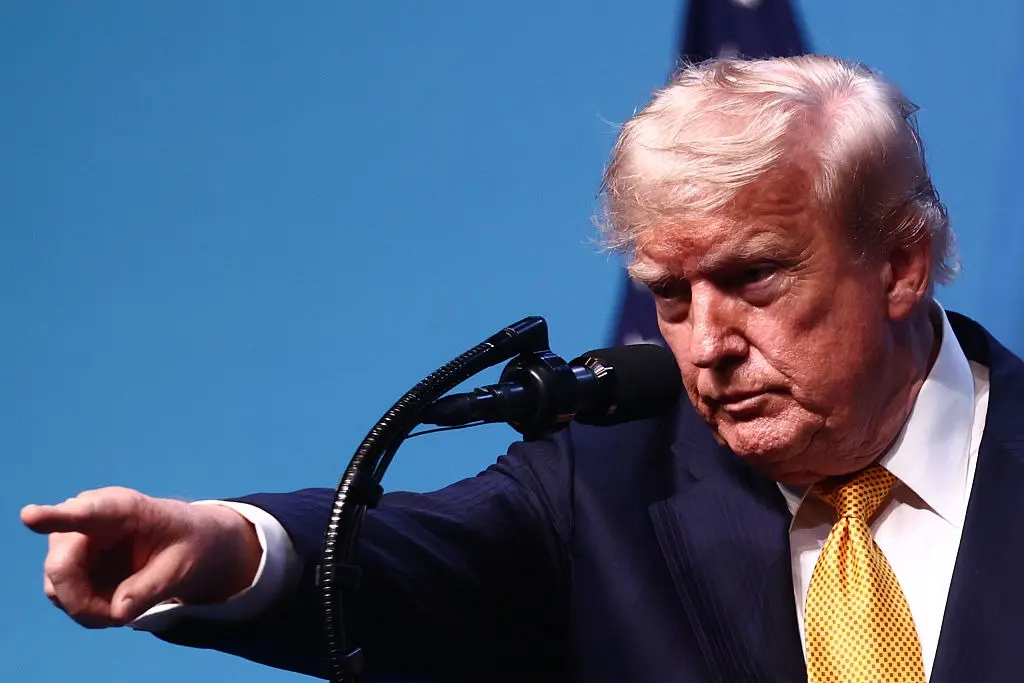
- July 2026: Public scrutiny intensifies regarding the mental health and well-being of the crew. During a press conference at the NATO Summit in Ankara, Turkey, President Donald Trump dismisses concerns raised by military families about deteriorating conditions aboard the vessel, declaring instead that the deployment "was not nearly long enough." Around the same time, military families and advocates begin speaking out against the unprecedented length of the mission, which far exceeds standard naval deployment schedules.
- August 2026: Individual acts of protest and desperation emerge from families attempting to advocate for their loved ones. Jefferson Kelley, an Ohio father, publicly petitions his senator and proposes a "parent swap," offering to trade places with his 20-year-old son, Jackson Kelley, a sailor serving aboard the Lincoln. His open appeals draw national media attention and highlight the anxieties facing military households.
- Early September 2026: After more than nine months at sea—surpassing the typical six-to-nine-month window for naval deployments during peacetime—the USS Abraham Lincoln finally docks in Thailand for a scheduled port stop before returning home. Independent reports and sailor accounts corroborate severe operational stress, crew fatigue, and harsh living conditions during the prolonged mission. Despite mounting eyewitness testimony, the administration declines to retract its initial assessment of the deployment’s duration.
Supporting Context & Metrics: Deconstructing Institutional Doublespeak
To understand how political and military institutions evade responsibility, one must examine the broader patterns of language that mask institutional failure. Cultural anthropologists who have studied authoritarian systems note striking parallels between historical regimes—such as Joseph Stalin’s Soviet Union—and contemporary rhetorical strategies in democratic societies. In both contexts, human missteps and systemic crises are systematically reframed as impersonal accidents or individual shortcomings.
The Mechanics of "Voluntary" Choice in Immigration
A parallel dynamic of narrative deflection is visible in domestic policy, particularly concerning immigration enforcement. The Department of Homeland Security (DHS) and Customs and Border Protection (CBP) have heavily promoted a "self-deportation" initiative, offering undocumented residents a financial incentive to leave the country voluntarily. Official agency messaging frames this program as a "fast, free, and easy process" and the "best New Year’s resolution that an illegal alien can accomplish."
However, empirical investigations paint a starkly different picture of systemic coercion:
- Detention Realities: Investigations by independent human rights organizations and journalistic outlets reveal that more than 70% of "voluntary departure" orders issued by immigration judges stem from individuals who are already held within the U.S. immigration detention system.
- Conditions of Confinement: Detainees in these facilities frequently face severe inadequacies in food, water, medical care, and sanitary infrastructure. Numerous federal reports and human rights documentation highlight systemic abuses and rising mortality rates within ICE facilities over the preceding eighteen months.
- The Illusion of Agency: Under conditions marked by systemic deprivation, psychological distress, and physical danger, presenting departure as a "free choice" relies on the same linguistic sleight-of-hand that frames protracted, high-risk military deployments as mere occupational hazards.
The Military Culture of "Embracing the Suck"
Within the armed forces, institutional culture often reinforces the narrative that service members bear sole responsibility for enduring systemic neglect. The informal institutional ethos of "embracing the suck"—originally intended to foster resilience—frequently functions to normalize preventable hardships, inadequate resourcing, and overstretched deployment schedules.
Military families report that official channels and spouse group literature consistently emphasize external threats while ignoring homemade vulnerabilities, such as the psychological toll of prolonged separations and the systemic strain placed on an overextended military apparatus. When family members attempt to voice concerns, they often encounter institutional resistance or social pressure from veterans and commentators who argue that troops "knew what they signed up for," thereby absolving leadership of strategic and operational accountability.
Official Statements and Institutional Positions
The divergence between official rhetoric and the lived realities of those affected highlights a persistent reluctance among leaders to acknowledge accountability for systemic policy outcomes.
- The Executive Branch: President Donald Trump and administration officials have maintained that prolonged naval deployments are a necessary component of national defense in regions facing active hostility. Regarding the Lincoln deployment, administration officials emphasized the defensive successes of the strike group in intercepting hostile missiles and drones, while downplaying or dismissing crew fatigue and mental health strains as standard operational challenges.
- Military Leadership: Navy commanders have historically navigated a delicate balance between maintaining operational readiness and addressing crew morale. While operational directives prioritize mission execution and force protection, public commentary from military leadership frequently adheres to established messaging frameworks that frame stress as an unavoidable byproduct of global power projection.
- Military Families and Advocates: Critics of current deployment policies, including participating family members like Jefferson Kelley, argue that official narratives deliberately obscure the foundational policy choices driving endless engagements. Kelley’s public statements challenge the sanitization of war, questioning why the United States continues to sustain unapproved, protracted military commitments without clear strategic objectives or adequate safeguards for personnel.
Future Outlook: Restoring Accountability Through the Historical Record
The saga of the USS Abraham Lincoln and the broader systemic trends in immigration and military administration point to a central challenge for modern governance: the pervasive use of language to sanitize suffering and erase institutional culpability. When complex webs of political decisions are reframed as natural disasters, inevitable conflicts, or voluntary personal choices, the mechanisms of democratic oversight are severely weakened.
Addressing this deficit requires moving beyond superficial accountability measures. Journalists, historians, and civil society actors carry the responsibility of constructing the "longer story"—documenting not only the immediate tactical events, but the upstream policy choices, structural neglect, and human consequences that follow.
As eyewitness accounts from sailors, detained immigrants, and affected families continue to enter the public record, they serve as a vital counterweight to institutional doublespeak. Only by confronting these uncomfortable truths—and refusing to accept sanitized narratives of inevitable suffering—can democratic systems begin to hold power genuinely responsible for the human costs of its decisions.