

Executive Overview
In the intricate and often volatile ecosystem of the American presidency, no position holds more institutional gravity than that of the White House Chief of Staff. Acting as the ultimate gatekeeper, manager of the West Wing bureaucracy, and final arbiter of executive information, the chief of staff has historically functioned as an essential check on executive excess. From James Baker under Ronald Reagan to Leon Panetta under Bill Clinton, the gold standard of the office has always required a combination of operational mastery and the courage to deliver unvarnished, sometimes brutal truths to the commander-in-chief.
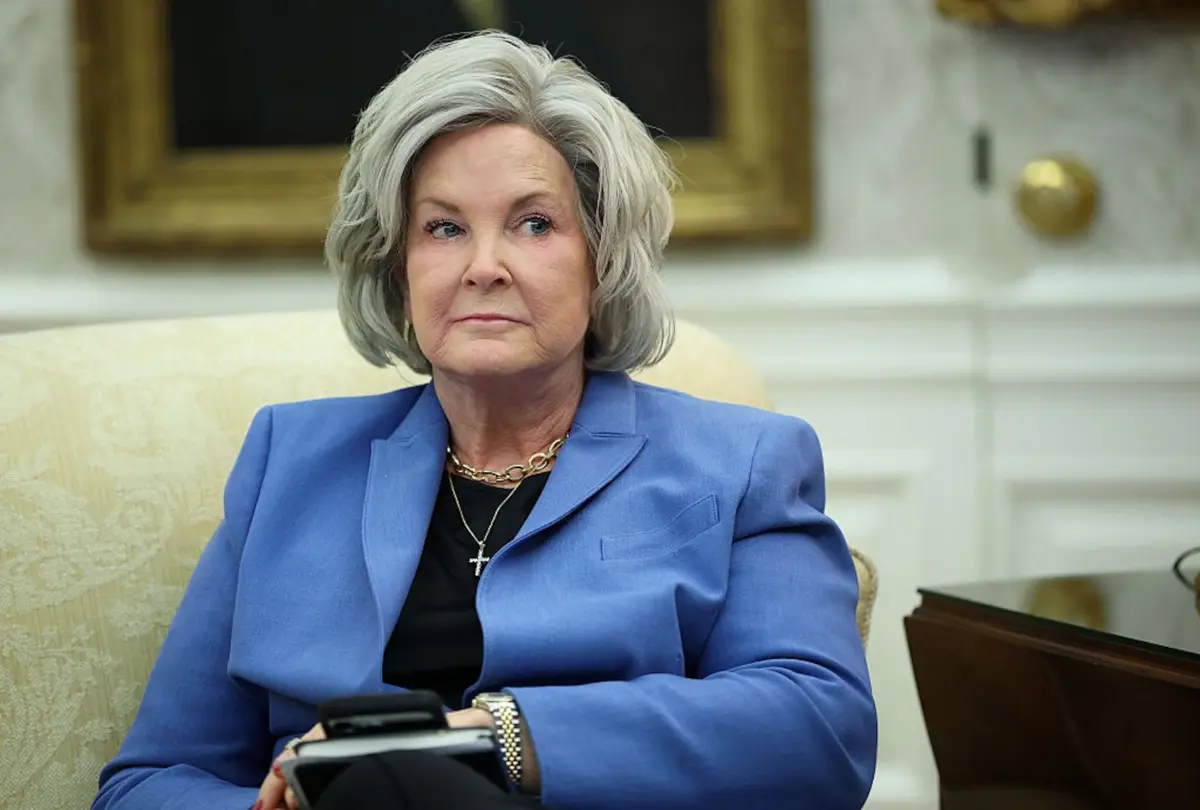
However, the architecture of executive power has shifted dramatically during the presidencies of Donald Trump. Following a chaotic first term defined by high-profile leaks, internal civil wars, and a revolving door of exasperated chiefs—ranging from Reince Priebus to retired Gen. John Kelly and the infamous Mark Meadows—Trump’s second administration has transitioned into a tightly orchestrated operation. At the helm of this reformed apparatus is Susie Wiles, the first female chief of staff in U.S. history and the co-architect of Trump’s successful 2024 campaign alongside Chris LaCivita.
While Wiles has successfully eliminated the chaotic leaks and operational friction that plagued Trump’s initial years in office, an examination of her tenure reveals a startling reality: she has achieved this discipline not by checking the president’s worst impulses, but by abandoning the traditional oversight duties of the job altogether. Rather than serving as a critical barrier against unconstitutional or erratic decisions, Wiles has willingly embraced the role of a passive "facilitator." By her own admission, she avoids difficult, consequential confrontations with the president, leaving Trump unchecked as he reshapes the federal government, alienates allies, and pursues controversial personal vendettas. In essence, Wiles has traded institutional guardrails for administrative compliance, proving to be little different from her disgraced predecessors.
Detailed Chronology: From Campaign Discipline to West Wing Acquiescence
To understand Susie Wiles’s current posture in the West Wing, one must trace the evolutionary arc of Donald Trump’s administrative staffing, which has long been characterized by a volatile dynamic between establishment oversight and populist loyalty.
The First-Term Chaos and the Fall of the Gatekeepers
During Trump’s first term (2017–2021), the White House was notorious for its structural instability and internal turf wars.
- July 2017: Republican party operative Reince Priebus lasted just six months as chief of staff, proving entirely unequipped to manage an executive who thrived on internal chaos and disregard for bureaucratic norms.
- July 2017 – December 2018: Retired Four-Star General John Kelly stepped in with a mandate to whip the West Wing into shape. Kelly attempted to impose military-style discipline, but ultimately found himself neutralized by competing power centers, most notably family members Jared Kushner and Ivanka Trump ("Javanka"), who wielded unmitigated, unaccountable influence.
- March 2020 – January 2021: Mark Meadows assumed the role, a tenure that historian and The Gatekeepers author Chris Whipple would later categorize as historically catastrophic. Meadows is most infamously remembered for sitting passively on a couch scrolling through his phone while violent insurrectionists stormed the U.S. Capitol on January 6, 2021, offering the defense that the president simply "wanted to be alone."
The "Wilderness Years" and the Rise of Wiles
Following the 2020 election defeat, Trump’s inner circle spent four years meticulously planning a strategy for absolute executive control—a blueprint heavily influenced by organizations driving projects like Project 2025. When Trump mounted his victorious 2024 campaign against Vice President Kamala Harris, Susie Wiles and Chris LaCivita engineered a remarkably disciplined, professionalized operation.
Following the election, Wiles was the logical choice to transition into the West Wing as chief of staff. According to veteran journalists Maggie Haberman and Jonathan Swan (authors of Regime Change), Wiles successfully engineered an administration free of the debilitating leaks of the first term. However, this discipline was achieved through a foundational compromise: rather than attempting to manage or alter Trump’s erratic instincts, Wiles discovered that the key to managing him was to not manage him at all.
The Vanity Fair Revelations and the "Facilitator" Doctrine
In a series of candid interviews with author Chris Whipple, published in a major Vanity Fair feature, Wiles offered unprecedented transparency regarding her philosophy in the West Wing. She made no secret of her disdain for ideological firebrands within the administration, characterizing Vice President JD Vance as an opportunist and a "conspiracy theorist," and labeling Russell Vought—Director of the Office of Management and Budget and a chief architect of Project 2025—as a "right-wing absolute zealot."
Yet, the most consequential revelation was Wiles’s confession regarding her own job description. Rejecting the notion that she acts as a substantive check or enabler, Wiles asserted that she views her position purely as that of a "facilitator." She admitted that she does not experience "seminal moments where you have to go in and tell the president what he wants to do is unconstitutional or will cost lives." Difficult conversations, by her own account, are reserved exclusively for "little things."
Supporting Context & Metrics: Historical Rankings of Chiefs of Staff
The office of the White House Chief of Staff has evolved significantly since its formal establishment in 1946 under President Harry S. Truman. Political scientists and presidential historians typically evaluate chiefs of staff across four distinct operational dimensions:
- Information Flow Management: Controlling who and what reaches the Resolute Desk without isolating the president from vital intelligence.
- Crisis Response & Bureaucratic Mediation: Resolving inter-agency turf wars and dampening administrative friction before policies are enacted.
- Political Strategy & Legislative Execution: Acting as an effective liaison to Congress, cabinet departments, and political stakeholders.
- Institutional Independence: Possessing the moral and political capital to tell the president "no" when policies cross legal, constitutional, or ethical boundaries.
Historical Benchmarks
| Chief of Staff | President | Era | Assessment / Historical Standing |
|---|---|---|---|
| James Baker | Ronald Reagan | 1981–1985 | Widely considered the "gold standard" of chiefs of staff; masterfully managed legislative strategy and information flow. |
| Leon Panetta | Bill Clinton | 1994–1997 | Brought vital organization, fiscal discipline, and adult supervision to a chaotic early Clinton administration. |
| Howard Baker | Ronald Reagan | 1987–1988 | Credited with restoring stability and credibility to the White House in the wake of the Iran-Contra scandal. |
| Dick Cheney | Gerald Ford | 1974–1977 | Noted for running a highly efficient, professional operation during a deeply unstable post-Watergate transition. |
| John Sununu | George H.W. Bush | 1989–1991 | Effective policy strategist, but suffered from poor managerial style and ethical controversies that forced his resignation. |
| Don Regan | Ronald Reagan | 1985–1987 | Alienated powerful West Wing figures (notably Nancy Reagan) and mismanaged the unfolding Iran-Contra crisis. |
| H.R. Haldeman | Richard Nixon | 1969–1973 | Highly disciplined gatekeeper whose absolute loyalty to Nixon’s abuses of power ultimately led to his conviction and imprisonment. |
| Mark Meadows | Donald Trump | 2020–2021 | Ranked by historians as historically inept; enabled absolute detachment during the January 6 insurrection. |
| Susie Wiles | Donald Trump | 2025–Present | Achieves administrative silence and internal discipline, but completely abdicates the responsibility of challenging executive overreach. |
Official Statements and Public Discourse
The debate surrounding Susie Wiles’s operational style has triggered sharp divisions across the American political landscape, drawing commentary from journalists, biographers, and administration officials alike.
- Chris Whipple, Author of The Gatekeepers:
Reflecting on the historical trajectory of the position, Whipple noted that while previous occupants fought for the title of worst chief of staff—frequently pointing to H.R. Haldeman or Mark Meadows—Wiles represents a distinct modern phenomenon: an operator who achieves high-level organizational silence while systematically declining to perform the core duty of substantive counsel. - JD Vance, Vice President of the United States:
In discussions with biographers, Vance corroborated Wiles’s self-assessment, acknowledging that her structural utility lies precisely in her willingness to act as a facilitator rather than an ideological combatant. By keeping the administrative train running on time without imposing traditional conservative or institutional friction, she avoids the fatal power struggles that consumed her predecessors. - Administration Defenders:
Defenders of Wiles argue that conventional definitions of the chief of staff role are obsolete when applied to a political figure like Donald Trump. In their view, attempts by previous chiefs (such as John Kelly) to impose traditional hierarchical control were doomed to fail because they fundamentally misunderstood Trump’s unique populist mandate. By adopting a non-confrontational, facilitative approach, Wiles has achieved what no other chief could: a functional, leak-free West Wing that executes the president’s agenda without internal mutiny. - Critics and Constitutional Scholars:
Conversely, detractors point to high-profile controversies—such as Trump’s appointment of Wiles to the board of the John F. Kennedy Center for the Performing Arts and subsequent efforts to imprint his name and legacy onto historic federal institutions—as evidence of a complete institutional vacuum. Critics argue that if a chief of staff lacks the leverage or inclination to dissuade a president from petty historical vandalism, they possess zero influence over existential policy decisions concerning national security or economic stability.
Future Outlook
As the Trump administration moves further into its second term, the long-term consequences of Susie Wiles’s "facilitator" model will become increasingly apparent. By opting out of the traditional gatekeeper responsibility—the duty to challenge the president on constitutional, legal, and ethical grounds—Wiles has redefined the chief of staff office from an independent institutional check into an engine of unmitigated execution.
This approach ensures short-term administrative harmony. Leaks have been suppressed, staff infighting has been driven underground, and the machinery of the executive branch is moving in a singular, unified direction. However, this silence comes at a profound cost to the republic. Without a trusted advisor inside the Oval Office willing to deliver hard truths, ask uncomfortable questions, and push back against impulses that risk legal catastrophe or public harm, the presidency operates entirely without a safety valve.
History demonstrates that administrations driven solely by uncritical facilitation eventually run headlong into major crises—be they constitutional, economic, or geopolitical—where administrative discipline is no substitute for wise, unvarnished counsel. In successfully mastering the art of not managing Donald Trump, Susie Wiles may have secured her tenure, but she has left the nation’s highest office dangerously exposed to the unchecked impulses of its occupant.