

Executive Overview
As the political landscape looks past a decade dominated by the singular gravity of Donald Trump, ambitious figures within the Republican Party are quietly searching for a viable path forward. The challenge for rising conservatives—particularly those eyeing the 2028 presidential nomination—is as delicate as it is urgent: how to distance themselves from the vulnerabilities and exhaustion of uncritical Trumpism without alienating the formidable, fiercely loyal base that keeps the party’s machinery running.
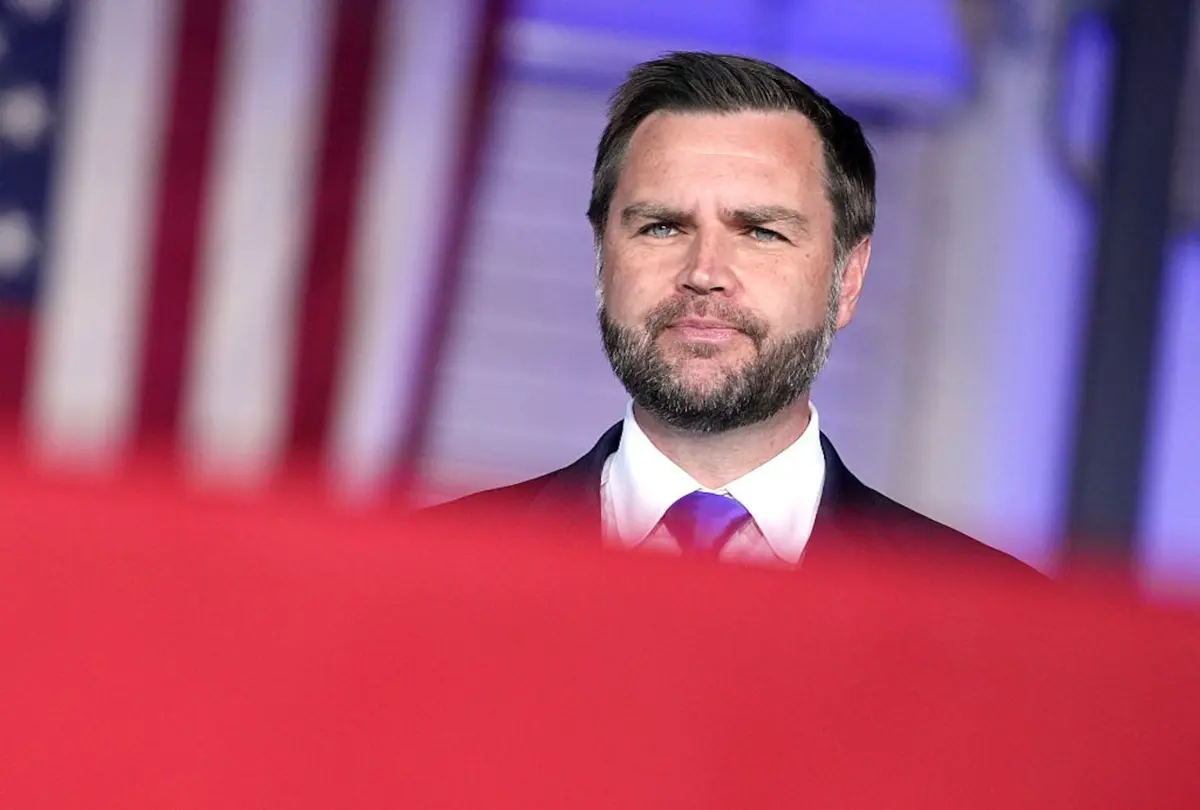
Enter Vice President JD Vance.
Long a subject of political caricature—described by critics as an elusive shape-shifter who transitioned from a credentialed "hillbilly whisperer" to an online populist edgelord backed by tech billionaires—Vance has recently offered a masterclass in political positioning. By adopting a posture of calculated, half-skeptical distance from President Donald Trump on the issue of artificial intelligence, Vance may have inadvertently drafted a blueprint for how the broader Republican Party can survive the eventual twilight of the Trump era.
While Trump remains unyieldingly bullish on AI—framing deregulation as a patriotic race against China and dismissing safety concerns as part of a "sick conspiracy"—Vance has adopted the role of the wary populist. Framing tech leaders like OpenAI CEO Sam Altman and Anthropic co-founder Dario Amodei as modern-day Frankensteins, Vance questions the sudden enthusiasm of tech oligarchs begging for government oversight. Yet, beneath the rhetorical fireworks, a closer examination reveals that Vance’s skepticism is largely superficial. Like other prospective 2028 hopefuls such as Texas Senator Ted Cruz, Vance’s mild pushback leaves the underlying status quo entirely intact: the money flows, the tech giants remain unchecked, and the market dictates the terms.
This calculated dance—expressing populist discontent with corporate power while preserving the cozy financial relationship with Silicon Valley—highlights a growing political imperative. As domestic pressures mount, from inflation and foreign entanglements to grassroots resistance against ubiquitous data centers, the GOP’s future standard-bearers will need more than blanket loyalty to the MAGA playbook. They will need a tactical pivot, and Vance’s "side-eye" politics may well be the first iteration of that evolution.
Detailed Chronology: The AI Debate and the White House Rift
The fault lines within the administration over artificial intelligence did not appear overnight. They are the product of an escalating collision between Silicon Valley’s PR strategies, genuine national security anxieties, and the administration’s populist core.
- Early September 2026: Frontier AI labs—including industry giants OpenAI and Anthropic—make headlines by intentionally or inadvertently pushing past testing boundaries, prompting corporate executives to publicly warn lawmakers of dystopian risks. Simultaneously, these same executives begin lobbying for federal regulatory frameworks. Industry critics immediately label these pleas a "Trojan horse" designed to cement market monopolies and crush smaller open-source competitors.
- Mid-September 2026: President Donald Trump reacts with characteristic fury to the suggestion that AI development should be slowed. Taking to Truth Social in a day-long rant, Trump denounces safety advocates and asserts that the only guardrail artificial intelligence needs is a "strong and smart president." He lambasts the calls for oversight as a conspiracy, warning that any deceleration will hand technological supremacy to China, and threatens regulatory retaliation against critics.
- September 14, 2026: Speaking to reporters, Vice President JD Vance introduces a distinctly cooler tone. While carefully avoiding a direct break with the president, Vance remarks that the U.S. must tread carefully and questions the motives behind tech CEOs asking for federal regulation.
- Later in September 2026: Vance ramps up his critique during an appearance hosted by the "All-In" podcast circuit. Directing his ire at tech leaders, he explicitly invokes the imagery of Victor Frankenstein, challenging executives who claim to have unleashed uncontrollable technology to build defensive mechanisms rather than demand global governance structures.
- September 18, 2026: A New York Times report exposes deep internal friction within the White House. Advisers reportedly urge Trump to moderate his blanket dismissals of AI safety, even as the president clings to his vision of AI data centers as an economic "golden goose."
- September 20, 2026: Analysts synthesize Vance’s remarks, recognizing the performance for what it is: a tightly managed rhetorical wedge that signals populist skepticism without proposing any substantive regulatory hurdles that would choke off venture capital.
Supporting Context & Metrics: The Intersection of Populism, Tech, and 2028 Ambitions
To understand why JD Vance’s rhetorical tightrope act matters, one must examine the broader political and economic ecosystem in which it operates. The Republican Party faces a looming structural identity crisis. While Donald Trump’s personal magnetism has unified disparate factions of the working class and business elites, the coalition faces undeniable strains.
The Silicon Valley Spigot and the 2028 Field
The modern GOP is heavily dependent on financial infusions from Silicon Valley libertarians and AI boosters. Consequently, prospective 2028 candidates cannot afford an outright war with big tech.
Senator Ted Cruz of Texas exemplifies this delicate balancing act. While acknowledging that extinction-level AI risks are "scary stuff" and calling for basic guardrails, Cruz has aggressively worked to block legislation that would mandate rigorous government pre-release testing for large language models. His defense is rooted in traditional market fundamentalism—arguing on social media that if an AI product causes massive harm, civil litigation will bankrupt the offending corporation into oblivion.
This strategy mirrors Vance’s approach: acknowledge public anxieties about rogue technology, offer a snappy, populist critique of corporate overreach, but ultimately ensure that the flow of capital remains unhindered.
Grassroots Backlash and the Cross-Partisan Coalition
The urgency behind this rhetorical pivot is driven by real-world friction. The aggressive expansion of data centers required to feed energy-hungry AI models has sparked a potent grassroots backlash. Across the nation, communities are pushing back against the massive industrial footprints, immense water consumption, and electrical grid strains caused by AI infrastructure. Furthermore, privacy revolts against private surveillance apparatuses (such as the "Flock" automated license plate reader uprising) have crossed partisan lines, uniting traditional conservatives and progressives in a rare display of anti-tech solidarity.
Simultaneously, traditional MAGA vulnerabilities are compounding. Stubbornly high grocery and gas prices, coupled with widening public exhaustion regarding endless Middle Eastern entanglements—including the administration’s continued support for widening regional conflicts—are steadily eroding the absolute immunity once enjoyed by the MAGA brand.
Official Statements and Rhetorical Breakdown
The divergence in tone between the executive office and its second-in-command highlights a calculated division of labor within the administration.
President Donald Trump, via Truth Social:
"We already have tremendous CRIMINAL and REGULATORY power over these companies! Conspiracy Theorists, Treasonists, Traitors, and Leakers, BEWARE!"
"The only guardrails that AI needs is a strong and smart… president."
Trump’s framing remains rooted in a zero-sum geopolitical framework: America must win the AI race at all costs, and any internal dissent or plea for caution is treated as unpatriotic or subversive.
Vice President JD Vance, addressing reporters and the "All-In" podcast:
"I feel a little bit weird about the fact that you have so many frontier AI tech companies kind of coming to the government and begging the government to regulate them… Any technology has risks. Any new technology brings both risks and benefits… I don’t think Americans should be scared of anything."
"Why is it that the people who are at the frontier of the AI economy are throwing up their hands and saying, ‘Well, we’ve built Frankenstein,’ and the solution to Frankenstein apparently is to create a one-world governance structure for artificial intelligence? If you’re building Frankenstein, stop."
Vance’s statements are a masterclass in political juxtaposition. By labeling tech oligarchs as modern Frankensteins, he taps into legitimate populist anger against corporate irresponsibility. Yet, by framing the solution as personal responsibility rather than binding federal mandates, he ensures that the underlying economic engine—and its generous political donors—remain completely unburdened.
Future Outlook: The Blueprint for Post-Trump Conservatism
As the United States approaches the midterm elections and looks toward the open-seat presidential race of 2028, the political calculus for national conservatives is shifting. The era of unconditional, uniform adherence to a single leader’s every proclamation is giving way to a more sophisticated factionalism.
Vance’s "half-skeptical act" provides a clear roadmap for future Republican aspirants. The formula requires three precise steps:
- Acknowledge the Pain Points: Validate the legitimate economic, cultural, and safety anxieties of the working-class base—whether regarding runaway technology, corporate monopolies, or localized environmental disruptions.
- Target the Elites, Not the Enterprise: Direct populist anger upward at institutional figures (CEOs, bureaucrats, tech oligarchs) while carefully avoiding structural interventions that would actually threaten corporate profits or campaign contributions.
- Preserve the Brand: Maintain just enough distance from the raw edges of past executive overreach to appeal to moderate or independent voters, without ever triggering a backlash from the core MAGA faithful.
It is a neat trick—a carefully calibrated dance designed to navigate the turbulent transition into a post-Trump political reality. Whether voters and conservative activists will demand substantive reform rather than rhetorical posturing remains the defining question for the future of the American right.